Foods to Lower Blood Sugar Levels: Top Choices
Published: 11 Mar 2026
Controlling blood sugar is essential for energy, weight management, and long-term health. High sugar levels increase fatigue, hunger, and the risk of diabetes or heart disease. Eating the right foods naturally regulates glucose, improves insulin sensitivity, and prevents sudden spikes or crashes.
Including these foods in daily meals supports metabolism, reduces cravings, and maintains steady energy throughout the day. This guide provides a detailed overview of foods to lower blood sugar levels, how to use them, and other important tips.
Let’s explore foods to lower blood sugar levels.
Main Foods to Lower Blood Sugar Levels
Here are the main categories of foods that help stabilize blood sugar:
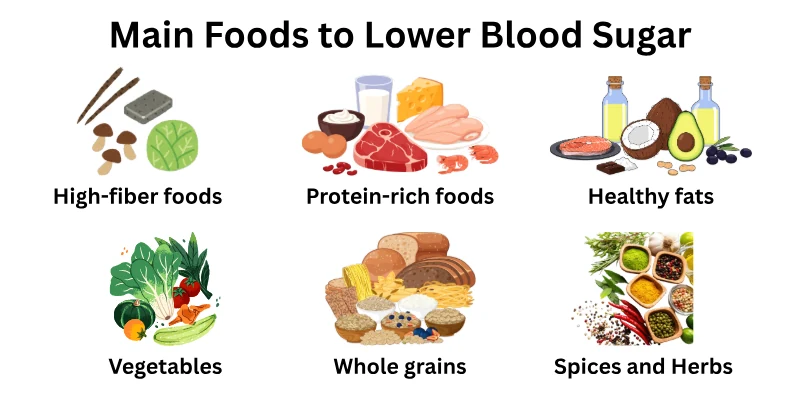
- High-fiber foods: Oats, chia seeds, flaxseeds, lentils, beans, chickpeas, apples, pears, berries, carrots
- Protein-rich foods: Eggs, chicken, fish, Greek yogurt, cottage cheese, tofu, lentils, beans
- Healthy fats: Avocado, almonds, walnuts, flaxseeds, chia seeds, olive oil, natural peanut butter
- Whole grains: Brown rice, whole wheat bread, quinoa, barley, millets (bajra, jowar, ragi)
- Low-sugar fruits: Berries, kiwi, apples, pears, peaches
- Vegetables: Spinach, kale, broccoli, cauliflower, cucumber, zucchini, carrots, cabbage, okra
- Spices and herbs: Cinnamon, turmeric, ginger, fenugreek seeds, garlic
- Drinks: Water, lemon water, green tea, cinnamon tea, fenugreek water, apple cider vinegar water
Detailed explanation of each food category is next.
1. High-Fiber Foods
Fiber slows digestion and sugar absorption, keeping blood sugar stable. It also supports gut health, reduces cravings, and keeps you full. Eating high-fiber foods at breakfast, lunch, or as snacks is most effective for sugar control.
Oats
- How to take: ½ to 1 cup of rolled or steel-cut oats cooked in water or low-fat milk.
- Timing: Breakfast or mid-morning snack.
- Tips: Add chia seeds, berries, or a teaspoon of cinnamon for extra blood sugar support. Avoid instant oats with added sugar.
Chia Seeds
- How to take: 1–2 tablespoons soaked in water, yogurt, or smoothie.
- Timing: Pre-meal or breakfast for slow sugar absorption.
- Tips: Can be mixed into oatmeal, smoothies, or used as pudding. Stay hydrated as chia absorbs water.
Flaxseeds
- How to take: 1–2 tablespoons of ground flaxseeds.
- Timing: Add to breakfast cereal, smoothies, or salads.
- Tips: Ground flaxseeds digest better than whole seeds.
Lentils & Beans
- How to take: ½ cup cooked lentils or beans per meal.
- Timing: Lunch or dinner to slow sugar release.
- Tips: Combine with vegetables or whole grains for balanced meals. Avoid fried beans.
Fruits (Apples, Pears, Berries)
- How to take: 1 medium fruit or ½ cup berries per snack.
- Timing: Between meals or as part of breakfast.
- Tips: Eat raw; avoid fruit juices or canned fruits with added sugar.
Carrots
- How to take: ½ to 1 cup raw or lightly cooked.
- Timing: Snack or side dish in meals.
- Tips: Pair with hummus or yogurt for extra fiber and protein.
2. Protein-Rich Foods
Protein prevents rapid sugar absorption, keeps you full, and supports muscle health. Aim to include protein in each meal to stabilize blood sugar.
Eggs
- How to take: 1–2 eggs boiled, poached, or scrambled.
- Timing: Breakfast or mid-morning snack.
- Tips: Avoid fried eggs with butter or oil; pair with vegetables for added fiber.
Chicken & Fish
- How to take: 100–150 grams per meal, grilled, baked, or steamed.
- Timing: Lunch or dinner.
- Tips: Pair with vegetables or whole grains. Avoid fried or breaded options.
Greek Yogurt & Cottage Cheese
- How to take: ½ cup unsweetened yogurt or cottage cheese.
- Timing: Breakfast, mid-morning, or evening snack.
- Tips: Add flaxseeds, berries, or cinnamon for extra sugar-control benefits.
Tofu & Lentils
- How to take: 100 grams tofu or ½ cup cooked lentils per meal.
- Timing: Lunch or dinner.
- Tips: Stir-fry with vegetables or add to salads. Avoid fried tofu.
3. Healthy Fats
Healthy fats slow digestion, improve insulin sensitivity, and maintain satiety. Include them in small portions in every meal.
Avocado
- How to take: ½ avocado per day.
- Timing: Breakfast, lunch, or as a side with salads.
- Tips: Eat raw or as guacamole. Avoid fried avocado dishes.
Almonds & Walnuts
- How to take: 10–12 almonds or 5–6 walnut halves daily.
- Timing: Mid-morning or mid-afternoon snack.
- Tips: Raw or roasted without salt. Avoid candied nuts.
Flaxseeds & Chia Seeds
- How to take: 1–2 tablespoons per day.
- Timing: Add to breakfast or smoothies.
- Tips: Stay hydrated; mix with yogurt or oatmeal for better digestion.
Olive Oil
- How to take: 1–2 teaspoons per meal.
- Timing: Salad dressing or cooking.
- Tips: Extra virgin olive oil is best. Avoid deep frying.
Natural Peanut Butter
- How to take: 1 tablespoon per day.
- Timing: Snack with fruit or on whole-grain toast.
- Tips: Ensure no added sugar or hydrogenated oils.
4. Whole Grains
Whole grains release sugar slowly and provide vitamins and fiber. Replace refined grains with whole grains for better sugar control.
Brown Rice & Whole Wheat Bread
- How to take: ½ cup cooked rice or 1 slice bread per meal.
- Timing: Lunch or dinner.
- Tips: Avoid white rice or refined bread. Pair with vegetables and protein.
Quinoa & Barley
- How to take: ½ cup cooked per meal.
- Timing: Lunch or dinner.
- Tips: Add vegetables and lean protein for balanced meals.
Millets (Bajra, Jowar, Ragi)
- How to take: ½ cup cooked or as flour-based roti/porridge.
- Timing: Breakfast, lunch, or dinner.
- Tips: Replace refined wheat products with millet-based meals.
5. Low-Sugar Fruits
Low-sugar fruits digest slowly, provide fiber and antioxidants, and reduce sugar spikes.
Berries
- How to take: ½ cup per day.
- Timing: Snack, breakfast, or dessert.
- Tips: Mix with yogurt or oatmeal.
Kiwi
- How to take: 1 fruit per day.
- Timing: Breakfast or snack.
- Tips: Eat raw; do not juice.
Apples & Pears
- How to take: 1 medium fruit per day.
- Timing: Snack between meals.
- Tips: Eat with skin for fiber benefits.
Peaches
- How to take: 1 medium fruit.
- Timing: Snack or dessert.
- Tips: Eat fresh, avoid canned with syrup.
6. Vegetables
Non-starchy vegetables provide fiber, vitamins, and antioxidants while keeping blood sugar stable.
- Spinach, Kale: 1–2 cups per day, raw in salads or sautéed.
- Broccoli, Cauliflower: ½–1 cup cooked per meal.
- Cucumber, Zucchini: ½ cup raw or lightly cooked.
- Carrots, Cabbage, Okra: ½–1 cup per meal.
Tips: Eat a variety daily, combine with protein and healthy fats for better sugar control.
7. Spices & Herbs
Spices improve insulin sensitivity and reduce inflammation.
- Cinnamon: ½–1 teaspoon per day in oatmeal, tea, or smoothies.
- Turmeric: ½–1 teaspoon in curries, soups, or golden milk.
- Ginger: ½–1 teaspoon grated in tea or cooking.
- Fenugreek Seeds: 1 teaspoon soaked in water before meals.
- Garlic: 1–2 cloves per day, raw or cooked.
8. Drinks
Drinks help regulate sugar and metabolism.
- Water: 2–3 liters daily.
- Lemon Water: 1 glass before meals.
- Green Tea / Cinnamon Tea: 1–2 cups daily.
- Fenugreek Water: 1 teaspoon seeds soaked overnight, drink before meals.
- Apple Cider Vinegar Water: 1 teaspoon in water before meals.
When to See a Doctor
Even with healthy eating, it’s important to monitor your blood sugar. Visit a doctor if you experience:
- Persistent high blood sugar readings
- Extreme fatigue, thirst, or frequent urination
- Unexpected weight loss or gain
- Dizziness or blurred vision
A doctor can check for diabetes, prediabetes, or other metabolic issues and provide a personalized plan.
What to Avoid
Certain foods raise blood sugar quickly and should be limited or avoided:
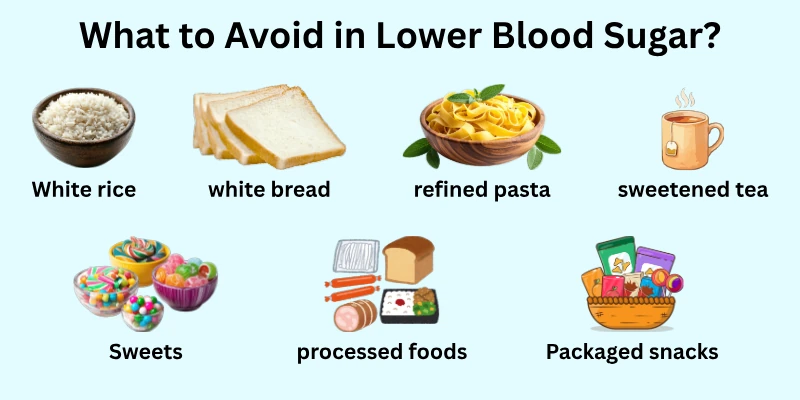
- White rice, white bread, refined pasta
- Sugary drinks like soda, sweetened tea, or juice
- Sweets, cakes, cookies, and pastries
- Fried or processed foods
- Packaged snacks with hidden sugar
Avoiding these foods helps your healthy diet work better and prevents sugar spikes.
How to Reduce Blood Sugar Level Immediately
Here are steps you can take to lower your blood sugar quickly and safely. These methods are natural, easy to follow, and can help stabilize glucose levels within a short period.
1. Drink Plenty of Water
- Water helps flush excess glucose from your bloodstream through urine.
- Drink 1–2 glasses of water slowly.
- Staying hydrated also reduces the risk of sugar-related fatigue and headaches.
2. Go for Light Physical Activity
- Brisk walking, climbing stairs, or light stretching helps your muscles use sugar for energy.
- A 10–20 minute walk after meals can lower sugar quickly.
- Avoid intense exercise if your sugar is extremely high or you feel unwell.
3. Eat Fiber or Protein-Rich Snacks
- Fiber slows sugar absorption, and protein prevents spikes.
- Examples: a boiled egg, handful of nuts, Greek yogurt, or raw vegetables.
- Avoid sugary foods or refined carbs during this time.
4. Use Cinnamon or Apple Cider Vinegar
- Cinnamon improves insulin sensitivity. Add ½ teaspoon to tea, oats, or smoothies.
- Apple Cider Vinegar slows sugar absorption. Mix 1 teaspoon in a glass of water before meals.
5. Practice Deep Breathing or Relaxation
- Stress raises cortisol, which increases blood sugar.
- Take 5–10 minutes of deep breathing, meditation, or gentle stretching.
6. Check Your Blood Sugar
- Monitor your blood sugar before and after these steps to track the effect.
- Seek medical help immediately if your sugar stays very high or if you feel dizzy, nauseated, or extremely thirsty.
Final Note
In this guide, we have covered foods to lower blood sugar levels in detail, including high-fiber foods, protein-rich options, healthy fats, whole grains, low-sugar fruits, vegetables, spices, and drinks. Following these recommendations consistently can help stabilize blood sugar, improve energy, reduce cravings, and support overall health.
Remember to combine these foods with proper hydration, light exercise, and regular check-ups for the best results.
Take charge of your health today, make small changes consistently, and enjoy a balanced lifestyle. Stay mindful, eat smart, and goodbye to unnecessary sugar spikes!
FAQs: Blood Sugar Reducing Food
Here are some of the most commonly asked questions related to blood sugar reducing food:
High-fiber foods like oats, lentils, and beans help bring down blood sugar naturally. Leafy greens, berries, and non-starchy vegetables also stabilize glucose levels. Including these in every meal helps prevent sudden spikes.
You can lower blood sugar by drinking water, taking a short walk, or eating protein-rich snacks. Cinnamon and apple cider vinegar also help regulate sugar. Checking your levels before and after helps track results.
Foods rich in fiber, protein, and healthy fats help balance blood sugar all day. Examples include eggs, almonds, Greek yogurt, and whole grains. Pairing them with vegetables slows glucose absorption and keeps energy steady.
Leafy greens, non-starchy vegetables, berries, nuts, and lentils are natural blood sugar-lowering foods. They digest slowly and prevent spikes. Eating them regularly improves insulin sensitivity.
Yes, foods like chia seeds, flaxseeds, avocado, and whole grains lower sugar levels in blood. They reduce rapid glucose absorption. Combining them with protein makes them more effective.
High-fiber fruits, vegetables, lean proteins, and healthy fats lower blood glucose effectively. Examples include spinach, lentils, salmon, and walnuts. Eating these consistently supports long-term sugar control.
You can reduce your sugar levels naturally by drinking plenty of water, walking after meals, and including fiber-rich foods. Avoid sugary drinks and processed snacks. Adding cinnamon or fenugreek seeds may further improve results.
Foods like green vegetables, berries, eggs, nuts, and whole grains help keep sugar levels low. They slow glucose absorption and reduce cravings. Eating small portions throughout the day works best.






- Be Respectful
- Stay Relevant
- Stay Positive
- True Feedback
- Encourage Discussion
- Avoid Spamming
- No Fake News
- Don't Copy-Paste
- No Personal Attacks
- Be Respectful
- Stay Relevant
- Stay Positive
- True Feedback
- Encourage Discussion
- Avoid Spamming
- No Fake News
- Don't Copy-Paste
- No Personal Attacks
