Best Vitamins for Women: Complete Guide to Women’s Wellness
Published: 1 May 2026
Women’s bodies need specific vitamins to stay energetic, strong, and healthy. Hormones, periods, stress, pregnancy, and lifestyle changes all affect vitamin levels every day. When the body does not get enough nutrients, it leads to low energy, hair fall, weak bones, mood swings, poor immunity, and slow metabolism.
The right vitamins help your body work smoothly and make you feel balanced from the inside. This detailed guide explains the best vitamins for women, why they matter, how they support your health, and how you can include them in your routine. And, yes, everything is written in simple English so you can follow easily.
Let’s begin with the most important vitamins every woman should know about.
Best Vitamins for Women
Here are the best vitamins every woman needs for daily health and long-term strength:
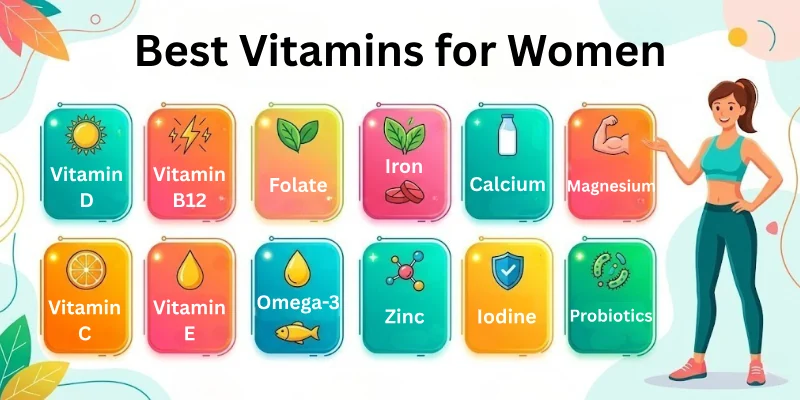
- Vitamin D
- Vitamin B12
- Folate (Vitamin B9)
- Iron
- Calcium
- Magnesium
- Vitamin C
- Vitamin E
- Omega-3 Fatty Acids
- Zinc
- Iodine
- Probiotics
Let’s cover all in detail.
1. Vitamin D
Vitamin D is one of the most important vitamins for women because it supports bones, mood, and immunity. Many women have low vitamin D because they don’t get enough sunlight daily. When levels drop, you may feel tired or low or experience bone weakness over time. This vitamin also helps your body absorb calcium properly and keeps your muscles strong.
Helpful points:
- Helps: Bones, mood, hormones, immunity, muscles
- Food Sources: Egg yolks, salmon, sardines, fortified milk
- Tip: Choose Vitamin D3 for better absorption
2. Vitamin B12
Vitamin B12 keeps your brain, nerves, and energy levels strong. Many women become deficient because B12 needs proper stomach acid to absorb, which decreases with age. Low B12 often causes tiredness, dizziness, and tingling in hands or feet. Vegetarians and vegans need supplements because plants don’t naturally contain B12. This vitamin also supports healthy red blood cells that carry oxygen.
Helpful points:
- Helps: Energy, memory, focus, nerve health
- Foods: Meat, eggs, dairy, fish, fortified cereals
- Tip: Sublingual B12 melts faster and absorbs better
3. Folate (Vitamin B9)
Folate supports cell repair, brain function, and hormone balance. Women who may become pregnant need folate daily to prevent birth defects. It also helps improve mood because it supports neurotransmitter production. Low folate can cause weakness, low appetite, or poor concentration. Many women absorb methylfolate better than regular folic acid. Supplementing daily keeps your levels stable and supports overall reproductive health.
Helpful points:
- Helps: Mood, fertility, cell growth, brain health
- Foods: Spinach, lentils, beans, avocados
- Tip: Methylfolate works best for most women
4. Iron
Iron helps your blood carry oxygen properly. Women lose iron every month during their periods, which increases the risk of deficiency. Low iron causes tiredness, pale skin, hair loss, and dizziness. Heavy periods make iron levels drop even faster. Iron also supports muscle strength and brain function. Taking iron with vitamin C helps your body absorb it better.
Helpful points:
- Helps: Energy, oxygen flow, hair growth
- Foods: Red meat, spinach, beans, lentils
- Tip: Avoid taking iron with coffee or tea
5. Calcium
Calcium keeps your bones, nails, teeth, and muscles strong. Women need more calcium as they age because bone density naturally decreases. Low calcium increases the risk of fractures and weak bones. It also helps your heart and nerves function properly. Many women don’t get enough calcium from food alone. Vitamin D improves calcium absorption.
Helpful points:
- Helps: Bones, teeth, heart rhythm
- Foods: Milk, yogurt, cheese, almonds
- Tip: Divide calcium doses for better absorption
6. Magnesium
Magnesium supports sleep, mood, muscle relaxation, and hormone balance. Stress reduces magnesium levels quickly, which can cause cramps or headaches. Women with PMS often feel better when magnesium is stable. It also supports good digestion and heart health. Many women find magnesium helpful for anxiety and sleep quality. Magnesium glycinate is the gentlest form.
Helpful points:
- Helps: Sleep, stress, mood, cramps
- Foods: Nuts, seeds, dark chocolate, leafy greens
- Tip: Take magnesium at night for better sleep
7. Vitamin C
Vitamin C strengthens your immune system and supports collagen production. It helps your skin stay bright and firm. Women who experience stress often need more vitamin C because stress lowers levels. It also helps your body absorb iron effectively. Vitamin C supports wound healing and protects cells from damage. Fresh foods contain the highest vitamin C.
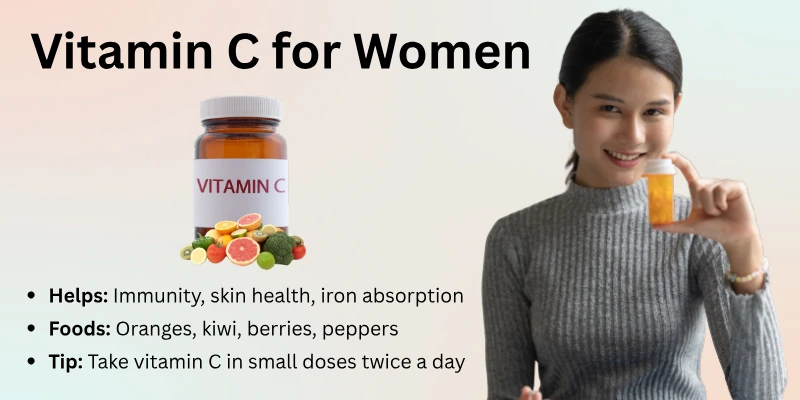
Helpful points:
- Helps: Immunity, skin health, iron absorption
- Foods: Oranges, kiwi, berries, peppers
- Tip: Take vitamin C in small doses twice a day
8. Vitamin E
Vitamin E supports skin repair, immune strength, and hormonal balance. It protects cells from damage caused by stress or pollution. Women often use vitamin E to improve skin moisture and reduce inflammation. It also supports heart health. Vitamin E deficiency is rare but can reduce immunity. Natural food sources are better than supplements for many women.
Helpful points:
- Helps: Skin, immunity, hormones
- Foods: Almonds, sunflower seeds, spinach
- Tip: Choose natural vitamin E (d-alpha tocopherol)
9. Omega-3 Fatty Acids
Omega-3 keeps your heart, brain, and hormones healthy. Many women don’t get enough omega-3 from food alone. Low levels can cause dry skin, mood swings, or poor focus. Omega-3 also reduces inflammation and supports joint health. It helps improve hair shine and scalp moisture. Women with hormonal changes benefit greatly from omega-3.
Helpful points:
- Helps: Brain, heart, hormones, skin
- Foods: Salmon, chia seeds, walnuts
- Tip: Choose fish oil with EPA + DHA
10. Zinc
Zinc supports your immunity, skin repair, and hormone balance. Women with acne or slow healing often need more zinc. It also supports fertility and reproductive health. Low zinc can cause hair thinning or weak nails. Stress and poor diet reduce zinc levels quickly. Good zinc levels improve your skin, immunity, and metabolism.
Helpful points:
- Helps: Skin, immunity, hormones
- Foods: Pumpkin seeds, meat, eggs
- Tip: Zinc picolinate absorbs best
11. Iodine
Iodine keeps your thyroid healthy, which manages your metabolism and energy. Low iodine can cause tiredness, weight gain, and hair fall. Women need iodine more than men because thyroid function is sensitive to hormonal changes. Pregnancy increases iodine needs. Many people do not use iodized salt anymore, leading to deficiency. Supplements help maintain a balanced thyroid.
Helpful points:
- Helps: Thyroid, metabolism, hormones
- Foods: Iodized salt, seaweed, dairy
- Tip: Do not take high doses without testing
12. Probiotics
Probiotics support digestion, gut health, and immunity. Women with bloating or irregular digestion benefit greatly. A healthy gut also improves mood because gut bacteria affect brain chemicals. Probiotics help balance yeast and vaginal health. They also support clear skin by reducing inflammation. Choose multi-strain probiotics for better results.
Helpful points:
- Helps: Digestion, skin, immunity, vaginal health
- Foods: Yogurt, kefir, kimchi, sauerkraut
- Tip: Choose 10–50 billion CFU for women
Top Multivitamin Picks (Practical Short Reviews)
Below are solid multivitamin options that match different women’s needs. These picks echo expert testing but are written fresh and simply.
- Ritual Essential for Women 18+: Good for daily coverage and clean ingredients. It uses delayed-release capsules and includes vitamin D, B12, iron, and omega-D blends. Best if you want traceable sources and low stomach upset.
- Transparent Labs Multivitamin: A whole-food, transparency-focused formula. It provides D3, K2, magnesium, and antioxidants. Best for people who want plant-forward sourcing and third-party testing.
- Nutricost Multivitamin (Gummy): Budget-friendly gummy with basic vitamins. Good if you dislike pills and need a simple daily option.
- Future Kind Complete (Vegan): Includes B12, vitamin D3, iodine, and algae EPA/DHA. Best for strict vegans who want a wide plant-derived formula.
- Olly Women’s Multi (Biotin): Gummy that targets hair, skin, and nails with added biotin. Good for beauty-focused women who want an easy daily gummy.
- New Chapter Every Woman One Daily 40+: One-pill daily for older women includes fermented nutrients for absorption. Best for women over forty who want targeted support.
- Optimum Nutrition Opti-Women (With Iron): Robust formula with iron and herbal extracts. Good for active women or those with higher iron needs after checking labs.
How to Choose the Best Vitamin for You
Here are step-by-step points:
- Check your diet first. Whole foods supply most needs.
- Get basic blood tests if possible: vitamin D, B12, iron, thyroid.
- Match supplement to your life stage (pregnancy, menopause, vegan).
- Prefer third-party tested brands for purity and accuracy.
- Avoid megadoses of fat-soluble vitamins unless supervised.
- Choose a form you will take daily (gummy, capsule, tablet).
- Read labels: prefer methylated folate and methylated B12 if needed.
- Consult your doctor about interactions with medicines.
What To Avoid in Women’s Vitamins
Here are some major points to be noted:
- Multivitamins with megadoses far above RDV without medical reason.
- Poor-quality fillers, artificial colors, or unnecessary sweeteners.
- Products without third-party testing or unclear labels.
- Taking iron if you are not iron-deficient (it can cause harm).
- Mixing multiple strong supplements that contain the same mineral (risk of overdose).
Personalized Advice
If you are short on time, start with a daily multivitamin that covers vitamin D, B12, folate, magnesium, and iron if needed. If you follow a plant-based diet, add B12 and algae omega-3. If you have heavy periods, check iron and consider an iron-containing multi after testing. If you struggle with sleep or cramps, add magnesium glycinate at night. Always ease into new supplements and track how you feel.
Final Note
In this guide I covered the best vitamins for women and explained why each nutrient matters. I gave practical food sources, supplement tips, and clear ways to choose a multivitamin that fits your life. Start with diet first, test key levels when possible, and use high-quality supplements to fill real gaps.
My personal recommendation: choose a third-party tested multivitamin that matches your age and diet, and review your needs with a clinician. Small, steady changes to nutrition give big benefits over time.
FAQs
Here are some of the most commonly asked questions related to the best vitamins for women:
Not everyone needs one daily. Many women get enough nutrients from a balanced diet. A multivitamin helps fill gaps for restrictive diets, pregnancy, or higher needs. Ask your doctor and check labs to decide.
No single vitamin rules all. Vitamin D, iron, folate, and B12 are commonly important for many women. The most important depends on age, diet, pregnancy status, and blood tests.
Yes, but be careful. Avoid stacking products that cause excess of the same nutrient. Review labels and ask your doctor to prevent interactions and overdose.
Gummies are easy to take but often have lower nutrient doses. They sometimes include added sugar and lack iron or strong B12 amounts. Choose gummies for convenience but check the label for coverage.
You may notice energy changes in 2–8 weeks for some nutrients like B12 or iron after correction. Bone-related improvements from vitamin D and calcium take longer. Track changes and retest labs when appropriate.
Yes. Pregnant women need prenatal vitamins with higher folate and iron. Always use a prenatal formula during planning and pregnancy. Talk to your provider for the correct dose.
Yes. Some vitamins and minerals change how drugs work. For example, vitamin K affects blood thinners, and calcium affects some antibiotics. Tell your doctor all supplements you take.
Look for third-party testing seals (USP, NSF, Informed-Choice). Check clear labeling, ingredient sources, and avoid proprietary blends that hide amounts. Read reviews and pick brands with transparent practices.





- Be Respectful
- Stay Relevant
- Stay Positive
- True Feedback
- Encourage Discussion
- Avoid Spamming
- No Fake News
- Don't Copy-Paste
- No Personal Attacks
- Be Respectful
- Stay Relevant
- Stay Positive
- True Feedback
- Encourage Discussion
- Avoid Spamming
- No Fake News
- Don't Copy-Paste
- No Personal Attacks
