How to Improve Emotional Intelligence: Easy Ways to Boost Your EQ
Published: 17 Jul 2026
Emotional intelligence is the ability to understand your emotions and healthily respond to them. It also helps you recognize how other people feel, which leads to more thoughtful and balanced reactions in different situations.
This skill affects many areas of daily life. It can strengthen relationships, improve communication, and help you manage stress more calmly. People with strong emotional intelligence often make better decisions and build deeper connections with others.
In this guide, you will learn practical and easy ways how to improve emotional intelligence, boost your EQ, and develop stronger emotional awareness in daily life, the benefits of emotional intelligence, and Common Mistakes That Reduce Emotional Intelligence
How to Improve Emotional Intelligence
Emotional intelligence is a skill that you can develop over time. It is not something that stays fixed throughout life. With greater self-awareness and a few positive daily habits, you can strengthen your EQ and improve the way you understand, manage, and respond to emotions.
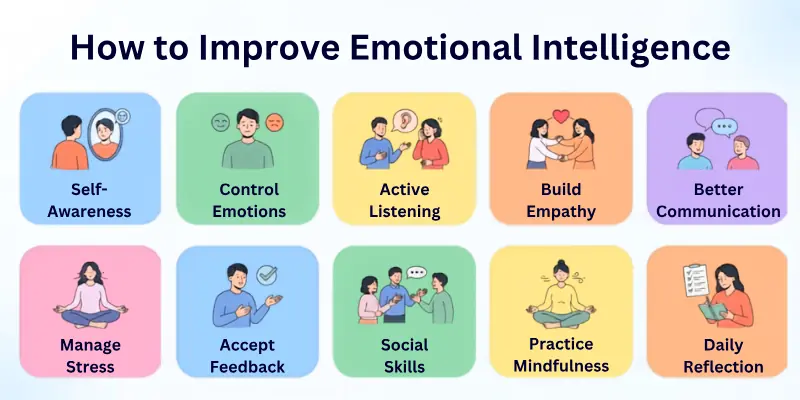
Here are some of the most effective ways to improve emotional intelligence naturally:
- Develop Self-Awareness
- Learn to Control Your Emotions
- Practice Active Listening
- Build Empathy
- Improve Communication Skills
- Handle Stress in a Healthy Way
- Accept Feedback Positively
- Improve Social Skills
- Practice Mindfulness
- Reflect on Your Behavior Daily
1. Develop Self-Awareness
Self-awareness is the foundation of emotional intelligence. If you want to boost emotional intelligence, you first need to understand your emotions and the factors that influence them.
Greater self-awareness can help you make better decisions, manage your reactions, and support the development of long-term EQ. It is also one of the most effective ways to develop emotional intelligence over time.
You can improve self-awareness by:
- Taking a few minutes each day to reflect on your emotions
- Keeping a journal to track your thoughts and feelings
- Practicing mindfulness to stay present in the moment
- Identifying situations that trigger strong emotional reactions
- Paying attention to how your emotions affect your behavior
2. Learn to Control Your Emotions
Learning how to improve emotional control is an important part of emotional intelligence improvement. Emotional control does not mean suppressing your feelings.
It means responding calmly and healthily. When you manage your emotions effectively, you can reduce impulsive reactions and improve EQ in everyday situations.
You can manage your emotions by:
- Taking deep breaths when you feel overwhelmed
- Pausing before reacting to a situation
- Identifying emotional triggers and preparing for them
- Replacing negative thoughts with more balanced ones
- Using healthy stress management techniques
3. Practice Active Listening
Active listening is one of the most valuable EQ skills. It helps you understand other people better and build stronger relationships.
If you are looking for ways to increase EQ, becoming a better listener is a great place to start. This habit can help you build emotional intelligence and communicate more effectively.
You can become a better listener by:
- Avoiding interruptions while others speak
- Maintaining appropriate eye contact
- Asking thoughtful questions for clarification
- Paying attention to the tone of voice and body language
- Focusing on understanding rather than preparing a response
4. Build Empathy
Empathy is the ability to understand and share the feelings of others. It helps you connect with people on a deeper level and improves both personal and professional relationships. If you want to become emotionally intelligent, developing empathy is essential.
It allows you to respond with understanding rather than judgment and supports overall emotional intelligence development.
You can improve empathy by:
- Listening carefully without making assumptions
- Paying attention to body language and facial expressions
- Trying to understand situations from another person’s perspective
- Validating other people’s emotions
- Showing patience and compassion during conversations
5. Improve Communication Skills
Good communication is an important part of emotional intelligence. The way you express your thoughts and emotions can affect your relationships and daily interactions.
Strong communication skills help reduce misunderstandings, build trust, and improve EQ skills over time. They also play a key role in building emotional intelligence skills.
You can improve communication by:
- Speaking clearly and respectfully
- Expressing your feelings honestly
- Using a calm tone during conversations
- Avoiding blame and criticism
- Being open to different opinions
6. Handle Stress in a Healthy Way
Stress can make it harder to think clearly and manage emotions. When stress becomes overwhelming, people often react without thinking.
Learning healthy ways to manage stress can improve EQ and support better emotional control. It is also one of the most effective ways to develop emotional intelligence in everyday life.
You can manage stress by:
- Exercising regularly
- Practicing meditation or mindfulness
- Using deep breathing techniques
- Getting enough sleep each night
- Taking short breaks when needed
7. Accept Feedback Positively
Feedback can help you recognize strengths and identify areas for improvement. People with strong emotional intelligence do not view feedback as a personal attack. Instead, they use it as an opportunity to learn and grow.
If you want to improve emotional intelligence, learning to accept constructive feedback is an important step.
You can handle feedback more positively by:
- Listening carefully before responding
- Avoiding defensive reactions
- Asking questions for better understanding
- Focusing on useful suggestions
- Applying what you learn to future situations
8. Improve Social Skills
Strong social skills make it easier to build relationships and communicate effectively. They help you work well with others, resolve conflicts, and create positive interactions.
Developing social skills can increase emotional intelligence and improve your confidence in both personal and professional settings.
You can improve social skills by:
- Starting conversations with confidence
- Showing respect during interactions
- Maintaining healthy personal boundaries
- Handling disagreements calmly
- Practicing kindness and patience
9. Practice Mindfulness
Mindfulness means paying attention to the present moment without judgment. It helps you become more aware of your thoughts, emotions, and reactions.
Many people use mindfulness as one of the best emotional intelligence tips because it supports emotional balance and self-awareness. It can also help improve EQ by reducing stress and increasing focus.
You can practice mindfulness by:
- Spending a few minutes each day in quiet reflection
- Focusing on your breathing
- Paying attention to your thoughts without reacting immediately
- Reducing distractions during daily activities
- Being fully present during conversations
10. Reflect on Your Behavior Daily
Daily reflection helps you understand your actions, emotions, and interactions with others. It allows you to learn from your experiences and make positive changes over time.
If you want to develop emotional intelligence, taking a few minutes each day to reflect on your behavior can make a meaningful difference. This habit can improve emotional awareness and support the development of long-term emotional intelligence.
You can reflect on your behavior by:
- Reviewing how you responded to emotional situations
- Thinking about your conversations and interactions
- Identifying areas where you handled situations well
- Recognizing mistakes and learning from them
- Setting small goals for personal improvement
Daily Habits That Improve Emotional Intelligence
Emotional intelligence grows through consistent practice. Small daily habits can help you become more aware of your emotions, improve your reactions, and strengthen your relationships.
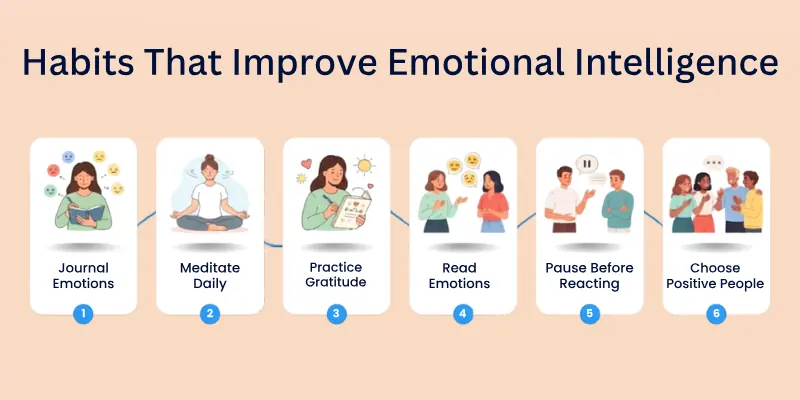
If you are looking for daily habits to develop emotional awareness, the following practices can support long-term emotional growth and help increase EQ over time.
- Journaling Emotions: Writing about your emotions can help you understand your thoughts and reactions more clearly. A journal allows you to identify patterns, recognize emotional triggers, and track your progress. This simple habit can support emotional intelligence improvement and increase self-awareness.
- Meditation and Deep Breathing: Meditation and deep breathing can calm your mind and reduce stress. These practices help you stay focused on the present moment and respond more thoughtfully to challenges. Many people use them as effective ways to improve emotional intelligence and emotional control.
- Gratitude Practice: Taking time to appreciate the positive aspects of your life can improve your mindset and emotional well-being. Gratitude helps shift your focus away from negativity and encourages a more balanced emotional perspective.
- Reading Emotional Cues: Paying attention to facial expressions, body language, and tone of voice can help you understand how others feel. This habit strengthens empathy and communication, which are essential emotional intelligence skills.
- Limiting Negative Reactions: Reacting impulsively can create unnecessary conflict and stress. Taking a moment to pause and think before responding can help you manage emotions more effectively and build emotional intelligence.
- Spending Time With Positive People: The people around you can influence your thoughts, emotions, and behavior. Spending time with supportive and positive individuals can encourage healthy habits, improve emotional awareness, and strengthen emotional intelligence.
Benefits of Emotional Intelligence
Developing emotional intelligence can improve many areas of your personal and professional life. When you learn how to understand and manage emotions better, it becomes easier to handle challenges and build meaningful connections.
Here are some key benefits of emotional intelligence:
1. Better Relationships: Emotional intelligence helps you understand other people’s feelings and respond with empathy. This leads to stronger, healthier, and more balanced relationships.
2. Improved Communication: When you improve emotional intelligence, you express your thoughts more clearly and listen more effectively. This reduces misunderstandings and builds trust.
3. Stronger Stress Management: People with high emotional intelligence stay calmer under pressure. They manage stress better and avoid impulsive reactions.
4. Better Decision-Making: Emotional intelligence helps you think more clearly before reacting. This leads to smarter and more balanced decisions.
5. Increased Self-Awareness: It allows you to understand your emotions, triggers, and behavior patterns. This improves personal growth and emotional control.
6. Professional Success: In the workplace, emotional intelligence helps with teamwork, leadership, and conflict resolution. It is a key skill for career growth.
These are the key benefits of EQ that show why it is important to learn how to improve emotional intelligence in daily life.
Common Mistakes That Reduce Emotional Intelligence
Avoiding these common mistakes can help you develop emotional intelligence and strengthen your relationships with others.
- Overreacting to Situations: Strong reactions create conflict and poor decisions. Pause before responding to stay calm.
- Ignoring Emotions: Ignoring feelings increases stress and confusion. Accept and understand your emotions instead.
- Poor Listening Habits: Interrupting others damages communication. Listen fully before replying.
- Judging Others Quickly: Quick judgment reduces empathy and understanding. Try to see the full situation first.
- Avoiding Feedback: Avoiding feedback stops personal growth. Accept it to improve yourself.
- Lack of Self-Reflection: No reflection means repeated mistakes. Think about your actions daily.
Conclusion
In this article, we covered how to improve emotional intelligence. We explored practical ways to improve emotional intelligence, including self-awareness, emotional control, empathy, communication skills, stress management, and daily habits, and the benefits of EQ. We also discussed common mistakes that can reduce emotional growth and how to avoid them.
If you really want to improve your emotional intelligence, start by observing your emotions every day and practicing better control in small situations. Stay consistent and focus on progress, not perfection.
For more information, read the frequently asked questions.
FAQs
Here are common FAQs to guide you on how to improve emotional intelligence naturally.
Emotional intelligence is the ability to understand and manage your emotions while also recognizing other people’s feelings. It helps improve communication and relationships. It is an important life skill for emotional intelligence development.
Yes, emotional intelligence can be improved with practice and consistency. It is not a fixed ability. Daily habits and awareness help increase emotional intelligence naturally.
Here are some simple ways:
- Practice self-awareness daily
- Control emotional reactions
- Improve empathy toward others
- Use mindfulness and reflection
- Build better communication skills
Both are important, but emotional intelligence plays a bigger role in daily life. It affects relationships and decision-making. Many successful people have strong emotional intelligence skills.
It helps people understand each other better. It reduces misunderstandings and improves trust. Strong emotional intelligence builds healthier relationships.
There is no fixed time. Improvement depends on your daily habits and consistency. Small changes can show results in a few weeks.
Here are some common signs:
- Staying calm in stressful situations
- Understanding other people’s emotions
- Communicating clearly and respectfully
- Handling conflict in a balanced way
Mindfulness improves emotional awareness and control. It helps you stay calm and focused. This makes emotional responses more balanced.
Here are some mistakes:
- Overreacting to situations
- Ignoring emotions
- Poor listening habits
- Judging others quickly
- Avoiding feedback
- Lack of self-reflection
Yes, it improves how you express and understand others. It builds clarity and reduces misunderstandings. It is one of the key emotional intelligence skills.






- Be Respectful
- Stay Relevant
- Stay Positive
- True Feedback
- Encourage Discussion
- Avoid Spamming
- No Fake News
- Don't Copy-Paste
- No Personal Attacks
- Be Respectful
- Stay Relevant
- Stay Positive
- True Feedback
- Encourage Discussion
- Avoid Spamming
- No Fake News
- Don't Copy-Paste
- No Personal Attacks
