Home Remedies for Toothache: Natural Ways to Reduce Tooth Pain
Published: 18 Oct 2026
Have you ever had a sudden toothache and wondered what you can do to ease the pain at home? Tooth pain can make eating, sleeping, and focusing on daily tasks difficult.
Many people look for home remedies for toothache when they need simple ways to manage mild discomfort. Some natural methods may help soothe irritation and provide temporary relief.
If you are looking for how to relieve a toothache at home, don’t worry. In this article, we’ll cover simple remedies, what to avoid, ways to prevent tooth pain, and when it’s time to see a dentist.
Let’s explore simple remedies that may help ease tooth pain at home.
Home Remedies for Toothache Relief
Tooth pain can be uncomfortable and may make eating or sleeping difficult. Simple home care may help soothe mild pain and irritation for a short time. Some remedies can also help keep the mouth clean and reduce discomfort while you wait for dental care.
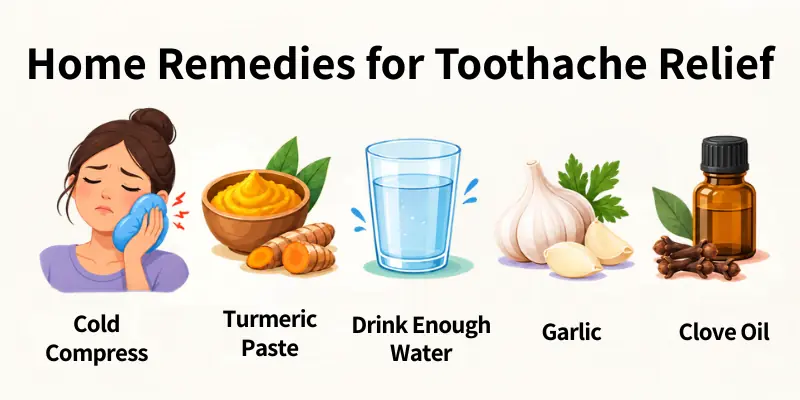
Choose gentle options and avoid anything that makes the pain or irritation worse. Here are some simple remedies you can try at home:
- Warm Salt Water Rinse
- Cold Compress
- Clove Oil
- Garlic
- Peppermint Tea Bag
- Diluted Hydrogen Peroxide Rinse
- Gentle Brushing and Flossing
- Turmeric Paste
- Drinking Enough Water
- Elevating Your Head While Sleeping
Let’s look at how to use these remedies safely for toothache relief.
1. Warm Salt Water Rinse
A warm salt water rinse is one of the simplest toothache remedies at home. It can help clean the mouth, loosen food particles, and soothe irritated gums. This may provide temporary relief when tooth pain comes with mild gum irritation.
It is easy to prepare and does not require any special ingredients. You can use it when your mouth feels sore or uncomfortable.
How to use it:
- Mix ½ teaspoon of salt into a cup of warm water.
- Swish the solution around your mouth for about 30 seconds.
- Spit it out and do not swallow it.
- Repeat a few times a day as needed.
Tip: Use warm water rather than very hot water to avoid irritating sensitive teeth or gums.
2. Cold Compress
A cold compress can help reduce toothache discomfort, especially when you have swelling around the tooth or jaw. The cold may numb the area and reduce inflammation for a short time.
It can be a useful option when you want natural ways to relieve tooth pain at home. It may also help make throbbing pain feel more manageable while you arrange dental care.
How to use it:
- Wrap a few ice cubes in a clean towel or cloth.
- Hold the compress against the outside of your cheek near the painful area.
- Keep it in place for about 15 to 20 minutes.
- Take a break before applying it again if needed.
Tip: Never place ice directly on your skin or gums, as it can cause irritation or tissue damage.
3. Clove Oil
Clove oil is a traditional home remedy that may help temporarily ease toothache because it contains eugenol, a compound that can have a mild numbing effect. It may make tooth pain feel less noticeable for a short time, but it does not treat cavities, infections, or other dental problems.
Clove oil is strong, so it should not be applied directly to the gums or used in large amounts. Use only a small amount of diluted clove oil and stop if you notice burning or irritation.
How to use it:
- Mix 1 drop of clove oil with a small amount of a carrier oil.
- Dip a clean cotton swab into the diluted mixture.
- Gently apply a small amount around the painful tooth.
- Avoid swallowing the oil.
Tip: Never use undiluted clove oil directly on your gums or tooth because it may irritate the tissues.
4. Garlic
Garlic is sometimes used as a traditional home remedy for toothache. It contains allicin, a compound with antimicrobial properties, but there is limited evidence that garlic can treat the underlying cause of tooth pain.
Raw garlic can irritate or burn the gums, so it is important to use caution. If you choose to try garlic, avoid leaving raw garlic directly against your tooth or gums for an extended period.
How to use it:
- Crush a small piece of fresh garlic into a soft paste.
- Keep the amount very small.
- Avoid pressing the garlic directly into the gums or an open area.
- Remove it quickly if you notice burning or irritation.
- Rinse your mouth thoroughly with water afterward.
Tip: Stop using garlic immediately if it causes burning, irritation, or increased pain. Garlic should not replace dental treatment for a cavity, infection, or damaged tooth.
5. Peppermint Tea Bag
A peppermint tea bag may help soothe mild tooth discomfort because peppermint has a cooling effect. It can make the painful area feel more comfortable for a short time.
This is one of the simple remedies for tooth pain you can try at home. It may also help calm mild gum irritation while you arrange proper dental care.
How to use it:
- Steep a peppermint tea bag in hot water for a few minutes.
- Let it cool until it is warm or slightly chilled.
- Place it gently against the painful area for a few minutes.
- Remove it and rinse your mouth if needed.
Tip: Do not use a very hot tea bag, as heat can worsen pain or irritate sensitive gums.
6. Diluted Hydrogen Peroxide Rinse
A properly diluted hydrogen peroxide rinse may help clean the mouth and reduce bacteria around the teeth and gums. However, it should not be used as a treatment for cavities, infections, or other causes of toothache.
If you choose to use hydrogen peroxide, follow the dilution and safety instructions on the product label or ask a dentist or pharmacist for guidance. Never swallow hydrogen peroxide, and stop using it if it causes burning, irritation, or discomfort.
How to use it:
- Use only a product intended for oral use and follow its label directions.
- Swish the recommended amount around your mouth as directed.
- Spit it out completely.
- Rinse your mouth with plain water afterward if the product instructions recommend it.
Tip: Never swallow hydrogen peroxide or use a concentrated solution in your mouth.
7. Gentle Brushing and Flossing
Keeping your mouth clean can help reduce irritation when you have tooth pain. Gentle brushing and flossing can remove plaque and food particles that may make the discomfort worse.
This simple step can support oral hygiene while you try other best home remedies for toothache. Be gentle around the painful area to avoid further irritation.
How to do it:
- Brush your teeth gently with a soft-bristled toothbrush.
- Floss carefully around the painful tooth to remove trapped food.
- Rinse your mouth with water after cleaning.
Tip: Avoid aggressive brushing or forcing floss between sore or swollen gums.
8. Turmeric Paste
Turmeric is a traditional home remedy that contains curcumin, a compound with anti-inflammatory properties. A small amount of turmeric paste may help soothe mild gum irritation and provide temporary comfort, but it cannot treat the underlying cause of a toothache.
Use turmeric gently and avoid applying it to damaged or open areas in the mouth. It should only be used as a temporary comfort measure while you arrange proper dental care if the pain continues.
How to use it:
- Mix a small amount of turmeric with a few drops of water to make a paste.
- Apply a small amount around the sore area.
- Leave it for a few minutes.
- Gently rinse your mouth with water.
Tip: Stop using turmeric if it irritates, burning, or increased discomfort. Avoid applying it to an open wound.
9. Drinking Enough Water
Drinking enough water can help keep your mouth moist and wash away food particles that may contribute to discomfort. Good hydration also supports normal saliva production, which helps protect your teeth and gums.
If you are looking for natural remedies for toothache, staying hydrated is a simple step to include in your daily routine. You can also read our guide on the benefits of drinking water to learn more about proper hydration.
How to stay hydrated:
- Drink water regularly throughout the day.
- Rinse your mouth with plain water after meals.
- Choose water instead of sugary drinks when possible.
Tip: Avoid very cold water if cold temperatures make your tooth pain worse.
10. Elevating Your Head While Sleeping
Tooth pain can feel worse at night, especially when you lie completely flat. Elevating your head slightly may help reduce pressure and make throbbing discomfort easier to manage.
This simple step can be helpful if you are looking for toothache remedies at home and need temporary relief while trying to sleep. It does not treat the cause of the toothache, so persistent pain still needs dental care.
How to do it:
- Use an extra pillow to keep your head slightly elevated.
- Keep your head and upper body comfortably supported.
- Avoid sleeping directly on the side of the painful tooth.
Tip: Choose a comfortable sleeping position that does not strain your neck.
What to Avoid When You Have a Toothache
Some foods, drinks, and habits can make tooth pain worse. Avoiding these triggers can help prevent extra irritation and keep the painful area more comfortable. It is also important to avoid home treatments that may damage your teeth or gums.
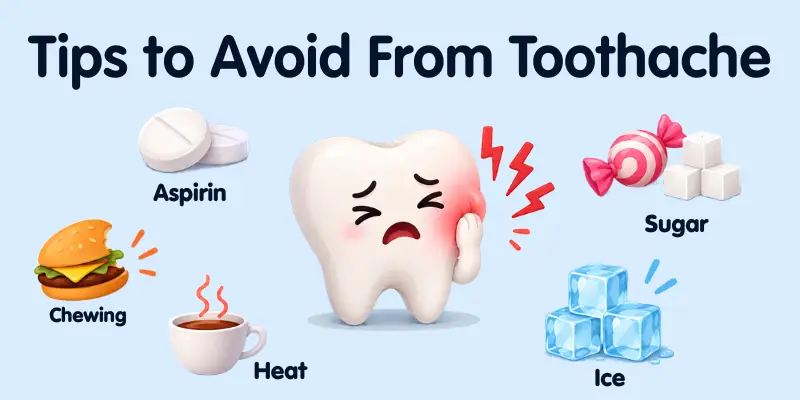
Small changes can make tooth pain easier to manage while you arrange dental care. Keep these things in mind when you have a toothache:
- Heat: Avoid very hot foods and drinks that may increase sensitivity or discomfort.
- Sugar: Limit sugary foods and drinks that can worsen tooth problems.
- Chewing: Avoid chewing on the painful side to reduce pressure on the tooth.
- Aspirin: Never place aspirin directly on your tooth or gums because it can irritate the tissue.
- Ice: Do not place ice directly on your tooth or gums because extreme cold may increase sensitivity.
- Delay: Do not ignore severe or persistent tooth pain, as it may need professional treatment.
When to See a Dentist for Tooth Pain
Home remedies may provide temporary comfort, but they cannot treat the underlying cause of tooth pain. Some symptoms can point to a cavity, infection, damaged tooth, or another dental problem that needs professional care.
Getting treatment early can help prevent the problem from becoming more serious. See a dentist if you notice any of these signs:
- Severe Pain: Get dental care if the pain is intense or makes it difficult to eat or sleep.
- Persistent Pain: See a dentist if the pain lasts more than 1–2 days or keeps returning.
- Swelling: Facial, cheek, or gum swelling may indicate an infection that needs treatment.
- Fever: A fever along with tooth pain can be a sign of infection.
- Pus: Pus around the gums or tooth may indicate a dental infection.
- Difficulty: Seek prompt care if swelling or pain makes it difficult to open your mouth.
- Damage: A broken, cracked, or badly damaged tooth should be checked by a dentist.
Conclusion
In this guide, we covered simple home remedies for toothache that may help ease mild tooth pain and discomfort at home. We also discussed what to avoid and signs that mean you should see a dentist.
Home remedies can provide temporary relief, but they cannot fix cavities, infections, or damaged teeth. If your pain is severe, keeps coming back, or comes with swelling or fever, seek professional dental care.
FAQs About Home Remedies for Toothache
Here are some common questions readers may have about home remedies for toothache.
1. What is the fastest home remedy for toothache?
A warm salt water rinse may provide temporary relief from mild tooth pain. A cold compress can also help reduce swelling and numb the painful area. These methods do not treat the underlying cause of the toothache.
2. How can I relieve toothache at night?
You can try a few simple steps to make tooth pain more manageable at night.
- Elevate: Keep your head slightly raised with an extra pillow.
- Compress: Apply a cold compress to the outside of your cheek.
- Clean: Gently clean your mouth before going to bed.
- Avoid: Stay away from foods or drinks that trigger your tooth pain.
3. Can salt water help with tooth pain?
Yes, rinsing with warm salt water can help clean the mouth and soothe irritated gums. It may also help loosen food particles around the painful area. Use it as temporary toothache relief rather than a replacement for dental treatment.
4. Can clove oil stop a toothache?
Clove oil may temporarily numb tooth pain because it contains eugenol. Always dilute clove oil before applying a small amount around the painful tooth or gum. Stop using it if you experience burning or irritation.
5. What can I do for a toothache caused by a cavity?
Home remedies for cavity pain may provide temporary comfort but cannot repair the cavity. A dentist may need to treat the decay and restore the affected tooth. Avoid delaying treatment if the pain continues or gets worse.
6. Can home remedies cure a toothache?
Home remedies may provide temporary relief, but they cannot cure most causes of toothache. Cavities, infections, cracks, and other dental problems may need professional treatment. See a dentist if your pain continues, returns, or becomes severe.
7. What should I avoid when I have a toothache?
Avoid foods and habits that can increase tooth sensitivity or irritate your gums.
- Hot Foods: Avoid very hot foods and drinks if they increase pain.
- Cold Foods: Limit very cold foods and drinks if your teeth feel sensitive.
- Sugary Foods: Reduce sugary foods and drinks that can worsen dental problems.
- Chewing: Avoid chewing on the painful side.
- Aspirin: Never place aspirin directly on your tooth or gums.
8. Can a toothache go away on its own?
A mild toothache may sometimes improve temporarily, but the underlying problem may remain. Pain caused by a cavity, infection, or damaged tooth usually needs dental treatment. See a dentist if the pain lasts more than one or two days.
9. How can I relieve severe tooth pain at home?
A cold compress and keeping your head elevated may provide temporary relief from severe tooth pain. Avoid putting harsh substances directly on the tooth or gums. Severe pain needs prompt dental attention because it may signal a deeper problem.
10. When should I see a dentist for tooth pain?
Some toothache symptoms need professional dental care rather than home treatment.
- Severe Pain: See a dentist if the pain is intense or persistent.
- Swelling: Facial or gum swelling may indicate an infection.
- Fever: Fever with tooth pain can be a sign of infection.
- Pus: Pus around the tooth or gums needs dental attention.
- Difficulty: Seek care if you have trouble opening your mouth.
- Damage: Get a broken or damaged tooth checked by a dentist.




- Be Respectful
- Stay Relevant
- Stay Positive
- True Feedback
- Encourage Discussion
- Avoid Spamming
- No Fake News
- Don't Copy-Paste
- No Personal Attacks
- Be Respectful
- Stay Relevant
- Stay Positive
- True Feedback
- Encourage Discussion
- Avoid Spamming
- No Fake News
- Don't Copy-Paste
- No Personal Attacks
