Postpartum Mental Health Tips: 15+ Ways to Stay Well
Published: 9 Jul 2026
Having a baby is one of the most joyful experiences in life, but it can also be very challenging. Many new parents face emotional changes after childbirth, ranging from mild mood swings to severe depression.
Postpartum mental health affects not only the mother but also the baby and the family. Taking care of your mental health early improves recovery and strengthens your bond with your child. Simple steps can make a big difference in coping with stress and preventing serious conditions.
In this guide, we will cover the best postpartum mental health tips that are easy to follow and backed by medical experts.
Why Postpartum Mental Health Matters
Postpartum mental health is essential for the well-being of both parents and babies. Mild emotional changes, like baby blues, are normal, but prolonged sadness or anxiety may indicate postpartum depression.
About 15% of women experience postpartum depression, and 1 in 1,000 may develop postpartum psychosis. Early support, self-care, and treatment can prevent serious complications.
Recognizing symptoms and seeking help is a sign of strength. Let’s now explore the best postpartum mental health tips in detail.
18 Best Postpartum Mental Health Tips
Here are best tips to follow t overcome the postpartum depression:
- Recognize the Baby Blues
- Know the Signs of Postpartum Depression
- Be Open About Your Feelings
- Ask for Help Early
- Prioritize Sleep
- Maintain a Healthy Diet
- Stay Physically Active
- Practice Mindfulness and Relaxation
- Set Realistic Expectations
- Limit Visitors and Social Pressure
- Foster Your Relationship with Your Partner
- Prioritize Self-Care
- Join Support Groups
- Keep Track of Your Symptoms
- Consider Therapy or Counseling
- Medication When Needed
- Bond with Your Baby
- Watch for Red Flags
Let us learn about each in detail.
1. Recognize the Baby Blues
Baby blues affect most new mothers in the first week after delivery. Symptoms include tearfulness, mood swings, and mild anxiety. They usually resolve within two weeks without treatment.
Understanding these early emotional changes helps you respond appropriately. Accepting support from your partner or family can ease the transition. Remember, these feelings are common and not your fault.
Tips:
- Talk to your partner or friends
- Rest whenever possible
- Accept help with baby care
2. Know the Signs of Postpartum Depression
Postpartum depression is more severe and lasts longer than baby blues. Symptoms include persistent sadness, irritability, fatigue, and guilt. You may also feel anxious, overwhelmed, or unable to bond with your baby.
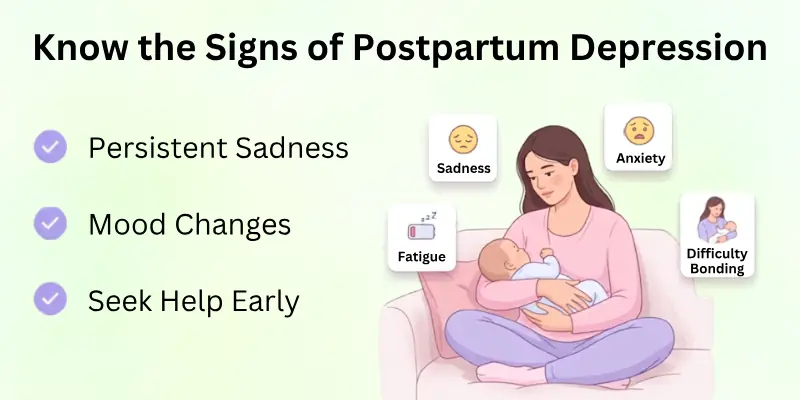
Seeking professional help early improves recovery. Treatment may include therapy, support groups, or medication. Remember, you are not alone in this.
Tips:
- Track your mood daily
- Talk to a healthcare provider
- Reach out for emotional support
3. Be Open About Your Feelings
Expressing your emotions prevents stress from building up. Sharing your thoughts with trusted people provides relief. Journaling can help organize your feelings and reflect on progress.
Speaking openly reduces the risk of depression worsening. Mental health check-ins with professionals are valuable. Honest conversations strengthen relationships and support networks.
Tips:
- Speak to a friend, partner, or family member
- Write down your feelings in a journal
- Join online forums or support groups
4. Ask for Help Early
Parenting is demanding and asking for help is necessary. Early support prevents feelings of isolation and burnout. Sharing responsibilities eases stress and improves mental health. Accept offers from family, friends, or community services.
Asking for help does not mean failure. It allows you to focus on recovery and bonding with your baby.
Tips:
- Delegate chores and errands
- Let someone watch the baby so you can rest
- Accept assistance without guilt
5. Prioritize Sleep
Sleep deprivation affects mood, energy, and decision-making. Short naps during the day can improve overall mental health. Sharing nighttime duties with a partner helps both parents rest.
Avoid using screens right before bedtime to improve sleep quality. Rest supports emotional stability and physical recovery. Even small amounts of sleep can make a big difference.
Tips:
- Sleep when your baby sleeps
- Share nighttime responsibilities
- Practice short relaxation routines before bed
6. Maintain a Healthy Diet
Eating well improves mood, energy, and recovery. Include protein, healthy fats, fruits, and vegetables in daily meals. Avoid skipping meals, as low blood sugar worsens anxiety and irritability.
Stay hydrated to support hormone balance and overall health. Balanced nutrition also helps breastfeeding mothers. A consistent diet improves both physical and mental well-being.
Tips:
- Eat small, frequent meals
- Include protein and fiber-rich foods
- Drink enough water throughout the day
7. Stay Physically Active
Light exercise improves mood, reduces stress, and promotes recovery. Walking, stretching, or postnatal yoga are safe ways to stay active. Exercise helps regulate hormones and increase energy levels.
Even 10–15 minutes of movement can boost mental well-being. Gradually increase intensity as your body heals. Being active also improves sleep quality and confidence.
Tips:
- Take short walks daily
- Try gentle yoga or stretching
- Increase activity gradually
8. Practice Mindfulness and Relaxation
Mindfulness helps reduce anxiety and stress. Simple techniques include deep breathing, meditation, and guided relaxation. Focusing on the present moment reduces overwhelming thoughts.
Mindfulness supports better sleep and emotional regulation. Practicing daily can strengthen resilience. Even a few minutes of calm can improve your mental health.
Tips:
- Practice deep breathing for 5–10 minutes
- Use meditation apps or guided sessions
- Focus on your baby during bonding time
9. Set Realistic Expectations
New parenthood comes with challenges and unpredictability. Setting achievable goals prevents disappointment and stress. Accept that some days will be more difficult than others. Celebrate small wins and progress.
Avoid comparing yourself to other parents. Realistic expectations reduce pressure and improve confidence.
Tips:
- Plan small, manageable tasks
- Celebrate daily accomplishments
- Avoid comparisons with other parents
10. Limit Visitors and Social Pressure
Too many visitors or unsolicited advice can increase stress. Protect early weeks at home for bonding and rest.
Communicate boundaries clearly with family and friends. Focusing on your needs and recovery is essential. Limiting distractions helps manage mood and energy. Prioritize mental health over social expectations.
Tips:
- Limit visitors during the first month
- Set clear boundaries for support
- Focus on bonding with your baby
11. Foster Your Relationship with Your Partner
Parenting stress can strain relationships. Maintaining open communication improves emotional support. Spending quality time together strengthens your partnership. Sharing responsibilities reduces burden and anxiety.
Emotional connection helps both parents cope with challenges. Work together as a team for better mental health outcomes.
Tips:
- Plan brief quality time daily
- Share household and baby care tasks
- Communicate openly about feelings and concerns
12. Prioritize Self-Care
Self-care is not selfish; it is essential for mental health. Taking short breaks restores energy and reduces stress.
Doing activities you enjoy improves mood and motivation. Small routines, like reading, listening to music, or a bath, help recovery. Prioritizing yourself allows better care for your baby. Consistency matters more than duration for self-care activities.
Tips:
- Take small breaks during the day
- Engage in hobbies you enjoy
- Practice relaxation techniques
13. Join Support Groups
Support groups provide connection and understanding. Sharing experiences reduces isolation and normalizes emotions. You can learn coping strategies from other parents. Emotional support helps prevent severe depression.
Both online and in-person groups are beneficial. Being part of a community improves overall mental health.
Tips:
- Join local or online postpartum groups
- Share experiences and coping methods
- Participate in discussions without judgment
14. Keep Track of Your Symptoms
Monitoring mood and behavior helps detect postpartum depression early. Note sleep patterns, appetite, mood swings, and energy levels. Regular tracking informs your healthcare provider about progress.
Awareness allows early intervention if symptoms worsen. Tracking also provides insight into triggers and improvements. This makes treatment more effective and personalized.
Tips:
- Keep a daily journal
- Note any changes in mood or energy
- Share observations with your healthcare provider
15. Consider Therapy or Counseling
Professional counseling supports emotional recovery. Cognitive behavioral therapy (CBT) is effective for postpartum depression and anxiety. Therapy provides strategies to cope with stress and mood swings.
Telehealth options make therapy more accessible. Consistent sessions improve mental resilience. Therapy helps you regain confidence and bonding ability.
Tips:
- Seek licensed therapists experienced with postpartum care
- Attend sessions regularly
- Explore online or in-person therapy options
16. Medication When Needed
Antidepressants or anti-anxiety medications may help moderate to severe symptoms. Consult a healthcare provider for safety and dosage. Many medications are safe while breastfeeding.
Medications balance hormones and improve mood. Consistency and medical supervision are essential. Combining medication with therapy often gives the best results.
Tips:
- Discuss medication options with your doctor
- Follow prescribed treatment consistently
- Never stop medication without guidance
17. Bond with Your Baby
Bonding improves emotional well-being for both parent and baby. Skin-to-skin contact and gentle talking strengthen attachment. Physical closeness supports hormone regulation and reduces stress.
Positive interaction boosts confidence in parenting abilities. Bonding also helps baby feel secure and loved. Consistent bonding time enhances mental health.
Tips:
- Hold and cuddle your baby daily
- Talk, sing, or read to your baby
- Use skin-to-skin contact whenever possible
18. Watch for Red Flags
Immediate attention is necessary for severe symptoms. Call emergency services if you have thoughts of harming yourself or your baby. Other warning signs include extreme agitation, hallucinations, or panic attacks.
Early intervention prevents complications. Your healthcare provider can guide treatment effectively. Awareness saves lives.
Tips:
- Call 911 or a crisis line in emergencies
- Contact your doctor if symptoms worsen
- Do not ignore severe emotional changes
How to Take Care of Your Mental Health in One Go
Combining multiple strategies simplifies postpartum care. Balance rest, nutrition, gentle exercise, therapy, and support. Creating a daily routine reduces stress and improves mood. Small, consistent steps are more effective than trying to do everything at once.
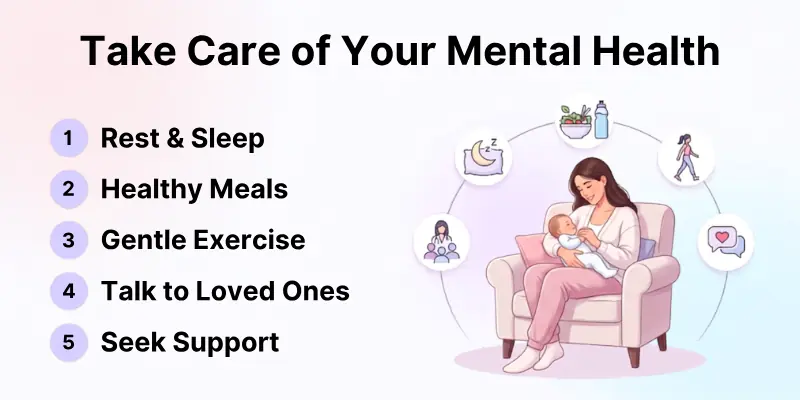
Support networks, mindfulness, and bonding with your baby all work together. This holistic approach ensures long-term mental health recovery.
Quick Tips:
- Prioritize rest and sleep
- Eat balanced meals and stay hydrated
- Move your body gently each day
- Talk openly with loved ones
- Seek therapy or join support groups
Final Note
In this guide, we have covered the best postpartum mental health tips to help new parents care for themselves after childbirth.
Personally, I highly recommend paying close attention to your emotional well-being and not ignoring the signs of baby blues or postpartum depression.
Make time for sleep, eat nourishing meals, and don’t hesitate to reach out for professional help or talk to someone you trust. Gentle exercise, self-care moments, and support from friends or family can make a huge difference in your recovery.
Remember, every parent’s journey is unique, so listen to your body and mind, and take one step at a time. Seeking help is a sign of strength, and you are never alone in this journey.
FAQs
Here are some of the most commonly asked questions related to the postpartum mental health tips:
Postpartum depression is a type of depression that happens after having a baby. It includes symptoms like sadness, fatigue, mood swings, and trouble bonding with your baby. It can appear within days or even months after childbirth. Treatment with therapy or medication is often effective.
Baby blues are mild and usually last about two weeks. Postpartum depression is more severe and lasts longer. Symptoms include extreme sadness, anxiety, guilt, and fatigue. Postpartum depression often requires professional help to recover.
Yes, both fathers and partners can experience postpartum depression. Around 4% of fathers may develop symptoms like low mood, anxiety, or irritability. Support and therapy are important for partners as well. Early recognition helps improve recovery for the whole family.
Postpartum anxiety includes excessive worrying, panic attacks, or feeling constantly on edge. It can also cause trouble sleeping or concentrating. These symptoms may interfere with daily life or caring for your baby. Talking to a healthcare provider helps manage anxiety effectively.
You can cope by resting whenever possible and eating nutritious meals. Gentle exercise, journaling, and mindfulness help reduce stress. Talking openly with friends or joining support groups also provides relief. Self-care is important for recovery.
Yes, therapy is very effective for postpartum depression and anxiety. It provides tools to manage emotions and cope with stress. Cognitive Behavioral Therapy (CBT) is often recommended. Therapy improves bonding with your baby and overall well-being.
Many medications, like certain antidepressants, are safe during breastfeeding. Your healthcare provider can guide you on the safest options. Medication helps balance mood and hormones. Combining medication with therapy often gives the best results.
Seek help if you have thoughts of harming yourself or your baby. Also get help for severe anxiety, confusion, or hallucinations. These are signs of serious postpartum conditions. Early treatment can prevent complications and protect both you and your baby.






- Be Respectful
- Stay Relevant
- Stay Positive
- True Feedback
- Encourage Discussion
- Avoid Spamming
- No Fake News
- Don't Copy-Paste
- No Personal Attacks
- Be Respectful
- Stay Relevant
- Stay Positive
- True Feedback
- Encourage Discussion
- Avoid Spamming
- No Fake News
- Don't Copy-Paste
- No Personal Attacks
