Simple Habits to Stay Fit Forever: Easy Steps for Better Health
Published: 22 Apr 2026
Staying fit doesn’t have to be complicated or time-consuming. With small, consistent habits, anyone can maintain a strong, healthy body and an energetic mind.
As a fitness expert, I’ve guided hundreds of people to develop routines that last for life. Today, I’ll share the best simple habits to stay fit forever that you can start right now.
These habits are practical, easy to follow, and require no special equipment or expensive supplements. Whether you are busy, older, or just starting your fitness journey, these tips will work for you.
Simple Habits to Stay Fit Forever
Here are 15 best habits that keep your body strong, mind alert, and energy high:
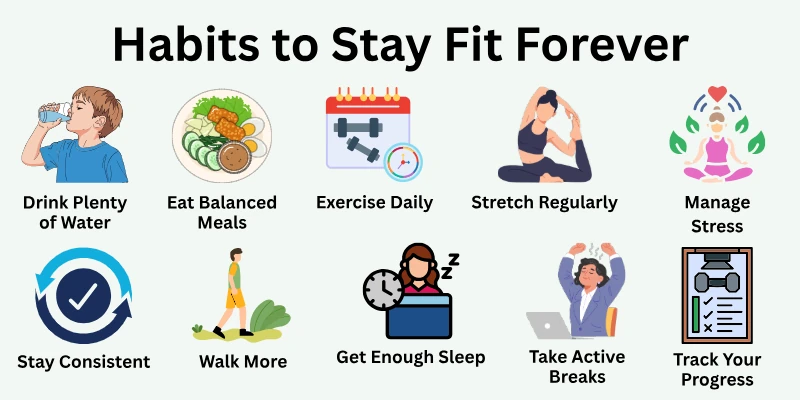
- Drink Plenty of Water
- Eat Balanced Meals
- Exercise Daily
- Get Enough Sleep
- Walk More
- Reduce Sugar Intake
- Practice Portion Control
- Include Strength Training
- Stretch Regularly
- Avoid Processed Foods
- Manage Stress
- Stay Consistent
- Take Active Breaks
- Track Your Progress
- Stay Positive
Let’s cover all of these in detail.
1. Drink Plenty of Water
Water is essential for every function in your body. It keeps your cells hydrated and helps organs work properly. Drinking enough water improves digestion and boosts metabolism. It also helps remove toxins from your system and keeps your skin glowing. Water prevents fatigue and increases energy, making it easier to stay active.
Drinking water before meals can help control appetite and reduce overeating. Consistently drinking enough water strengthens your immune system and overall health.
Tips:
- Drink at least 8–10 glasses daily
- Start your day with a glass of water
- Add lemon or herbs for flavor
2. Eat Balanced Meals
A balanced diet gives your body all the nutrients it needs for energy and growth. It helps maintain healthy weight and supports your immune system. Eating proteins, carbs, healthy fats, and fiber ensures your body functions efficiently.
A balanced diet improves mood, focus, and mental clarity. Skipping meals or eating junk food can lead to fatigue and health problems. Including a variety of foods prevents nutrient deficiencies. Balanced meals are the foundation of long-term fitness and well-being.
Tips:
- Include vegetables, fruits, and whole grains
- Eat lean proteins like chicken, eggs, or beans
- Limit fried and sugary foods
3. Exercise Daily
Daily exercise strengthens your heart, muscles, and bones. It improves stamina, flexibility, and endurance. Exercise also boosts metabolism, helping your body burn calories efficiently. Physical activity reduces stress and improves mood by releasing endorphins.
Even 30 minutes of daily movement has significant health benefits. Mixing cardio, strength, and flexibility exercises gives the best results. Exercise also improves sleep quality and overall energy levels.
Tips:
- Combine running, cycling, or swimming with bodyweight exercises
- Try fun activities like dancing or sports
- Stick to a daily schedule
4. Get Enough Sleep
Sleep is essential for recovery and mental clarity. Adults need 7–9 hours of sleep every night. Proper sleep restores energy, improves focus, and strengthens the immune system. Lack of sleep increases stress, reduces productivity, and affects mood. Sleep supports muscle recovery and prevents fatigue after exercise.
Good sleep habits reduce cravings and help maintain a healthy weight. Consistently getting enough sleep improves overall quality of life.
Tips:
- Maintain a regular sleep schedule
- Avoid screens before bedtime
- Create a calm, dark sleeping environment
5. Walk More
Walking is a simple habit with major health benefits. It improves heart health, strengthens muscles, and boosts mood. Walking after meals helps digestion and reduces bloating. Even short daily walks add up and improve overall fitness.
It is low-impact, making it suitable for all ages. Walking can be social too, allowing you to spend time with friends or family. Regular walking increases energy levels and reduces stress naturally.
Tips:
- Take stairs instead of elevators
- Walk 5–10 minutes after meals
- Aim for 8,000–10,000 steps daily
6. Reduce Sugar Intake
Too much sugar affects energy levels, weight, and overall health. High sugar intake can increase the risk of diabetes and heart disease. Reducing sugar improves energy and prevents unwanted fat gain.
Natural sugar from fruits is healthier than added sugar in snacks. Cutting sugar also reduces cravings and improves mood stability. Sugar-free alternatives and herbal drinks can help replace sugary beverages. Reducing sugar is an important step for maintaining long-term fitness.
Tips:
- Avoid candies, soda, and desserts
- Check labels for hidden sugar
- Use fruits as a natural sweetener
7. Practice Portion Control
Portion control prevents overeating and supports healthy weight management. Eating the right amounts allows your body to digest food properly. Smaller portions also help control calorie intake without starving yourself.
Mindful eating increases awareness of hunger and fullness cues. Portion control prevents energy crashes caused by overeating. It also encourages balanced nutrition in every meal. Practicing portion control is key for long-term fitness and metabolism.
Tips:
- Use smaller plates
- Avoid going back for seconds
- Eat slowly and mindfully
8. Include Strength Training
Strength training builds muscles and boosts metabolism. Muscles support joints and reduce injury risks. It also improves posture and balance.
Even light resistance exercises are highly effective at home. Consistent strength training increases calorie burn throughout the day. It enhances bone density and overall body strength. Including strength exercises 2–3 times weekly gives the best results.
Tips:
- Include squats, push-ups, or planks
- Train major muscle groups
- Gradually increase intensity
9. Stretch Regularly
Stretching improves flexibility and reduces the risk of injuries. It relieves muscle tension and improves posture. Stretching before workouts warms up muscles, while stretching after helps recovery. Regular stretching reduces stiffness and joint pain.
It also improves blood flow and body coordination. Stretching daily promotes relaxation and mental calmness. Including stretching in your routine supports long-term mobility and fitness.
Tips:
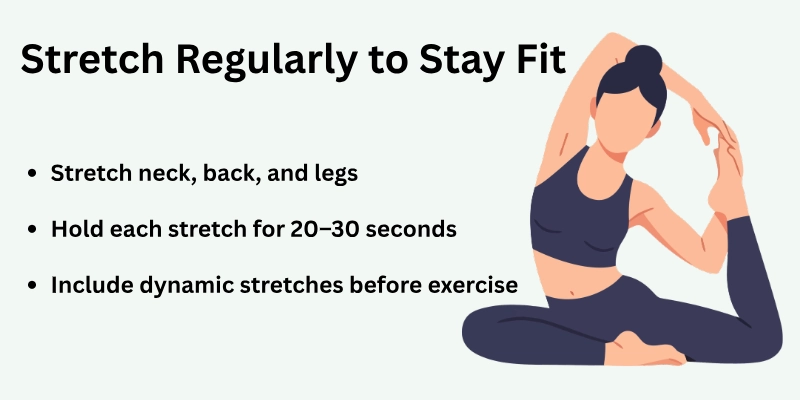
- Stretch neck, back, and legs
- Hold each stretch for 20–30 seconds
- Include dynamic stretches before exercise
10. Avoid Processed Foods
Processed foods are high in sugar, salt, and unhealthy fats. They can cause weight gain, fatigue, and chronic diseases. Eating fresh foods keeps your body nourished and energized. Home-cooked meals give better control over ingredients and portions.
Fresh fruits, vegetables, and whole grains should be prioritized. Reducing processed foods improves digestion and overall health. Avoiding processed food is essential for maintaining fitness forever.
Tips:
- Choose fresh fruits, vegetables, and grains
- Avoid fast food and packaged snacks
- Read labels carefully
11. Manage Stress
Stress negatively impacts physical and mental health. Chronic stress can lead to fatigue, weight gain, and poor immunity. Managing stress keeps your mind calm and your body healthy. Daily relaxation practices help maintain balance in life.
Exercise, meditation, and hobbies are great ways to reduce stress. Spending time with supportive people also lowers stress levels. Managing stress ensures you stay consistent in fitness routines.
Tips:
- Practice meditation or deep breathing
- Take short breaks during work
- Spend time with loved ones
12. Stay Consistent
Consistency is more important than intensity in long-term fitness. Daily habits accumulate to produce lasting results. Even small efforts every day are better than occasional extremes. Staying consistent improves endurance, strength, and overall health. It helps your body adapt and perform better over time.
Tracking progress and rewarding yourself encourages persistence. Consistency builds a lifestyle rather than just temporary results.
Tips:
- Stick to a schedule
- Track daily progress
- Reward yourself for achievements
13. Take Active Breaks
Sitting for long hours reduces metabolism and energy. Short active breaks improve circulation and focus. Movement prevents stiffness and supports weight management. Even a few minutes of stretching or walking is beneficial.
Active breaks boost productivity and mental clarity. They help maintain energy throughout the day. Including active breaks is an easy habit with big results.
Tips:
- Stand or stretch every 60 minutes
- Walk during phone calls or meetings
- Do light exercises at your desk
14. Track Your Progress
Tracking helps you stay motivated and see improvements. Recording workouts, meals, and steps provides accountability. Progress tracking allows adjustments for better results. It encourages you to celebrate small milestones.
Tracking creates a sense of achievement and discipline. It also helps identify patterns that affect fitness. Using journals or apps makes tracking easy and effective.
Tips:
- Keep a fitness journal
- Use apps for workouts or food
- Set realistic daily goals
15. Stay Positive
A positive mindset supports all fitness habits. Believing in yourself encourages consistency. Focusing on progress rather than perfection keeps motivation high. Positive thinking reduces stress and improves energy.
Surrounding yourself with encouraging people strengthens habits. Positive attitudes make workouts and healthy eating enjoyable. Staying positive ensures fitness becomes a lifelong journey.
Tips:
- Set realistic fitness goals
- Celebrate small wins
- Avoid comparing yourself to others
Final Note
In this guide, we have covered the 15 best simple habits to stay fit forever. Following these habits consistently keeps your body strong, your mind active, and your energy levels high. These are practical, easy-to-follow tips that work for anyone, regardless of age or lifestyle.
Personally, I recommend focusing on these core habits first, as they create a strong foundation for lasting wellness. Start today, stay consistent, and make these habits part of your daily routine. By committing to these 15 proven habits, staying fit becomes natural, simple, and sustainable.
Now, let’s move on to some frequently asked questions about staying fit and healthy.
FAQs
Here are some of the most commonly asked questions related to the best healthy habits to stay fit forever:
The easiest habits are drinking water, eating healthy, and moving daily. Walking, stretching, or taking small breaks helps your body stay active. Doing these every day builds strong fitness habits. Simple daily actions give long-term results.
You can exercise at home with bodyweight moves like squats, push-ups, and planks. Walking, climbing stairs, or stretching also works. Eating healthy and drinking enough water keeps you fit. You don’t need a gym to stay active.
Most people notice more energy and better mood in 2–4 weeks. Daily exercise, healthy meals, and water add up over time. Tracking your habits helps you stay consistent. Small actions every day lead to lasting results.
Yes. Water keeps your body hydrated and boosts energy. It helps digestion and controls appetite. Drinking enough water also removes toxins and supports fitness.
Eat foods rich in protein, fiber, and healthy fats. Include vegetables, fruits, whole grains, and lean protein. Avoid processed and sugary foods. Healthy meals give energy and keep your body strong.
Sleep is very important. Adults need 7–9 hours every night. Good sleep restores energy, supports workouts, and balances hormones. Without enough sleep, your fitness and focus drop.
Set small daily goals and track your progress. Celebrate small wins to stay motivated. Focus on consistency, not perfection. Positive habits grow stronger every day.
Yes. Even 10–15 minutes of exercise helps your body. Walking, stretching, or home workouts boost energy and strength. Daily movement adds up to long-term fitness.
Avoid sugary drinks, snacks, and desserts. Replace sugar with fruits or herbal tea. Reducing sugar helps control weight and energy. Cutting sugar is a simple way to stay healthy.
Yes. Believing in yourself keeps you consistent. Focusing on progress, not perfection, reduces stress. A positive mindset helps your body and mind stay fit.






- Be Respectful
- Stay Relevant
- Stay Positive
- True Feedback
- Encourage Discussion
- Avoid Spamming
- No Fake News
- Don't Copy-Paste
- No Personal Attacks
- Be Respectful
- Stay Relevant
- Stay Positive
- True Feedback
- Encourage Discussion
- Avoid Spamming
- No Fake News
- Don't Copy-Paste
- No Personal Attacks
