Pregnancy-Safe Foods List: Top Foods for a Healthy Baby
Published: 3 May 2026
Pregnancy is a crucial time for both mother and baby. Eating the right foods provides essential nutrients for fetal growth, maternal health, and overall wellbeing. A pregnancy-safe foods list ensures you know which foods to include and which to avoid, helping you make informed choices every day.
From fruits and vegetables to protein, dairy, whole grains, and healthy fats, this guide covers everything you need for a healthy pregnancy.
Eating a balanced diet during pregnancy can help:
- Support baby’s brain, bone, and organ development
- Prevent nutritional deficiencies
- Maintain maternal energy and prevent fatigue
- Reduce risks of complications like anemia, gestational diabetes, and preterm birth
This guide is structured, detailed, and easy to follow.
Let’s dive into the complete pregnancy-safe foods list.
Pregnancy-Safe Foods List
A pregnancy-safe foods list focuses on nutrient-dense, safe, and wholesome foods. Key nutrients to prioritize include:
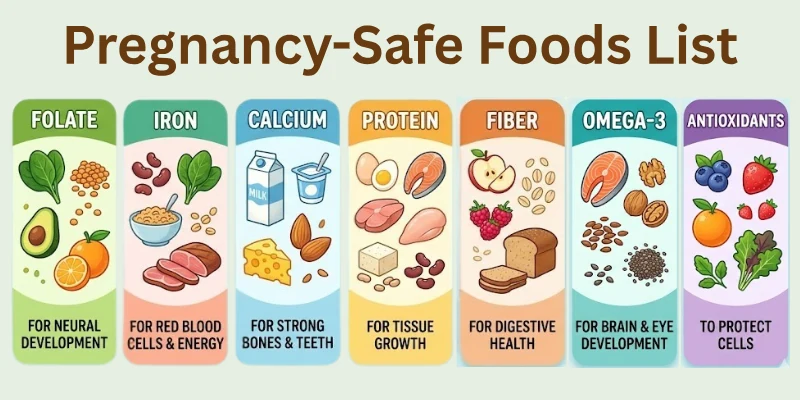
- Folate: Supports neural tube development
- Iron: Prevents anemia
- Calcium and Vitamin D: Strengthen bones and teeth
- Protein: Supports fetal growth and maternal health
- Fiber: Improves digestion
- Omega-3 fatty acids: Aid brain and eye development
- Antioxidants: Protect cells and boost immunity
Including a variety of foods ensures all these nutrients are met. A good pregnancy diet balances taste, safety, and nutrition.
Here is the list of all the best foods to eat during pregnancy:
- Leafy Green Vegetables
- Fresh Fruits
- Lean Protein
- Whole Grains
- Dairy Products
- Legumes
- Nuts and Seeds
- Eggs
- Low-Mercury Fish
- Avocados
- Sweet Potatoes
- Berries
- Carrots
- Oranges and Citrus Fruits
- Garlic
- Water
Let us cover all in detail.
1. Leafy Green Vegetables
Leafy greens such as spinach, kale, romaine, arugula, and Swiss chard are excellent pregnancy superfoods. They are loaded with folate, iron, calcium, vitamin K, and fiber, which are essential for both mother and baby.
Folate is particularly important for preventing neural tube defects in the baby. Iron supports maternal blood health and prevents fatigue, while fiber promotes healthy digestion.
These greens can be eaten raw in salads, lightly steamed, or added to soups and smoothies. Regular consumption helps maintain steady energy and overall health throughout pregnancy.
Tips:
- Consume at least 2–3 servings daily
- Add to smoothies, omelets, or soups
- Pair with vitamin C-rich foods to boost iron absorption
Quick Benefits:
- Supports fetal brain and spinal development
- Maintains maternal blood health
- Prevents constipation
2. Fresh Fruits
Fresh fruits such as oranges, berries, apples, bananas, mangoes, and pears are rich in vitamins, antioxidants, and fiber. They provide vitamin C, which improves iron absorption and strengthens the immune system. Fiber from fruits also helps prevent constipation, a common pregnancy issue.
Eating a variety of colorful fruits ensures you get a range of essential nutrients daily. Fruits can be eaten raw, in smoothies, or as healthy snacks between meals. Including fruits in your diet supports overall energy, immunity, and digestion.
Tips:
- Eat 2–4 servings of fruit per day
- Choose fresh, seasonal options
- Blend in smoothies or eat as snacks
Quick Benefits:
- Boosts immunity
- Provides natural energy
- Supports digestion
3. Lean Protein
Lean protein is crucial for fetal growth, tissue development, and maternal health. Safe sources include chicken, turkey, eggs, tofu, legumes, and lean cuts of beef or pork. Protein helps maintain maternal muscle mass, keeps you fuller for longer, and supports immune function.
Cooking all animal proteins thoroughly reduces the risk of foodborne illnesses. Protein can be incorporated into meals as a main dish, in salads, or as snacks. Consistent protein intake contributes to steady energy and healthy pregnancy progression.
Tips:
- Include a source of protein at every meal
- Combine plant and animal proteins for variety
- Avoid undercooked or raw meats
Quick Benefits:
- Supports fetal growth
- Maintains maternal energy
- Reduces fatigue
4. Whole Grains
Whole grains such as oats, brown rice, quinoa, barley, and whole wheat bread are rich in fiber, B vitamins, and iron. Fiber promotes healthy digestion and prevents constipation during pregnancy. B vitamins aid energy metabolism and support the body’s overall function. Iron from whole grains helps maintain healthy red blood cell levels.
Whole grains are a healthier alternative to refined grains, which can cause blood sugar spikes. Including them in meals provides long-lasting energy and essential nutrients for both mother and baby.
Tips:
- Eat at least 3 servings daily
- Combine with vegetables or protein for balanced meals
- Limit refined grains like white bread and white rice
Quick Benefits:
- Provides sustained energy
- Supports digestive health
- Supplies essential vitamins
5. Dairy Products
Dairy products like milk, yogurt, and cheese are excellent sources of calcium, protein, and vitamin D. Calcium and vitamin D help strengthen the baby’s bones and teeth while supporting maternal bone health. Yogurt contains probiotics that improve gut health and digestion.
Choosing pasteurized dairy products reduces the risk of foodborne illnesses. Both low-fat and full-fat options are safe when consumed in moderation. Regular intake of dairy ensures adequate nutrients and helps maintain energy levels throughout pregnancy.
Tips:
- Include 2–3 servings daily
- Add yogurt to smoothies or breakfast bowls
- Check labels for pasteurization
Quick Benefits:
- Strengthens bones and teeth
- Supports protein needs
- Promotes healthy gut flora
6. Legumes
Legumes, including beans, lentils, chickpeas, and peas, provide plant-based protein, fiber, folate, and iron. Folate is essential for fetal neural development, and iron supports maternal blood health.
Fiber aids digestion and prevents constipation, a common pregnancy issue. Legumes can be used in soups, salads, curries, or snacks. Pairing legumes with vitamin C-rich foods helps improve iron absorption. Including legumes regularly contributes to overall nutrient intake and energy maintenance.
Tips:
- Eat 1–2 servings daily
- Combine with vitamin C-rich foods for better iron absorption
- Soak beans overnight to reduce digestive discomfort
Quick Benefits:
- Supports fetal development
- Maintains maternal digestion
- Provides plant-based protein
7. Nuts and Seeds
Nuts and seeds such as almonds, walnuts, chia seeds, flax seeds, and pumpkin seeds are packed with healthy fats, protein, fiber, and minerals. Omega-3 fatty acids from these foods support fetal brain and eye development. They can be eaten as a small handful daily or added to meals for extra nutrients.
Nuts and seeds are versatile for snacks, smoothies, cereals, or yogurt toppings. Avoid products with added sugars or hydrogenated oils for best benefits. Regular consumption supports maternal health, energy, and fetal development.
Tips:
- Snack on raw or roasted unsalted nuts
- Add seeds to smoothies, cereals, or yogurt
- Avoid nut butters with added sugars or hydrogenated oils
Quick Benefits:
- Supports baby’s brain and eye development
- Provides essential minerals
- High in healthy fats
8. Eggs
Eggs are a complete protein source and contain choline, which is vital for fetal brain and spinal development. They also provide vitamin B12, vitamin D, and other essential nutrients. Fully cooked eggs reduce the risk of salmonella infection.
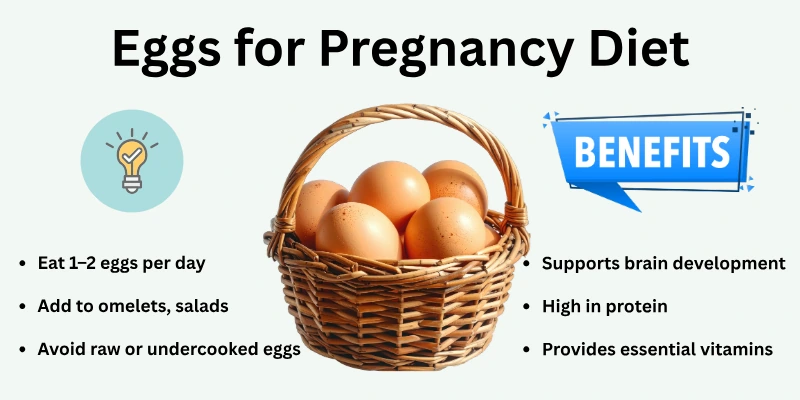
Eggs are versatile and can be included in breakfast, lunch, or dinner. Regular consumption contributes to maternal energy and supports healthy fetal growth. Eggs are a convenient and nutrient-rich option for pregnancy diets.
Tips:
- Eat 1–2 eggs per day
- Add to omelets, salads, or sandwiches
- Avoid raw or undercooked eggs
Quick Benefits:
- Supports brain development
- High in protein
- Provides essential vitamins
9. Low-Mercury Fish
Low-mercury fish like salmon, sardines, trout, and herring are safe and nutritious during pregnancy. They provide protein, omega-3 fatty acids, and vitamin D. Omega-3 supports fetal brain and eye development. Fish should be cooked thoroughly to avoid contamination. Avoid high-mercury fish such as shark, swordfish, and king mackerel. Regular inclusion of safe fish supports healthy growth and development for both mother and baby.
Tips:
- Pair with vegetables for a balanced meal
- Use steaming, baking, or grilling
- Avoid raw sushi
Quick Benefits:
- Supports fetal brain and vision
- Provides protein
- Low in harmful toxins
10. Avocados
Avocados are rich in healthy monounsaturated fats, folate, and fiber. Folate supports neural tube development, while healthy fats help absorb vitamins. Fiber aids digestion and helps prevent constipation.
Avocados can be added to salads, sandwiches, or smoothies for nutrient boost. Including avocados regularly helps maintain steady energy and supports overall maternal health. They are versatile, safe, and nutrient-dense for pregnancy diets.
Tips:
- Eat half an avocado daily
- Use as a spread instead of butter
- Combine with fruits for smoothies
Quick Benefits:
- Supports fetal brain development
- Provides healthy fats
- Aids digestion
11. Sweet Potatoes
Sweet potatoes are rich in beta-carotene, vitamin C, and fiber. Beta-carotene converts to vitamin A, supporting fetal vision and immune function. They also provide complex carbohydrates for sustained energy.
Sweet potatoes can be baked, roasted, or steamed for easy inclusion in meals. Regular consumption contributes to maternal energy and overall fetal development. They are a healthy, versatile addition to any pregnancy-safe diet.
Tips:
- Eat 3–4 servings per week
- Combine with lean protein
- Avoid excessive added sugar
Quick Benefits:
- Supports fetal vision and immunity
- High in fiber
- Provides long-lasting energy
12. Berries
Berries such as blueberries, strawberries, raspberries, and blackberries are high in vitamins, antioxidants, and fiber. Antioxidants help protect cells and reduce oxidative stress. Fiber supports digestion and prevents constipation.
Berries can be eaten fresh, frozen, or added to smoothies and oatmeal. Including berries daily helps boost immunity and provides essential nutrients. They are a safe and flavorful option during pregnancy.
Tips:
- Eat a handful daily
- Wash thoroughly before eating
- Add to yogurt or oatmeal
Quick Benefits:
- High in antioxidants
- Boosts immunity
- Supports healthy digestion
13. Carrots
Carrots provide beta-carotene, vitamin C, and fiber. Beta-carotene supports fetal eye and skin development, while vitamin C strengthens immunity. Fiber promotes healthy digestion and prevents constipation.
Carrots can be eaten raw, steamed, or roasted. Regular intake contributes to maternal energy and supports healthy fetal growth. They are an easy, safe, and nutrient-rich vegetable for pregnancy diets.
Tips:
- Include 2–3 servings weekly
- Combine with hummus or salads
- Avoid overcooking to preserve nutrients
Quick Benefits:
- Supports fetal vision and skin
- Promotes digestion
- Rich in antioxidants
14. Oranges and Citrus Fruits
Citrus fruits such as oranges, lemons, limes, and grapefruits are rich in vitamin C, potassium, and antioxidants. Vitamin C improves iron absorption and strengthens immunity. Citrus fruits also help prevent dehydration and maintain electrolyte balance.
They can be eaten fresh or as juice without added sugar. Regular consumption supports maternal health and fetal growth. Citrus fruits are versatile and safe for pregnancy diets.
Tips:
- Eat daily or as juice
- Avoid added sugars
- Pair with leafy greens for better absorption
Quick Benefits:
- Boosts immunity
- Supports iron absorption
- Prevents dehydration
15. Garlic
Garlic contains antioxidants and compounds that support heart health and immunity. Regular consumption may also improve maternal wellbeing and overall vitality. Garlic can be eaten raw or cooked in moderation.
It can be included in soups, stir-fries, dressings, or sauces. Adding garlic to meals enhances flavor while providing pregnancy-safe health benefits. Consistent intake supports overall maternal and fetal health.
Tips:
- Add to soups, stir-fries, or dressings
- Limit raw consumption to avoid digestive upset
- Safe and flavorful seasoning
Quick Benefits:
- Supports immunity
- Enhances cardiovascular health
- Natural flavor booster
16. Water
Staying hydrated with water is essential for pregnancy. Water supports blood volume, amniotic fluid, kidney function, and digestion. Drinking 8–10 glasses daily helps reduce swelling, fatigue, and constipation.
Hydration also improves nutrient delivery to the baby and helps maintain maternal energy. Include fruits and vegetables with high water content to complement intake. Limiting sugary and caffeinated drinks ensures safe hydration during pregnancy.
Tips:
- Carry a reusable water bottle
- Include fruits and vegetables with high water content
- Limit caffeinated drinks
Quick Benefits:
- Maintains hydration
- Supports fetal and maternal health
- Reduces swelling
When to Consult a Doctor or Nutritionist
It’s important to reach out to a doctor or nutritionist at any point you feel unsure about your diet or pregnancy-safe foods. Every pregnancy is different, and some women may need extra guidance based on health history, weight changes, or nutrient deficiencies.
A specialist can check your blood levels, review your symptoms, and help create a meal plan tailored to your needs. Professional advice ensures you avoid unsafe foods, meet your nutrient goals, and support both your health and your baby’s development.
Tips:
- Contact a doctor if you experience nausea, fatigue, or appetite loss
- Ask for a nutrition evaluation if you have anemia, diabetes, or food restrictions
- Seek guidance before taking supplements or herbal products
- Book follow-ups if sudden weight gain or loss occurs
Quick Benefits:
- Ensures safe, personalized nutrition
- Helps prevent deficiencies and complications
- Gives expert support throughout pregnancy
Final Note
In this guide, we have covered the complete pregnancy-safe foods list and explained how each food supports your health and your baby’s development. You now know what to eat, how much to eat, and how to build a balanced plan that nourishes your body every day. If you follow these safe food choices, you give yourself a stronger, healthier pregnancy journey.
Personal Advice:
Always listen to your body. Eat slowly, chew well, and stop when you feel full. cravings are normal, but balance them with nutritious meals. Keep your stress low, sleep well, and move your body lightly every day. Small daily habits make a big difference for you and your baby.
Thank you for reading, see you in the FAQs below!
FAQs
Here are some of the most commonly asked questions related to the best pregnancy-safe foods list:
The safest foods include fruits, vegetables, whole grains, lean proteins, nuts, seeds, and dairy. These foods give you essential nutrients for growth and energy. They also support digestion and prevent deficiencies. Choose fresh foods and cook them properly.
Avoid raw meats, unpasteurized dairy, high-mercury fish, raw eggs, and processed deli meats. These foods can carry bacteria or heavy metals. They increase the risk of infections. Always choose clean, cooked, and freshly prepared meals.
Aim for three balanced meals and two to three healthy snacks. Eating every few hours keeps your blood sugar stable. It also reduces nausea and fatigue. Small meals help improve digestion and comfort.
Yes, you can eat low-mercury fish like salmon, trout, sardines, and herring. These fish provide omega-3s that support brain and eye development. Avoid high-mercury fish such as shark and swordfish. Always cook fish fully.
Yes, but keep it limited. Up to 200 mg of caffeine per day is safe for most women. Too much caffeine may affect sleep and increase anxiety. Choose decaf if you want more than one cup.
Oranges, berries, bananas, and apples are top choices. They give vitamins, antioxidants, and natural energy. These fruits also help digestion and improve immunity. Fresh and washed fruit is always safest.
You still need prenatal vitamins for folic acid, iron, and vitamin D. Food gives nutrients, but supplements fill any gaps. Always ask your doctor before starting anything new. Personalized guidance keeps you safe.
Most women need 8–10 glasses of water daily. Proper hydration supports blood flow, amniotic fluid, and digestion. It also reduces swelling and headaches. Drink more water in hot weather or after activity.
Yes, nuts and seeds are safe and healthy. They provide protein, minerals, and healthy fats. A small handful daily boosts energy and supports fetal development. Choose unsalted and natural options.
Start with vegetables, add lean protein, include whole grains, and finish with fruits and healthy fats. This mix gives complete nutrition. Eat at regular times and adjust portions to your hunger. A simple structure helps you stay consistent.





- Be Respectful
- Stay Relevant
- Stay Positive
- True Feedback
- Encourage Discussion
- Avoid Spamming
- No Fake News
- Don't Copy-Paste
- No Personal Attacks
- Be Respectful
- Stay Relevant
- Stay Positive
- True Feedback
- Encourage Discussion
- Avoid Spamming
- No Fake News
- Don't Copy-Paste
- No Personal Attacks
