Best Exercises During Pregnancy: Safe Fitness Tips for Moms
Published: 4 May 2026
Pregnancy is an exciting and transformative time, but it also brings many changes to your body. Staying active is one of the best ways to maintain physical fitness, improve mood, and prepare your body for labor.
Exercising safely during pregnancy can help reduce back pain, improve circulation, boost energy, manage stress, and even support postpartum recovery.
This guide covers best exercises during pregnancy, each trimester, their benefits, safety tips, and ways to stay active both at home and at the gym.
Cardio Exercises for All Trimesters
Cardiovascular exercises keep your heart, lungs, and muscles strong throughout pregnancy. Safe options include:
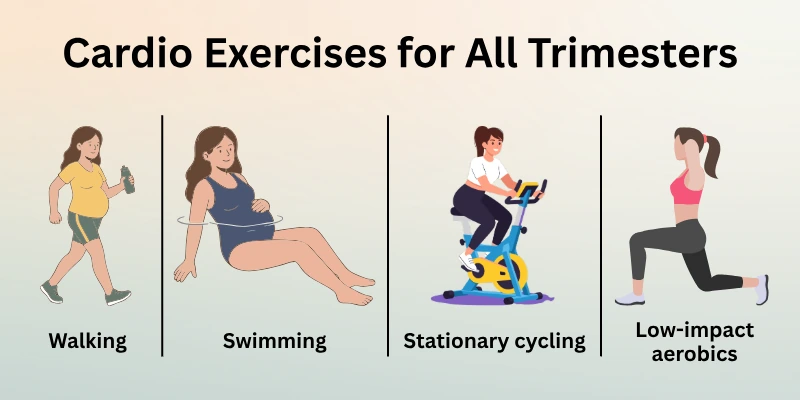
- Walking
- Swimming
- Stationary cycling
- Low-impact aerobics
Let us learn about each in detail.
1. Walking
Walking is one of the safest and easiest exercises during pregnancy. You can do it anywhere, at your own pace, and it keeps your heart healthy. Walking helps improve circulation, reduce swelling in your legs, and boosts energy.
It’s gentle on your joints and great for managing weight gain. You can do short walks throughout the day or one longer session.
Tips:
- Walk at a comfortable pace, not too fast
- Use supportive shoes to protect your feet and back
- Try walking outdoors for fresh air and mood boost
- Aim for 20–30 minutes daily
2. Swimming
Swimming is a full-body workout that feels weightless, making it perfect for pregnancy. The water supports your belly, reducing stress on joints and back. Swimming strengthens your muscles, improves circulation, and cools you down during warm days. It also relieves swelling in your legs and ankles. You can do simple strokes or gentle water aerobics.
Tips:
- Swim at a comfortable pace, avoid overexertion
- Use pool noodles or floats for extra support
- Take breaks if you feel tired
- Enjoy the water, it’s relaxing and refreshing
3. Stationary Cycling
Stationary cycling is a safe cardio option that keeps you off your feet while boosting heart health. It strengthens your legs and improves stamina without putting pressure on your joints. You can adjust the bike’s resistance to match your energy level.
Cycling helps with endurance for labor and keeps circulation strong. You can also watch a show or listen to music while pedaling.
Tips:
- Keep the seat height comfortable for your belly
- Maintain an upright posture to protect your back
- Pedal at a steady, moderate pace
- Cycle 20–30 minutes, a few times per week
4. Low-Impact Aerobics
Low-impact aerobics includes gentle movements like stepping, side-steps, and small jumps. It gets your heart pumping without straining your joints.
This exercise improves coordination, strengthens muscles, and helps manage weight gain. You can join a prenatal class or follow a video at home. It’s also fun and energizing!
Tips:
- Avoid bouncing or high jumps
- Focus on controlled, smooth movements
- Include upper and lower body exercises
- Stay hydrated and listen to your body
Exercises During the First Trimester
The first trimester is a time of rapid hormonal and physical changes. Your body is adjusting, so it’s important to focus on building a foundation for strength, stability, and flexibility. Gentle exercises now prepare your muscles and core for the months ahead.
Recommended Exercises:
- Pelvic Curl
- Pelvic Brace (Kegels)
- Kneeling Pushups
- Squats
- Bicep Curls
1. Pelvic Curl
The pelvic curl strengthens your lower back, glutes, and core, which supports your growing belly. It improves spinal flexibility and helps maintain proper posture. This exercise also prepares your body for labor by engaging pelvic muscles safely.
You lie on your back, bend your knees, and slowly lift your hips while exhaling. Lower down gently, one vertebra at a time.
Tips:
- Do 12–15 repetitions per set
- Focus on slow, controlled movements
- Keep your core engaged throughout
- Breathe deeply and evenly
2. Pelvic Brace (Kegels)
Kegel exercises strengthen your pelvic floor, which supports your bladder, uterus, and bowels. Strong pelvic muscles can reduce the risk of incontinence and improve labor recovery.
You gently contract your pelvic muscles as if stopping urine flow, hold, then relax. This exercise is safe throughout pregnancy and can be done anywhere.
Tips:
- Do 2 sets of 8–15 repetitions daily
- Hold each contraction for 3–5 seconds
- Combine with gentle abdominal engagement
- Focus on smooth, controlled breathing
3. Kneeling Pushups
Kneeling pushups help strengthen your chest, shoulders, and arms safely. They also engage your core, improving stability and posture. This exercise reduces strain on your lower back compared to standard pushups. You start on your hands and knees, lower your chest toward the floor, then press back up.
Tips:
- Start with 6–10 reps and gradually increase
- Keep your core tight and back straight
- Exhale while pressing up, inhale while lowering
- Use a mat for comfort and support
4. Squats
Squats strengthen your quads, glutes, hamstrings, and core. They also improve balance and posture, which helps support your belly as it grows.
Bodyweight squats can be done safely at home or using a leg press machine at the gym. Keep your feet hip-width apart and lower yourself slowly as if sitting in a chair.
Tips:
- Do 2 sets of 15–20 reps
- Take 5 seconds to lower, 3 seconds to rise
- Keep knees behind toes and chest upright
- Use a chair for support if needed
5. Bicep Curls
Bicep curls strengthen your arms, preparing you for lifting and holding your baby. They also support posture and upper body endurance.
Use light dumbbells or resistance bands, keeping movements slow and controlled. Focus on engaging your biceps fully with each curl.
Tips:
- Do 2 sets of 10–15 reps
- Take 3 seconds to lift, 5 seconds to lower
- Keep elbows close to your body
- Combine with other upper body exercises for balance
Exercises During the Second Trimester
In the second trimester, energy often increases, and you can safely add variations while paying attention to your changing body. Avoid exercises that strain balance or involve lying flat on your back.
Recommended Exercises:
- Incline Pushups
- Side-Lying Leg Lifts
- Hip Flexor & Quadriceps Stretch
- Squat Variations
- Glute Bridges
Let us learn about each in detail.
1. Incline Pushups
Incline pushups strengthen your chest, shoulders, and triceps safely. Using a ledge or wall reduces strain on your back and core. This exercise also helps maintain upper body strength as your belly grows. Keep your body in a straight line and bend your elbows slowly as you lower yourself.
Tips:
- Do 2 sets of 10–12 reps
- Keep your core tight and back straight
- Exhale while pushing up, inhale while lowering
- Adjust the incline to control intensity
2. Side-Lying Leg Lifts
Side-lying leg lifts strengthen your hips, thighs, and glutes while improving balance. They also stabilize your pelvis, which is important as your center of gravity shifts. Lie on your side, lift the top leg slowly, then lower it gently. Keep movements controlled and avoid swinging.
Tips:
- Do 2 sets of 8–15 reps per side
- Keep your hips stacked and core engaged
- Pause at the top for extra activation
- Use a mat for comfort
3. Hip Flexor & Quadriceps Stretch
This stretch relieves tension in your hips and front thighs caused by postural changes. Stretching improves flexibility and prevents lower back or pelvic discomfort. Step into a half-kneeling position, keeping your back tall, and gently lunge forward to feel the stretch. Hold and switch sides.
Tips:
- Hold each stretch for 20–30 seconds
- Repeat 2–3 times per side
- Focus on deep, even breathing
- Avoid bouncing or overstretching
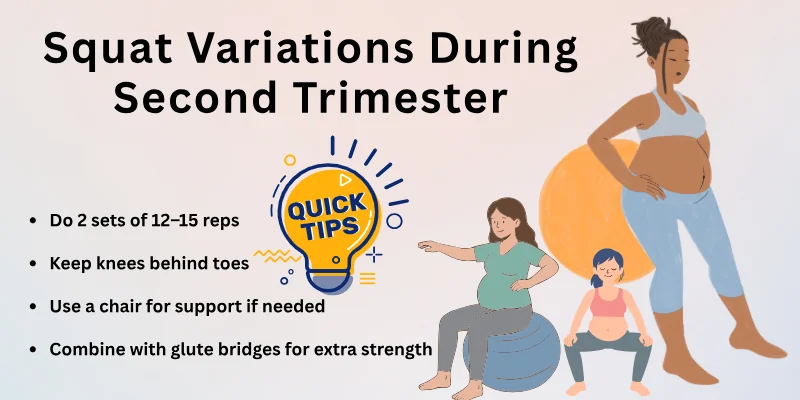
4. Squat Variations
Squat variations strengthen your lower body and improve balance. Wider or single-leg squats adjust to your changing center of gravity. Keep your chest upright and move slowly to maintain control. These squats also prepare your legs for labor and daily activities.
Tips:
- Do 2 sets of 12–15 reps
- Keep knees behind toes
- Use a chair for support if needed
- Combine with glute bridges for extra strength
5. Glute Bridges
Glute bridges strengthen your glutes, core, and lower back. They support proper posture and relieve pressure from your growing belly. Lie on your back with knees bent, lift your hips toward the ceiling, and lower slowly. Engage your core and glutes throughout the movement.
Tips:
- Do 2 sets of 12–15 reps
- Hold the top for 1–2 seconds for more activation
- Avoid arching your lower back excessively
- Can include a small ball squeeze between knees for inner thigh engagement
Exercises During the Third Trimester
In the third trimester, focus on mobility, low-impact cardio, and gentle strength exercises. Balance becomes key as your center of gravity shifts.
Recommended Exercises:
- Walking & Swimming
- Prenatal Yoga & Pilates
- Pelvic Floor Exercises
- Bodyweight Squats or Sumo Squats
- Light Dumbbell Work
- Diastasis Recti Correction
Let us learn about each in detail.
1. Walking & Swimming
Walking and swimming are excellent low-impact cardio exercises. They keep your heart, lungs, and muscles strong without stressing your joints. Swimming supports your body weight and eases pressure on your back and pelvis. Walking can be done anywhere and helps maintain stamina.
Tips:
- Aim for 20–30 minutes daily
- Keep a comfortable pace
- Wear supportive shoes or swim gear
- Stay hydrated during activity
2. Prenatal Yoga & Pilates
Prenatal yoga and Pilates improve flexibility, balance, and core strength. They also reduce stress and promote relaxation. Focus on gentle stretches, breathing exercises, and positions that support your growing belly. Avoid deep twists or poses that strain your abdomen.
Tips:
- Practice 3–4 times per week
- Focus on controlled breathing
- Use props like pillows or blocks for support
- Avoid poses that cause discomfort or dizziness
3. Pelvic Floor Exercises
Pelvic floor exercises strengthen muscles that support the bladder, uterus, and bowels. They also prepare your body for labor and help recovery postpartum. Practice Kegels by contracting and relaxing the pelvic muscles.
Tips:
- Do 2 sets of 8–15 reps, holding 3–5 seconds each
- Practice daily, multiple times if comfortable
- Engage core muscles along with pelvic floor
- Avoid holding your breath during exercises
4. Bodyweight Squats or Sumo Squats
Squats maintain lower body strength and improve stability. Sumo squats with a wider stance provide extra balance support. They strengthen glutes, quads, and hamstrings while preparing your legs for labor.
Tips:
- Perform 2 sets of 12–15 reps
- Keep knees behind toes and chest upright
- Use a chair or wall for support if needed
- Move slowly to maintain control
5. Light Dumbbell Work
Using light dumbbells strengthens your arms, shoulders, and upper back. This helps with lifting and holding your baby after birth. Focus on controlled movements and avoid heavy weights or straining.
Tips:
- Perform 2 sets of 10–15 reps
- Keep a stable stance and engage core
- Exhale while lifting, inhale while lowering
- Avoid overexertion or holding breath
6. Diastasis Recti Correction
Diastasis recti correction strengthens the abdominal muscles and prevents further separation. Use a pillow or rolled towel under your back for support. Engage your core while lifting your head and shoulders slightly, hugging the pillow gently with your arms.
Tips:
- Perform 2 sessions daily, 10–20 reps
- Focus on slow, controlled movements
- Avoid crunches or traditional sit-ups
- Breathe deeply and keep core engaged
Pregnancy Exercise Safety Tips
Exercising during pregnancy is highly beneficial, but safety should always come first. Following these tips helps protect both you and your baby while keeping workouts effective.
Key Safety Guidelines:
- Get Medical Clearance: Always check with your doctor before starting or continuing any exercise program.
- Listen to Your Body: Stop immediately if you feel dizziness, shortness of breath, pain, or unusual fatigue.
- Stay Hydrated: Drink water before, during, and after workouts to prevent dehydration.
- Avoid Overheating: Especially during the first trimester, keep your environment cool and avoid excessive sweating.
- Wear Proper Support: Use a supportive sports bra, comfortable shoes, and, if needed, a belly support band.
- Avoid High-Risk Activities: Skip contact sports, high-impact exercises, heavy lifting, or movements with fall risk.
- Modify as You Grow: As your belly expands, adjust exercises to maintain balance and comfort.
- Focus on Core and Pelvic Floor: Protect your abdomen and lower back with gentle core and pelvic floor exercises.
Quick Reminders:
- Aim for moderate intensity, not exhaustion
- Incorporate rest days to recover
- Use props like chairs, walls, or cushions for extra support
Final Note
In this guide, we have covered best exercises during pregnancy, including safe cardio, strength, and flexibility exercises for all three trimesters.
Staying active during pregnancy can improve your energy, mood, and overall health while preparing your body for labor and recovery.
Personal Advice:
- Listen carefully to your body and adjust exercises as needed.
- Prioritize rest and hydration alongside your workouts.
- Consider gentle stretching and breathing exercises daily to reduce stress and improve circulation.
- Always consult your doctor if you notice pain, dizziness, or unusual discomfort.
Now, check out the FAQs below to get answers to common questions about pregnancy-safe exercises.
FAQs
Here are some of the most commonly asked questions related to the best exercises during pregnancy:
Yes, you can start, but always get clearance from your doctor first. Begin with low-impact exercises like walking or gentle stretching. Increase intensity gradually as your body adjusts. Listen to your body and avoid overexertion.
Aim for at least 150 minutes of moderate-intensity exercise per week. Spread activity across most days, combining cardio and strength moves. Include rest days to allow your body to recover. Focus on consistency, not intensity.
Yes, prenatal yoga and Pilates are safe when performed correctly. They improve flexibility, core strength, and relaxation. Avoid poses that strain your belly or risk falls. Always follow pregnancy-specific routines.
Yes, you can use light weights or bodyweight exercises. Focus on controlled movements and proper form. Avoid heavy lifting or exercises that compromise balance. Modify as your belly grows.
Swimming is excellent and safe throughout all trimesters. It supports your body, reduces joint stress, and improves circulation. Avoid diving or high-impact pool exercises. Swim at a comfortable pace.
Avoid contact sports, high-impact activities, and exercises with fall risk. Skip lying flat on your back for long periods in later trimesters. Avoid overexertion or exercises that cause pain. Focus on safe, moderate-intensity workouts.
Strengthen your core and pelvic floor with safe exercises like squats and pelvic braces. Maintain proper posture during all movements. Avoid heavy lifting and twisting motions. Use props for support when needed.
Yes, safe cardio includes walking, stationary cycling, swimming, and low-impact aerobics. Adjust intensity as your body changes. Avoid high-impact or risky activities. Aim for moderate intensity most days.
If you feel dizziness, shortness of breath, pain, or fatigue, stop immediately. Your heart rate should remain moderate. You should still be able to talk while exercising. Always listen to your body.
Consult your doctor before starting or modifying any routine. Seek advice if you have medical conditions or experience pain, bleeding, or dizziness. Regular check-ins help ensure safety. Always prioritize your and your baby’s health.





- Be Respectful
- Stay Relevant
- Stay Positive
- True Feedback
- Encourage Discussion
- Avoid Spamming
- No Fake News
- Don't Copy-Paste
- No Personal Attacks
- Be Respectful
- Stay Relevant
- Stay Positive
- True Feedback
- Encourage Discussion
- Avoid Spamming
- No Fake News
- Don't Copy-Paste
- No Personal Attacks
