Skincare Tips for Women: Simple Beauty Secrets
Published: 6 May 2026
Healthy skin needs daily care, smart habits, and the right products. Every woman wants clear, smooth, and glowing skin, and the good news is that you can achieve it with simple and consistent steps.
This guide shares the best skincare tips for women that help improve your skin’s texture, protect it from damage, and keep it youthful over time.
So, guys? What are you waiting for? Let us cover all in detail.
Skincare Tips for Women
Here are the best 35 tips for women who want fresh, glowing, and healthy skin:
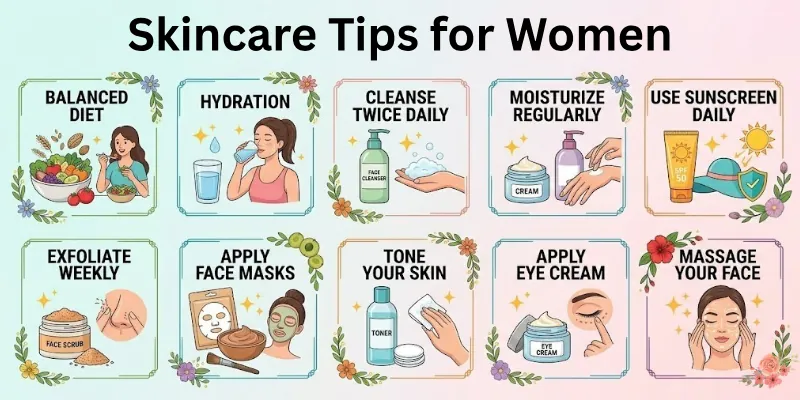
- Balanced Diet
- Hydration
- Cleanse Twice Daily
- Moisturize Regularly
- Use Sunscreen Daily
- Exfoliate Weekly
- Apply Face Masks
- Avoid Touching Your Face
- Remove Makeup Before Bed
- Get Enough Sleep
- Manage Stress
- Reduce Sugar Intake
- Use Antioxidant Serums
- Add Vitamin C
- Add Vitamin E
- Avoid Harsh Chemicals
- Choose Natural Products
- Use Gentle Face Wash
- Tone Your Skin
- Apply Eye Cream
- Massage Your Face
- Avoid Smoking
- Limit Alcohol
- Include Omega-3 Foods
- Practice Yoga or Meditation
- Keep Hair Away From Face
- Clean Pillowcases and Phone
- Use Lip Balm
- Use Hand Cream
- Avoid Hot Showers
- Exercise Regularly
- Monitor Skin Changes
- Visit a Dermatologist
- Apply Night Cream
- Stick to a Routine
Let us cover all in detail.
1. Balanced Diet
A nutrient-rich diet supports glowing and healthy skin.
- Add fresh fruits because they supply vitamins that brighten and nourish your skin.
- Eat colorful vegetables since they protect your skin from daily damage.
- Include lean proteins to help your skin repair itself overnight.
- Choose whole grains because they support smoother and firmer skin.
- Add healthy fats to improve hydration and softness.
- Reduce junk food to avoid breakouts and irritation.
- Drink green tea to calm inflammation from within.
- Add nuts and seeds to provide minerals that strengthen skin layers.
- Use supplements if recommended to fill nutritional gaps.
2. Hydration
Water keeps your skin plump, fresh, and glowing.
- Drink enough water to maintain moisture levels throughout the day.
- Increase water intake when the weather is hot or when you sweat more.
- Eat hydrating foods like watermelon and cucumber to support hydration.
- Replace soft drinks with water to avoid dull and dehydrated skin.
- Drink herbal teas that gently support your skin’s natural glow.
- Reduce caffeine because it pulls moisture from your skin.
- Carry a bottle to stay consistent with your intake.
- Drink a glass of water every morning to start hydration early.
- Pay attention to your body’s thirst signals to prevent dryness.
3. Cleanse Twice Daily
Cleansing helps remove oil, pollution, and product buildup.
- Choose a mild cleanser that respects your skin barrier.
- Wash your face in the morning to refresh your skin from overnight oils.
- Cleanse again at night to clear pollution and makeup.
- Use lukewarm water to protect natural moisture levels.
- Massage gently to increase circulation and loosen dirt.
- Avoid rubbing your skin harshly to prevent irritation.
- Double cleanse if you wear heavy makeup or sunscreen.
- Dry your face with a clean towel to avoid bacteria.
- Choose a cleanser based on your skin type for better results.
4. Moisturize Regularly
Moisture keeps your skin smooth, soft, and protected.
- Apply moisturizer twice a day to maintain consistent hydration.
- Choose gel moisturizers for oily skin to prevent extra shine.
- Pick thicker creams for dry skin to lock in moisture.
- Apply on slightly damp skin to enhance absorption.
- Use lightweight products if your skin feels sticky easily.
- Switch formulas by season to adapt to weather changes.
- Look for ingredients like ceramides to strengthen your barrier.
- Apply on your neck because it ages the same as your face.
- Moisturize before makeup to improve blending and finish.
5. Use Sunscreen Daily
Sunscreen protects your skin from sun damage and early aging.
- Apply broad-spectrum sunscreen to block harmful UV rays.
- Use SPF 30 or higher for reliable protection.
- Reapply every few hours when staying outdoors.
- Choose gel formulas if your skin reacts to heavy textures.
- Apply even on cloudy days because UV rays still reach your skin.
- Cover your neck, ears, and hands to avoid uneven tanning.
- Use mineral sunscreen if you have sensitive skin.
- Apply sunscreen last in your skincare routine.
- Carry a small tube for easy touch-ups during the day.
6. Exfoliate Weekly
Exfoliation removes dead skin and brightens your complexion.
- Use gentle scrubs that do not irritate your skin surface.
- Try chemical exfoliants for smoother and clearer skin.
- Exfoliate once or twice a week depending on sensitivity.
- Avoid scrubbing too hard to prevent redness.
- Apply moisturizer afterward to calm the skin.
- Switch between mild and deep exfoliation as needed.
- Avoid exfoliating broken or inflamed skin.
- Use exfoliation at night so your skin can recover.
- Choose products with safe and skin-friendly ingredients.
7. Apply Face Masks
Masks provide deep nourishment and instant freshness.
- Use hydrating masks to restore moisture on dry days.
- Choose clay masks to control oil and shrink pores.
- Apply sheet masks when you need quick radiance.
- Use soothing masks when your skin feels irritated.
- Try brightening masks for dull and tired skin.
- Use masks once or twice a week for best results.
- Apply on clean skin so nutrients absorb better.
- Store sheet masks in the fridge for a cooling effect.
- Choose masks based on your skin needs for targeted care.
8. Avoid Touching Your Face
Touching your face spreads dirt and causes breakouts.
- Keep your hands clean to avoid transferring bacteria.
- Avoid popping pimples because it leads to scars.
- Stay conscious of habits like resting your chin on your hand.
- Clean surfaces you touch often to limit bacteria.
- Use tissues if you need to touch your face.
- Keep nails short to avoid bacteria buildup.
- Replace hand towels often for cleanliness.
- Keep your phone away from your cheeks.
- Build awareness to reduce face-touching over time.
9. Remove Makeup Before Bed
Sleeping with makeup harms your skin and clogs pores.
- Use makeup remover to dissolve layers properly.
- Follow with cleanser for complete cleaning.
- Use cotton pads that feel gentle on your skin.
- Remove mascara carefully to avoid damage to lashes.
- Use micellar water for quick and soft cleaning.
- Clean around your hairline to prevent bumps.
- Avoid harsh rubbing to protect your skin barrier.
- Moisturize afterward to restore hydration.
- Make removal part of your nightly routine for consistency.
10. Get Enough Sleep
Sleep repairs your skin naturally.
- Aim for seven to eight hours for healthy recovery.
- Sleep early to support your body’s natural rhythm.
- Use a silk pillowcase to reduce friction and wrinkles.
- Keep your bedroom cool to prevent skin dryness.
- Avoid late-night snacking to prevent oil imbalance.
- Use night cream for extra repair while you sleep.
- Reduce screen time before bed to protect sleep quality.
- Keep a fixed schedule to support natural healing.
- Let your skin rest without heavy products at bedtime.
11. Manage Stress
Stress affects your hormones and makes your skin dull and reactive.
- Practice deep breathing to calm your body and reduce stress levels.
- Take short breaks during the day to prevent mental exhaustion.
- Spend time in nature to relax your mind and improve mood.
- Talk to someone you trust to release emotional pressure.
- Maintain a balanced routine to avoid overwhelming yourself.
- Do small enjoyable activities that refresh your mind.
- Reduce unnecessary screen time to give yourself mental space.
- Sleep on time to reset your body’s stress response.
- Use aromatherapy to support a calming environment at home.
12. Reduce Sugar Intake
High sugar levels create inflammation and trigger breakouts.
- Limit sweets to prevent skin dullness caused by sugar spikes.
- Choose fruits when you crave something sweet to avoid processed sugar.
- Reduce soft drinks because they increase oil production.
- Read labels to avoid hidden sugar in packaged foods.
- Eat balanced meals to avoid frequent sugar cravings.
- Include more fiber to keep your blood sugar stable.
- Drink more water to flush out excess sugar.
- Replace desserts with healthier options like yogurt.
- Track your sugar intake to build better awareness.
13. Use Antioxidant Serums
Antioxidants protect your skin from pollution and early aging.
- Apply a serum in the morning for protection throughout the day.
- Choose serums with vitamin C, niacinamide, or green tea for visible effects.
- Use lightweight formulas that absorb easily into your skin.
- Apply after cleansing to allow deeper penetration.
- Combine with sunscreen for stronger defense against damage.
- Use regularly to reduce fine lines and dullness.
- Store serums properly to keep them effective.
- Patch test new products to avoid irritation.
- Stick to one serum at a time for clearer results.
14. Add Vitamin C
Vitamin C brightens your skin and fades dark spots.
- Use vitamin C serum every morning for a glowing look.
- Apply on dry skin so it works more effectively.
- Choose stable formulas to avoid quick oxidation.
- Use consistently to even out your skin tone.
- Combine with sunscreen for stronger protection against pigmentation.
- Start with a lower strength if your skin is sensitive.
- Store in a cool place to maintain quality.
- Watch for irritation and adjust usage if needed.
- Avoid mixing with strong exfoliants on the same day.
15. Add Vitamin E
Vitamin E nourishes your skin and protects the moisture barrier.
- Use vitamin E creams to soothe dry or irritated skin.
- Apply at night to allow deeper penetration.
- Use with vitamin C for stronger antioxidant effects.
- Choose products with gentle and hydrating ingredients.
- Apply around your eyes for extra nourishment.
- Use regularly to soften rough skin areas.
- Check formulas so they suit your skin type.
- Apply lightly if you have oily skin to prevent heaviness.
- Combine with moisturizing habits for better results.
16. Avoid Harsh Chemicals
Harsh products damage your barrier and cause irritation.
- Choose fragrance-free products to avoid skin sensitivity.
- Read labels to identify ingredients that may cause reactions.
- Avoid alcohol-heavy toners that strip natural oils.
- Test new products to prevent unexpected irritation.
- Use gentle formulas when your skin feels tired.
- Avoid bleaching creams that damage deeper layers.
- Choose trusted brands that use safe ingredients.
- Reduce products with drying foaming agents.
- Keep your routine simple when your skin feels stressed.
17. Choose Natural Products
Natural skincare supports gentle and long-term skin health.
- Pick products with plant-based ingredients suitable for your skin.
- Use aloe vera to calm redness and soothe irritation.
- Choose rose water to refresh and balance your skin.
- Apply natural oils like jojoba or argan when you need hydration.
- Avoid products with unnecessary fillers.
- Use natural scrubs that do not scratch your skin.
- Keep products fresh and avoid expired items.
- Patch test natural oils before full use.
- Combine natural care with a consistent routine.
18. Use Gentle Face Wash
Gentle cleansers protect your skin from dryness and irritation.
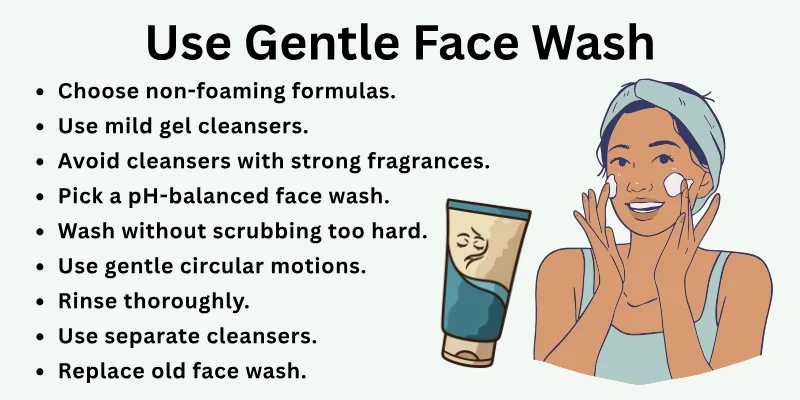
- Choose non-foaming formulas for dry and sensitive skin.
- Use mild gel cleansers if your skin feels oily.
- Avoid cleansers with strong fragrances.
- Pick a pH-balanced face wash to support your barrier.
- Wash without scrubbing too hard.
- Use gentle circular motions for better cleansing.
- Rinse thoroughly to avoid residue on your skin.
- Use separate cleansers for morning and night if needed.
- Replace old face wash regularly to maintain freshness.
19. Tone Your Skin
Toners balance your skin and prepare it for the next steps.
- Use hydrating toners to soften and refresh your skin.
- Choose alcohol-free formulas to avoid dryness.
- Apply with cotton or pat with your hands for better absorption.
- Use toners after cleansing to rebalance pH levels.
- Look for ingredients like rose water or hyaluronic acid.
- Use calming toners if your skin gets irritated easily.
- Apply morning and night for steady hydration.
- Avoid toners with harsh exfoliants for daily use.
- Let your toner absorb before applying serums.
20. Apply Eye Cream
The under-eye area needs gentle and focused care.
- Use eye cream to reduce puffiness and dryness.
- Apply lightly with your ring finger to avoid pressure.
- Use cooling formulas to refresh tired eyes.
- Look for ingredients like caffeine and peptides for visible improvements.
- Apply morning and night for consistent results.
- Avoid applying too close to the lash line.
- Use eye cream before moisturizer for better layering.
- Store some eye products in the fridge for cooling effects.
- Pick lightweight formulas for daytime use.
21. Massage Your Face
Face massage boosts circulation and supports a natural glow.
- Use gentle upward motions to lift and relax your skin.
- Apply facial oil for smooth and easy movement.
- Massage along the jawline to reduce tension.
- Use jade roller or gua sha to enhance results.
- Do short massages daily for visible improvement.
- Massage under eyes carefully to reduce puffiness.
- Use firm pressure on cheeks for better circulation.
- Avoid pulling your skin to prevent stretching.
- Use clean hands and tools for safety.
22. Avoid Smoking
Smoking harms skin texture and speeds up aging.
- Quit smoking to improve oxygen flow to your skin.
- Limit exposure to smoky areas to avoid dullness.
- Replace the habit with healthier routines.
- Drink more water to support healing.
- Use antioxidant skincare to repair damage.
- Exercise often to improve circulation.
- Eat nutrient-rich foods to support skin renewal.
- Track your progress to stay motivated.
- Notice improvements to encourage consistency.
23. Limit Alcohol
Alcohol dehydrates your skin and triggers inflammation.
- Reduce drinking to maintain hydration and clarity.
- Drink water between beverages to reduce dryness.
- Choose lighter drinks when possible.
- Avoid drinking late at night to protect your skin cycle.
- Eat before drinking to limit inflammation.
- Moisturize extra on days you consume alcohol.
- Watch how your skin reacts and adjust intake.
- Balance alcohol with healthy habits.
- Prefer hydrating drinks when socializing.
24. Include Omega-3 Foods
Omega-3 supports smooth, flexible, and glowing skin.
- Eat salmon, flaxseed, or walnuts for daily omega-3.
- Add chia seeds to snacks for easy intake.
- Use supplements if approved by your doctor.
- Include omega-3 foods to reduce inflammation.
- Use healthy oils like olive or avocado oil.
- Replace fried foods with baked options.
- Pair omega-3 with hydration for soft skin.
- Eat these foods regularly for visible results.
- Combine with a balanced diet for better skin health.
25. Practice Yoga or Meditation
Mind-body balance improves your skin naturally.
- Do yoga to improve blood flow and reduce puffiness.
- Practice meditation to calm your mind.
- Use breathing exercises for instant relaxation.
- Choose gentle stretches to release tension.
- Make it part of your morning routine for freshness.
- Stay consistent for long-term benefits.
- Join a class if you need guidance.
- Use relaxing music during your practice.
- Keep your body active for overall skin health.
26. Keep Hair Away From Face
Hair carries oil and dirt that irritates your skin.
- Tie your hair during skincare to avoid contact.
- Wash your hair regularly to reduce buildup.
- Avoid oily hair products near your hairline.
- Keep long hair back during workouts.
- Use clean hair accessories to avoid bacteria.
- Avoid touching your hair then touching your face.
- Clean your hairbrush frequently.
- Use satin pillowcases to reduce friction.
- Keep bangs clean to prevent forehead breakouts.
27. Clean Pillowcases and Phone
Surfaces that touch your skin can cause breakouts.
- Wash pillowcases often to avoid bacteria.
- Use fragrance-free detergents to protect your skin.
- Clean your phone screen daily to prevent dirt transfer.
- Avoid pressing your phone against your cheek.
- Keep your bedding clean to support healthy skin.
- Replace old pillowcases often.
- Use soft fabrics that do not irritate your skin.
- Keep your workspace clean to reduce skin contact with bacteria.
- Build a weekly cleaning habit for better hygiene.
28. Use Lip Balm
Your lips need as much care as your skin.
- Use hydrating balms to prevent dryness and cracking.
- Apply before bed for overnight healing.
- Look for SPF lip balms to protect from sun damage.
- Choose balms with natural oils for nourishment.
- Avoid licking your lips to prevent dryness.
- Reapply during cold weather to avoid peeling.
- Drink more water to keep lips soft.
- Exfoliate gently once a week for smoother lips.
- Store lip balms in clean areas to avoid contamination.
29. Use Hand Cream
Hands show early signs of aging and need protection.
- Apply hand cream after washing your hands.
- Use richer creams at night for deep repair.
- Choose formulas with shea butter for hydration.
- Protect your hands during winter with gloves.
- Avoid harsh soaps to prevent dryness.
- Massage cream into cuticles for softness.
- Use sunscreen on your hands for anti-aging benefits.
- Keep a travel-size hand cream in your bag.
- Reapply throughout the day as needed.
30. Avoid Hot Showers
Hot water removes natural oils and dries out skin.
- Use warm water to protect moisture levels.
- Limit shower time to reduce dryness.
- Apply moisturizer right after showering.
- Use gentle body washes to avoid irritation.
- Avoid hot water on your face to prevent redness.
- Keep showers short on cold days to protect skin.
- Install a shower filter if your water is harsh.
- Dry your skin gently with a soft towel.
- Shower at a moderate temperature for long-term skin health.
31. Exercise Regularly
Movement supports glowing and healthy skin.
- Exercise increases circulation and improves skin tone.
- Sweat naturally removes buildup from your pores.
- Choose activities like walking or yoga if you prefer gentle workouts.
- Stay consistent to maintain good skin health.
- Hydrate well before and after exercise.
- Clean your face after workouts to avoid breakouts.
- Wear breathable clothes during exercise.
- Include stretching to release body tension.
- Balance workouts with enough rest.
32. Monitor Skin Changes
Paying attention to your skin helps you prevent problems early.
- Notice reactions after trying new products.
- Track dryness or oiliness during weather changes.
- Watch for unexpected breakouts or irritation.
- Check for new moles or unusual marks.
- Adjust skincare based on how your skin behaves.
- Keep a simple diary if your skin fluctuates.
- Understand what triggers your breakouts.
- Change products slowly to find what suits you.
- Visit a doctor if something feels unusual.
33. Visit a Dermatologist
Professional guidance gives your skin the right direction.
- See a dermatologist for persistent acne or pigmentation.
- Get expert advice when over-the-counter products do not work.
- Take recommended treatments seriously for best results.
- Ask about safe ingredient combinations for your skin.
- Discuss any allergies or reactions you experience.
- Request personalized routines when your skin feels complicated.
- Visit at least once a year for overall skin checks.
- Follow instructions properly for long-term improvement.
- Track progress with your dermatologist to stay informed.
34. Apply Night Cream
Night creams help your skin repair and restore overnight.
- Use nourishing formulas to support nighttime healing.
- Apply after cleansing for better absorption.
- Choose creams with peptides, ceramides, or gentle acids.
- Use lightly if your skin feels oily.
- Apply on your neck and chest too.
- Let your skin rest without too many layers.
- Use nightly to see visible improvements.
- Choose non-sticky textures for comfort.
- Apply at least 30 minutes before bed.
35. Stick to a Routine
Consistency creates the biggest changes in your skin.
- Follow a simple routine you can maintain daily.
- Avoid switching products too often to prevent irritation.
- Give each product enough time to work.
- Stay patient because skin improves slowly.
- Keep morning and evening routines separate.
- Use only what your skin needs rather than many products.
- Track progress every few weeks to stay motivated.
- Adjust routines slowly based on skin behavior.
- Stay committed for long-lasting results.
Lifestyle Habits That Support Healthy Skin
A good skincare routine needs good lifestyle habits. Your daily choices affect your skin more than you realize. When you eat well, sleep well, and protect your skin, it rewards you with a natural glow and stronger resilience.
- Maintain a balanced schedule to reduce stress on your body.
- Stay physically active to support healthy blood flow.
- Eat nutrient-rich meals for steady skin nourishment.
- Avoid habits that damage your skin like smoking or staying up late.
- Keep your environment clean to reduce bacteria buildup.
- Drink enough water during busy days.
- Protect your skin from pollution with proper cleansing.
- Maintain a fresh pillowcase and clean towel routine.
- Observe your skin and adjust habits that cause issues.
Final Note
In this guide, we have covered the most effective skincare tips for women and explained each tip in detail so you can build a routine that truly supports healthy, glowing skin. When you follow these steps consistently, your skin becomes clearer, softer, and more resilient over time. Every woman deserves skin that feels confident and cared for, and these tips help you achieve that naturally.
FAQs About Skincare Tips for Women
Here are some of the most commonly asked questions related to the best skincare tips for women:
The best routine depends on your skin type, but it usually includes cleansing, moisturizing, and sun protection. You can add serums and masks based on your concerns. A simple and consistent routine works better than a complicated one. Always use products that suit your skin.
Most women can exfoliate once or twice a week. Over exfoliating causes irritation and weakens the barrier, so avoid doing it daily. Choose formulas that match your sensitivity level. Always moisturize after exfoliating for smoother results.
Sunscreen protects your skin from UV rays that cause tanning, pigmentation, and early aging. Daily sun exposure without protection leads to long-term damage. Using sunscreen helps maintain an even skin tone. It also prevents freckles and sun spots from getting darker.
You can reduce acne by cleansing regularly, avoiding oily products, and eating a balanced diet. Keep your hands away from your face and change pillowcases often. Use gentle ingredients like salicylic acid if needed. Stay consistent with your routine to prevent frequent breakouts.
Avoid products with alcohol, harsh fragrances, bleaching chemicals, and heavy sulfates. These ingredients weaken your skin and cause long-term sensitivity. Read labels before buying new products. Use gentle formulas to protect your skin barrier.
Drink enough water, eat fresh fruits, and follow a simple skincare routine. Include vitamin C and antioxidants for radiance. Sleep well and manage stress to support natural glow. Limit junk food because it affects skin texture.
Women can start anti-aging skincare in their mid-twenties. Early care helps maintain elasticity and prevents fine lines. Use gentle products like sunscreen, vitamin C, and moisturizer. Avoid strong anti-aging ingredients if your skin does not need them.
Observe how your skin behaves throughout the day. Oily skin needs lightweight products, while dry skin needs creamy and hydrating formulas. Combination skin benefits from balanced products. Always test new products before full use.
Sleep repairs your skin naturally and improves elasticity. Lack of sleep causes dullness, puffiness, and breakouts. Aim for seven to eight hours daily. Use night cream to support skin recovery.
Use sunscreen daily, avoid smoking, and stay hydrated. Include antioxidants to protect your skin from damage. Sleep well and manage stress to reduce signs of aging. Follow a consistent skincare routine to maintain firmness and smoothness.






- Be Respectful
- Stay Relevant
- Stay Positive
- True Feedback
- Encourage Discussion
- Avoid Spamming
- No Fake News
- Don't Copy-Paste
- No Personal Attacks
- Be Respectful
- Stay Relevant
- Stay Positive
- True Feedback
- Encourage Discussion
- Avoid Spamming
- No Fake News
- Don't Copy-Paste
- No Personal Attacks
