How to Improve Hair Health Naturally: 32 Easy Tips for Strong, Shiny Hair
Published: 7 May 2026
Healthy hair needs steady care, the right habits, and natural support. When you follow gentle methods, your strands grow stronger, smoother, and more vibrant. This guide explains how to improve hair health naturally with simple steps, everyday routines, and powerful natural ingredients that work without harsh chemicals.
Let us learn about each in detail.
How To Improve Hair Health Naturally
Here are the best 30+ tips for improving hair health with natural and effective methods:
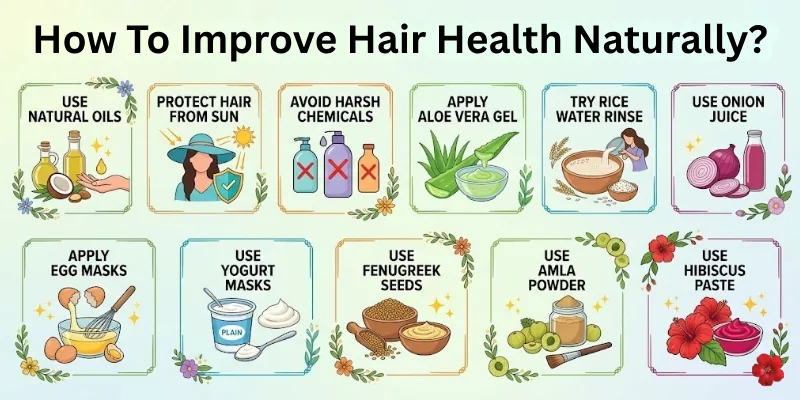
- Nourish Hair With A Balanced Diet
- Stay Hydrated Daily
- Add Omega Fatty Acids
- Increase Protein Intake
- Eat Biotin Rich Foods
- Massage Scalp Regularly
- Use Natural Oils
- Choose Gentle Hair Products
- Avoid Over Washing
- Rinse Hair With Cool Water
- Use Mild Shampoos
- Deep Condition Weekly
- Reduce Heat Styling
- Let Hair Air Dry
- Avoid Tight Hairstyles
- Trim Split Ends
- Brush Hair Gently
- Sleep On Silk Pillowcases
- Protect Hair From Sun
- Avoid Harsh Chemicals
- Apply Aloe Vera Gel
- Try Rice Water Rinse
- Use Onion Juice
- Apply Egg Masks
- Use Yogurt Masks
- Use Fenugreek Seeds
- Use Amla Powder
- Use Hibiscus Paste
- Use Coconut Milk Mask
- Reduce Stress
- Sleep Well
- Stay Consistent With Care
Let us cover all in detail.
1. Nourish Hair With A Balanced Diet
A healthy diet fuels strong strands and supports natural long-term hair growth.
- Eat leafy greens daily to strengthen roots and boost growth.
- Add colorful fruits regularly to supply antioxidants protecting hair from damage.
- Include whole grains consistently to deliver steady nutrients supporting stronger strands.
- Eat nuts and seeds daily to provide healthy fats improving softness.
- Add bright vegetables often to supply vital vitamins helping repair weakened hair.
- Include beans often to give plant protein improving natural thickness significantly.
- Eat citrus fruits daily to support collagen production strengthening hair roots.
- Add lentils frequently to increase natural density and encourage healthy growth.
- Keep meals balanced daily to maintain overall hair strength and shine.
- Choose nutrient-rich foods consistently to support healthier strands and scalp wellness.
2. Stay Hydrated Daily
Proper hydration keeps your strands soft, moisturized, flexible, and naturally strong.
- Drink enough water daily to prevent dryness that encourages breakage.
- Sip water frequently throughout the day to maintain consistent hydration levels.
- Add hydrating foods regularly to support natural moisture within every strand.
- Keep electrolytes balanced daily to promote a healthier and calmer scalp.
- Increase water intake during hot weather to reduce excessive moisture loss.
- Avoid sugary or dehydrating drinks that weaken hair and cause dryness.
- Track hydration habits daily to maintain soft, smooth, shiny strands.
- Drink a glass before meals to support steady hydration throughout days.
- Maintain consistent hydration routines daily to prevent unnecessary hair damage.
- Make hydration a lifestyle habit supporting stronger roots and hair health.
3. Add Omega Fatty Acids
Omega fatty acids nourish your scalp and improve shine, softness, and strength.
- Eat fatty fish weekly to provide essential oils improving hair texture.
- Add chia seeds daily to give beneficial fats preventing unnecessary dryness.
- Eat walnuts regularly to naturally enhance overall thickness and hair strength.
- Add flaxseeds often to boost moisture levels and soften brittle strands.
- Include avocados frequently to improve elasticity and reduce unwanted breakage.
- Take fish oil supplements if diet lacks enough healthy fatty acids.
- Add mixed seeds daily to increase nourishment supporting healthier roots.
- Eat omega-rich foods consistently to strengthen strands and encourage growth.
- Include these fats weekly to promote long-lasting shine and softness.
- Support scalp moisture by maintaining steady omega intake across meals.
4. Increase Protein Intake
Protein supports hair structure, prevents breakage, and helps maintain stronger strands.
- Eat eggs regularly to give complete protein strengthening roots effectively.
- Add chicken or fish often to nourish follicles and encourage growth.
- Include tofu frequently to help repair weak strands naturally and safely.
- Eat lentils daily to support long-term thickness and better resilience.
- Add yogurt consistently to supply protein strengthening damaged hair strands.
- Include beans often to maintain steady protein supporting overall growth.
- Add cottage cheese regularly to enhance softness and improve hair texture.
- Eat nuts frequently to boost protein intake supporting stronger strands.
- Keep protein balanced daily to support healthier hair formation continuously.
- Choose protein-rich meals often to ensure lasting strength and growth.
5. Eat Biotin-Rich Foods
Biotin strengthens strands, improves thickness, and reduces excessive shedding naturally.
- Eat eggs weekly to provide biotin supporting stronger roots and growth.
- Add peanuts often to improve overall texture and natural smoothness.
- Include almonds regularly to support stronger strands and improved shine.
- Eat sweet potatoes often to promote thicker growth and healthier roots.
- Add spinach frequently to nourish follicles and support better hair growth.
- Include oats daily to deliver steady biotin supporting long-term thickness.
- Eat bananas often to maintain scalp comfort and reduce irritation.
- Add mushrooms regularly to strengthen strands and increase natural resilience.
- Keep biotin intake consistent to achieve stronger healthier hair overtime.
- Choose biotin-rich foods often to support fuller long-lasting growth.
6. Massage Scalp Regularly
Scalp massages increase blood flow, relax your scalp, and encourage natural growth.
- Use fingertips gently to stimulate circulation around hair follicles consistently.
- Massage scalp slowly in circles to encourage healthier daily growth.
- Apply warm oil sometimes to enhance nourishment and improve stimulation.
- Massage lightly to avoid breakage and protect delicate hair strands.
- Focus extra on dry areas to activate oil glands naturally.
- Massage before washing to loosen buildup and refresh scalp thoroughly.
- Practice nightly massages to relax scalp and promote stronger growth.
- Spend minutes daily stimulating roots and encouraging better thickness.
- Make scalp massage routine for steady long-term hair improvement.
- Use gentle pressure consistently to maintain scalp health and comfort.
7. Use Natural Oils
Natural oils protect strands, restore softness, and deeply nourish your scalp.
- Use coconut oil weekly to reduce protein loss improving hair strength.
- Apply castor oil often to support thicker growth and stronger roots.
- Use olive oil consistently to soften coarse strands and reduce dryness.
- Apply almond oil regularly to moisturize strands and maintain smoothness.
- Use argan oil frequently to add shine and strengthen brittle hair.
- Warm oils slightly to improve absorption and enhance overall nourishment.
- Apply before shampoo to protect strands from drying cleanser effects.
- Leave oils overnight sometimes for deeper repair and softness.
- Use oil blends often to target multiple concerns and boost results.
- Include oils weekly to maintain moisture and prevent unnecessary breakage.
8. Choose Gentle Hair Products
Gentle products protect your strands from long-term dryness and unnecessary weakening.
- Pick sulfate-free shampoos to avoid moisture loss and prevent dryness.
- Choose natural conditioners providing hydration without causing heavy buildup.
- Avoid alcohol-based gels since they dry strands and damage texture.
- Pick mild cleansers supporting calmer scalp and healthier strands daily.
- Avoid heavy products that encourage buildup and weaken overall health.
- Switch products gradually to prevent irritation and unexpected reactions.
- Choose items matching your hair type for best possible results.
- Read labels carefully to avoid harsh chemicals harming delicate strands.
- Use simple formulas consistently to maintain natural softness and strength.
- Prefer gentle ingredients that protect strands and keep scalp comfortable.
9. Avoid Over Washing
Washing too often strips natural oils and makes strands dry and fragile.
- Wash two or three times weekly to protect natural moisture balance.
- Use mild shampoo only to cleanse without stripping necessary oils.
- Avoid harsh scrubbing because it irritates follicles and weakens strands.
- Keep shampoo focused on scalp to prevent unnecessary dryness elsewhere.
- Apply conditioner mainly on lengths to maintain softness and shine.
- Rinse thoroughly each wash to prevent buildup and improve comfort.
- Avoid extra washes during dry weather to maintain moisture levels.
- Follow steady washing schedule supporting long-term hair moisture.
- Protect natural oils by maintaining gentle washing habits consistently.
- Reduce overwashing to prevent breakage and support healthier growth.
10. Rinse Hair With Cool Water
Cool water seals cuticles, improves shine, and reduces overall frizz effectively.
- Use cool water after shampoo to smooth cuticles and reduce frizz.
- Rinse gently to prevent tangles and keep strands naturally manageable.
- Finish every wash with cool rinse boosting shine immediately.
- Seal moisture by ending conditioner with refreshing cool water rinse.
- Avoid hot water because it dries strands and weakens hair.
- Use lukewarm water initially then finish using cool rinse.
- Improve smoothness weekly by practicing regular cool-water rinsing.
- Reduce frizz naturally by incorporating cool rinses into routine.
- Maintain shine longer using consistent cool-rinse hair care habits.
- Add cool water rinses regularly to support softer healthier strands.
11. Use Mild Shampoos
Mild shampoos preserve moisture, protect the scalp, and maintain natural hair softness.
- Choose gentle formulas avoiding harsh detergents that strip essential moisture.
- Avoid strong fragrances since they irritate sensitive scalps easily.
- Pick plant-based ingredients offering gentle cleansing without irritation.
- Use shampoo designed specifically for your hair type needs.
- Avoid daily use of clarifying shampoos because they dry hair quickly.
- Lather only the scalp to protect lengths from unnecessary dryness.
- Use small amounts to avoid dryness and preserve natural oils.
- Rinse thoroughly to ensure strands remain clean light and fresh.
- Keep mild shampoos as main option for healthy hair maintenance.
- Choose gentle shampoo habits supporting long-term softness and strength.
12. Deep Condition Weekly
Weekly deep conditioning restores softness, moisture, strength, and overall manageability.
- Use hydrating masks weekly to recover moisture lost from styling.
- Apply from mid-length downward to nourish weakest hair sections effectively.
- Leave conditioner sufficient time to allow complete absorption and repair.
- Choose natural butters offering intense moisture for very dry strands.
- Select protein masks when hair feels overly weak or excessively limp.
- Add gentle heat sometimes to improve penetration and deeper conditioning.
- Rinse using cool water to enhance shine and smooth cuticles.
- Condition weekly to maintain long-term softness and improved flexibility.
- Keep hydration steady with consistent deep-conditioning habits weekly.
- Use rich masks often to prevent dryness and maintain strength.
13. Reduce Heat Styling
Limiting heat tools protects your strands and reduces long-term damage significantly.
- Reduce straightener use to prevent weakening and preserve natural shine.
- Keep curling tools minimal to avoid unnecessary dryness and breakage.
- Always apply heat protectant before styling to safeguard delicate strands.
- Use low temperatures to reduce damage and maintain hair elasticity.
- Avoid daily heat usage to preserve moisture and prevent brittleness.
- Choose natural styling alternatives promoting healthier long-lasting results.
- Air-dry whenever possible to limit heat exposure completely.
- Give weekly breaks from heat to support rejuvenation and softness.
- Use rollers or braids to create curls without damaging heat.
- Maintain heat-care awareness to protect strands and encourage healthier growth.
14. Let Hair Air Dry
Air drying prevents heat damage and supports smoother, naturally healthier texture.
- Gently squeeze water using soft towel to protect strands from frizz.
- Avoid towel rubbing because it roughens cuticles causing increased frizz.
- Allow hair to dry naturally for smoother texture and improved softness.
- Comb when damp to prevent tangles and reduce breakage risks.
- Avoid tight hairstyles while wet to prevent unnecessary strain.
- Use leave-in conditioners for added softness and smoother drying.
- Let hair breathe freely before styling to maintain natural shine.
- Skip blow-dryers often to reduce heat exposure and dryness.
- Allow natural drying routine regularly to improve overall hair health.
- Protect strands naturally by choosing gentle air-dry routines consistently.
15. Avoid Tight Hairstyles
Loose styles protect roots from stress, breakage, and long-term thinning.
- Choose loose ponytails to reduce scalp tension and prevent breakage.
- Avoid tight braids that strain roots and weaken delicate follicles.
- Switch hairstyles frequently to reduce stress on specific areas.
- Avoid pulling hair upward tightly to protect root strength.
- Use soft scrunchies minimizing friction and preventing unnecessary damage.
- Avoid rubber bands because they break strands and weaken texture.
- Keep protective styles loose supporting natural hair comfort.
- Allow hair resting days between tight styles encouraging healthier growth.
- Choose gentle styles daily to maintain strong roots and softness.
- Reduce tension regularly to prevent thinning and improve long-term density.
16. Trim Split Ends
Regular trimming removes damaged ends and maintains healthier, thicker-looking strands.
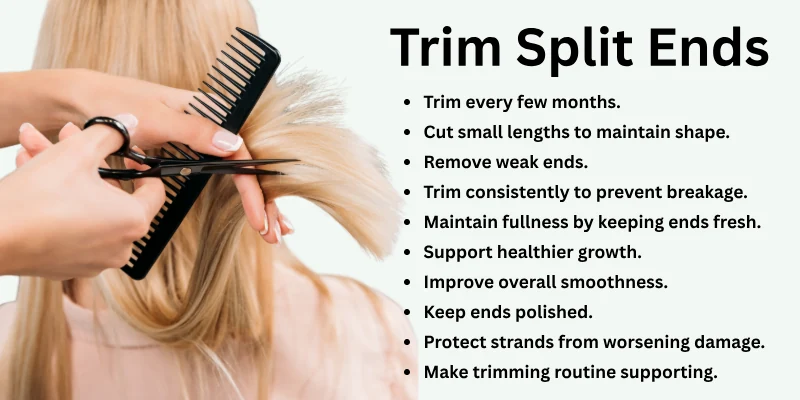
- Trim every few months to stop splits from spreading upward.
- Cut small lengths to maintain shape and preserve overall fullness.
- Remove weak ends supporting smoother texture and improved appearance.
- Trim consistently to prevent breakage and protect natural thickness.
- Maintain fullness by keeping ends fresh and regularly shaped.
- Support healthier growth by eliminating damaged unrepairable sections.
- Improve overall smoothness through routine trimming habits consistently.
- Keep ends polished to enhance styling and reduce frizz.
- Protect strands from worsening damage by trimming proactively.
- Make trimming routine supporting long-term strong healthy hair.
17. Protect Hair During Sleep
A gentle night routine helps keep your hair safe while sleeping.
- Use a silk pillowcase to reduce nightly friction and prevent breakage.
- Tie hair loosely using soft scrunchies for reducing unnecessary tension overnight.
- Apply a light serum before bed to maintain moisture during nighttime.
- Avoid sleeping with wet hair to prevent friction damage while turning.
- Wrap hair in satin accessories to protect strands from rough fabrics.
- Keep bedroom air mildly humid to prevent hair dryness during sleep.
- Choose comfortable hairstyles that avoid pulling hair tightly every night.
- Use protective bonnets made from silk to reduce breakage risks overnight.
- Brush gently before bed to remove tangles that worsen during sleep.
- Keep bedding cleaned regularly to prevent buildup affecting scalp health.
18. Use Gentle Heat Styling
Soft heat techniques protect your strands from long-term unnecessary stress.
- Choose low temperatures when styling hair to prevent excessive heat damage.
- Apply heat protectant spray generously before styling for reducing potential harm.
- Use ceramic tools that distribute heat evenly to protect delicate strands.
- Limit heat styling frequency weekly to maintain healthier overall hair condition.
- Let hair partially air-dry before styling to reduce total heat exposure.
- Avoid repeated passes with straighteners to minimize unnecessary heat strain.
- Clean styling tools regularly for consistent heat performance and safer usage.
- Keep tools moving continuously to avoid overheating one specific hair section.
- Use blow-dryers with diffusers for gentler airflow protecting natural texture.
- Choose hairstyles requiring minimal heat to maintain long-term hair health.
19. Brush Hair the Right Way
Correct brushing protects your strands from breakage and unnecessary stress.
- Use wide-tooth combs first to detangle gently without causing significant breakage.
- Start brushing from tips upward to avoid pulling knots unnecessarily hard.
- Brush slowly with controlled strokes to protect delicate strands from strain.
- Avoid brushing wet hair aggressively since wet strands break extremely easily.
- Choose flexible brushes designed to reduce tension and protect fragile roots.
- Clean brushes weekly to remove buildup affecting scalp cleanliness and hygiene.
- Replace damaged brushes quickly to prevent bristles scratching your scalp.
- Use detangling sprays for smoother brushing sessions and minimal strand stress.
- Divide hair sections before brushing for easier, safer detangling every time.
- Avoid excessive brushing daily to prevent unnecessary friction and strand stress.
20. Keep Your Scalp Moisturized
A hydrated scalp keeps your hair roots strong and comfortable daily.
- Apply light oils to scalp regularly for maintaining consistent hydration levels.
- Use hydrating shampoos formulated specifically for moisture-balancing sensitive scalps.
- Massage oils gently using fingertips to improve product absorption and nourishment.
- Avoid harsh cleansers stripping natural scalp oils causing unnecessary dryness.
- Keep shower temperature warm not hot to preserve scalp moisture balance.
- Use light aloe gel weekly to calm and moisturize irritated scalp skin.
- Maintain healthy hydration habits to support comfortable scalp moisture levels.
- Protect scalp during sun exposure to prevent dryness from ultraviolet damage.
- Include omega-rich foods daily to nourish scalp health from within.
- Avoid overwashing hair frequently to maintain natural protective scalp oils.
21. Trim Hair Regularly
Frequent trims help remove damaged ends and keep hair looking healthy.
- Schedule trims every few months for maintaining healthy and manageable length.
- Remove split ends early to prevent damage spreading further up hair.
- Keep ends neat through regular trims improving overall hair texture significantly.
- Trimming encourages fuller hair appearance making strands appear healthier overall.
- Avoid delaying trims too long to prevent worsening dryness at ends.
- Choose professional stylists experienced in maintaining natural hair health.
- Tell stylist your goals clearly for receiving trims matching desired appearance.
- Trim lightly without removing unnecessary length while maintaining healthier ends.
- Use dusting techniques between trims for maintaining smoother healthier ends.
- Regular trims support better hair appearance making styling easier daily.
22. Use Hair Masks Weekly
Weekly masks provide deep nourishment and support stronger, smoother strands.
- Choose moisturizing masks containing natural oils for deep nourishing weekly sessions.
- Apply mask after shampooing for better absorption and greater hydration benefits.
- Leave mask recommended duration to allow nutrients to strengthen hair effectively.
- Focus mask on mid-lengths downward where dryness commonly occurs most frequently.
- Rinse thoroughly afterward to avoid leaving residue affecting hair texture.
- Use masks containing proteins occasionally to support rebuilding weaker strands.
- Warm hair slightly before masking to enhance deeper conditioning product penetration.
- Wrap hair during treatment for maintaining warmth improving product absorption.
- Choose masks suitable for your hair type ensuring proper targeted treatment.
- Maintain weekly masking routine consistently for healthier hair improvements.
23. Avoid Tight Hairstyles
Loose styles protect your roots and reduce long-term tension damage.
- Pick gentle hairstyles avoiding tight pulling that weakens delicate hair roots.
- Use soft accessories reducing friction against strands and preventing unnecessary breakage.
- Alternate hairstyles regularly to avoid stressing the same hair areas.
- Avoid high ponytails daily since they cause long-term scalp tension.
- Loosen braids slightly for reducing pressure on roots and fragile strands.
- Use wide scrunchies instead of rubber bands for preventing strand damage.
- Keep styles soft around edges to protect sensitive scalp regions.
- Remove hairstyles gently to avoid breakage caused by pulling tightly.
- Moisturize hair before styling to prevent dryness increasing tension risks.
- Choose low-tension protective styles promoting healthier long-term hair growth.
24. Wash Hair Properly
Proper washing maintains clean strands without harming natural moisture levels.
- Wet hair thoroughly before shampooing for helping even product distribution.
- Massage shampoo gently to cleanse scalp without creating unnecessary friction.
- Rinse thoroughly ensuring no shampoo residue remains affecting scalp health.
- Apply conditioner mainly on lengths keeping roots free from buildup.
- Use warm water initially then finish rinsing using cooler water.
- Avoid washing hair daily to maintain comfortable natural moisture balance.
- Choose shampoos formulated for your specific hair needs and concerns.
- Focus on scalp cleansing first then clean lengths with running water.
- Avoid using too much shampoo since excess causes dryness issues.
- Use gentle pressure when washing to prevent stress on delicate strands.
25. Balance Your Stress Levels
Stable stress levels support healthier hair growth and overall scalp comfort.
- Practice breathing exercises daily to calm mind reducing hair-affecting stress.
- Maintain consistent sleep patterns supporting better stress response and hair stability.
- Include relaxing hobbies for lowering stress impacting long-term scalp health.
- Limit unnecessary overwork that contributes to stress affecting hair wellness.
- Stay hydrated daily supporting calmer mood and healthier hair growth.
- Build healthy boundaries to prevent overwhelming stress harming scalp comfort.
- Stretch muscles regularly helping reduce body tension supporting better wellbeing.
- Use nature breaks frequently for helping reset stress-affected emotional balance.
- Reduce caffeine intake improving mood stability supporting healthier hair growth.
- Maintain social support improving emotional balance benefiting overall hair health.
26. Limit Chemical Treatments
Gentler choices protect your strands from long-term chemical stress and weakening.
- Reduce bleaching frequency to protect strands from significant cuticle weakening.
- Avoid repeated coloring sessions closely spaced causing excessive hair stress.
- Choose ammonia-free dyes reducing irritation and minimizing long-term damage.
- Strengthen hair between treatments using nourishing conditioners weekly.
- Test new products carefully before applying full chemical treatments entirely.
- Space treatments widely giving hair sufficient recovery time improving strength.
- Maintain moisture-rich routines supporting chemically treated hair health continuously.
- Avoid chemical straightening often to protect natural strand structure.
- Ask professionals experienced in minimizing damage during chemical applications.
- Keep treated hair protected using masks regularly improving long-term resilience.
27. Stay Hydrated Daily
Proper hydration keeps your hair soft, comfortable, and naturally vibrant.
- Drink enough water daily supporting healthier hydration reaching scalp and strands.
- Carry water throughout day for maintaining consistent hydration habits easily.
- Choose hydrating foods aiding moisture levels supporting overall hair wellness.
- Reduce sugary drinks replacing them with water for healthier hydration patterns.
- Track hydration goals ensuring daily consistency benefiting stronger overall strands.
- Drink water before meals improving hydration levels supporting better hair growth.
- Keep balanced electrolytes supporting hydration for healthier scalp condition.
- Hydrate steadily during exercise sessions supporting body and hair wellness.
- Avoid dehydration triggers like excessive caffeine affecting scalp hydration negatively.
- Maintain steady water intake enhancing hair softness naturally and consistently.
28. Protect Hair From Pollution
Environmental protection helps prevent dryness, weakness, and buildup from pollutants.
- Cover hair outdoors on dusty days preventing harmful particles settling heavily.
- Rinse hair gently after exposure removing pollutants affecting scalp cleanliness.
- Use antioxidant products supporting defense against pollution-related strand damage.
- Moisturize hair regularly strengthening protection against harsh environmental pollutants.
- Keep hair tied loosely outdoors reducing direct exposure to pollutants.
- Clarify hair occasionally removing buildup caused by ongoing environmental conditions.
- Apply serums forming protective barriers supporting strands outdoors effectively.
- Avoid staying near heavy traffic areas protecting hair from soot.
- Use mild cleansers ensuring pollutants leave without stripping moisture harshly.
- Follow consistent routines supporting resilience against pollution-related dryness issues.
29. Keep Hair Frizz Under Control
Controlling frizz helps maintain smoother texture and reduces unnecessary breakage.
- Use hydrating conditioners regularly improving smoothness and reducing everyday frizz.
- Apply leave-in creams forming protective layers smoothing hair throughout day.
- Avoid brushing dry hair causing increased frizz and unnecessary strand lifting.
- Seal moisture using lightweight oils to maintain smooth texture longer.
- Reduce humidity exposure by tying hair gently during humid weather.
- Choose anti-frizz products suitable for your specific texture improving manageability.
- Dry hair downward direction reducing raised cuticles preventing frizzy appearance.
- Use microfiber towels minimizing friction reducing frizz significantly during drying.
- Avoid overwashing hair causing dryness contributing heavily to daily frizz.
- Maintain steady hydration supporting natural smoothness and reducing frizz issues.
30. Protect Hair From Swimming Damage
Water protection prevents dryness from chlorine and salt exposure.
- Wet hair before swimming preventing excess chlorine or salt absorption quickly.
- Apply protective oils forming barriers against harsh pool or ocean water.
- Wear swimming caps shielding strands from chemicals and salty water.
- Rinse hair immediately afterward preventing damage from lingering chemical residue.
- Shampoo gently post-swim removing chemicals without stripping moisture aggressively.
- Deep condition regularly supporting healthier moisture levels after swimming exposure.
- Avoid sun while hair wet preventing double damage from heat and chemicals.
- Protect ends with conditioner applications before entering water environments.
- Avoid rough towel drying afterwards protecting delicate post-swim weakened strands.
- Maintain consistent hydration improving resilience to chlorine’s dryness effects.
31. Support Hair With Good Sleep
Quality sleep keeps your body balanced and strengthens your natural hair cycle.
- Maintain regular sleep routines supporting optimized hair growth rhythm nightly.
- Avoid late nights reducing stress affecting natural hair growth patterns.
- Sleep seven hours minimum supporting healthy scalp and hair recovery.
- Keep bedroom darker encouraging deeper rest supporting healthier hair cycles.
- Avoid screen time before bed promoting better sleep improving hair wellness.
- Relax before sleeping helping body repair processes supporting hair strength.
- Use comfortable bedding keeping hair safe from unnecessary fabric friction.
- Limit caffeine evenings supporting smoother sleep enhancing hair restoration.
- Ventilate bedroom nightly maintaining air quality supporting scalp comfort.
- Wake consistently improving body’s rhythm supporting long-term hair health.
32. Maintain Consistent Haircare Habits
Consistency keeps your routine effective and supports healthier long-term results.
- Follow daily routines carefully supporting noticeable improvements in hair health.
- Maintain weekly treatments ensuring strands stay nourished and comfortable consistently.
- Track hair progress monthly understanding needs and improving routine effectiveness.
- Use products regularly avoiding abrupt changes affecting hair’s long-term stability.
- Maintain balanced diet supporting healthier strands through essential internal nourishment.
- Hydrate consistently maintaining scalp moisture supporting steady healthy growth.
- Protect hair outdoors daily preventing environmental damage affecting hair wellness.
- Trim routinely managing ends preventing split worsening throughout hair strands.
- Reduce harmful habits avoiding long-term damage affecting overall hair condition.
- Commit to routine fully achieving healthier hair improvements over extended time.
Best Natural Oils for Stronger Hair
Natural oils nourish your scalp, strengthen strands, and promote healthy growth naturally.
- Coconut Oil: Deeply penetrates hair, reducing protein loss and improving strength.
- Argan Oil: Adds shine, softens strands, and protects against daily damage.
- Castor Oil: Supports thicker growth and strengthens roots over consistent use.
- Olive Oil: Softens coarse hair and reduces dryness effectively every time.
- Almond Oil: Moisturizes and smooths hair, preventing breakage and improving texture.
- Jojoba Oil: Balances scalp oils while hydrating strands naturally and gently.
- Avocado Oil: Rich in vitamins, strengthens follicles, and promotes overall growth.
- Grapeseed Oil: Light oil protecting hair without weighing it down excessively.
- Rosemary Oil: Stimulates scalp circulation, encouraging thicker and healthier hair growth.
- Tea Tree Oil: Reduces dandruff and soothes scalp while promoting clean strands.
Final Note
In this guide, we have covered how to improve hair health naturally. We shared the best 32 haircare tips that, if followed consistently, can help you achieve strong, healthy, and shiny hair.
Based on my personal experience, I recommend oiling your hair three times a week, leaving it on for one hour before showering. Avoid harsh chemicals, dry hair gently, and apply a good serum for extra care.
Follow these natural haircare tips consistently, and soon everyone will ask what you do for your hair. Stick to these habits, and your hair will stay healthy, strong, and beautiful.
FAQs
Here are the some most commonly asked questions related to improving hair health naturally:
Eat a balanced diet, stay hydrated, and use natural oils. Massage your scalp and avoid harsh chemicals. Follow a simple routine for stronger, shiny hair. Consistency is the key for long-lasting results.
Coconut, argan, castor, and almond oils work best. They nourish, reduce breakage, and add shine. Use them regularly for healthy hair. Apply them before washing for better absorption.
Oil your hair 2–3 times a week for at least 1 hour. It strengthens roots and prevents dryness. Regular oiling keeps hair soft and smooth. Adjust frequency based on your hair type.
Yes, protein, vitamins, and omega-3s help hair grow strong. Eat eggs, nuts, leafy greens, and fruits. A good diet reduces hair fall naturally. Healthy hair starts from good nutrition.
Avoid tight hairstyles and harsh chemicals. Brush gently and trim split ends regularly. Use natural oils and masks for stronger hair. Protecting hair daily prevents long-term damage.
Yes, masks add deep moisture and strength. Use eggs, yogurt, or coconut oil weekly. They make hair soft, shiny, and manageable. Weekly masks repair and nourish hair effectively.
Yes, water keeps hair soft and prevents dryness. Eat water-rich foods and drink enough daily. Hydration helps hair stay strong and shiny. Dehydration can make hair weak and brittle.
Limit straighteners, curlers, and blow-dryers. Always use heat protectant sprays. Air-dry whenever possible to prevent damage. Lower heat and less frequent styling reduce breakage.
Yes, stress can cause hair fall. Sleep well and relax daily. Reducing stress keeps hair thick and healthy. Managing stress supports natural hair growth.
Results appear in 4–8 weeks of consistent care. Oil, diet, gentle washing, and trims help. Be patient for healthy, strong hair. Long-term habits give the best, lasting results.





- Be Respectful
- Stay Relevant
- Stay Positive
- True Feedback
- Encourage Discussion
- Avoid Spamming
- No Fake News
- Don't Copy-Paste
- No Personal Attacks
- Be Respectful
- Stay Relevant
- Stay Positive
- True Feedback
- Encourage Discussion
- Avoid Spamming
- No Fake News
- Don't Copy-Paste
- No Personal Attacks
