What Causes Hair Loss and Everyday Habits Behind It
Published: 16 May 2026
Hair loss is a common issue that affects millions of people worldwide. It can be gradual or sudden, patchy or diffuse, and may occur due to genetic, hormonal, medical, or lifestyle factors.
Understanding the root cause is crucial for effective treatment and prevention. Hair loss can affect self-esteem and confidence, so addressing it early is important.
Here is a comprehensive guide to the major causes of hair loss.
What Causes Hair Loss
Here are the major 15 causes of hair loss:
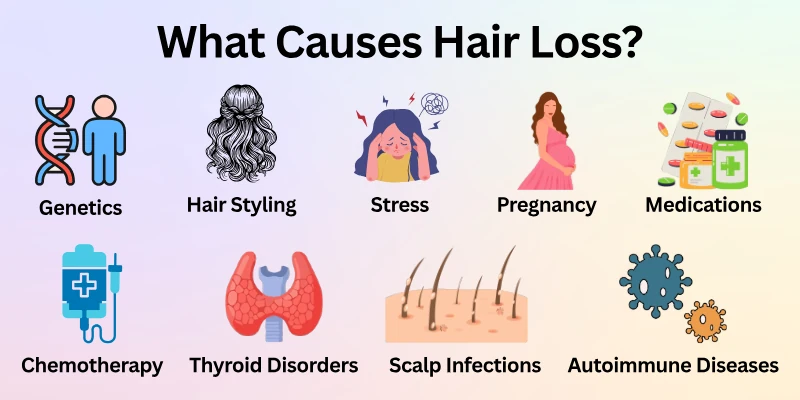
- Genetics (Androgenetic Alopecia)
- Hormonal Changes
- Thyroid Disorders
- Nutritional Deficiencies
- Stress and Anxiety
- Pregnancy and Childbirth
- Menopause
- Autoimmune Diseases (Alopecia Areata)
- Scalp Infections
- Medications
- Chemotherapy and Radiation
- Hair Styling and Treatments
- Rapid Weight Loss
- Chronic Illnesses
- Environmental Factors
Let us learn about each in detail.
1. Genetics (Androgenetic Alopecia)
Genetic hair loss is the most common form and affects both men and women. It occurs when hair follicles are sensitive to hormones like dihydrotestosterone (DHT), causing them to shrink over time.
Key points:
- Usually inherited from family history
- Causes receding hairline in men and diffuse thinning in women
- Can start in the late teens or early adulthood
- Treatments like minoxidil or finasteride can help
This condition is progressive, so early intervention can preserve hair and slow the thinning process.
2. Hormonal Changes
Hormonal fluctuations due to puberty, pregnancy, childbirth, or menopause can trigger hair shedding. Hormones like estrogen, progesterone, and testosterone play a vital role in hair growth cycles.
Key points:
- Postpartum shedding is common in women
- Menopause can lead to thinning due to reduced estrogen
- Hormonal imbalances like PCOS can worsen hair loss
- Hormone therapy or lifestyle changes can help
Balancing hormone levels can significantly improve hair growth and overall hair health.
3. Thyroid Disorders
Thyroid hormones regulate hair follicle activity. Imbalances, whether hyperthyroidism or hypothyroidism, can weaken hair and cause excessive shedding.
Key points:
- Hair becomes thin, dry, and brittle
- Often accompanied by fatigue, weight change, and mood swings
- Proper medication restores hormone balance and hair growth
- Early diagnosis is key for treatment success
Untreated thyroid issues can prolong hair loss and affect overall health.
4. Nutritional Deficiencies
Hair follicles require vitamins and minerals to function properly. Deficiencies in iron, zinc, vitamin D, biotin, and protein are common culprits behind hair thinning.
Key points:
- Iron deficiency causes hair shedding in women
- Low protein intake weakens hair shafts
- Vitamin D deficiency affects hair follicle growth
- A balanced diet or supplements improve hair health
Nutrition plays a central role in maintaining strong, healthy hair.
5. Stress and Anxiety
High stress levels trigger telogen effluvium, a condition where hair prematurely enters the shedding phase. Chronic stress can extend hair loss over months.
Key points:
- Hair shedding occurs 2–3 months after stressful events
- Psychological and physical stress can trigger it
- Relaxation techniques help recovery
- Exercise, yoga, and meditation reduce stress-related hair loss
Managing stress effectively can shorten hair shedding periods.
6. Pregnancy and Childbirth
During pregnancy, elevated estrogen levels thicken hair. After childbirth, sudden hormonal drops often cause postpartum shedding.
Key points:
- Hair shedding peaks 2–4 months postpartum
- Usually temporary and resolves within a year
- Proper diet and gentle hair care support regrowth
- Avoid chemical treatments during postpartum
Most women regain normal hair density naturally after recovery.
7. Menopause
Declining estrogen and progesterone levels during menopause can trigger hair thinning, especially on the top of the scalp.
Key points:
- Androgen levels may rise, worsening hair loss
- Hair becomes finer and more brittle
- Nutritional support and hormone therapy help manage symptoms
- Gentle hair care reduces breakage
Maintaining hair health during menopause requires hormonal and lifestyle considerations.
8. Autoimmune Diseases (Alopecia Areata)
In alopecia areata, the immune system attacks hair follicles, causing patchy hair loss. It can affect any age group and appear suddenly.
Key points:
- Often presents as round, smooth bald patches
- Can occur on scalp, beard, or other body areas
- Stress and genetics may worsen the condition
- Treatments include corticosteroids and immunotherapy
Early intervention increases chances of hair regrowth.
9. Scalp Infections
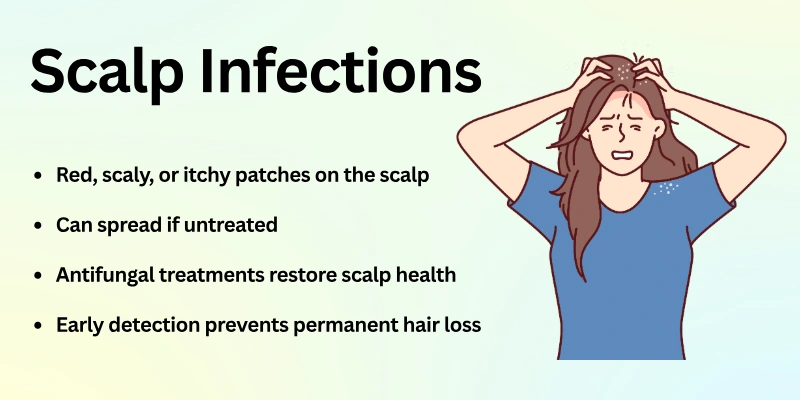
Fungal infections, like ringworm, can invade hair follicles and disrupt growth. They cause inflammation and hair breakage.
Key points:
- Red, scaly, or itchy patches on the scalp
- Can spread if untreated
- Antifungal treatments restore scalp health
- Early detection prevents permanent hair loss
Maintaining scalp hygiene is critical to prevent infection-related hair loss.
10. Medications
Some medications have hair loss as a side effect. Common drugs include blood thinners, antidepressants, beta-blockers, and acne treatments.
Key points:
- Hair shedding may occur during or after treatment
- Typically reversible after discontinuation
- Consult your doctor before stopping any medication
- Minoxidil may support regrowth during recovery
Monitoring side effects can help prevent prolonged hair loss.
11. Chemotherapy and Radiation
Cancer treatments target rapidly dividing cells, including hair follicles, causing hair loss.
Key points:
- Hair may fall out completely or in patches
- Hair usually regrows after treatment ends
- Scalp cooling can reduce hair loss during chemotherapy
- Gentle hair care supports recovery
Hair loss from chemotherapy is temporary, but planning ahead helps manage expectations.
12. Hair Styling and Treatments
Excessive heat, dyes, perms, or tight hairstyles can damage hair shafts and follicles.
Key points:
- Traction alopecia results from consistent pulling
- Chemical treatments weaken hair structure
- Avoid excessive styling or heat
- Opt for protective hairstyles
Gentle hair care and reducing harsh treatments prevent breakage and thinning.
13. Rapid Weight Loss
Sudden weight loss shocks the body and pushes hair follicles into the resting phase, leading to shedding.
Key points:
- Often occurs 2–3 months after rapid weight loss
- Can result from crash diets or illness
- Gradual weight loss minimizes hair loss
- Adequate nutrition supports recovery
Steady weight management is essential for hair and overall health.
14. Chronic Illnesses
Diseases like diabetes, lupus, and anemia can interfere with hair growth cycles.
Key points:
- Hair may thin gradually or fall out suddenly
- Managing the underlying illness is key to regrowth
- Regular checkups prevent long-term damage
- Hair treatments may complement medical care
Addressing the root cause is vital for long-term hair restoration.
15. Environmental Factors
Pollution, UV rays, hard water, and toxins can weaken hair and lead to breakage or shedding.
Key points:
- Exposure damages hair structure
- Protect hair with gentle products and hats
- Wash scalp regularly to remove pollutants
- Use conditioners to strengthen hair
Minimizing environmental damage preserves hair health and prevents unnecessary loss.
How to Maintain Healthy Hair
Maintaining healthy hair is as important as treating hair loss. Simple daily habits can strengthen hair and prevent further shedding.
- Use mild shampoos and conditioners suitable for your hair type.
- Protect hair from excessive sun exposure and pollution.
- Massage your scalp regularly to improve blood circulation.
- Avoid frequent coloring, straightening, or chemical treatments.
- Keep hydrated and maintain a nutrient-rich diet.
These habits can help sustain healthy hair growth alongside any medical or nutritional interventions.
Final Note
In this guide, we have covered what causes hair loss in detail, explaining 15 major factors that can affect hair health. From genetics and hormonal changes to stress, nutritional deficiencies, medications, and environmental factors, understanding the root cause is key to preventing and treating hair loss effectively.
Personal advice:
- Always maintain a balanced diet rich in proteins, vitamins, and minerals.
- Practice gentle hair care: avoid excessive heat, harsh chemicals, or tight hairstyles.
- Manage stress through exercise, meditation, or relaxation techniques.
- Consult a dermatologist or trichologist if hair loss is sudden, patchy, or persistent.
Take action early, stay consistent, and remember that most hair loss causes are manageable with proper care and lifestyle adjustments.
FAQs About Hair Loss
Here are some of the most commonly asked questions related to the causes of hair loss:
The most common cause is genetic hair loss, also called androgenetic alopecia. It affects both men and women and causes gradual thinning over time. Family history often plays a major role.
Yes, chronic stress can trigger telogen effluvium, where hair enters the shedding phase early. Relaxation, sleep, and stress management can help reverse this type of hair loss.
Hormonal changes during pregnancy, menopause, or due to conditions like PCOS can disrupt the hair growth cycle. Balancing hormones through medical advice or lifestyle changes can reduce shedding.
Absolutely. Deficiencies in protein, iron, zinc, and vitamins can weaken hair and cause thinning. A nutrient-rich diet supports hair strength and growth.
Yes, hair usually regrows after chemotherapy or radiation treatments. Scalp cooling during treatment may reduce hair loss, and gentle hair care aids recovery.
Yes, hairstyles like tight ponytails or braids can cause traction alopecia, pulling on hair follicles and leading to thinning. Looser hairstyles are safer for long-term hair health.
Yes, both hyperthyroidism and hypothyroidism affect hair follicles. Treating the underlying thyroid condition usually helps restore hair growth.
Depending on the cause, many types of hair loss are reversible with proper treatment, nutrition, stress management, or medication. Early intervention improves results.
Protect hair from UV rays, pollution, and hard water by using protective hairstyles, hats, mild shampoos, and conditioning regularly.
Consult a doctor if hair loss is sudden, patchy, persistent, or accompanied by scalp pain, itching, or inflammation. Early diagnosis ensures effective treatment.



- Be Respectful
- Stay Relevant
- Stay Positive
- True Feedback
- Encourage Discussion
- Avoid Spamming
- No Fake News
- Don't Copy-Paste
- No Personal Attacks
- Be Respectful
- Stay Relevant
- Stay Positive
- True Feedback
- Encourage Discussion
- Avoid Spamming
- No Fake News
- Don't Copy-Paste
- No Personal Attacks
