How Many Calories Should I Eat Daily: Complete Guide
Published: 27 May 2026
Have you ever wondered how many calories should I eat daily to stay healthy? Calories are the energy your body gets from food, and they are important for everything you do, from walking to thinking.
The number of calories each person needs is different and depends on factors like age, gender, weight, height, and activity level. Knowing your daily calorie needs helps you maintain, lose, or gain weight in a healthy way.
So, guys, let’s dive in with me!
Factors That Affect Daily Calorie Needs
Before we directly answer how many calories should I eat daily, it’s important to know some factors that affect your calorie needs:
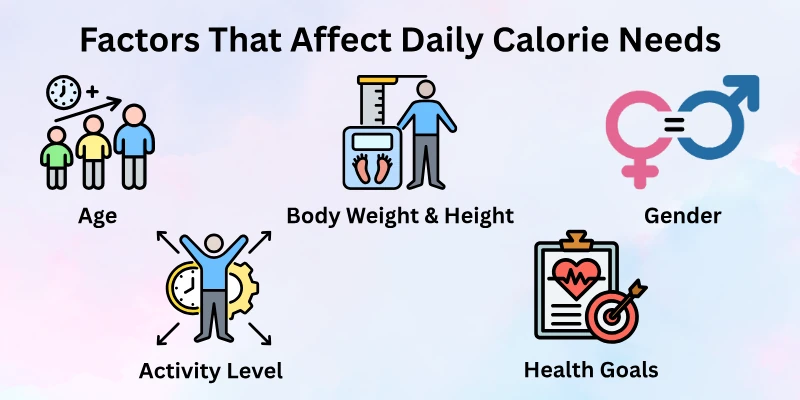
- Age: As you get older, your metabolism slows down, so you may need fewer calories.
- Gender: Men usually need more calories than women because of differences in body composition.
- Body Weight and Height: Bigger bodies burn more energy, so they need more calories.
- Activity Level: People who are active need more calories than those who are sedentary.
- Health Goals: Your goals, like losing weight, gaining weight, or maintaining it, change how many calories you should eat.
How to Calculate Your Daily Calorie Needs
Knowing how many calories should I eat daily starts with understanding your body’s energy needs. The most common way to calculate this is by using your BMR (Basal Metabolic Rate) and multiplying it by your activity level.
1. What is BMR?
BMR is the number of calories your body needs at rest to keep vital functions running, like breathing, circulating blood, and keeping your organs working. It does not include calories burned through exercise or daily activities.
2. Basic Formula to Calculate Calories
A simple way to estimate your daily calories is:
Daily Calorie Needs = BMR × Activity Level
Step 1: Calculate BMR
You can use formulas like the Mifflin-St Jeor Equation:
For men:
BMR = 10 × weight(kg) + 6.25 × height(cm) − 5 × age(years) + 5
For women:
BMR = 10 × weight(kg) + 6.25 × height(cm) − 5 × age(years) − 161
Step 2: Multiply by Activity Level
Choose an activity factor based on your daily routine:
- Sedentary (little or no exercise): × 1.2
- Lightly active (light exercise 1–3 days/week): × 1.375
- Moderately active (moderate exercise 3–5 days/week): × 1.55
- Very active (hard exercise 6–7 days/week): × 1.725
- Extra active (very hard exercise or physical job): × 1.9
3. Use Online Calorie Calculators
If you don’t want to do the math, many online calculators do it for you. Simply enter your:
- Age
- Gender
- Weight and height
- Activity level
The calculator will tell you how many calories should I eat daily for maintenance, weight loss, or weight gain.
4. Examples
Example 1: A 30-year-old woman, 65 kg, 165 cm, lightly active:
- BMR ≈ 1,400 calories
- Daily Calories = 1,400 × 1.375 ≈ 1,925 calories/day
Example 2: A 25-year-old man, 75 kg, 175 cm, moderately active:
- BMR ≈ 1,770 calories
- Daily Calories = 1,770 × 1.55 ≈ 2,743 calories/day
These examples show that calorie needs change depending on age, gender, weight, height, and activity level.
Recommended Daily Calorie Intake (Average)
After understanding your personal factors and how to calculate calories, it’s helpful to know the average daily calorie intake for most people.
These numbers are general estimates and can vary depending on activity level, age, and health goals. Using these guidelines can help you plan meals and manage your weight in a healthy way.
| Age Group | Gender | Activity Level | Average Calories per Day |
|---|---|---|---|
| 2–3 years | Both | Active | 1,000–1,400 |
| 4–8 years | Both | Active | 1,200–1,800 |
| 9–13 years | Girls | Active | 1,600–2,200 |
| 9–13 years | Boys | Active | 1,800–2,600 |
| 14–18 years | Girls | Active | 1,800–2,400 |
| 14–18 years | Boys | Active | 2,200–3,200 |
| 19–30 years | Women | Sedentary | 1,800–2,000 |
| 19–30 years | Women | Active | 2,000–2,400 |
| 19–30 years | Men | Sedentary | 2,400–2,600 |
| 19–30 years | Men | Active | 2,600–2,800 |
| 31–50 years | Women | Sedentary | 1,800–2,000 |
| 31–50 years | Women | Active | 2,000–2,200 |
| 31–50 years | Men | Sedentary | 2,200–2,400 |
| 31–50 years | Men | Active | 2,400–2,800 |
| 51+ years | Women | Sedentary | 1,600–2,000 |
| 51+ years | Women | Active | 1,800–2,200 |
| 51+ years | Men | Sedentary | 2,000–2,600 |
| 51+ years | Men | Active | 2,200–2,800 |
Note: Children and teens need fewer calories than adults, but growing bodies need nutrient-rich food. Seniors may need fewer calories due to lower activity but still require healthy nutrients.
Adjusting Calories for Goals
Once you know how many calories should I eat daily, you can adjust your intake based on your health and fitness goals.
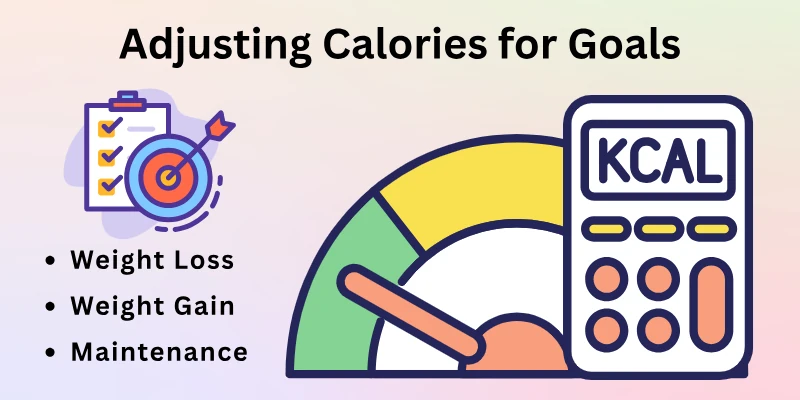
Whether you want to lose weight, gain weight, or maintain your current weight, the key is to balance the calories you eat with the calories your body uses.
- Weight Loss: Eat fewer calories than your body burns to lose weight safely.
- Weight Gain: Eat more calories than your body burns to gain weight gradually.
- Maintenance: Eat roughly the same number of calories your body uses to maintain your current weight.
Tips for Healthy Calorie Management
Managing your calories doesn’t have to be hard. Small, simple changes in your daily habits can help you stay on track and reach your health goals.
- Track calories using apps or a food diary to know how much you eat.
- Focus on nutrient-rich foods like vegetables, fruits, whole grains, and lean protein.
- Avoid empty calories from sugary drinks, fast food, and snacks.
- Eat balanced meals with protein, carbs, and healthy fats.
- Drink plenty of water to stay full and support your metabolism.
Common Myths About Calories
There are many myths about calories that can confuse people. Understanding the truth helps you make better food choices and reach your goals.
- Myth 1: Eating less always leads to faster weight loss – not true; too few calories can slow your metabolism.
- Myth 2: All calories are equal – false; quality of calories matters more than quantity.
- Myth 3: Skipping meals helps reduce calories – can be harmful and may lead to overeating later.
- Myth 4: You can eat anything if you stay within calories – choosing healthy foods is important for nutrients and energy.
- Myth 5: Only exercise matters for calorie burning – both diet and activity are important.
Conclusion
In this guide, we have covered how many calories should I eat daily and the key factors that affect your calorie needs. Remember, your body is unique, so listen to it, eat balanced meals, and adjust your calories according to your goals. Personally, I recommend focusing on healthy, nutrient-rich foods rather than just numbers. This will keep your energy high and your body strong.
Take small steps, track your progress, and stay consistent. Good luck on your journey to better health, and don’t forget to check the FAQs below for more helpful tips!
FAQs
Here are some of the most commonly asked questions related to the number of calories you should intake daily:
To lose weight, you need to eat fewer calories than your body burns. A safe approach is to reduce 500 calories per day, which can help you lose about 0.5 kg (1 pound) per week. Always choose healthy foods, so you get enough nutrients while losing weight.
On average, adult women need about 1,800–2,200 calories per day, and adult men need about 2,200–2,800 calories. Your exact needs depend on your age, weight, height, and activity level. More active people require more calories than less active people.
Not exactly. While staying within calories can help control weight, the quality of food matters. Choose healthy, nutrient-rich foods like fruits, vegetables, whole grains, and protein instead of sugary or processed foods.
If you gain weight over time, you might be eating more calories than needed. If you feel weak or lose weight too fast, you may be eating too few. Tracking your calories and monitoring your body changes can help you find the right balance.
Counting calories every day is not necessary for everyone. You can track your meals for a few weeks to understand your eating habits. Later, you can focus on healthy portion sizes and balanced meals without strict counting.
The more active you are, the more calories your body burns. Sedentary people need fewer calories, while those who exercise regularly or have physically demanding jobs need more. Adjusting calories based on activity helps maintain, lose, or gain weight effectively.
No, all calories are not the same. Calories from protein, carbs, and fat affect your body differently. Eating nutrient-rich foods gives you energy, vitamins, and minerals, while empty calories from sugar and junk food don’t.
Children and teens should not follow adult calorie numbers because their bodies are still growing. They need the right calories and nutrients for healthy growth. Parents should focus on balanced meals with healthy snacks for kids.
You can use online calorie calculators that ask for your age, gender, weight, height, and activity level. They estimate how many calories you need to maintain, lose, or gain weight. This is easier than using complicated formulas on your own.
Yes, it’s normal for calorie intake to vary daily. Your body can adjust as long as your average intake matches your goal over time. Focus on consistent healthy habits rather than perfect daily numbers.






- Be Respectful
- Stay Relevant
- Stay Positive
- True Feedback
- Encourage Discussion
- Avoid Spamming
- No Fake News
- Don't Copy-Paste
- No Personal Attacks
- Be Respectful
- Stay Relevant
- Stay Positive
- True Feedback
- Encourage Discussion
- Avoid Spamming
- No Fake News
- Don't Copy-Paste
- No Personal Attacks
