10+ Best Foods For Hormone Balance & Natural Health
Published: 14 Jun 2026
Hormones control almost every important function in your body. They affect your mood, metabolism, sleep, energy levels, skin health, and even your weight.
When we talk about hormone balance, we mean keeping these chemical messengers working properly without sudden spikes or drops. A balanced diet plays a major role in supporting healthy hormone production.
But guys, many people struggle with fatigue, mood swings, weight gain, or irregular cycles, and they do not realize that food choices can make a big difference. So how can you naturally support your hormones without complicated plans?
In this guide, I will share the best foods for hormone balance that you can easily include in your daily routine. So, without wasting time, let us dig in!
Best Foods For Hormone Balance
Hormones play an important role in regulating energy, mood, metabolism, and overall health. Eating the right foods can help support natural hormone balance and reduce fluctuations that may affect your well-being.
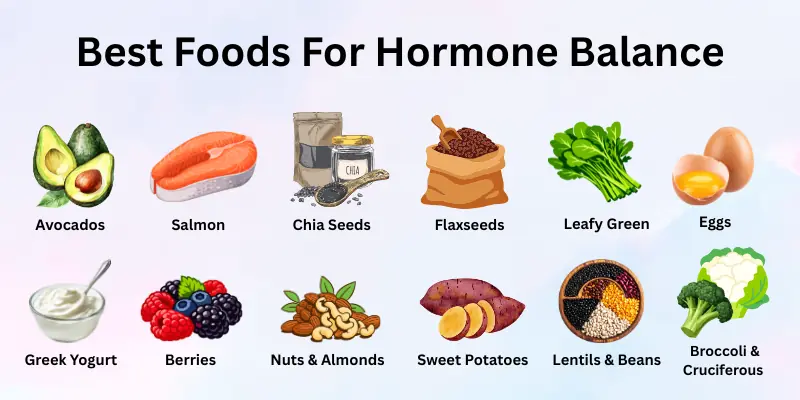
A nutrient-rich, balanced diet provides the essential vitamins, healthy fats, and antioxidants your body needs to maintain stable hormone levels. Here is the list of all the best foods for hormone balance:
- Avocados
- Salmon
- Chia Seeds
- Flaxseeds
- Leafy Green Vegetables
- Eggs
- Greek Yogurt
- Berries
- Nuts And Almonds
- Sweet Potatoes
- Broccoli And Cruciferous Vegetables
- Lentils And Beans
Let us learn about their benefits and preparation ideas in great detail.
1. Avocados
Avocados are rich in healthy fats that support hormone production. Your body needs good fats to create important hormones. I often suggest adding avocados to daily meals for better skin and stable energy. They also help control blood sugar levels. This reduces sudden cravings and mood swings. They are creamy, filling, and very easy to include in meals.
How To Prepare:
- Slice avocado and add to salads.
- Spread mashed avocado on whole wheat toast.
- Add cubes to smoothies.
- Mix with lemon and salt for a simple side dish.
- Use in wraps and sandwiches.
2. Salmon
Salmon contains healthy fats that support hormone health. These fats reduce inflammation in the body. I personally recommend salmon for people struggling with stress and fatigue. It supports brain and heart health as well. Eating it twice a week can be very helpful. It also keeps you full for longer.
How To Prepare:
- Season salmon with salt and pepper.
- Add lemon juice.
- Bake for 15 minutes.
- Serve with vegetables.
- Store leftovers for next-day lunch.
3. Chia Seeds
Chia seeds are small but powerful. They contain fiber and healthy fats that help regulate blood sugar. Stable blood sugar supports balanced hormones. I suggest adding them to breakfast daily. They also improve digestion. They are easy to use and affordable.
How To Prepare:
- Add one spoon to smoothies.
- Mix into yogurt.
- Prepare chia pudding with milk.
- Sprinkle on oatmeal.
- Add to homemade energy bites.
4. Flaxseeds
Flaxseeds support estrogen balance in the body. They are rich in fiber and plant nutrients. I often advise women to include flaxseeds in their diet. They support digestion and reduce bloating. They are easy to grind and store. Regular use may improve hormonal stability.
How To Prepare:
- Grind flaxseeds before use.
- Add to smoothies.
- Mix into oatmeal.
- Add to roti or pancake batter.
- Sprinkle over salads.
5. Leafy Green Vegetables
Leafy greens like spinach and kale are rich in vitamins and minerals. They support liver function, which helps regulate hormones. I always recommend eating greens daily. They improve energy and reduce inflammation. They are low in calories but high in nutrients. They also support healthy digestion.
How To Prepare:
- Add spinach to omelettes.
- Blend into green smoothies.
- Steam and serve as a side dish.
- Add to soups.
- Use in salads.
6. Eggs
Eggs provide high-quality protein and healthy fats. They help control hunger hormones. I suggest eating eggs for breakfast to stay full longer. They support muscle repair and metabolism. They are affordable and easy to cook. They fit into many meal plans.
How To Prepare:
- Boil eggs for quick snacks.
- Make scrambled eggs with vegetables.
- Prepare omelettes.
- Add to salads.
- Use in whole-grain sandwiches.
7. Greek Yogurt
Greek yogurt supports gut health, which directly affects hormones. A healthy gut improves nutrient absorption. I personally recommend plain yogurt without added sugar. It supports digestion and immunity. It also provides protein. It works well as a breakfast or a snack.
How To Prepare:
- Eat plain with berries.
- Add nuts for crunch.
- Blend into smoothies.
- Use as a salad dressing base.
- Mix with honey lightly.
8. Berries
Berries are rich in antioxidants. They help reduce inflammation that can disturb hormones. I often suggest adding berries to daily meals. They are naturally sweet and healthy. They support skin and immune health. They also control sugar cravings.
How To Prepare:
- Add to oatmeal.
- Mix into yogurt.
- Blend into smoothies.
- Eat as a snack.
- Add to salads.
9. Nuts And Almonds
Nuts provide healthy fats and protein. They support balanced blood sugar levels. I recommend a small handful daily. They reduce cravings and improve energy. They are easy to carry. They are perfect for busy routines.
How To Prepare:
- Eat raw as a snack.
- Add to yogurt.
- Mix into salads.
- Use in smoothies.
- Make homemade nut butter.
10. Sweet Potatoes
Sweet potatoes provide healthy carbohydrates. They support stable energy and blood sugar. I suggest replacing refined carbs with sweet potatoes. They are rich in vitamins. They keep you full for longer. They support balanced insulin levels.
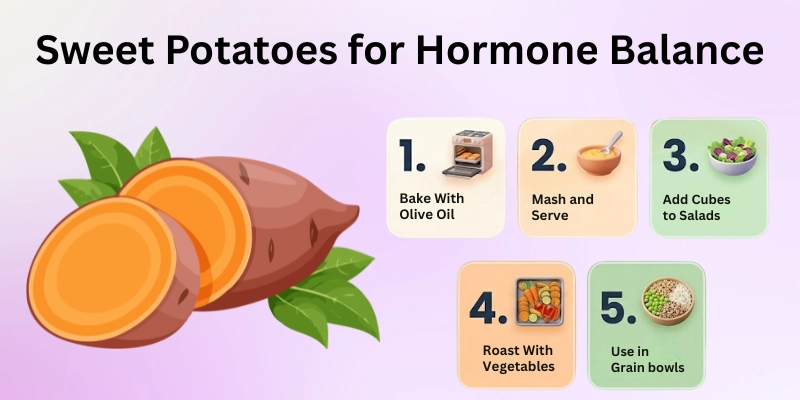
How To Prepare:
- Bake with olive oil.
- Mash and serve as a side dish.
- Add cubes to salads.
- Roast with vegetables.
- Use in grain bowls.
11. Broccoli And Cruciferous Vegetables
Broccoli supports hormone detox in the body. It helps balance estrogen levels. I recommend including it several times a week. It supports liver health. It is rich in fiber and vitamins. It works well in many dishes.
How To Prepare:
- Steam lightly.
- Stir fry with garlic.
- Add to soups.
- Roast in the oven.
- Mix into salads.
12. Lentils And Beans
Lentils and beans provide plant protein and fiber. They help regulate blood sugar. I often suggest them for balanced meal plans. They are affordable and filling. They support digestion. They are excellent for vegetarian diets.
How To Prepare:
- Boil and add to salads.
- Cook lentil soup.
- Use in wraps.
- Add to rice bowls.
- Prepare bean curry.
Lifestyle Habits That Support Hormone Balance
Food plays a major role in hormone health, but lifestyle habits also matter. I always tell my clients that sleep, stress control, and regular exercise are equally important. When you combine healthy food with proper habits, results improve faster. Small changes create long-term balance. Consistency is the key.
Helpful Habits:
- Sleep at least seven hours daily.
- Manage stress with breathing exercises.
- Exercise three to four times a week.
- Drink enough water daily.
- Avoid excessive processed sugar.
Final Note
In this guide, we have covered the best foods for hormone balance that support natural health and stability. As a diet expert, I always remind people that hormones respond to consistent habits. You do not need extreme diets or complicated routines. Simple whole foods and balanced meals can improve your energy, mood, and overall health.
Stay connected and explore more helpful guides on this site to improve your health step by step.
FAQs
Here are some of the most commonly asked questions related to the best foods for hormone balance:
The best foods for hormone balance include healthy fats, fiber-rich vegetables, and quality protein. Foods like salmon, avocados, and leafy greens are very helpful. They support hormone production and stability. Consistent healthy eating brings better results.
Yes, diet directly affects hormone levels. Poor food choices can disturb blood sugar and insulin. Balanced meals support stable hormone function. Nutrition plays a key role in overall health.
Results depend on your body and lifestyle. Some people notice changes in a few weeks. Consistency is very important. Healthy eating combined with proper sleep improves results.
Yes, healthy fats are essential for hormone production. Your body uses fats to create hormones. Include sources like nuts and fish. Avoid unhealthy trans fats.
Limit processed sugar and refined carbohydrates. Avoid excessive fried foods. Reduce packaged snacks. Choose whole and natural foods instead.
Yes, fiber helps regulate blood sugar. Stable blood sugar supports hormone stability. Vegetables, lentils, and whole grains are excellent sources. Include them daily.
Yes, protein supports muscle and metabolic health. It also controls hunger hormones. Include eggs, beans, and fish in your diet. Balanced protein intake improves energy.
Yes, stress can disturb hormone levels. Even healthy food may not fully help if stress is high. Manage stress through exercise and relaxation. A balanced lifestyle improves hormone health.
Yes, vegetarian diets can support hormone health. Include lentils, beans, nuts, and seeds. Ensure balanced protein intake. Variety is important for complete nutrition.
There is no single most important nutrient. Healthy fats, protein, and fiber all matter. Balanced meals provide all essential nutrients. Consistency brings long-term hormone stability.





- Be Respectful
- Stay Relevant
- Stay Positive
- True Feedback
- Encourage Discussion
- Avoid Spamming
- No Fake News
- Don't Copy-Paste
- No Personal Attacks
- Be Respectful
- Stay Relevant
- Stay Positive
- True Feedback
- Encourage Discussion
- Avoid Spamming
- No Fake News
- Don't Copy-Paste
- No Personal Attacks
