Home Remedies for Nosebleeds: Natural Ways to Stop Bleeding
Published: 7 Aug 2026
Nosebleeds can happen without warning and often feel alarming, especially when the bleeding starts suddenly. In many cases, they result from dry air, nose picking, allergies, or minor irritation inside the nose. The good news is that most nosebleeds are not serious and can be managed at home with simple care.
Knowing the right home remedies for nosebleeds can help you stop the bleeding quickly and reduce discomfort. From using a cold compress to keeping your nasal passages moist, several easy methods may provide relief.
In this guide, you’ll learn effective home remedies for nosebleeds, practical prevention tips, and signs that it may be time to seek medical attention.
Best Home Remedies for Nosebleeds
Many nosebleeds can be managed at home with simple remedies that help stop bleeding and keep the nasal passages moist. These methods may also reduce irritation and lower the risk of future nosebleeds.

Try these home remedies for nosebleeds to find relief and support healing.
- Ice Pack or Cold Compress
- Saline Nasal Spray
- Petroleum Jelly
- Humidifier Therapy
- Steam Inhalation
- Drinking More Water
- Avoid Nose Picking and Irritation
Below, you’ll learn how each remedy works and the best way to use it safely.
1. Ice Pack or Cold Compress
An ice pack or cold compress is one of the most common home remedies for nosebleeds. Cold temperatures help narrow blood vessels inside the nose, which may slow bleeding. This simple remedy is easy to use and often provides quick relief when a nosebleed occurs.
- Wrap ice cubes in a clean cloth or use a cold pack.
- Place it gently on the bridge of your nose.
- Leave it in place for 10 to 15 minutes.
- Sit upright and lean slightly forward while applying it.
- Avoid placing ice directly on your skin.
Using a cold compress may help reduce bleeding and make you more comfortable while the nose heals.
2. Saline Nasal Spray
Dry nasal passages are one of the most common causes of nosebleeds. A saline nasal spray helps moisten the nasal passages and may reduce irritation from dry air. It is a simple and gentle option that many people use as part of their nosebleed treatment at home.
- Helps keep the nasal passages moist.
- May reduce dryness, irritation, and crusting inside the nose.
- Can be especially helpful during dry weather or winter months.
- Follow the instructions on the product label when using it.
- Use it regularly if dry air frequently triggers nosebleeds.
- Avoid sharing nasal sprays with others.
Keeping the inside of your nose moist with a saline spray may help prevent dryness-related nosebleeds and support healing.
3. Petroleum Jelly
Petroleum jelly is a common remedy for nosebleeds caused by dry nasal passages. It helps lock in moisture and creates a protective barrier inside the nose. This may reduce irritation, prevent crusting, and support the healing of delicate nasal tissues.
- Apply a small amount inside each nostril using a clean cotton swab or fingertip.
- Use a thin layer to avoid discomfort.
- Consider applying it before bedtime if dry air often causes nosebleeds.
- Reapply as needed to help keep the nasal passages moist.
Keeping the inside of the nose moisturized with petroleum jelly may help reduce dryness and lower the risk of recurring nosebleeds.
4. Humidifier Therapy
Dry indoor air can irritate the nasal passages and make nosebleeds more likely, especially during winter or in air-conditioned rooms. A humidifier adds moisture to the air, which helps prevent the inside of the nose from becoming too dry. This simple change can make a big difference for people who experience frequent nosebleeds.
- Use a humidifier in your bedroom or the room where you spend most of your time.
- Keep the humidity level at a comfortable range to avoid overly dry air.
- Clean the humidifier regularly according to the manufacturer’s instructions.
- Refill it with fresh water as needed.
Adding moisture to the air may help keep your nasal passages comfortable and reduce the risk of dryness-related nosebleeds.
5. Steam Inhalation
Steam inhalation may help relieve dryness inside the nose by adding moisture to the nasal passages. It is a simple home remedy that many people use when dry air, seasonal changes, or indoor heating irritates the nose. Keeping the nasal tissues hydrated may help reduce discomfort and support healing.
- Fill a bowl with hot water and allow it to cool slightly before use.
- Lean over the bowl and gently inhale the steam for several minutes.
- Keep a safe distance from the water to avoid burns.
- Stop immediately if you feel dizzy or uncomfortable.
- Repeat as needed to help relieve nasal dryness.
Steam inhalation may help keep the nasal passages moist, which can lower the risk of nosebleeds caused by dryness.
6. Drinking More Water
Staying hydrated plays an important role in keeping the body and nasal passages healthy. When you do not drink enough water, the tissues inside your nose can become dry and irritated. This dryness may increase the likelihood of nosebleeds, especially during hot weather or in dry environments.
- Drink water regularly throughout the day instead of waiting until you feel thirsty.
- Increase your fluid intake during hot weather or when exercising.
- Eat water-rich foods such as cucumbers, watermelon, and oranges.
- Limit drinks that may contribute to dehydration if consumed in excess.
Maintaining good hydration may help keep the nasal passages moist and reduce the risk of dryness-related nosebleeds.
7. Avoid Nose Picking and Irritation
The inside of the nose contains delicate blood vessels that can break easily when irritated. Frequent nose picking, rubbing, or aggressive nose blowing may damage these tissues and trigger bleeding. Giving the nose time to heal can help prevent recurring nosebleeds and reduce further irritation.
- Avoid picking or scratching the inside of your nose.
- Blow your nose gently, especially after a recent nosebleed.
- Keep fingernails trimmed to reduce accidental injury.
- Use tissues carefully to avoid irritating sensitive nasal tissues.
- Try to avoid touching your nose unnecessarily while it heals.
Protecting the nasal passages from irritation may help prevent future nosebleeds and support the healing process.
Note: Some people use natural moisturizers such as coconut oil, aloe vera gel, or vitamin E oil to help relieve nasal dryness. While these options may provide temporary moisture, evidence supporting their effectiveness for nosebleeds remains limited. If you choose to use them, apply only a small amount and discontinue use if irritation occurs.
What to Do Immediately When a Nosebleed Starts
A nosebleed can be surprising, but staying calm and taking the right steps can help stop the bleeding more quickly. Simple first-aid measures often work well for minor nosebleeds and may prevent the situation from getting worse.
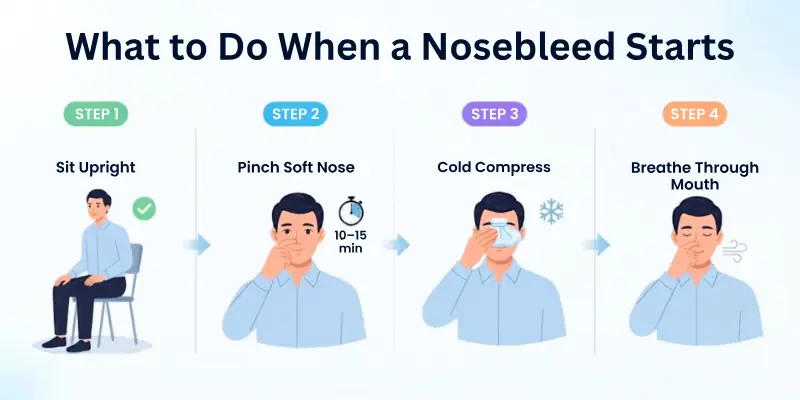
Follow these steps as soon as a nosebleed starts:
- Sit Upright and Lean Forward
- Pinch the Soft Part of Your Nose
- Apply a Cold Compress
- Stay Calm and Breathe Through Your Mouth
Let’s look at each step in more detail and how it can help manage a nosebleed safely.
1. Sit Upright and Lean Forward
Sitting upright is one of the first things you should do when a nosebleed begins. This position helps reduce blood pressure in the veins of the nose and may slow the bleeding. Leaning forward also prevents blood from flowing down the back of your throat.
- Sit in a comfortable upright position.
- Lean your head slightly forward.
- Avoid lying down or tilting your head backward.
- Keep your body relaxed while waiting for the bleeding to stop.
This simple step can help control bleeding and make a nosebleed easier to manage.
2. Pinch the Soft Part of Your Nose
Applying gentle pressure is one of the most effective ways to stop a nosebleed. Pinching the soft part of the nose helps compress the blood vessels and may slow or stop the bleeding.
- Use your thumb and index finger to pinch the soft part of your nose.
- Hold steady pressure for 10 to 15 minutes.
- Avoid releasing the pressure too soon to check the bleeding.
- Breathe through your mouth while holding your nose.
Maintaining steady pressure gives the blood vessels time to seal and may help stop the bleeding more quickly.
3. Apply a Cold Compress
A cold compress may help narrow blood vessels and reduce blood flow to the area. Many people use this method along with gentle pressure on the nose for additional relief.
- Wrap ice cubes or a cold pack in a clean cloth.
- Place it gently on the bridge of your nose.
- Leave it in place for 10 to 15 minutes.
- Avoid applying ice directly to the skin.
Using a cold compress may help reduce bleeding and make you more comfortable during a nosebleed.
4. Stay Calm and Breathe Through Your Mouth
It is normal to feel worried when a nosebleed starts, but staying calm can make the situation easier to manage. Stress and panic may make it harder to follow the proper steps. Breathing through your mouth allows you to keep steady pressure on your nose without interruption.
- Take slow, steady breaths through your mouth.
- Avoid talking unnecessarily while the bleeding continues.
- Remain seated and relaxed.
- Continue following the recommended first-aid steps.
Staying calm helps you manage the nosebleed effectively and gives your body time to stop the bleeding naturally.
Home Remedies That May Not Be Safe
While many home remedies for nosebleeds can help, some common practices may do more harm than good. Avoiding these mistakes can help you manage a nosebleed safely and prevent further irritation.
- Tilting Your Head Back: This may cause blood to flow down the throat, which can lead to coughing, nausea, or discomfort.
- Excessive Nose Packing: Placing too much tissue or cotton inside the nose may irritate the nasal lining and interfere with healing.
- Unproven Herbal Treatments: Some herbal remedies lack scientific support and may irritate sensitive nasal tissues.
Using safe, well-known remedies is often the best approach for managing a nosebleed at home.
Natural Ways to Prevent Future Nosebleeds
Preventing nosebleeds is often easier than treating them. A few simple habits can help keep your nasal passages healthy and reduce the chances of future bleeding.
- Keep Indoor Air Moist: Use a humidifier to add moisture to the air and help prevent dryness inside the nose.
- Stay Hydrated: Drinking enough water helps keep the nasal tissues moist and less prone to irritation.
- Avoid Nose Picking: Picking the nose can damage delicate blood vessels and increase the risk of bleeding.
- Use Saline Spray Regularly: A saline spray helps keep the nasal passages moist, especially in dry environments.
- Blow Your Nose Gently: Forceful nose blowing may irritate sensitive tissues and trigger bleeding.
- Protect Your Nose During Activities: Wear appropriate protective gear during sports or activities that could cause nasal injuries.
Following these simple habits may help reduce the risk of recurring nosebleeds and support overall nasal health. Understanding the common causes of nosebleeds can also help you identify and avoid potential triggers.
When to See a Doctor for a Nosebleed
Most nosebleeds stop on their own and can be treated at home. However, some situations may require medical attention. It is important to seek professional help if you notice any of the following signs:
- The bleeding continues for more than 20 minutes after applying pressure.
- Nosebleeds occur frequently or keep coming back.
- The bleeding is heavy or difficult to control.
- The nosebleed happens after a fall, accident, or injury to the face.
While most nosebleeds are not serious, persistent or severe bleeding should not be ignored. If you experience other warning signs along with a nosebleed, learn more about the common symptoms of nosebleeds and when they may require medical evaluation.
Conclusion
In this guide, we explored several home remedies for nosebleeds, from using a cold compress and saline nasal spray to keeping the nasal passages moist and avoiding irritation. These simple steps can often help stop minor nosebleeds and reduce the chances of them happening again.
Most nosebleeds are not serious and can be managed at home with proper care. However, if the bleeding is severe, lasts longer than expected, or occurs frequently, it is important to seek medical advice.
By following the right treatment and prevention strategies, you can help keep your nasal passages healthy and lower your risk of future nosebleeds.
FAQs: About Home Remedies for Nosebleeds
Below are answers to some frequently asked questions about home remedies for nosebleeds and how to prevent them.
If you are wondering how to stop a nosebleed fast, here are a few simple steps that may help:
- Sit upright and lean forward.
- Pinch the soft part of your nose.
- Hold pressure for 10 to 15 minutes.
- Apply a cold compress if needed.
These simple first-aid steps can often help stop a minor nosebleed quickly.
Many home remedies for nosebleeds can be effective for minor bleeding caused by dryness or irritation. Common options include saline nasal spray, petroleum jelly, and cold compresses. However, severe or recurring nosebleeds may require medical attention.
Yes, dry air is one of the most common causes of nosebleeds. It can dry out the nasal passages and make blood vessels more likely to crack and bleed. Using a humidifier and staying hydrated may help prevent this problem.
Petroleum jelly may help prevent nosebleeds by keeping the inside of the nose moist. It creates a protective barrier that reduces dryness and irritation. Applying a small amount regularly can be helpful for people with dry nasal passages.
Most saline nasal sprays can be used several times a day as needed. They help keep the nasal passages moist and may reduce dryness-related nosebleeds. Always follow the instructions provided with the product.
To avoid making a nosebleed worse, try not to do the following:
- Tilt your head back.
- Lie flat on your back.
- Pack your nose with excessive tissue or cotton.
- Blow your nose immediately after the bleeding stops.
Avoiding these mistakes may help a nosebleed stop more quickly and reduce further irritation.
Dehydration can contribute to dry nasal tissues, which may increase the risk of nosebleeds. Drinking enough water helps maintain moisture throughout the body, including the nasal passages. Proper hydration is an important part of nosebleed prevention.
Nosebleeds are more common in winter because indoor heating and cold outdoor air can dry out the nasal passages. Dry tissues are more likely to crack and bleed. Using a humidifier may help reduce winter-related nosebleeds.
Occasional nosebleeds are usually not serious, but frequent nosebleeds should not be ignored. Repeated bleeding may indicate an underlying issue that needs medical evaluation. A healthcare professional can help determine the cause.
Seek medical attention if your child experiences any of the following:
- A nosebleed that lasts longer than 20 minutes.
- Frequent or recurring nosebleeds.
- Heavy bleeding that is difficult to control.
- A nosebleed after an injury or accident.





- Be Respectful
- Stay Relevant
- Stay Positive
- True Feedback
- Encourage Discussion
- Avoid Spamming
- No Fake News
- Don't Copy-Paste
- No Personal Attacks
- Be Respectful
- Stay Relevant
- Stay Positive
- True Feedback
- Encourage Discussion
- Avoid Spamming
- No Fake News
- Don't Copy-Paste
- No Personal Attacks
