Symptoms of Enlarged Tonsils: Early Signs and Warning Clues
Published: 13 Aug 2026
Enlarged tonsils are a common condition that can quietly affect breathing, swallowing, and even sleep without being immediately noticed. In many cases, the first clues appear as everyday discomforts like a sore throat, snoring, or a constant feeling of something stuck in the throat.
These signs of enlarged tonsils can vary in intensity, making them easy to overlook at the beginning. Understanding these signs early is important because they often develop gradually and can look different in children and adults.
In this article, we’ll go through the most important symptoms of enlarged tonsils so you can recognize them clearly and know what to look out for.
Main Symptoms of Enlarged Tonsils
The symptoms of enlarged tonsils can affect different parts of the body, especially the throat, breathing, sleep, and even speech. These signs may appear gradually and vary in intensity from person to person. Recognizing them early can help you understand what is happening in the throat.
Let’s break down these symptoms in detail:
1. Throat-Related Symptoms
Throat-related symptoms are often the first and most noticeable signs of enlarged tonsils. These symptoms mainly affect swallowing and throat comfort.
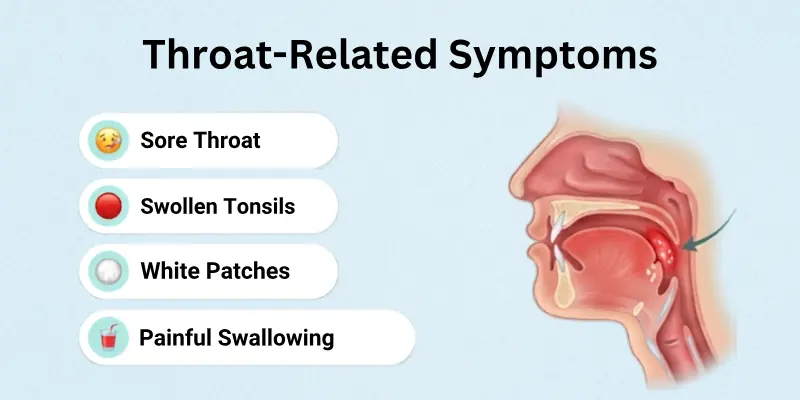
Here are the main throat-related symptoms:
- Sore throat
- Red and swollen tonsils
- White patches or spots
- Pain or difficulty while swallowing
Sore throat
A sore throat is one of the most common symptoms of enlarged tonsils. As the tonsils become swollen, they can irritate surrounding tissues and cause pain or discomfort, especially while swallowing.
Red and swollen tonsils
Red and swollen tonsils mean the tonsils become inflamed and appear larger and redder than normal. This can cause a feeling of tightness or blockage in the throat and may make swallowing uncomfortable.
White patches or spots
White patches or spots are visible marks that can appear on the tonsils, usually due to infection or inflammation. They are often noticeable when looking inside the mouth and may be associated with throat discomfort or irritation.
Pain or difficulty while swallowing
Enlarged tonsils can reduce the space in the throat, making swallowing food, liquids, or even saliva uncomfortable or painful. It can feel like food is moving slowly or getting stuck in the throat, making eating and drinking difficult at times.
2. Breathing Symptoms
Breathing symptoms of enlarged tonsils occur when the swollen tonsils partially block the airway. This can make normal breathing feel difficult, especially during sleep or physical activity.
Here are the main breathing symptoms:
- Mouth breathing due to blockage
- Noisy breathing
- Feeling of throat obstruction
Mouth breathing due to blockage
This happens when enlarged tonsils partially block the normal airflow through the nose and throat. As a result, the person starts breathing through the mouth instead of the nose. It is often more noticeable during sleep or physical activity.
Noisy breathing
Noisy breathing happens when air passes through a narrowed airway caused by enlarged tonsils. It can produce sounds like snoring or rough breathing. This is often more noticeable during sleep or when the person is lying down.
Feeling of throat obstruction
This symptom feels like something is blocking or narrowing the throat. It can make breathing feel slightly difficult or uncomfortable. The person may constantly feel awareness or pressure in the throat area.
3. Sleep-Related Symptoms
Sleep-related symptoms of enlarged tonsils occur when the airway becomes partially blocked during sleep. This can disturb normal breathing patterns and affect sleep quality.
Here are the main sleep-related symptoms:
- Loud snoring
- Restless or disturbed sleep
- Waking up multiple times at night
- Breathing pauses during sleep (in severe cases)
Loud snoring
Loud snoring happens when air struggles to pass through a narrowed airway caused by enlarged tonsils. This creates a vibrating sound during breathing while sleeping. It is often more noticeable at night and may disturb sleep quality.
Restless or disturbed sleep
Restless or disturbed sleep means the person does not get deep or peaceful sleep due to breathing discomfort. They may keep changing positions or feel uneasy during the night. This can result in poor rest and daytime tiredness.
Waking up multiple times at night
This symptom means the person wakes up repeatedly during sleep without a clear reason. It often happens due to breathing discomfort or throat blockage. As a result, sleep becomes broken and less refreshing.
Breathing pauses during sleep
In severe cases, enlarged tonsils can temporarily block the airway during sleep. This may cause brief pauses in breathing that can happen multiple times throughout the night. These interruptions can affect sleep quality and may require medical evaluation.
4. Voice & Speech Changes
Enlarged tonsils can sometimes affect the way a person speaks and how their voice sounds. This happens when the swollen tonsils reduce the space in the throat and interfere with normal airflow.
Here are the main voice and speech changes:
- Muffled or blocked voice
- Difficulty speaking clearly in severe cases
Muffled or blocked voice
A muffled or blocked voice sounds less clear than usual, as if the person is speaking with something in their throat. This occurs when enlarged tonsils affect the movement of air and sound. The voice may sound deeper, nasal, or slightly unclear.
Difficulty speaking clearly in severe cases
In more severe cases, enlarged tonsils can make certain words harder to pronounce. The reduced space in the throat may affect speech clarity and make speaking feel uncomfortable. This can cause the person to sound less clear than normal.
5. General Discomfort Symptoms
In addition to throat, breathing, and sleep problems, enlarged tonsils can cause several general discomfort symptoms. These symptoms may not seem directly related to the tonsils at first, but they can still affect daily comfort and well-being.
Here are the main general discomfort symptoms:
- Feeling of something stuck in the throat
- Ear pain (referred pain)
- Bad breath (halitosis)
Feeling of something stuck in the throat
This symptom creates the sensation that there is a lump or object in the throat. It occurs because enlarged tonsils take up more space than usual. The feeling may become more noticeable when swallowing.
Ear pain (referred pain)
Ear pain can occur even when there is no problem inside the ear itself. This happens because the throat and ears share some of the same nerve pathways. As a result, discomfort from enlarged tonsils may be felt in one or both ears.
Bad breath (halitosis)
Bad breath is an unpleasant odor that comes from the mouth. Enlarged tonsils can sometimes trap bacteria and debris, which may contribute to this symptom. It can persist even with regular brushing and oral hygiene.
Symptoms of Enlarged Tonsils in Children
The symptoms of enlarged tonsils in children can sometimes be different from those seen in adults. Because children may have difficulty describing what they feel, parents often notice changes in their eating, sleeping, or behavior first.
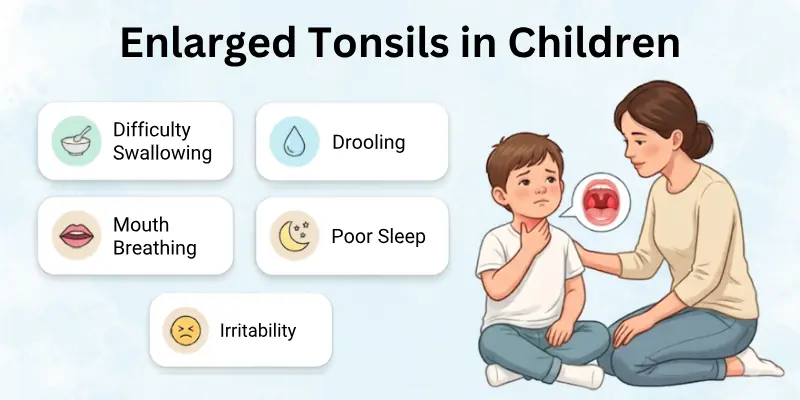
Here are the common symptoms of enlarged tonsils in children:
- Difficulty swallowing: Enlarged tonsils can make swallowing uncomfortable, causing children to eat slowly or avoid certain foods.
- Drooling: Some children may drool more than usual because swallowing saliva becomes difficult or uncomfortable.
- Mouth breathing: A blocked airway can cause a child to breathe through the mouth instead of the nose while sleeping.
- Poor sleep: Breathing difficulties during sleep can lead to restless nights and reduced sleep quality.
- Irritability: Ongoing throat discomfort and poor sleep may make children more fussy, tired, or irritable than usual.
This combination of symptoms can affect a child’s comfort, sleep, and daily activities, making early recognition important.
Symptoms of Enlarged Tonsils in Adults
The symptoms of enlarged tonsils in adults may develop gradually and can sometimes be mistaken for other throat or sleep-related issues. In many cases, these symptoms persist over time and begin to affect daily comfort and sleep quality.
Here are the common symptoms of enlarged tonsils in adults:
- Sore throat: Ongoing throat pain or irritation may persist for weeks and can make swallowing or speaking uncomfortable.
- Snoring: Enlarged tonsils can narrow the airway, leading to frequent snoring during sleep.
- Daytime fatigue: Interrupted sleep caused by breathing difficulties may leave adults feeling tired and less refreshed during the day.
- Difficulty swallowing: Large tonsils can make it harder for food to pass comfortably through the throat.
These symptoms can gradually interfere with everyday activities, making them important signs to recognize and monitor.
When These Symptoms Become Concerning
While enlarged tonsils often cause mild to moderate discomfort, some symptoms may indicate a more serious problem. If the symptoms begin to affect breathing, swallowing, or sleep regularly, they should not be ignored.
The following signs may require medical attention:
- Nighttime breathing: Difficulty breathing during sleep can affect oxygen flow and disrupt normal rest.
- Severe swallowing: If swallowing becomes very painful or food and liquids are hard to consume, it may indicate significant enlargement.
- Interrupted sleep: Repeated waking during the night due to breathing problems can affect overall sleep quality and daily functioning.
- Persistent symptoms: Symptoms that last for weeks without improvement may need further medical evaluation.
If these symptoms continue, worsen, or start interfering with daily life, it is important to seek medical advice for a proper assessment.
Conclusion
In this article, we explored the most common symptoms of enlarged tonsils, including throat discomfort, breathing difficulties, sleep-related issues, voice changes, and other signs that can affect daily life. While some symptoms may be mild, others can become more noticeable over time and interfere with normal eating, sleeping, or breathing.
Understanding these symptoms can help you recognize enlarged tonsils early and identify when the condition may need medical attention. If the symptoms persist, worsen, or begin affecting your quality of life, it is important to seek professional evaluation for proper diagnosis and guidance.
FAQs About Symptoms of Enlarged Tonsils
Here are answers to some of the most frequently asked questions about the symptoms of enlarged tonsils.
Here are some of the most common early symptoms of enlarged tonsils:
- Sore Throat
- Red and Swollen Tonsils
- Pain or Difficulty While Swallowing
- Mouth Breathing
- Mild Snoring
These symptoms may start gradually and become more noticeable as the tonsils enlarge.
Yes, enlarged tonsils can partially block the airway and make breathing more difficult. Common breathing symptoms of enlarged tonsils include mouth breathing, noisy breathing, and a feeling of throat obstruction. These symptoms are often more noticeable during sleep.
Not always. While a sore throat is one of the most common symptoms of enlarged tonsils, some people mainly experience snoring, swallowing difficulties, or sleep problems. Symptoms can vary from person to person.
Yes, enlarged tonsils can interfere with normal breathing during sleep. This may lead to loud snoring, restless sleep, or frequent nighttime awakenings. Poor sleep quality can also cause daytime fatigue.
Enlarged tonsils appear larger than normal and may look red or swollen. In some cases, white patches or spots may also be visible on the tonsils. These changes can often be seen when looking inside the mouth.
Yes, children often show symptoms such as drooling, mouth breathing, poor sleep, and difficulty swallowing. They may also become more irritable due to discomfort. Parents usually notice these changes before children describe their symptoms.
Here are some signs that may require medical attention:
- Trouble breathing at night
- Severe swallowing difficulty
- Frequent sleep interruptions
- Symptoms lasting for weeks without improvement
- Breathing pauses during sleep
Yes, snoring is a common symptom of enlarged tonsils. The enlarged tissue can narrow the airway and create vibrations during breathing while asleep. This often results in loud or persistent snoring.
Yes, enlarged tonsils can reduce the space in the throat and make swallowing uncomfortable. Some people may feel pain when swallowing food or liquids. In severe cases, solid foods may be harder to swallow.
The duration depends on the underlying cause and the severity of the enlargement. Some symptoms improve within a short period, while others may persist for weeks. Persistent symptoms should be evaluated by a healthcare professional.






- Be Respectful
- Stay Relevant
- Stay Positive
- True Feedback
- Encourage Discussion
- Avoid Spamming
- No Fake News
- Don't Copy-Paste
- No Personal Attacks
- Be Respectful
- Stay Relevant
- Stay Positive
- True Feedback
- Encourage Discussion
- Avoid Spamming
- No Fake News
- Don't Copy-Paste
- No Personal Attacks
