Advantages and Disadvantages of Jamun: Benefits, Risks & More
Published: 13 Sep 2026
Jamun, also known as black plum or Indian blackberry, is a seasonal fruit known for its deep purple color, sweet-tart taste, and impressive nutritional profile. It has been used in traditional diets for generations and is valued for its vitamins, minerals, antioxidants, and fiber. Many people enjoy jamun fresh during its short harvest season, while others consume it as juice or powder, or use it in various recipes.
Jamun is popular because it may support blood sugar control, digestion, heart health, and immunity. It is also rich in antioxidants that help protect the body from oxidative stress. However, excessive consumption may cause side effects and may not be suitable for everyone.
In this guide, we will explore the advantages and disadvantages of jamun, including its nutritional value, potential health benefits, possible risks, who should eat or avoid it, and the best time to consume it. This information will help you decide whether jamun deserves a place in your healthy diet.
Advantages of Jamun
Jamun is a nutrient-rich fruit that offers several potential health benefits. It contains fiber, antioxidants, vitamins, and minerals that may support different functions in the body. When consumed in moderation, jamun can be a healthy addition to a balanced diet.
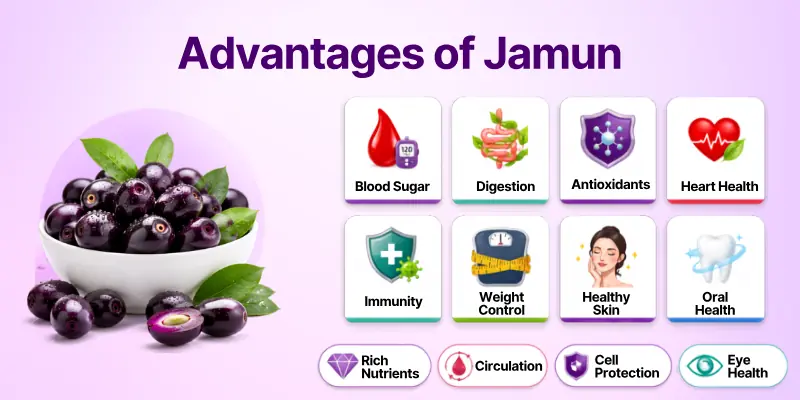
Here are some of the most important advantages of jamun:
- Blood Sugar Support
- Digestive Health
- Antioxidant Rich
- Heart Health
- Immunity Support
- Weight Management
- Skin Health
- Oral Health
- Rich in Nutrients
- Blood Circulation
- Cell Protection
- Eye Health
Let’s explore these potential benefits of jamun in detail.
1. Blood Sugar Support
Jamun may help support healthy blood sugar levels due to its fiber content and natural plant compounds. It is often included in diets focused on maintaining balanced glucose levels because it may slow sugar absorption and support better metabolic health.
The fruit contains beneficial compounds such as jamboline and antioxidants that may help manage blood sugar. While jamun can be a healthy choice, people with diabetes should eat it in moderation and follow their healthcare provider’s advice.
Key Reasons:
- May help slow sugar absorption in the body
- May support healthy blood glucose levels
- Contains compounds like jamboline that are linked with blood sugar support
- May improve insulin sensitivity
- Has a lower glycemic impact compared to some sugary foods
2. Digestive Health
Jamun may support digestive health because it contains dietary fiber that helps promote regular bowel movements and supports a healthy digestive system. Adding fiber-rich fruits like jamun to the diet may help improve digestion and prevent common digestive issues.
The natural compounds in jamun may also support gut health by promoting better digestion. However, consuming too much jamun may cause digestive discomfort in some people, so moderation is important.
Key Reasons:
- Contains dietary fiber that supports healthy digestion
- May help improve bowel regularity
- Supports smoother digestion of food
- May help prevent constipation
- Provides natural compounds that support gut health
3. Antioxidant-Rich
Jamun is rich in antioxidants that help protect the body from oxidative stress caused by free radicals. These protective compounds may support overall health by helping maintain healthy cells and reducing damage caused by environmental factors.
The deep purple color of jamun comes from plant compounds like anthocyanins, which are known for their antioxidant properties. Regularly including antioxidant-rich foods like jamun may contribute to better overall wellness.
Key Reasons:
- Contains anthocyanins and other antioxidant compounds
- Helps protect cells from oxidative stress
- Supports the body’s natural defense system
- May help reduce free radical damage
- Provides protective plant compounds
4. Heart Health
Jamun may support heart health due to its fiber, antioxidant content, and essential nutrients. These nutrients may help maintain healthy cholesterol levels and support better cardiovascular function when included as part of a balanced diet.
The antioxidants in jamun may help protect the heart from oxidative stress and support healthy blood circulation. Eating nutrient-rich fruits like jamun can contribute to overall heart wellness.
Key Reasons:
- Contains fiber that may support healthy cholesterol levels
- Provides antioxidants that protect heart cells
- May support healthy blood circulation
- Contains potassium that supports normal heart function
- May help reduce oxidative stress
5. Immunity Support
Jamun may help strengthen immunity because it contains vitamins, minerals, and antioxidants that support the body’s natural defense system. Regular intake of nutrient-rich fruits can help provide essential nutrients needed for overall wellness.
The antioxidants in jamun may help protect cells from damage and support immune health. Including jamun in a balanced diet may contribute to better protection against daily stressors.
Key Reasons:
- Contains vitamin C that supports immune function
- Provides antioxidants for cell protection
- Contains essential minerals for overall health
- Supports the body’s natural defense system
- Helps provide important nutrients
6. Weight Management
Jamun may support weight management because it is low in calories and contains fiber that helps promote fullness. Adding fiber-rich fruits like jamun to meals may help control unnecessary snacking and support a balanced diet.
Its natural nutrients and high water content make it a healthy option for people focusing on maintaining a healthy weight. However, portion control is still important for overall calorie balance.
Key Reasons:
- Low in calories compared to many sweet snacks
- Contains fiber that promotes fullness
- Helps reduce hunger between meals
- Provides nutrients without excess fat
- Supports a balanced weight-loss diet
7. Skin Health
Jamun may support healthy skin because it contains antioxidants and nutrients that help protect skin cells from damage. These compounds may support a natural glow and help maintain overall skin wellness when included in a balanced diet.
The vitamin and antioxidant content of jamun may help protect the skin from oxidative stress caused by free radicals. Eating nutrient-rich fruits like jamun can contribute to healthier-looking skin.
Key Reasons:
- Contains antioxidants that protect skin cells
- Provides vitamin C that supports collagen production
- May help reduce oxidative stress affecting skin
- Supports overall skin nourishment
- Provides plant compounds beneficial for skin health
8. Oral Health
Jamun may support oral health due to its natural compounds and antioxidant properties. Traditionally, different parts of the jamun plant have been used for oral care, while the fruit provides nutrients that support overall mouth health.
The astringent compounds in jamun may help maintain gum health and support a cleaner oral environment. However, it should be consumed as part of proper oral hygiene practices.
Key Reasons:
- Contains natural astringent compounds
- May support healthy gums
- Provides antioxidants for oral tissues
- Helps support overall mouth health
- Contains nutrients that benefit body wellness
9. Rich in Nutrients
Jamun is a nutrient-rich fruit that provides essential vitamins, minerals, fiber, and plant compounds. These nutrients help support different body functions and make jamun a healthy addition to a balanced diet.
Its combination of antioxidants and important nutrients may contribute to overall health and wellness. Including a variety of nutrient-dense fruits like jamun can help improve dietary quality.
Key Reasons:
- Provides dietary fiber
- Contains vitamin C and other vitamins
- Offers minerals like potassium and iron
- Contains beneficial plant compounds
- Provides antioxidants that support overall health
10. Blood Circulation
Jamun may support healthy blood circulation due to its antioxidants, minerals, and plant compounds. These nutrients may help maintain proper blood flow and support overall cardiovascular wellness when included in a balanced diet.
The presence of potassium and antioxidants in jamun may contribute to better blood vessel function and help protect the circulatory system. Regular consumption in moderation can support overall health.
Key Reasons:
- Contains antioxidants that support blood vessel health
- Provides potassium that helps maintain normal circulation
- May support healthy blood flow
- Helps protect blood vessels from oxidative stress
- Provides nutrients that support cardiovascular function
11. Cell Protection
Jamun is rich in protective plant compounds that may help defend body cells from damage caused by free radicals. These antioxidants play an important role in supporting healthy cells and overall wellness.
The anthocyanins and polyphenols in jamun may help reduce oxidative stress and protect cells from environmental damage. Including antioxidant-rich foods like jamun can support the body’s natural protection system.
Key Reasons:
- Contains anthocyanins and polyphenols
- Helps protect cells from free radical damage
- May reduce oxidative stress
- Supports healthy cell function
- Provides protective plant compounds
12. Eye Health
Jamun may contribute to eye health because it contains antioxidants and essential nutrients that support overall vision. A diet rich in colorful fruits can help provide compounds needed for maintaining healthy eyes.
The antioxidant properties of jamun may help protect eye cells from oxidative stress. However, a balanced diet with various fruits and vegetables is important for long-term eye wellness.
Key Reasons:
- Contains antioxidants that protect eye cells
- Provides nutrients that support overall eye health
- May help reduce oxidative stress affecting vision
- Supports healthy body tissues, including the eyes
- Adds beneficial plant compounds to the diet
Disadvantages of Jamun
Although jamun is a nutrient-rich fruit with several health benefits, consuming it in excess or under certain conditions may cause unwanted effects. Some people may experience side effects due to allergies, digestive sensitivity, or specific health concerns.
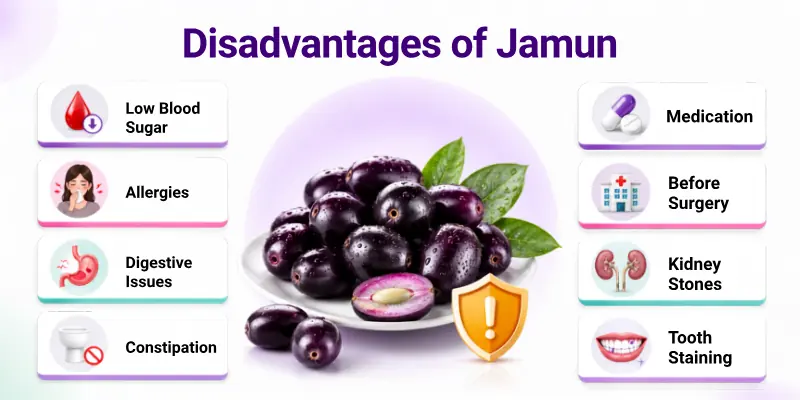
Being aware of these possible risks can help you consume jamun safely and in moderation. Here are some common disadvantages of jamun:
- Low Blood Sugar Risk
- Allergic Reactions
- Gastrointestinal Distress
- Constipation Risk
- Medication Interactions
- Surgery Concerns
- Kidney Stone Concerns
- Tooth Staining
Let’s explore these potential side effects of jamun in detail.
1. Low Blood Sugar Risk
Jamun may help support healthy blood sugar levels, but consuming too much may cause blood sugar levels to drop too low in some people. This risk may be higher for individuals taking diabetes medications or those who already have low blood sugar issues.
The blood sugar-lowering effect of jamun can vary from person to person. Eating it in moderation and monitoring blood sugar levels can help reduce possible risks.
Side Effects:
- May cause low blood sugar levels
- May lead to dizziness or weakness
- May cause excessive sweating
- May trigger shakiness
- May affect energy levels
2. Allergic Reactions
Although jamun is safe for most people, some individuals may experience allergic reactions after consuming it. These reactions usually occur when the immune system responds negatively to certain compounds present in the fruit.
People with fruit allergies should be careful and monitor their body’s response after eating jamun. If any unusual symptoms appear, it is better to stop consumption and seek medical advice.
Side Effects:
- May cause itching or skin irritation
- May trigger rashes or redness
- May cause swelling in some people
- May lead to mouth irritation
- May cause allergic discomfort
3. Gastrointestinal Distress
Eating too much jamun may cause digestive problems in some people, especially those with a sensitive stomach. Although its fiber content supports digestion, excessive intake may disturb normal digestive function.
The natural compounds and fiber in jamun may not suit everyone when consumed in large amounts. Moderation can help reduce the chances of stomach-related discomfort.
Side Effects:
- May cause bloating and gas
- May lead to stomach discomfort
- May trigger indigestion
- May cause abdominal cramps
- May result in nausea
4. Constipation Risk
Although jamun contains fiber that supports digestion, consuming it in excessive amounts may cause constipation in some people. Too much fiber without enough fluid intake can sometimes make bowel movements difficult.
People with a sensitive digestive system should consume jamun in moderation and maintain proper hydration. This can help reduce the chances of constipation and other digestive problems.
Side Effects:
- May increase constipation risk
- May make stools harder
- May slow bowel movements
- May cause difficulty passing stools
- May lead to digestive discomfort
5. Medication Interactions
Jamun may interact with certain medications, especially those used for blood sugar control. Its natural compounds may affect glucose levels, which can be a concern for people taking diabetes medicines.
People who use regular medications should consult a healthcare professional before consuming large amounts of jamun. Moderation can help avoid possible medication-related concerns.
Side Effects:
- May affect blood sugar medication response
- May increase low blood sugar risk
- May require blood sugar monitoring
- May affect glucose control with medicines
- May need medical guidance before use
6. Surgery Concerns
Jamun may require caution before surgery because its natural compounds may affect blood sugar levels. People who are preparing for a surgical procedure should inform their healthcare provider about their diet and jamun intake.
Stopping or limiting certain foods before surgery may help reduce possible complications. Always follow medical advice when managing diet around a scheduled procedure.
Side Effects:
- May affect blood sugar control before surgery
- May increase the risk of glucose fluctuations
- May require stopping intake before procedures
- May interact with certain medical recommendations
- May need doctor’s guidance before surgery
7. Kidney Stone Concerns
Jamun may require moderation for people with existing kidney problems or a history of kidney stones. Although jamun is a healthy fruit, individual tolerance can vary depending on kidney health and dietary needs.
People with kidney-related concerns should consult a healthcare professional before consuming large amounts of jamun. A balanced diet and proper guidance can help reduce possible risks.
Side Effects:
- May not suit people with kidney concerns
- May require limited intake in some cases
- May need caution with existing kidney stones
- May require medical advice for kidney conditions
- May not be suitable in excessive amounts
Who Should Eat Jamun & Who Should Avoid It?
Jamun can be a healthy addition to many diets because it contains fiber, antioxidants, vitamins, and minerals. However, it may not be suitable for everyone, especially people with certain health conditions or those taking specific medications.
1. Good For
Jamun may benefit people who want to add more nutrient-rich fruits to their diet. Its fiber and antioxidant content make it a helpful choice for supporting overall wellness when consumed in moderation.
People Who May Benefit:
- Diabetes: May support blood sugar management under medical guidance
- Antioxidants: Provides protective compounds that support overall wellness
- Weight: May help with healthy weight management due to fiber content
- Fiber: Supports digestion by providing dietary fiber
- Heart: May support cardiovascular health with beneficial nutrients
2. Bad For
Although jamun is generally safe for most people, some individuals may need to limit or avoid it due to allergies, health conditions, or medication concerns. Proper guidance can help prevent possible side effects.
People Who Should Limit or Avoid It:
- Allergy: People with jamun allergies should avoid consumption
- Sugar: Individuals with low blood sugar should use caution
- Surgery: People preparing for surgery may need to limit intake
- Digestion: Those with digestive sensitivity should consume moderately
- Medication: People taking diabetes medicines should consult a doctor
Understanding your health needs can help you decide whether jamun is the right choice for your diet.
Best and Worst Time to Eat Jamun
The timing of eating jamun can affect how well your body responds to its nutrients. Choosing the right time may help you enjoy its fiber, antioxidants, and other benefits while reducing possible digestive discomfort.
1. Best Time
Jamun is generally best consumed during the day when the body can use its nutrients effectively. Eating it as part of a balanced diet can help support overall health and wellness.
Best Times:
- Morning: A healthy addition to breakfast or a mid-morning snack
- Between Meals: Helps provide nutrients and fiber between main meals
- Fresh Season: Offers better taste and freshness during its natural season
- Balanced Diet: Works well when included with other nutritious foods
2. When to Avoid
Although jamun is safe for most people, certain situations may require limiting or avoiding its intake. Paying attention to your health condition can help prevent possible side effects.
Avoid These Situations:
- Sensitivity: Avoid on an empty stomach if it causes discomfort
- Night: Avoid eating large amounts late at night
- Surgery: Limit intake before scheduled surgical procedures
- Allergy: Avoid during allergic reactions
- Blood Sugar: Avoid when blood sugar levels are already low
Choosing the right time to eat jamun and consuming it in moderation can help you enjoy its nutritional benefits while reducing the chances of possible side effects.
Nutritional Value of Jamun
Jamun is a low-calorie fruit that provides important nutrients, including fiber, vitamins, minerals, and antioxidants. Its nutritional profile makes it a healthy addition to a balanced diet and may support digestion, immunity, and overall wellness.
Nutritional Value of Jamun (Per 100g):
| Nutrient | Amount |
| Calories | 60–75 kcal |
| Carbohydrates | 14–18 g |
| Fiber | 0.6–1 g |
| Protein | 0.7 g |
| Fat | 0.2 g |
| Vitamin C | 15–20 mg |
| Potassium | 50–80 mg |
| Calcium | 15–20 mg |
| Iron | 1–1.5 mg |
Conclusion
In this guide, we have covered the advantages and disadvantages of jamun to help you understand its health benefits, possible risks, and safe ways to enjoy this nutritious fruit. My recommendation is to consume jamun in moderation and balance its benefits with any personal health concerns. By understanding your body’s needs, choosing the right amount, and following medical advice when needed, you can enjoy jamun safely. Thank you for reading this guide, and I hope it was helpful for you.
Don’t skip the next part of the FAQs. I hope you will find something more interesting, so don’t miss it. If you miss it, you may miss something new.
FAQs
Find answers to common questions about the advantages and disadvantages of jamun.
Here are the main advantages of jamun:
- Blood Sugar: May support healthy blood sugar management
- Digestion: Supports digestive health with dietary fiber
- Antioxidants: Helps protect the body from oxidative stress
- Heart Health: May support cardiovascular wellness
- Immunity: Provides nutrients that support immune function
- Weight Management: May help support healthy weight control
Here are the common disadvantages of jamun:
- Digestion: May cause digestive discomfort when eaten in excess
- Allergy: May trigger allergic reactions in sensitive individuals
- Blood Sugar: May lower blood sugar levels in some cases
- Constipation: May affect bowel movements in some people
- Medication: May interact with certain diabetes medicines
Jamun may support blood sugar management because it contains fiber and beneficial plant compounds. However, people with diabetes should consume it in moderation and monitor their blood sugar levels. Those taking diabetes medicines should consult a healthcare professional before increasing intake.
Jamun may support weight management because it is low in calories and contains fiber that helps promote fullness. Including it in a balanced diet may help control unnecessary snacking. However, it should be combined with healthy eating habits and regular physical activity.
Jamun may support skin health because it contains antioxidants and vitamin C that help protect cells. These nutrients may contribute to healthier-looking skin as part of a nutritious diet. A balanced lifestyle is also important for maintaining healthy skin and hair.
The ideal amount of jamun can vary depending on individual health needs and diet. Eating a moderate portion is generally recommended to enjoy its benefits without overconsumption. People with specific health conditions should follow medical advice.
Here are the best times to eat jamun:
- Morning: A good time to enjoy jamun and its nutrients
- Snacks: Can be eaten between meals for added fiber
- Season: Fresh jamun is best enjoyed during its natural season
- Meals: Works well as part of a balanced diet
People with jamun allergies, low blood sugar concerns, or certain medical conditions may need to limit or avoid it. Individuals taking diabetes medications should also be careful with their intake. Consulting a healthcare professional can help determine if jamun is suitable for you.
Jamun may support digestion because it contains dietary fiber that helps maintain healthy bowel movements. However, eating too much jamun may cause digestive discomfort in some people. Drinking enough water and eating it in moderation can support better digestion.
Jamun can be included in a pregnancy diet when consumed in moderate amounts and as part of a balanced eating plan. Its nutrients may support overall health during pregnancy. Pregnant women with specific health concerns should consult their doctor before making dietary changes.






- Be Respectful
- Stay Relevant
- Stay Positive
- True Feedback
- Encourage Discussion
- Avoid Spamming
- No Fake News
- Don't Copy-Paste
- No Personal Attacks
- Be Respectful
- Stay Relevant
- Stay Positive
- True Feedback
- Encourage Discussion
- Avoid Spamming
- No Fake News
- Don't Copy-Paste
- No Personal Attacks
