Home Remedies for Swelling Feet and Ankles: Natural Ways to Reduce Swelling
Published: 15 Sep 2026
Have your feet or ankles ever felt swollen, tight, or uncomfortable after a long day? Swelling in the lower legs is a common problem that can affect people of all ages. It can make walking, standing, and other daily activities more difficult and uncomfortable.
Many cases of mild swelling can improve with simple care at home. In fact, home remedies for swelling feet and ankles may help reduce discomfort, support healthy circulation, and ease fluid buildup in the lower legs. These remedies are often easy to follow and require little effort.
This guide covers effective remedies that may help relieve swelling naturally. You will learn practical ways to improve comfort and support healthier feet and ankles using simple methods at home.
Best Home Remedies for Swelling Feet and Ankles
Swollen feet and ankles can feel uncomfortable and make daily activities more difficult. Simple changes in your routine may help reduce swelling and improve comfort. Many home remedies focus on supporting circulation and reducing fluid buildup in the lower legs.
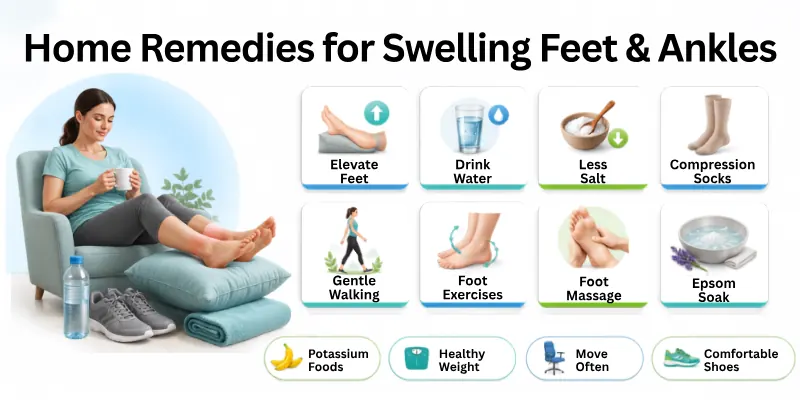
These methods are easy to follow and can often be done at home without special equipment. Here are some effective natural remedies for swelling feet and ankles:
- Elevate Your Feet
- Drink More Water
- Reduce Salt Intake
- Wear Compression Socks
- Gentle Walking and Movement
- Foot and Ankle Exercises
- Massage the Feet and Ankles
- Epsom Salt Foot Soak
- Eat Potassium-Rich Foods
- Maintain a Healthy Weight
- Avoid Sitting for Long Periods
- Wear Comfortable Shoes
Let’s look at each remedy in more detail.
1. Elevate Your Feet
Elevating your feet is one of the simplest ways to reduce swelling in the lower legs. Raising your feet above heart level helps excess fluid move away from the feet and ankles. This method may provide relief if swelling develops after sitting or standing for long periods. It does not require any special equipment and can be done easily at home. Many people find that regular elevation helps their feet feel lighter and more comfortable.
If you notice other signs along with swelling, understanding the symptoms of swollen feet can help you know when extra care may be needed.
How to Do It:
- Lie down on a bed, sofa, or comfortable surface
- Place pillows under your feet and ankles
- Raise your feet above the level of your heart
- Keep them elevated for 15 to 30 minutes
- Repeat several times throughout the day if needed
Tip: Try elevating your feet before bedtime or whenever swelling starts to develop.
2. Drink More Water
Staying hydrated can support your body’s natural fluid balance and may help reduce swelling in the feet and ankles. When you do not drink enough water, your body may hold onto more fluid, which can contribute to puffiness and discomfort.
Drinking enough water throughout the day supports circulation and helps your body work properly. This simple habit is also part of maintaining the benefits of drinking water for overall health.
How to Do It:
- Drink water regularly throughout the day
- Keep a water bottle with you
- Choose water instead of sugary drinks
- Increase water intake during hot weather or physical activity
- Drink enough water based on your body’s needs
Tip: Drink water regularly throughout the day to support healthy fluid balance.
3. Reduce Salt Intake
Eating too much salt can cause your body to hold extra water, which may increase swelling in the feet and ankles. Reducing your salt intake can help support better fluid balance and may ease puffiness.
Small changes in your daily diet can make a difference in managing mild swelling. Following a low-sodium diet can also support better fluid control and overall wellness.
How to Do It:
- Limit processed and packaged foods
- Avoid adding extra salt to meals
- Choose fresh foods instead of salty snacks
- Check food labels for sodium content
- Use herbs and spices for flavor instead of salt
Tip: Reduce salt gradually and choose fresh, low-sodium foods whenever possible.
4. Wear Compression Socks
Compression socks can help support blood flow and reduce fluid buildup in the feet and ankles. They apply gentle pressure to the legs, which may help prevent swelling and improve comfort. They can be especially useful for people who sit or stand for long periods. These socks provide support to the veins and help blood move more efficiently through the legs.
How to Do It:
- Choose the right size for a comfortable fit
- Wear them during the day when needed
- Put them on before swelling becomes severe
- Remove them before sleeping unless advised otherwise
Tip: Choose breathable compression socks and avoid wearing them if they feel too tight.
5. Gentle Walking and Movement
Staying active can help improve circulation and reduce swelling in the feet and ankles. Gentle movement encourages blood flow and prevents fluid from collecting in the lower legs. Simple activities like walking can be an easy way to support foot comfort. Regular movement also helps keep muscles active and reduces stiffness caused by sitting for long periods.
Adding regular movement and exercises to improve circulation can support healthier blood flow and reduce discomfort.
How to Do It:
- Take short walks throughout the day
- Avoid sitting in one position for too long
- Move your feet and ankles regularly
- Stretch your legs after long periods of sitting
Tip: Take a few minutes to walk or stretch every hour if you spend most of your day sitting.
6. Foot and Ankle Exercises
Simple foot and ankle exercises can help keep the muscles active and support healthy circulation. Regular movement may reduce stiffness and discomfort caused by swelling. These exercises are easy to perform at home and do not require special equipment. Adding these movements to your routine may improve flexibility and help your feet and ankles feel more comfortable.
Regular activity and exercises to improve circulation can also support better blood flow and reduce the feeling of heaviness in the lower legs.
How to Do It:
- Rotate your ankles in circles for a few seconds
- Flex and point your toes slowly
- Raise your heels while standing
- Repeat these movements several times a day
Tip: Perform gentle exercises regularly and stop if you feel pain or discomfort.
7. Massage the Feet and Ankles
Massaging the feet and ankles can help improve blood flow and reduce the feeling of heaviness caused by swelling. Gentle massage may encourage fluid movement and provide relaxation to tired feet. This simple remedy can be done at home and does not require special tools. Regular massage may support comfort and help your feet feel less tired after daily activities.
If swelling is linked with circulation problems, learning about how to improve blood circulation can help you understand other ways to support healthy blood flow.
How to Do It:
- Use gentle pressure while massaging your feet and ankles
- Move your hands in upward strokes toward your legs
- Massage for a few minutes at a time
- Use a moisturizer or massage oil for smoother movement
Tip: Massage your feet after a long day of standing or walking to help ease discomfort.
8. Epsom Salt Foot Soak
An Epsom salt foot soak is a simple way to relax tired feet and reduce discomfort. Soaking your feet in warm water can provide a soothing effect and help relieve feelings of tightness. This remedy is easy to try at home and can be added to your regular foot care routine. Many people use it when their feet feel tired after a busy day.
It can also be used as part of simple home remedies for leg swelling to provide comfort and relaxation.
How to Do It:
- Fill a bowl or basin with warm water
- Add a small amount of Epsom salt
- Soak your feet for 15 to 20 minutes
- Dry your feet gently after soaking
Tip: Avoid using very hot water because it may irritate your skin.
9. Eat Potassium-Rich Foods
Potassium-rich foods can support healthy fluid balance in the body and may help reduce water retention. Including potassium sources in your diet can support overall health and may benefit people who experience mild swelling. A balanced diet with enough potassium helps maintain proper electrolyte levels and supports normal body functions.
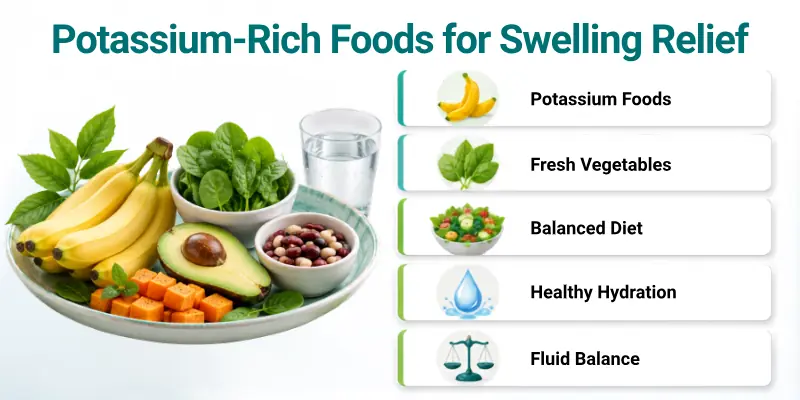
Adding foods high in potassium to your meals can be a simple way to support your body’s natural fluid balance.
How to Do It:
- Add bananas, spinach, and sweet potatoes to your meals
- Include avocados and beans in your diet
- Choose fresh fruits and vegetables regularly
- Maintain a balanced diet with different nutrients
Tip: Choose natural potassium sources and add them to your meals regularly.
10. Maintain a Healthy Weight
Maintaining a healthy weight can help reduce pressure on your feet and ankles. Extra body weight can put more stress on the lower legs and may contribute to swelling. A balanced lifestyle with healthy eating and regular activity can support better movement and comfort. Small daily changes can help you build long-term healthy habits.
Following healthy lifestyle habits can support overall wellness and may help reduce pressure on your feet and ankles.
How to Do It:
- Follow a balanced and nutritious diet
- Stay physically active with regular movement
- Choose healthy portion sizes
- Build consistent lifestyle habits
Tip: Focus on small changes that you can maintain over time.
11. Avoid Sitting for Long Periods
Sitting for long periods can slow down blood flow and allow fluid to collect in the feet and ankles. Taking regular movement breaks can help support circulation and reduce the chance of swelling.
Simple changes in your daily routine can make a difference, especially if you spend many hours sitting at work or while traveling. Keeping your legs active helps your body move fluid more effectively. Regular movement breaks and the benefits of walking can support circulation and help prevent stiffness in the lower legs.
How to Do It:
- Stand up and move around every hour
- Stretch your feet and legs regularly
- Avoid keeping your legs in the same position for too long
- Take short walks during breaks
Tip: Set reminders to move your body if you sit for several hours each day.
12. Wear Comfortable Shoes
Wearing comfortable shoes can help reduce pressure on your feet and ankles. Tight or poorly fitting shoes may restrict movement and make swelling feel worse. Choosing supportive footwear can improve comfort and help your feet handle daily activities more easily.
Proper shoes also provide better support for your ankles and overall foot health. If you often experience foot discomfort, understanding foot pain causes can help you identify other factors that may affect your comfort.
How to Do It:
- Choose shoes with proper support and enough space
- Avoid tight footwear that squeezes your feet
- Select comfortable shoes for long periods of walking or standing
- Replace worn-out shoes when needed
Tip: Choose lightweight, supportive shoes that keep your feet comfortable throughout the day.
When Should You See a Doctor?
Most cases of mild swelling in the feet and ankles may improve with simple home care. However, some types of swelling can be a sign of an underlying health problem. Paying attention to warning signs can help you get the right care at the right time.
Here are signs that you should seek medical attention:
- Sudden Swelling: Swelling that appears quickly without a clear reason may need medical evaluation.
- One-Sided Swelling: Swelling in only one leg can be a sign of a condition that requires attention.
- Severe Pain: Intense pain along with swelling should not be ignored.
- Redness or Warmth: Skin that becomes red, hot, or irritated may indicate an infection or inflammation.
- Chest Pain: Chest discomfort with swelling needs immediate medical care.
- Shortness of Breath: Breathing difficulty along with swelling can be a serious warning sign.
- No Improvement: Swelling that does not improve with home remedies should be checked by a doctor for proper evaluation.
Conclusion
In this guide, we covered simple home remedies for swelling feet and ankles that may help reduce discomfort and support better foot health. We discussed practical methods like elevating your feet, drinking more water, reducing salt intake, staying active, and making healthy lifestyle changes.
These remedies can be helpful for managing mild swelling at home, but it is important to pay attention to warning signs. If swelling appears suddenly, becomes severe, or does not improve with home care, seek medical advice for proper evaluation and treatment.
FAQs About Home Remedies for Swelling Feet and Ankles
After learning about home remedies for swelling feet and ankles, you may have some questions about the best ways to reduce swelling naturally and manage discomfort at home. These FAQs cover common concerns and provide simple answers to help you understand effective home care options.
The best home remedies for swelling feet and ankles include:
- Elevating your feet
- Drinking more water
- Reducing salt intake
- Wearing compression socks
- Gentle walking and movement
- Foot and ankle exercises
- Massaging the feet and ankles
- Epsom salt foot soak
- Eating potassium-rich foods
- Maintaining a healthy weight
- Avoiding long periods of sitting
- Wearing comfortable shoes
You can reduce swelling in your feet naturally by raising your legs, moving regularly, and maintaining a healthy diet. Drinking enough water and eating potassium-rich foods may also support fluid balance. These habits can help improve comfort and reduce puffiness.
You can help get rid of swollen ankles naturally by using gentle massage, wearing comfortable shoes, and avoiding long periods of sitting. Elevating your ankles can also help move excess fluid away from the area. Regular movement may support healthier circulation.
Yes, staying hydrated may help your body maintain a healthy fluid balance and reduce water retention. When you do not drink enough water, your body may hold extra fluid. Drinking water regularly can support overall health and comfort.
Foods that may help reduce swelling include:
- Bananas
- Spinach
- Sweet Potatoes
- Avocados
- Beans
- Fresh Fruits
- Vegetables
- Low-Sodium Foods
The time it takes for swelling to reduce depends on the cause and severity. Mild swelling may improve within a few hours with rest, elevation, and other home treatments. Persistent swelling may need medical attention.
Yes, compression socks may help support blood flow and reduce fluid buildup in the lower legs. They can be useful for people who sit or stand for long periods. Choose the right size to avoid discomfort.
Gentle walking can help improve circulation and prevent fluid from collecting in the feet and ankles. Regular movement keeps the leg muscles active and supports blood flow. Short walks throughout the day may help reduce discomfort.
You should seek medical advice if swelling appears suddenly, affects only one leg, or comes with severe pain. Chest pain, breathing problems, or redness and warmth in the skin also need attention. Swelling that does not improve with home remedies should be checked by a doctor.
Common causes of swollen feet and ankles include:
- Sitting or standing for long periods
- Excess salt intake
- Injuries
- Fluid buildup
- Certain health conditions
- Poor circulation
- Water retention





- Be Respectful
- Stay Relevant
- Stay Positive
- True Feedback
- Encourage Discussion
- Avoid Spamming
- No Fake News
- Don't Copy-Paste
- No Personal Attacks
- Be Respectful
- Stay Relevant
- Stay Positive
- True Feedback
- Encourage Discussion
- Avoid Spamming
- No Fake News
- Don't Copy-Paste
- No Personal Attacks
