Best Plant-Based Protein Sources for Better Health & Energy
Published: 17 Jun 2026
Protein is one of the most important nutrients your body needs every day. It helps build muscles, repair tissues, support immunity, and maintain healthy skin and hair.
When we talk about plant-based protein, we mean protein that comes from natural plant foods instead of animal products. These sources can fully support your health when chosen wisely and eaten in proper portions.
Many people think plant-based diets lack protein, but that is not true. The real question is how to choose the right plant foods that give you enough protein without making your meals complicated.
In this guide, I will share the best plant-based protein sources that are nutritious, affordable, and easy to include in your daily routine. So, without wasting time,e let us dig in!
Best Plant-Based Protein Sources
Plant-based protein sources are a great way to meet your daily protein needs while keeping your diet healthy and balanced. These foods are rich in protein, fiber, vitamins, and minerals that support muscle growth, energy levels, and overall health.
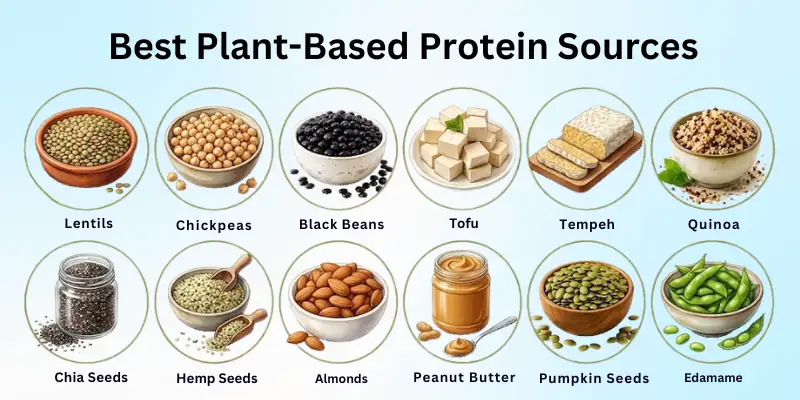
Including a variety of plant-based proteins in your meals can help you stay full longer and maintain a nutritious diet without relying on animal products. Here is the list of all the best plant-based protein sources:
- Lentils
- Chickpeas
- Black Beans
- Tofu
- Tempeh
- Quinoa
- Chia Seeds
- Hemp Seeds
- Almonds
- Peanut Butter
- Pumpkin Seeds
- Edamame
Let us learn about their benefits and preparation ideas in great detail.
1. Lentils
Lentils are one of the richest plant-based protein sources. They are also high in fiber, which supports digestion. I often recommend lentils to people who want affordable and filling meals. They help maintain steady energy levels. They are easy to cook and store. They work well for lunch and dinner.
How To Prepare:
- Boil lentils until soft.
- Cook lentil soup with vegetables.
- Add to rice bowls.
- Mix into salads.
- Prepare a simple lentil curry.
2. Chickpeas
Chickpeas provide protein and fiber together. They help control hunger and support weight management. I suggest adding chickpeas to weekly meal plans. They are versatile and budget-friendly. They also support gut health. They taste great in many dishes.
How To Prepare:
- Add boiled chickpeas to salads.
- Blend into homemade hummus.
- Roast with light spices.
- Add to wraps.
- Mix into grain bowls.
3. Black Beans
Black beans are rich in protein and iron. They support muscle health and energy levels. I personally like using black beans in quick dinners. They are filling and satisfying. They also provide complex carbohydrates. They are easy to prepare in bulk.
How To Prepare:
- Cook and add to tacos.
- Mix into salads.
- Prepare black bean soup.
- Add to rice dishes.
- Mash for sandwich filling.
4. Tofu
Tofu is made from soybeans and contains complete protein. It includes all essential amino acids. I recommend tofu for vegetarian and vegan diets. It absorbs flavors easily. It works well in both lunch and dinner meals. It is light yet filling.
How To Prepare:
- Cut into cubes and stir-fry.
- Grill with simple seasoning.
- Add to curries.
- Blend into smoothies for extra protein.
- Use in wraps.
5. Tempeh
Tempeh is another soy-based protein source. It is fermented, which supports digestion. I often suggest tempeh for higher protein intake. It has a firm texture and a nutty taste. It keeps you full for longer. It is perfect for hearty meals.
How To Prepare:
- Slice and pan-fry.
- Add to sandwiches.
- Mix into stir-fry dishes.
- Grill and serve with vegetables.
- Crumble into salads.
6. Quinoa
Quinoa is a grain that contains complete protein. It provides both protein and fiber. I recommend quinoa for balanced meal bowls. It supports steady energy levels. It is light and easy to digest. It works well as a rice substitute.
How To Prepare:
- Cook according to instructions.
- Mix with roasted vegetables.
- Add to salads.
- Serve with beans.
- Use in breakfast bowls.
7. Chia Seeds
Chia seeds are small but powerful. They contain protein, fiber, and healthy fats. I suggest adding them to breakfast meals. They support digestion and energy. They are easy to store and affordable. They require no cooking.
How To Prepare:
- Add to smoothies.
- Mix into yogurt.
- Prepare chia pudding.
- Sprinkle on oatmeal.
- Add to homemade snacks.
8. Hemp Seeds
Hemp seeds provide complete protein and healthy fats. They support muscle recovery and heart health. I often recommend them for active individuals. They are soft and easy to digest. They blend well with many foods. They are nutrient-dense.
How To Prepare:
- Sprinkle over salads.
- Add to smoothies.
- Mix into oatmeal.
- Blend into protein bowls.
- Add to yogurt.
9. Almonds
Almonds provide protein and healthy fats. They help control hunger and cravings. I suggest a small handful daily as a snack. They are easy to carry. They support heart health. They also provide vitamin E.
How To Prepare:
- Eat raw as a snack.
- Add to yogurt.
- Mix into salads.
- Blend into smoothies.
- Make homemade almond butter.
10. Peanut Butter
Peanut butter is rich in protein and healthy fats. It is affordable and widely available. I recommend choosing natural peanut butter without added sugar. It supports energy and muscle health. It works well for breakfast and snacks. It is easy to use daily.
How To Prepare:
- Spread on whole-grain toast.
- Add to smoothies.
- Mix into oatmeal.
- Use as a dip for fruits.
- Add to protein snacks.
11. Pumpkin Seeds
Pumpkin seeds are rich in protein and minerals. They support immune health and energy. I often suggest adding seeds to meals for extra nutrition. They are easy to store. They add crunch to dishes. They are convenient snacks.
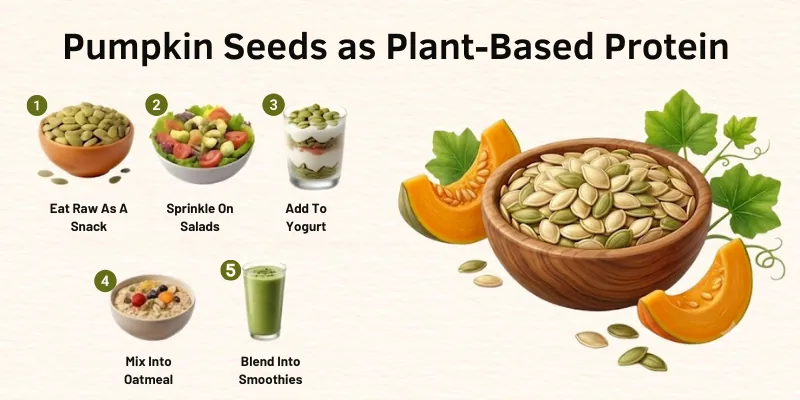
How To Prepare:
- Eat raw as a snack.
- Sprinkle on salads.
- Add to yogurt.
- Mix into oatmeal.
- Blend into smoothies.
12. Edamame
Edamame are young soybeans that provide high-quality protein. They are filling and nutritious. I personally recommend them for quick snacks. They support muscle and energy levels. They are simple to prepare. They are great for meal prep.
How To Prepare:
- Boil and sprinkle salt lightly.
- Add to salads.
- Mix into rice bowls.
- Blend into spreads.
- Eat as an evening snack.
How To Combine Plant-Based Proteins For Complete Nutrition
Plant-based protein sources can fully meet your needs when combined properly. I always advise mixing legumes with grains to improve amino acid balance. Variety is very important in plant-based diets. Eating different protein sources throughout the week supports better nutrition. Balanced meals keep you satisfied and energized.
Helpful Tips:
- Combine beans with rice or quinoa.
- Add seeds and nuts to daily meals.
- Rotate protein sources weekly.
- Focus on whole foods instead of processed options.
- Maintain proper portion sizes.
Final Note
In this guide, we have covered the best plant-based protein sources that support muscle health, energy, and overall wellness. As a diet expert, I always remind my clients that plant-based eating can be powerful and nutritious when done correctly. You do not need complicated supplements if you focus on a whole food variety and balance.
Stay connected and explore more helpful health guides on this site to build a stronger and healthier lifestyle step by step.
FAQs
Here are some of the most commonly asked questions related to the best plant-based protein sources:
Lentils, tofu, tempeh, quinoa, and edamame are excellent options. They provide quality protein for muscle repair. Combine them with balanced meals. Consistent intake supports better results.
Yes, plant-based protein can build muscle when consumed in adequate amounts. Combine different sources for complete nutrition. Regular strength training also supports muscle growth. Balanced meals are important.
Yes, plant-based protein supports heart health and digestion. It often contains fiber and healthy fats. Whole food sources are the best choice. Avoid highly processed options.
Protein needs depend on your weight and activity level. Most adults require a moderate daily intake. Spread protein across meals. Balanced eating improves absorption.
Yes, nuts provide protein and healthy fats. They are convenient and nutritious. Eat in moderate portions. Combine with other protein foods.
Yes, quinoa contains all essential amino acids. It is one of the best grain options. It supports energy and muscle health. Include it regularly in meals.
Yes, vegetarians can meet protein needs through beans, lentils, soy products, nuts, and seeds. Variety is important. Balanced meals provide complete nutrition.
Yes, seeds like chia, hemp, and pumpkin seeds contain protein. They also provide minerals and healthy fats. Add them to daily meals. Small portions are effective.
Yes, peanut butter contains protein and healthy fats. Choose natural options without added sugar. Consume in moderate amounts. It works well for breakfast and snacks.
Lentils and chickpeas are very beginner-friendly. They are affordable and easy to cook. They fit into many recipes. Start simple and increase variety gradually.




- Be Respectful
- Stay Relevant
- Stay Positive
- True Feedback
- Encourage Discussion
- Avoid Spamming
- No Fake News
- Don't Copy-Paste
- No Personal Attacks
- Be Respectful
- Stay Relevant
- Stay Positive
- True Feedback
- Encourage Discussion
- Avoid Spamming
- No Fake News
- Don't Copy-Paste
- No Personal Attacks
