High-Protein Vegetarian Foods: Best Sources for Energy & Health
Published: 8 Jun 2026
Protein is essential for your body. It builds muscles, repairs tissues, boosts immunity, and keeps you full. Many people think only meat or fish provides protein, but vegetarians have plenty of options.
This guide covers high-protein vegetarian foods, how to include them in your diet, and why they are important. By the end, you’ll know how to get enough protein without eating meat.
So, guys, what are you waiting for? Let’s dive in with me!
High-Protein Vegetarian Foods
Protein is essential for building and repairing muscles, supporting metabolism, and keeping you full for longer. For vegetarians, many plant-based options provide high-quality protein along with other important nutrients.
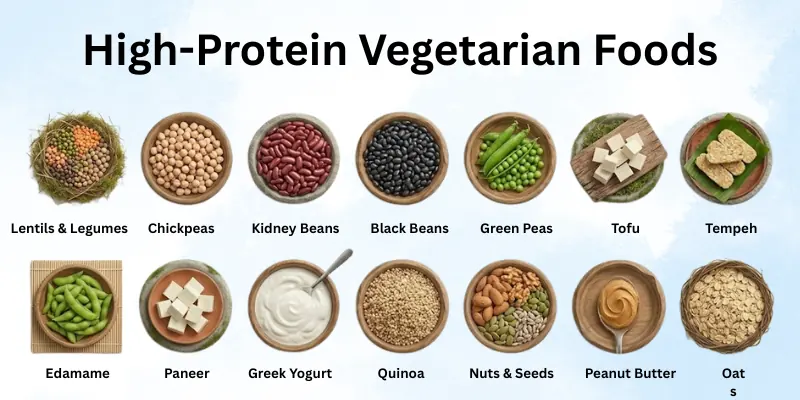
Here are the top high-protein vegetarian foods that are nutritious, versatile, and easy to include in your diet:
- Lentils and Legumes
- Chickpeas
- Kidney Beans
- Black Beans
- Green Peas
- Tofu
- Tempeh
- Edamame
- Paneer
- Greek Yogurt
- Quinoa
- Nuts and Seeds
- Peanut Butter
- Oats
- Seitan
Let’s cover each in detail.
1. Lentils and Legumes
Lentils are one of the most versatile and affordable vegetarian protein sources. They are high in protein, fiber, and essential minerals like iron and folate. Eating lentils regularly can support heart health and digestion. They also help control blood sugar levels and keep you full for a long time. Lentils can be cooked in soups, stews, or mixed with rice for a complete protein meal.
Tips:
- Mix lentils with rice or vegetables for a complete protein.
- Store cooked lentils in the fridge for quick meals.
- Use red or green lentils in soups for variety.
- Sprinkle herbs and spices to enhance flavor.
2. Chickpeas
Chickpeas are a protein-packed legume that is very filling and versatile. They provide about 15g of protein per cooked cup. Chickpeas are also rich in fiber, which helps digestion and satiety. They can be roasted for a crunchy snack or blended into hummus. Chickpeas are perfect for salads, curries, and stews, making them ideal for daily meals.
Tips:
- Roast chickpeas for a healthy office snack.
- Add to salads for extra protein and texture.
- Blend into hummus for sandwiches or dips.
- Soak overnight to reduce cooking time.
3. Kidney Beans
Kidney beans are rich in protein and iron, which makes them perfect for vegetarians. They provide around 13–15g of protein per cooked cup. These beans are also packed with fiber and antioxidants that support gut and heart health. Kidney beans can be added to soups, chili, or rice dishes for a protein boost. They also help maintain energy levels throughout the day.
Tips:
- Soak beans overnight before cooking.
- Use in chili, salads, or wraps.
- Pair with rice for a complete protein meal.
- Season with herbs for a better taste.
4. Black Beans
Black beans are small but loaded with protein and nutrients. One cup of cooked black beans contains around 15g of protein. They are also high in fiber, which helps digestion and keeps you full. Black beans can be used in salads, soups, tacos, or veggie bowls. They also support blood sugar control and heart health.
Tips:
- Combine black beans with rice for a complete protein.
- Add to salads for extra fiber and protein.
- Make black bean burgers for a nutritious meal.
- Use canned black beans for quick preparation.
5. Green Peas
Green peas are tiny yet rich in protein, fiber, and essential vitamins. One cooked cup provides around 8g of protein. They are low in calories but very nutritious, making them ideal for healthy meals and snacks. Green peas can be added to soups, curries, stir-fries, or mashed as spreads. They also support digestion and overall energy levels.
Tips:
- Blend peas into dips or spreads.
- Add to pasta or rice dishes for protein.
- Freeze fresh peas for long-term storage.
- Season with herbs for better flavor.
6. Tofu
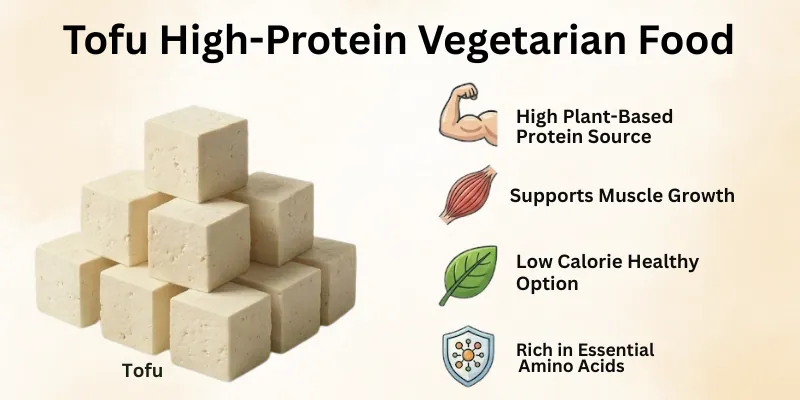
Tofu is made from soybeans and is a popular vegetarian protein source. One 100g serving provides about 10g of protein. Tofu is soft and absorbs the flavors of any dish, making it versatile for cooking. It is low in calories and high in essential amino acids needed for muscle growth. Tofu can be grilled, stir-fried, or added to soups, curries, and salads.
Tips:
- Press tofu to remove extra water before cooking.
- Marinate tofu for extra flavor.
- Use firm tofu for stir-fries and soft tofu for soups.
- Store it in water in the fridge to keep it fresh.
7. Tempeh
Tempeh is fermented soy, richer in protein than tofu, with a nutty flavor. One 100g serving has about 19g of protein. It also contains probiotics, which support gut health. Tempeh can be grilled, stir-fried, or baked, and it holds its shape well in dishes. Regular tempeh consumption helps build muscle, improve digestion, and maintain steady energy.
Tips:
- Slice thinly for sandwiches or salads.
- Marinate for at least 30 minutes before cooking.
- Use in stir-fries, curries, or baked dishes.
- Store in the fridge for up to a week.
8. Edamame
Edamame are young, green soybeans that are easy to cook and eat. One cup provides 17g of protein. They are also rich in fiber, vitamins, and antioxidants. Edamame can be boiled, steamed, or lightly salted for a snack. Eating edamame supports muscle health and keeps you full between meals.
Tips:
- Steam with a pinch of salt for a quick snack.
- Add to salads, rice bowls, or stir-fries.
- Can be frozen for long-term use.
- Eat straight from the pod for convenience.
9. Paneer
Paneer is a fresh Indian cheese that is high in protein and calcium. One 100g serving provides about 18g of protein. It is versatile and can be added to curries, salads, or grilled dishes. Paneer also supports muscle growth and bone strength. It is an excellent source of protein for vegetarians who do not consume dairy.
Tips:
- Use in stir-fries or grilled as kebabs.
- Pair with vegetables for a balanced meal.
- Store in the fridge for up to a week.
- Avoid frying in excess oil to keep it healthy.
10. Greek Yogurt
Greek yogurt is thicker and higher in protein than regular yogurt. One cup provides about 10g of protein. It also contains probiotics that support gut health. Greek yogurt can be eaten with fruits, nuts, or seeds. It keeps you full, supports digestion, and helps maintain energy levels.
Tips:
- Choose plain Greek yogurt to avoid added sugar.
- Mix with berries or nuts for a snack or breakfast.
- Use in smoothies or dips for extra protein.
- Store in a sealed container in the fridge.
11. Quinoa
Quinoa is a whole grain that is also a complete protein, containing all essential amino acids. One cup of cooked provides 8g of protein. It is gluten-free and rich in fiber, magnesium, and iron. Quinoa can be added to salads, soups, or eaten as a side dish. It supports energy, digestion, and overall health.
Tips:
- Cook quinoa in vegetable broth for better flavor.
- Mix with beans or vegetables for a complete meal.
- Store cooked quinoa in the fridge for up to 5 days.
- Use as a base for protein-packed breakfast bowls.
12. Nuts and Seeds
Nuts and seeds are small but packed with protein, healthy fats, and minerals. Almonds, walnuts, chia seeds, and pumpkin seeds are all high in protein. They help keep you full, support heart and brain health, and provide steady energy. Nuts and seeds can be eaten as snacks or added to cereals, salads, and yogurt.
Tips:
- Measure portions to avoid excess calories.
- Combine seeds with yogurt for extra protein.
- Keep nuts in airtight containers for freshness.
- Use in trail mixes for healthy snacking.
13. Peanut Butter
Peanut butter is rich in protein and healthy fats. Two tablespoons provide about 8g of protein. It can be spread on bread, fruits, or added to smoothies. Peanut butter supports muscle repair and long-lasting energy. Choose natural peanut butter without added sugar or hydrogenated oils.
Tips:
- Pair with apples or bananas for a snack.
- Add to oatmeal or smoothies for extra protein.
- Store in a cool, dry place.
- Use in moderation to control calories.
14. Oats
Oats are a whole grain with moderate protein content. One cup of cooked provides 6g of protein. They are high in fiber and support heart health and digestion. Oats can be used in breakfast bowls, overnight oats, or baked snacks. They provide slow-release energy and keep you full for hours.
Tips:
- Combine with milk, nuts, or seeds for higher protein.
- Use in granola bars for portable snacks.
- Cook with fruits for natural sweetness.
- Store dry oats in a sealed container.
15. Seitan
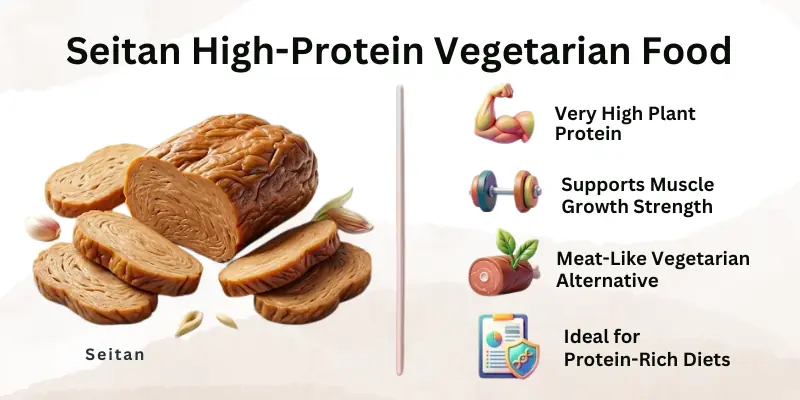
Seitan, also known as wheat meat, is a high-protein vegetarian food made from gluten. One 100g serving contains about 25g of protein. It has a meat-like texture and can be cooked in many ways. Seitan supports muscle growth and is ideal for vegetarians who need higher protein. It can be stir-fried, grilled, or added to sandwiches.
Tips:
- Slice thinly for stir-fries or sandwiches.
- Marinate for flavor before cooking.
- Use as a meat substitute in many recipes.
- Store in the fridge in a sealed container.
Final Note
In this guide, we have covered high-protein vegetarian foods with detailed explanations, tips, and serving suggestions. Eating a variety of these foods ensures you meet your protein needs, stay full, and maintain energy throughout the day. Smart vegetarian protein choices can help with muscle growth, weight management, and overall health.
Eat a mix of legumes, dairy, grains, and soy products to build a strong, healthy body. Goodbye, goodbye, goodbye.
FAQs
Here are some of the most frequently asked questions related to the high-protein vegetarian foods:
Protein is essential for building muscles, repairing tissues, and keeping you full. Vegetarians can get enough protein from plants, dairy, and soy. Eating protein regularly supports energy, immunity, and overall health.
The best options include lentils, chickpeas, tofu, tempeh, beans, Greek yogurt, paneer, quinoa, and nuts. These foods are rich in protein and easy to include in daily meals. They also provide vitamins, minerals, and fiber.
Protein needs vary by age, weight, and activity, but an average adult needs around 0.8–1g per kg of body weight. Active individuals may require more. Combining different protein sources helps meet daily requirements.
Yes, legumes like lentils, chickpeas, and beans are excellent protein sources. They also provide fiber, iron, and other nutrients. Eating a variety of legumes ensures adequate protein intake.
Tempeh generally has more protein than tofu, but both are excellent sources. Tofu is versatile and softer, while tempeh is firmer and fermented. Both support muscle growth and overall nutrition.
Yes, nuts and seeds are protein-rich and provide healthy fats. They can complement other protein sources in a vegetarian diet. Eating them regularly helps meet daily protein needs.
Combine legumes with grains, such as rice and beans, or lentils and quinoa. Dairy or soy products like yogurt or tofu can also complete protein profiles. This ensures all essential amino acids are included.
Not always, but dairy like paneer and Greek yogurt is a convenient and rich protein source. Vegetarians who avoid dairy can rely on legumes, soy, nuts, seeds, and grains.
Yes, protein keeps you full longer, reduces cravings, and supports muscle maintenance. Including protein-rich foods in meals can aid healthy weight management.
Add lentils, beans, tofu, tempeh, quinoa, Greek yogurt, nuts, and seeds to meals. Prepare snacks like roasted chickpeas or peanut butter with fruits. Planning meals ensures consistent protein intake.





- Be Respectful
- Stay Relevant
- Stay Positive
- True Feedback
- Encourage Discussion
- Avoid Spamming
- No Fake News
- Don't Copy-Paste
- No Personal Attacks
- Be Respectful
- Stay Relevant
- Stay Positive
- True Feedback
- Encourage Discussion
- Avoid Spamming
- No Fake News
- Don't Copy-Paste
- No Personal Attacks
