Causes of Bad Breath: Common and Hidden Reasons
Published: 6 Oct 2026
Bad breath (also known as halitosis) is a common problem that can affect anyone at any age. In many cases, people do not realize they have it until someone notices, which can cause embarrassment and lower confidence. This is why many people search for what causes bad breath and how to get rid of it.
The main cause of bad breath is usually the buildup of bacteria in the mouth. These bacteria break down leftover food particles and release foul-smelling sulfur compounds. In some cases, bad breath is temporary, such as after eating strong-smelling foods, but in others it can become chronic and signal a deeper health problem.
In this article, we will explore the common and hidden causes of bad breath and what they may indicate about your oral and overall health.
Common Causes of Bad Breath
Bad breath can develop due to many different factors, ranging from simple daily habits to underlying health conditions. In most cases, the cause starts in the mouth, but sometimes it can also be linked to other parts of the body, such as the digestive system or respiratory tract.
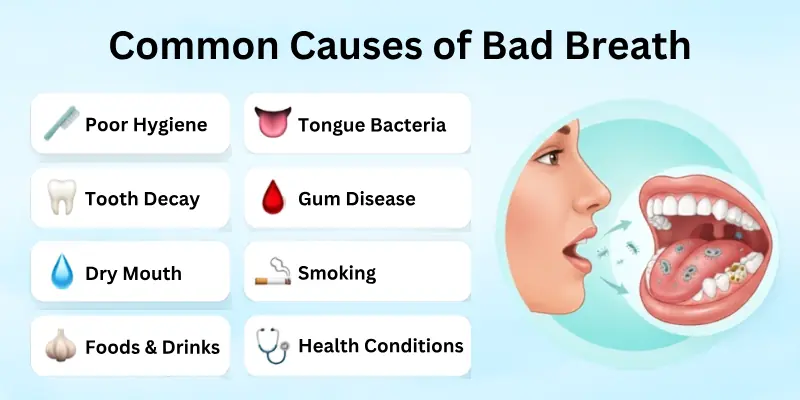
Understanding these causes can help you identify the real reason behind bad breath and take the right steps to fix it.
Let’s explore the most common causes of bad breath below:
- Poor Oral Hygiene
- Bacteria on the Tongue
- Food Particles Stuck Between Teeth
- Gum Disease
- Tooth Decay and Dental Infections
- Dry Mouth (Including Dehydration)
- Smoking and Tobacco Use
- Foods and Drinks (Garlic, Onion, Coffee, Alcohol)
- Tonsil Stones
- Sinus Infections and Postnasal Drip
- Acid Reflux (GERD)
- Certain Medications
- Diabetes
- Kidney Disease
- Liver Disease
- Respiratory Infections
1. Poor Oral Hygiene
Poor oral hygiene is one of the most common causes of bad breath. When you do not brush and floss properly, food particles stay in the mouth for a long time. These particles break down and allow bacteria to grow, which produces foul-smelling gases that lead to bad breath.
Oral Care Mistakes
- Skipping brushing or irregular brushing habits
- Not flossing between teeth
- Plaque and tartar buildup on teeth
- Food residue left in the mouth after meals
This is one of the most common and preventable causes of bad breath.
2. Bacteria on the Tongue
Bacteria on the tongue is another major cause of bad breath. The surface of the tongue, especially the back area, can trap food particles and dead cells. These create a perfect environment for bacteria to grow and produce sulfur compounds that lead to an unpleasant odor.
Tongue-Related Bacteria Build-up
- White or yellow coating on the tongue
- Bacteria collecting at the back of the tongue
- Dead cells and food particles trapped on the surface
- Sulfur compounds produce a foul smell
This is a hidden but very common cause of persistent bad breath.
3. Food Particles Stuck Between Teeth
Food particles stuck between teeth can easily lead to bad breath if they are not removed properly. When small bits of food remain trapped, bacteria start breaking them down. This process produces unpleasant-smelling gases that affect overall breath freshness.
Why Food Gets Trapped Between Teeth
- Not flossing regularly between teeth
- Eating sticky or fibrous foods
- Tight gaps or crowded teeth
- Poor brushing technique
Over time, this buildup can lead to persistent bad breath.
4. Gum Disease
Gum disease is an infection of the gums caused by plaque buildup along the gum line. It can lead to inflammation, bleeding, and damage to the tissues that support the teeth. This condition is a major cause of persistent bad breath because bacteria accumulate in infected gum areas.
Key Signs of Gum Disease
- Swollen or red gums
- Bleeding while brushing or flossing
- Receding gums
- Deep spaces between teeth and gums
If not treated early, gum disease can lead to long-term bad breath and serious dental problems.
5. Tooth Decay and Dental Infections
Tooth decay and dental infections occur when bacteria damage the tooth structure and reach deeper layers of the tooth. These infections create trapped areas where bacteria continue to grow, leading to a strong and unpleasant smell in the mouth.
Key Dental Problems Linked to Bad Breath
- Untreated cavities
- Tooth abscess or infection
- Broken or damaged teeth
- Bacterial buildup inside decayed areas
These dental issues can gradually worsen and significantly affect overall breath freshness.
6. Dry Mouth (Including Dehydration)
Dry mouth occurs when the mouth does not produce enough saliva. Saliva plays an important role in washing away food particles and controlling bacteria. When saliva levels drop, bacteria multiply more easily and cause bad breath.
Key Causes of Dry Mouth
- Not drinking enough water (dehydration)
- Mouth breathing, especially during sleep
- Certain medications that reduce saliva flow
- Medical conditions affecting salivary glands
A dry mouth environment allows odor-causing bacteria to grow quickly and affect breath freshness.
7. Smoking and Tobacco Use
Smoking and tobacco use are major causes of bad breath because they leave a strong odor in the mouth and dry out the oral tissues. Tobacco also reduces saliva flow, which allows bacteria to grow more easily and worsen mouth odor.
Key Effects of Smoking on Breath
- Strong lingering smell in the mouth and lungs
- Reduced saliva production leading to dry mouth
- Increased bacterial buildup on teeth and gums
- Higher risk of gum disease and infections
This habit can quickly lead to long-lasting bad breath and overall oral health problems.
8. Foods and Drinks (Garlic, Onion, Coffee, Alcohol)
Certain foods and drinks can temporarily cause bad breath due to their strong odor compounds. Items like garlic and onion contain sulfur-based substances that enter the bloodstream and affect breath even after digestion. Coffee and alcohol can also contribute by reducing saliva flow.
Common Food and Drink Triggers
- Garlic and onion (strong sulfur compounds)
- Coffee (can leave a lingering odor)
- Alcohol (reduces saliva and dries the mouth)
- Spicy or heavily seasoned foods
These effects are usually temporary but can noticeably impact breath freshness after consumption.
9. Tonsil Stones
Tonsil stones are small, hard deposits that form in the crevices of the tonsils. They develop when food particles, dead cells, and bacteria get trapped and harden over time. These deposits can produce a strong, foul smell that leads to noticeable bad breath.
Common Signs of Tonsil Stones
- White or yellow hard spots on tonsils
- Bad breath that does not improve with brushing
- Sore throat or discomfort while swallowing
- Feeling of something stuck in the throat
Tonsil stones can be a hidden but persistent cause of unpleasant mouth odor.
10. Sinus Infections and Postnasal Drip
Sinus infections and postnasal drip can lead to bad breath when mucus builds up in the nasal passages and throat. This mucus creates a moist environment where bacteria can grow and produce unpleasant odors that affect breath freshness.
Key Signs of Sinus-Related Bad Breath
- Thick mucus in the throat or nose
- Constant need to clear the throat
- Nasal congestion or blocked sinuses
- Bad taste in the mouth
This condition can quietly contribute to ongoing bad breath, especially when mucus buildup continues over time.
11. Acid Reflux (GERD)
Acid reflux (GERD) occurs when stomach acid flows back into the esophagus and sometimes reaches the mouth. This acid exposure can create a sour or unpleasant smell in the breath and may also irritate the throat, making bad breath more noticeable.
Key Signs of Acid Reflux–Related Bad Breath
- Sour or bitter taste in the mouth
- Heartburn or chest discomfort
- Regurgitation of food or acid
- Frequent burping or indigestion
This condition can contribute to recurring bad breath, especially after meals or when lying down.
12. Certain Medications
Some medications can contribute to bad breath by reducing saliva production or changing the natural balance of bacteria in the mouth. When saliva decreases, the mouth becomes dry, allowing odor-causing bacteria to grow more easily.
Medications That May Affect Breath
- Antihistamines (for allergies)
- Antidepressants
- Blood pressure medications
- Diuretics (water pills)
Medication-related dry mouth can gradually lead to ongoing bad breath if not managed properly.
13. Diabetes
Diabetes can affect breath odor when blood sugar levels are not well controlled. In some cases, the body starts breaking down fat for energy, which produces ketones. These ketones can create a distinctive fruity or unusual smell in the breath.
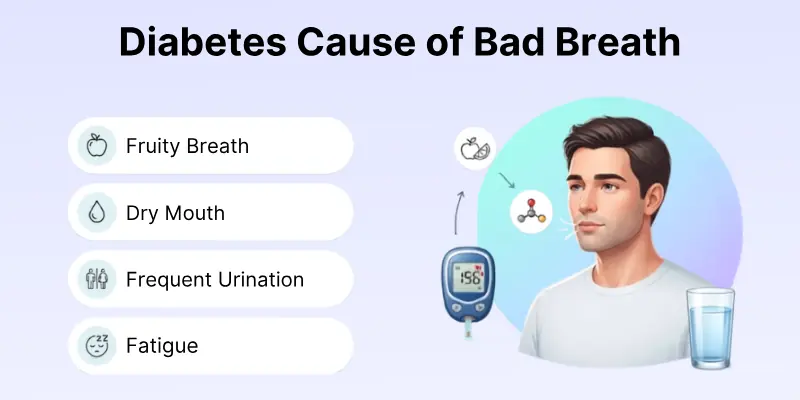
Key Signs of Diabetes-Related Bad Breath
- Fruity or sweet-smelling breath
- Frequent thirst and dry mouth
- Increased urination
- Fatigue or low energy levels
Diabetes-related breath changes can be a sign of uncontrolled blood sugar and should not be ignored.
14. Kidney Disease
Kidney disease can cause bad breath when the kidneys are not able to filter waste from the blood properly. As toxins build up in the body, they can affect the breath, creating a strong, ammonia-like odor.
Key Signs of Kidney-Related Bad Breath
- Ammonia-like or urine-like breath odor
- Persistent fatigue and weakness
- Swelling in feet, ankles, or face
- Changes in urination frequency or color
Kidney-related breath odor is often a sign of reduced kidney function and should be medically evaluated.
15. Liver Disease
Liver disease can cause bad breath when the liver is unable to properly filter toxins from the blood. As these toxins build up, they may affect the breath and produce a strong, musty or foul odor.
Key Signs of Liver-Related Bad Breath
- Persistent bad breath with a strong odor
- Yellowing of skin or eyes (jaundice)
- Nausea or loss of appetite
- Fatigue and weakness
Liver-related breath changes may indicate a serious underlying condition and should be medically evaluated.
16. Respiratory Infections
Respiratory infections can lead to bad breath when bacteria or viruses affect the lungs, throat, or airways. These infections often produce mucus buildup, which creates a breeding ground for bacteria and results in an unpleasant smell in the breath.
Key Signs of Respiratory Infection–Related Bad Breath
- Persistent cough with mucus
- Sore throat or throat irritation
- Nasal congestion or chest discomfort
- Thick or colored phlegm
These infections can temporarily worsen breath odor and usually improve once the underlying condition is treated.
What Different Bad Breath Smells May Mean
Different bad breath smells can indicate various underlying health conditions. Each type of odor may point toward a specific issue in the body.
- Fruity Smell: May indicate uncontrolled diabetes due to ketone production in the body.
- Ammonia Smell: Often linked to kidney problems where toxins are not properly filtered.
- Rotten Egg Smell: Usually caused by digestive issues or sulfur-producing bacteria.
- Musty Smell: May suggest liver-related problems affecting toxin removal.
- Fishy Smell: Can be linked to infections or metabolic imbalance in the body.
How to Prevent Bad Breath
Bad breath can often be controlled with simple daily oral care habits and a healthy routine. Consistency is the key to keeping your mouth fresh and reducing odor-causing bacteria.
Here are some tips to prevent bad breath:
- Brush twice daily properly
- Floss to remove food particles
- Clean your tongue regularly
- Drink enough water
- Avoid smoking and tobacco
- Limit strong-smelling foods
- Get regular dental checkups
These habits can greatly improve breath freshness and oral health. You can also try some home remedies for bad breath to manage it naturally.
Conclusion
In this guide, we covered the main causes of bad breath, what different breath smells may indicate, and the best ways to prevent it. We also discussed both oral hygiene-related issues and possible underlying health conditions.
The key point is that most cases of bad breath can be improved with simple daily habits like proper brushing, flossing, tongue cleaning, and staying hydrated. However, if the problem continues, it may need professional dental or medical attention.
Small, consistent changes in your oral care routine can make a big difference in keeping your breath fresh. You can also try home remedies for bad breath for additional natural support.
FAQs: About Causes of Bad Breath
Here are the most commonly asked questions about causes of bad breath and their simple answers.
Here are the main causes of bad breath:
- Poor oral hygiene and plaque buildup
- Bacteria on the tongue
- Food particles stuck between teeth
- Dry mouth and dehydration
- Smoking and tobacco use
- Strong-smelling foods like garlic and onion
- Certain medical conditions in some cases
These factors often work together to cause persistent bad breath.
You can quickly reduce bad breath by brushing your teeth, flossing, and cleaning your tongue. Drinking water also helps wash away odor-causing bacteria. Chewing sugar-free gum can give temporary fresh breath.
Constant bad breath, also called chronic halitosis, may indicate poor oral hygiene or gum disease. It can also be linked to issues like sinus infections or acid reflux. If it persists, a dental checkup is recommended.
Yes, poor oral hygiene is one of the most common causes of bad breath. When you don’t brush or floss properly, bacteria build up in the mouth. This leads to foul-smelling gases that cause halitosis.
If bad breath remains after brushing, it may be due to tongue bacteria or gum disease. Dry mouth or underlying health issues can also be a reason. Cleaning the tongue and staying hydrated can help improve it.
Here are the common foods that cause bad breath:
- Garlic (strong sulfur compounds)
- Onion (lingers in breath after digestion)
- Coffee (can leave a strong odor)
- Alcohol (reduces saliva and causes dry mouth)
- Spicy or heavily seasoned foods
- Sugary foods that feed mouth bacteria
These foods may temporarily affect breath freshness even after brushing.
Yes, digestive issues like acid reflux (GERD) can cause bad breath. Stomach acid coming back into the esophagus may lead to a sour or unpleasant smell. Treating the underlying condition can improve breath quality.
You can prevent bad breath naturally by maintaining good oral hygiene and drinking enough water. Avoiding smoking and strong-smelling foods also helps. You can also try home remedies for bad breath for extra support.
Sometimes bad breath may indicate health issues like diabetes, kidney disease, or liver problems. These cases usually come with other symptoms as well. If bad breath is persistent, medical advice is important.
Here are the best treatment options for halitosis:
- Proper brushing twice daily with fluoride toothpaste
- Daily flossing to remove trapped food particles
- Cleaning the tongue to reduce bacteria buildup
- Regular dental checkups and professional cleaning
- Treating gum disease or tooth infections if present
- Managing underlying health issues like acid reflux or diabetes





- Be Respectful
- Stay Relevant
- Stay Positive
- True Feedback
- Encourage Discussion
- Avoid Spamming
- No Fake News
- Don't Copy-Paste
- No Personal Attacks
- Be Respectful
- Stay Relevant
- Stay Positive
- True Feedback
- Encourage Discussion
- Avoid Spamming
- No Fake News
- Don't Copy-Paste
- No Personal Attacks
