Causes of Swollen Eyelids: Common Reasons You Should Know
Published: 11 Oct 2026
A swollen eyelid happens when the eyelid becomes puffy, enlarged, or inflamed. The swelling can affect the upper eyelid, lower eyelid, or both eyelids. It may appear in one eye or happen in both eyes at the same time.
Many factors can cause eyelid swelling, including allergies, eye irritation, infections, injuries, and certain health conditions. Some causes are mild and improve with simple care, while others may need medical attention.
In this article, we will discuss the common and serious causes of swollen eyelids, along with the symptoms that can help you understand when to seek help.
Common Causes of Swollen Eyelids
A swollen eyelid can happen due to different reasons. Some causes are mild and improve with basic care, while others may require medical attention. Allergies, infections, and irritation are among the most common reasons for eyelid swelling.
Here are the common causes of swollen eyelids:
- Allergies
- Stye
- Chalazion
- Blepharitis
- Conjunctivitis (Pink Eye)
- Eye Injury or Trauma
- Eye Irritation from Makeup or Skincare Products
- Blocked Tear Duct
- Lack of Sleep or Fluid Retention
- Contact Lens Irritation
- Insect Bite Near the Eye
- Sinus Infection
- Eye Infection
- Orbital Cellulitis (Serious Eye Infection)
- Thyroid Problems
Let’s look at each cause in detail to understand what can trigger eyelid swelling and what symptoms may appear.
1. Allergies
Allergies are one of the most common causes of a swollen eyelid. When your body reacts to allergens like pollen, dust, pet dander, or certain products, it can trigger inflammation around the eyes.
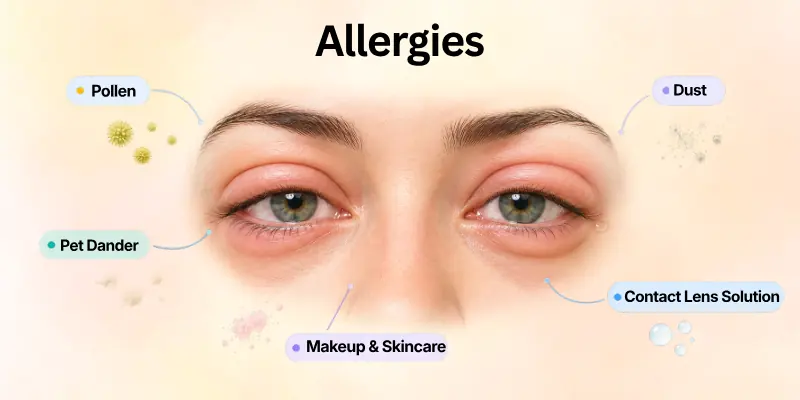
This reaction can make the eyelids look puffy and cause other symptoms like itching, redness, watery eyes, and irritation. Eye allergies often affect both eyes, but they can sometimes cause swelling in one eye as well.
Common allergy triggers include:
- Pollen from plants
- Dust and dust mites
- Pet dander
- Eye makeup or skincare products
- Contact lens solutions
2. Stye
A stye is a small, painful lump that develops on the eyelid due to a bacterial infection or a blocked oil gland. It usually appears near the eyelashes and can cause swelling, redness, and discomfort.
A stye can make the eyelid feel sore and sensitive. It often affects one eye and may cause pain when you touch the affected area or blink. You can also read our guide on home remedies for swollen eyelids to learn simple ways to reduce discomfort and support healing.
Common causes of a stye include:
- Bacterial infection near the eyelashes
- Blocked oil glands in the eyelid
- Touching eyes with unwashed hands
- Poor eyelid hygiene
- Using old or contaminated eye makeup
3. Chalazion
A chalazion is a small lump that forms on the eyelid when an oil gland becomes blocked. It usually does not cause pain, but it can make the eyelid swollen, heavy, and puffy.
A blocked gland stops oil from draining properly, which causes buildup inside the eyelid. A chalazion can develop on the upper or lower eyelid and may take time to go away.
Common causes of a chalazion include:
- Blocked oil glands in the eyelid
- Previous stye infection
- Chronic eyelid inflammation
- Poor eyelid hygiene
- Skin conditions that affect oil glands
4. Blepharitis
Blepharitis is an inflammation of the eyelids that usually affects the area around the eyelashes. It can make the eyelids swollen, red, and irritated. This condition can affect one or both eyes.
Blepharitis often happens when oil glands near the eyelashes become blocked or when bacteria build up around the eyelids. It can cause ongoing discomfort and make the eyelids feel dry or itchy.
Common causes of blepharitis include:
- Bacterial buildup around the eyelashes
- Blocked oil glands in the eyelids
- Poor eyelid hygiene
- Skin conditions like dandruff or rosacea
- Allergic reactions to eye products
5. Conjunctivitis (Pink Eye)
Conjunctivitis, also called pink eye, is an inflammation of the thin layer covering the white part of the eye and the inside of the eyelid. It can cause eyelid swelling, redness, and irritation.
Pink eye can happen due to infections, allergies, or irritation from outside factors. The swelling may affect one or both eyes and often appears with other eye symptoms.
Common causes of conjunctivitis include:
- Viral infections
- Bacterial infections
- Allergic reactions
- Exposure to smoke, dust, or chemicals
- Poor eye hygiene
6. Eye Injury or Trauma
An eye injury or trauma can cause swelling around the eyelid due to damage or irritation in the eye area. A hit, scratch, or foreign object can trigger inflammation and make the eyelid look swollen.
The severity of swelling depends on the type of injury. Mild injuries may improve with time, while serious injuries may need medical care.
Common causes of eye injury or trauma include:
- Accidental hit near the eye
- Scratches on the eyelid or eye surface
- Foreign objects entering the eye
- Sports-related injuries
- Chemical exposure near the eye
7. Eye Irritation from Makeup or Skincare Products
Makeup and skincare products can irritate the sensitive skin around the eyes. Certain ingredients may cause an allergic reaction or irritation that leads to eyelid swelling.
Using unsuitable or expired products can increase the risk of redness, itching, and puffiness around the eyes.
Common causes of eye irritation from products include:
- Old or expired eye makeup
- Fragrances or harsh ingredients in skincare products
- Makeup left on overnight
- Allergic reaction to cosmetics
- Contaminated makeup tools
8. Blocked Tear Duct
A blocked tear duct happens when the pathway that drains tears from the eye becomes blocked. This can cause tears to build up and lead to swelling around the eyelid.
A blocked tear duct can affect people of different ages and may cause discomfort around the affected eye.
Common causes of a blocked tear duct include:
- Inflammation inside the tear duct
- Eye infections
- Injury near the tear drainage system
- Age-related changes
- Narrow or blocked tear drainage pathways
9. Lack of Sleep or Morning Puffiness
Lack of sleep can make the skin around the eyes look swollen and tired. When you do not get enough rest, fluid can collect around the eyes and cause morning puffiness.
This type of swelling is usually temporary and improves after proper sleep and rest. It often affects both eyes and does not usually cause pain or redness.
Common causes of morning puffiness include:
- Not getting enough sleep
- Staying awake for long hours
- Sleeping in an uncomfortable position
- Eating too much salty food
- Temporary fluid buildup around the eyes
10. Contact Lens Irritation
Contact lens irritation can cause swelling, redness, and discomfort around the eyelid. Wearing lenses for too long or using them incorrectly can irritate the eyes and trigger inflammation.
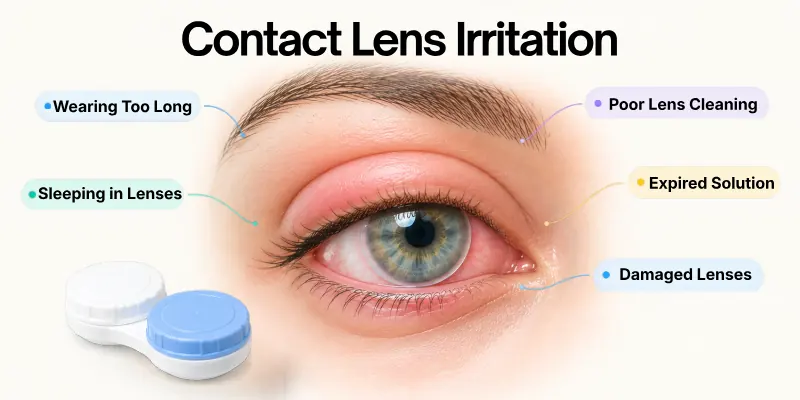
Poor lens care can also increase the risk of eye irritation and infections. This may lead to symptoms like dryness, itching, and eyelid swelling.
Common causes of contact lens irritation include:
- Wearing contact lenses for too long
- Using dirty or poorly cleaned lenses
- Sleeping while wearing contact lenses
- Using expired contact lens solutions
- Wearing damaged or incorrect lenses
11. Insect Bite Near the Eye
An insect bite near the eye can cause eyelid swelling because the skin around the eyes is thin and sensitive. A bite may trigger an inflammatory reaction that makes the eyelid look puffy, red, and irritated.
The swelling usually appears around the area where the insect bites. Some people may also experience itching, tenderness, or mild discomfort.
Common causes of insect bites near the eye include:
- Mosquito bites
- Bee or wasp stings
- Ant bites
- Other small insect bites
- Allergic reaction to insect venom
12. Sinus Infection
A sinus infection can cause swelling around the eyelids when the spaces around the nose and eyes become inflamed. The pressure and inflammation from infected sinuses can affect the tissues near the eyes and make the eyelids look puffy.
Sinus infections often cause other symptoms along with eyelid swelling. These symptoms may include facial pressure, nasal congestion, and discomfort around the eyes.
Common causes of sinus infection include:
- Viral infections like the common cold
- Bacterial infections
- Allergies that block the sinuses
- Nasal swelling and inflammation
- Poor drainage of mucus from the sinuses
13. Eye Infection
An eye infection can cause eyelid swelling when harmful bacteria, viruses, or other germs affect the eye area. The infection can trigger inflammation, making the eyelid look red, swollen, and irritated.
Eye infections may affect one or both eyes and often come with symptoms like pain, discharge, redness, or sensitivity to light. Some infections improve with care, while others may need medical treatment.
Common causes of eye infection include:
- Bacterial infections
- Viral infections
- Fungal infections
- Poor eye hygiene
- Touching eyes with dirty hands
14. Orbital Cellulitis (Serious Eye Infection)
Orbital cellulitis is a serious infection that affects the tissues around the eye. It can cause severe eyelid swelling, redness, and pain because the infection spreads into the deeper areas around the eye.
This condition needs medical attention because it can affect vision and lead to serious complications if left untreated. It often develops after infections in nearby areas.
Common causes of orbital cellulitis include:
- Bacterial infection spreading from the sinuses
- Untreated eye infections
- Skin infections near the eye
- Eye injuries that allow bacteria to enter
- Infections after surgery around the eye area
15. Thyroid Problems
Thyroid problems, especially thyroid eye disease, can cause swelling around the eyelids. Changes in thyroid function can affect the tissues around the eyes and make them look puffy or enlarged.
This condition may develop along with other eye symptoms, such as dryness, irritation, or a feeling of pressure around the eyes. It often requires proper medical evaluation.
Common causes of thyroid-related eyelid swelling include:
- Graves’ disease
- Overactive thyroid (hyperthyroidism)
- Inflammation of tissues around the eyes
- Changes in immune system activity
- Family history of thyroid conditions
Swollen Eyelid on One Side vs Both Eyes
The cause of a swollen eyelid can often depend on whether the swelling affects one eye or both eyes. One-sided swelling is usually linked to a local problem near the eye, while swelling in both eyes may happen due to allergies, lifestyle factors, or health conditions.
Here is a simple comparison to understand the possible causes:
| Type | Possible Causes |
|---|---|
| One swollen eyelid | Stye, eye injury, blocked oil gland, insect bite, eye infection |
| Both swollen eyelids | Allergies, lack of sleep, morning puffiness, sinus infection, thyroid problems |
Symptoms That May Occur With a Swollen Eyelid
A swollen eyelid can appear with different symptoms depending on the cause. Some people may notice mild irritation, while others may experience pain, redness, or changes in vision.
Here are some signs of swollen eyelids:
- Redness around the eyelid or eye
- Itching or irritation
- Pain or tenderness in the eyelid
- Eye discharge
- Watery eyes
- Sensitivity to light
- Blurred vision
When Should You See a Doctor for a Swollen Eyelid?
Most swollen eyelids improve with simple care, especially when caused by mild irritation or allergies. However, some signs may indicate a serious problem that needs medical attention.
You should see a doctor if you notice:
- Severe pain: Strong eye pain may point to an infection or serious eye issue.
- Vision changes: Blurred or reduced vision needs medical evaluation.
- Fever: Fever with swelling may indicate an infection.
- Spreading swelling: Swelling around the eye may need urgent care.
- Eye movement issues: Trouble moving the eye can be a warning sign.
- Serious injury: Severe swelling after an injury needs medical attention.
- No improvement: Swelling that continues for days should be checked.
Conclusion
In this guide, we covered the common and serious causes of swollen eyelids, including allergies, stye, chalazion, infections, irritation, injuries, and health conditions. We also discussed the symptoms that may appear with eyelid swelling and when you should see a doctor.
Most swollen eyelids improve with proper care, especially when caused by mild issues. However, paying attention to warning signs of swollen eyelids like severe pain, vision changes, or spreading swelling can help you get timely medical help when needed.
Frequently Asked Questions
Here are answers to some common questions about causes of swollen eyelids:
1. What is the most common cause of a swollen eyelid?
The most common causes of a swollen eyelid include:
- Allergies: Reactions to pollen, dust, or products can cause eyelid swelling.
- Stye: A blocked oil gland or bacterial infection can create a swollen bump on the eyelid.
- Blocked oil glands: A blockage can lead to swelling and irritation.
- Eye irritation: Makeup, skincare products, or contact lenses may trigger swelling.
2. Why is my eyelid swollen when I wake up?
Morning eyelid swelling can happen due to:
- Lack of sleep: Poor rest can make the eyes look puffy.
- Fluid buildup: Extra fluid around the eyes can cause morning swelling.
- Sleeping position: Certain positions can increase puffiness.
- Allergies: Nighttime exposure to allergens may cause swelling.
3. Can allergies cause swollen eyelids?
Yes, allergies can cause swollen eyelids. Exposure to pollen, dust, pet dander, or certain products can trigger inflammation, itching, and puffiness around the eyes. Avoiding known allergens can help reduce repeated swelling.
4. Why is only one eyelid swollen?
One swollen eyelid may happen due to:
- Stye: A painful lump affecting one eyelid.
- Insect bite: A bite near the eye can cause local swelling.
- Eye injury: Trauma can affect one side.
- Blocked gland: A blocked oil gland may cause swelling in one eyelid.
5. Can lack of sleep cause eyelid swelling?
Yes, lack of sleep can make the eyelids look puffy. Poor rest can cause temporary fluid buildup around the eyes and make them appear swollen. This type of swelling usually improves after proper rest.
6. How long does a swollen eyelid take to heal?
The healing time depends on the cause:
- Mild irritation: May improve within a short time.
- Allergy-related swelling: Often improves after avoiding triggers.
- Stye or blocked gland: May take longer to heal.
- Infections: May require medical treatment.
7. Is a swollen eyelid a sign of infection?
A swollen eyelid can be a sign of infection, especially if it appears with redness, pain, warmth, discharge, or fever. Some infections need medical treatment to prevent complications.
8. Can a stye cause eyelid swelling?
Yes, a stye can cause eyelid swelling. It develops as a painful bump near the eyelashes due to a blocked oil gland or bacterial infection. Warm compresses may help reduce discomfort and support healing.
9. Should I use a warm or cold compress for a swollen eyelid?
The right compress depends on the cause:
- Warm compress: Helps with styes and blocked oil glands.
- Cold compress: Helps reduce swelling from allergies or irritation.
- Clean cloth: Always use a clean cloth to avoid further irritation.
10. When should I worry about a swollen eyelid?
You should get medical advice if you notice:
- Severe pain: Strong pain may indicate a serious issue.
- Vision changes: Blurred vision needs evaluation.
- Spreading swelling: Swelling around the eye can be concerning.
- No improvement: Swelling that continues needs attention.




- Be Respectful
- Stay Relevant
- Stay Positive
- True Feedback
- Encourage Discussion
- Avoid Spamming
- No Fake News
- Don't Copy-Paste
- No Personal Attacks
- Be Respectful
- Stay Relevant
- Stay Positive
- True Feedback
- Encourage Discussion
- Avoid Spamming
- No Fake News
- Don't Copy-Paste
- No Personal Attacks
