Causes of Diabetes: A Complete Guide to Type 1, Type 2, and Gestational
Published: 4 Oct 2026
Diabetes is not just one disease. It has different forms, and each one develops due to different factors. In simple words, it means your blood sugar goes too high. This happens because your body cannot use insulin the right way. Insulin is a hormone that takes sugar from your blood and sends it into your cells for energy. When this process stops working well, sugar stays in your blood instead of going into your cells.
So what causes diabetes? The reason varies by type. In type 1, the immune system attacks the cells that make insulin. Type 2 usually develops slowly and is linked to weight, low activity, and family history. Gestational diabetes is triggered by hormone changes during pregnancy.
This article explains the common causes of diabetes of type 1, type 2, and gestational diabetes, along with less common causes, key risk factors, and when to get tested.
Causes of Type 1 Diabetes
Type 1 diabetes happens when the immune system attacks itself. It destroys the cells in the pancreas that make insulin. Without insulin, sugar cannot move out of the blood and into the cells. This type has no link to weight or lifestyle. It usually starts in childhood or early adulthood, but it can appear at any age. It often develops faster than other types of diabetes.
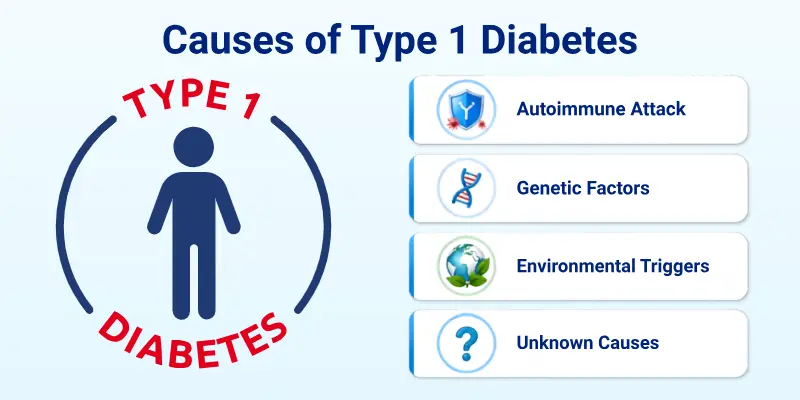
Here are the main causes behind type 1 diabetes:
- Autoimmune Response
- Genetic Factors
- Environmental Triggers
- Unknown Causes
Let’s look at each of these in detail below.
1. Autoimmune Response
The immune system normally fights germs and viruses. In type 1 diabetes, it attacks the beta cells in the pancreas instead. These cells produce insulin. Once enough of them are destroyed, the body stops making the insulin it needs.
Doctors still don’t fully know why this attack starts. Blood tests can often detect the antibodies behind this attack early on.
2. Genetic Factors
Family history is one of the main risk factors for type 1 diabetes. If a parent or sibling has it, the risk goes up. Certain genes raise the chance of developing the condition.
Having these genes doesn’t guarantee diabetes. It only raises the odds. Genetic testing can sometimes show this risk before symptoms appear.
3: Environmental Triggers
Some researchers think outside factors can trigger type 1 diabetes in people already at risk through their genes. Viral infections are one of the most studied triggers. Cold weather and early childhood diet have also been studied, but nothing is proven yet. More research is still needed to confirm these links.
4. Unknown Causes
In many cases, doctors cannot find an exact cause. Type 1 diabetes can appear suddenly, even without family history or a clear trigger. This makes it hard to predict or prevent. It’s one of the reasons regular checkups matter for early detection.
Causes of Type 2 Diabetes
Type 2 diabetes is the most common form of diabetes. It usually develops slowly over the years. In this type, the body still makes insulin, but the cells stop responding to it well. This is called insulin resistance.
Over time, the pancreas cannot keep up, and blood sugar levels rise. Lifestyle plays a bigger role here than in type 1. Here are the main causes behind type 2 diabetes:
- Insulin Resistance
- Excess Weight and Obesity
- Physical Inactivity
- Poor Diet
- Genetic Factors
- Age
Let’s look at each of these in detail below.
1. Insulin Resistance
Insulin resistance means the cells in your muscles, fat, and liver don’t use insulin properly. Sugar builds up in the blood instead of moving into the cells. The pancreas tries to make more insulin to fix this. Over time, it wears out and can’t keep up. This is the core problem behind most type 2 cases.
2. Excess Weight and Obesity
Carrying extra weight, especially around the belly, raises the risk of insulin resistance. Fat cells release substances that interfere with how insulin works. This is why many people ask if obesity can cause diabetes.
The answer is yes, it’s one of the strongest risk factors for type 2 diabetes. Losing even a small amount of weight can lower this risk.
3. Physical Inactivity
Muscles use sugar for energy during movement. Regular activity helps the body use insulin better. A sedentary lifestyle does the opposite. It makes cells more resistant to insulin over time. This is why doctors often recommend exercise for diabetes as part of prevention and management.
4. Poor Diet
Eating a lot of processed food, sugary drinks, and refined carbs can raise blood sugar and body weight. This is why people often ask if diet can cause diabetes. On its own, diet is rarely the only cause, but it adds to the risk when combined with other factors. Choosing better foods for diabetes prevention can lower this risk over time.
5. Genetic Factors
Family history matters in type 2 diabetes as much as it does in type 1. If a close relative has it, your risk goes up. Genes affect how your body processes insulin and stores fat. This is one of the key risk factors for type 2 diabetes that you can’t change, but knowing it helps with early screening.
6. Age
The risk of type 2 diabetes increases after age 45. As people get older, the body naturally becomes more resistant to insulin. Muscle mass also tends to drop with age, which affects blood sugar control. This is why regular screening matters more as you get older.
Causes of Gestational Diabetes
Gestational diabetes develops only during pregnancy. It happens when hormones from the placenta make it harder for the body to use insulin. Most women’s bodies adjust and make extra insulin to keep up.
When the pancreas can’t produce enough, blood sugar rises. It usually goes away after childbirth, but it raises future risk for type 2 diabetes.
Here are the main causes behind gestational diabetes:
- Hormonal Changes
- Insulin Resistance During Pregnancy
- Excess Weight Before Pregnancy
- Family History
- Age
Let’s look at each of these in detail below.
1. Hormonal Changes
The placenta produces hormones that help the baby grow. Some of these hormones block insulin from working properly in the mother’s body. This is a normal part of pregnancy. In most cases, the body compensates by making more insulin. When it can’t keep up, gestational diabetes develops.
2. Insulin Resistance During Pregnancy
As pregnancy progresses, insulin resistance naturally increases. This helps make sure the baby gets enough glucose to grow. But in some women, this resistance becomes too strong for the pancreas to handle. The result is higher blood sugar levels during pregnancy.
3. Excess Weight Before Pregnancy
Women who are overweight before pregnancy have a higher risk of developing gestational diabetes. Extra weight adds to insulin resistance, which is already increased by pregnancy hormones. This combination puts more strain on the pancreas. Managing weight before pregnancy can lower this risk.
4. Family History
A family history of diabetes raises the risk of gestational diabetes too. If a parent or sibling has type 2 diabetes, the chances go up. Genetics affect how the body handles insulin resistance during pregnancy. This is one of the risk factors doctors ask about during prenatal visits.
5. Age
Women over 25 have a higher risk of gestational diabetes. The risk increases further after age 35. Age affects how well the body responds to insulin resistance during pregnancy. This is why older mothers are often screened earlier and more closely.
Other, Less Common Causes of Diabetes
Not all diabetes fits into the type 1, type 2, or gestational categories. Some rarer forms come from specific genetic mutations, other health conditions, or certain medications. These types are often missed or misdiagnosed because they’re less known.
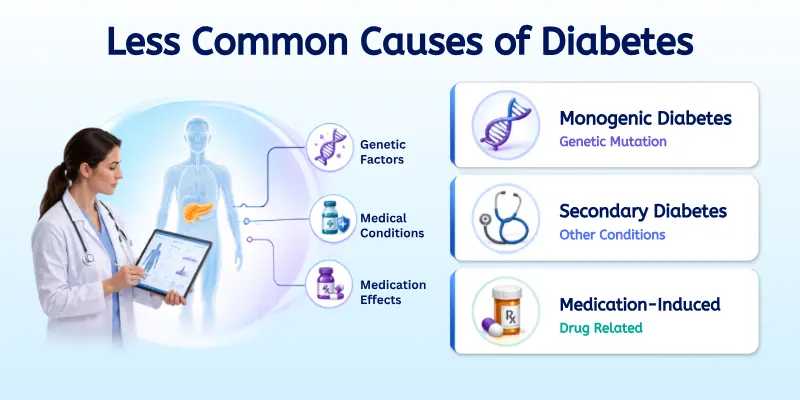
Understanding them helps explain cases that don’t follow the usual pattern. Here are the main causes behind these less common types:
- Monogenic Diabetes (MODY)
- Secondary Diabetes From Other Conditions
- Medication-Induced Diabetes
Let’s look at each of these in detail below.
1. Monogenic Diabetes (MODY)
Monogenic diabetes happens when a single gene mutation affects how the pancreas makes insulin. It’s often passed down from a parent to a child.
This form is different from type 1 and type 2 because it comes from one specific gene change, not multiple factors. It’s frequently misdiagnosed as type 1 or type 2 diabetes. Genetic testing is the only way to confirm it.
2. Secondary Diabetes from Other Conditions
Some health conditions can damage the pancreas and lead to diabetes as a side effect. Cystic fibrosis is one example, where thick mucus buildup harms the pancreas over time. Pancreatitis, or inflammation of the pancreas, can also reduce insulin production.
In these cases, diabetes develops because of the original disease, not on its own. Treating the underlying condition is often part of managing this type.
3. Medication-Induced Diabetes
Certain medications can raise blood sugar levels or affect insulin function. Steroids are one of the most common triggers, especially with long-term use. Some antipsychotic medications carry a similar risk.
This type of diabetes can sometimes improve or go away once the medication is stopped or adjusted. Doctors usually monitor blood sugar closely for patients on these drugs.
Can Diabetes Be Prevented?
The answer depends on the type. Some forms of diabetes respond well to lifestyle changes, while others can’t be stopped no matter what you do. Knowing the difference helps set realistic expectations and puts your energy where it actually matters.
Here are the key points on what can and can’t be prevented:
- Type 2 Diabetes: This type is largely preventable through weight management, regular exercise, and better food choices.
- Gestational Diabetes: Risk can be lowered with a healthy weight before pregnancy and staying active during it.
- Prediabetes: Catching this stage early and making lifestyle changes can stop it from turning into full diabetes.
- Type 1 Diabetes: This type cannot be prevented since it’s caused by an autoimmune response, not lifestyle.
- Monogenic Diabetes: Most cases can’t be prevented because they come from inherited gene mutations.
Who’s Most at Risk
Certain factors make some people more likely to develop diabetes than others. Some of these factors can be changed, like weight and activity level. Others, like age and family history, stay fixed no matter what you do. Here’s a simple breakdown by type.
1. Risk factors for type 2 diabetes:
Type 2 diabetes is more likely in people with certain lifestyle and health patterns. These factors often build up over time.
- Age 45 or older
- Family history of diabetes
- Overweight or obesity
- Low physical activity
- High blood pressure
- Prediabetes
2. Risk factors for gestational diabetes:
Gestational diabetes has its own set of risk factors tied to pregnancy and past health history. Doctors often check for these early in pregnancy.
- Age 25 or older, with higher risk after 35
- Overweight before pregnancy
- PCOS
- Prior gestational diabetes
- Large baby in past pregnancy
3. Common risk factors for both types:
Some risk factors overlap between both types and are worth watching regardless of which one applies to you.
- Family history of diabetes
- Certain ethnic backgrounds, including African American, Hispanic, Native American, and Asian American
When to See a Doctor or Get Tested
Diabetes often develops quietly, without obvious signs at first. Many people live with high blood sugar for months or years before getting diagnosed. Catching it early makes treatment easier and lowers the risk of complications. Knowing when to get tested can make a real difference.
Here are the signs and situations that mean it’s time to get tested:
- Frequent Urination: Needing to pee often, especially at night, can be an early sign of high blood sugar.
- Constant Thirst: Feeling thirsty all the time, even after drinking water, often goes along with frequent urination.
- Fatigue: Feeling tired for no clear reason can point to blood sugar problems.
- Blurry Vision: High blood sugar can affect your eyes and make your vision blurry.
- Slow Healing: Cuts or wounds that take longer than usual to heal are worth getting checked.
- Weight Loss: Losing weight without trying is a warning sign that shouldn’t be ignored.
- Family History: Having a parent or sibling with diabetes raises your own risk.
- Age Factor: Adults over 45 should get screened every three years, even without symptoms.
- Low Activity: Being inactive combined with extra weight increases the need for earlier testing.
- Pregnancy Window: Most women get tested for gestational diabetes between 24 and 28 weeks.
- Blood Pressure: High blood pressure is a reason doctors may test earlier than usual.
- Past Diagnosis: A history of gestational diabetes raises the risk of type 2 diabetes later.
Conclusion
In this guide, I covered common causes of diabetes and why the reasons differ from one type to another. I walked through the causes of type 1, type 2, and gestational diabetes, along with rarer forms like monogenic and secondary diabetes.
Diabetes isn’t one condition with one cause. Type 1 comes from an autoimmune response you can’t control. Type 2 and gestational diabetes involve a mix of genetics and lifestyle, which means some risk can be lowered with the right choices. Knowing your own risk factors, watching for early symptoms of diabetes, and getting tested on time can make a real difference in catching it early.
If you notice any warning signs or fall into a high-risk group, don’t wait. Talk to a doctor and get your blood sugar checked.
FAQs
Here are quick answers to common questions people ask about the common causes of diabetes.
No, eating sugar alone does not cause diabetes. Type 2 diabetes develops from a mix of factors like weight, low activity, and genetics. A diet high in sugar and processed food can add to the risk, but it’s not the single cause.
Stress does not directly cause diabetes, but it can raise blood sugar levels temporarily. Long-term stress may also lead to poor eating habits and less exercise, which can add to the risk of type 2 diabetes over time.
Here are the key points:
- Autoimmune response
- Genetic factors
- Environmental triggers
- Unknown causes
Yes, family history plays a role in both type 1 and type 2 diabetes. Having a parent or sibling with diabetes raises your own risk. But genes alone don’t guarantee you’ll develop it, other factors matter too.
Yes. Weight is a major risk factor for type 2 diabetes, but not the only one. Genetics, age, and family history can lead to diabetes even in people at a healthy weight.
No, type 1 diabetes cannot be prevented. It’s caused by an autoimmune response that isn’t linked to diet or lifestyle. Researchers are still studying ways to stop it before it starts.
Yes, type 2 diabetes is becoming more common in children and teens, especially with rising obesity rates and low activity levels. It used to be seen mostly in adults, but that’s changing.
Here are the key points:
- Insulin resistance
- Cells stop responding to insulin
- Linked to weight, activity, and genetics
Yes, women who have gestational diabetes have a much higher risk of developing type 2 diabetes later in life. Regular blood sugar checks after pregnancy help catch this early.
Alcohol doesn’t directly cause diabetes, but heavy drinking can affect the pancreas and lead to weight gain, both of which raise the risk over time. Moderate drinking is generally considered lower risk.
Here are the key points:
- Hormonal changes during pregnancy
- Hormones block insulin from working properly
- The pancreas can’t keep up with the extra demand
Type 2 diabetes can sometimes go into remission with major lifestyle changes like weight loss and diet control, though it’s not guaranteed for everyone. Type 1 diabetes cannot be reversed.






- Be Respectful
- Stay Relevant
- Stay Positive
- True Feedback
- Encourage Discussion
- Avoid Spamming
- No Fake News
- Don't Copy-Paste
- No Personal Attacks
- Be Respectful
- Stay Relevant
- Stay Positive
- True Feedback
- Encourage Discussion
- Avoid Spamming
- No Fake News
- Don't Copy-Paste
- No Personal Attacks
