Low-Calorie Foods for Fat Loss: Best Choices to Stay Full & Slim
Published: 9 Jun 2026
Fat loss is not only about eating less, but it’s also about eating smarter. Choosing low-calorie foods for fat loss helps you stay full, control hunger, and reduce overall calorie intake without feeling deprived. In this guide, we will explain the best low-calorie foods, why they help with fat loss, and how to include them in your daily diet.
You will also learn tips, meal ideas, and snacks that make fat loss easier and more sustainable. By the end, you’ll know how to eat in a way that supports weight loss while keeping energy and nutrition high.
Top Low-Calorie Foods for Fat Loss
Choosing the right low-calorie foods can make fat loss easier without leaving you feeling hungry. These foods are packed with fiber, water, vitamins, and minerals that help keep you full, support your metabolism, and reduce unnecessary calorie intake.
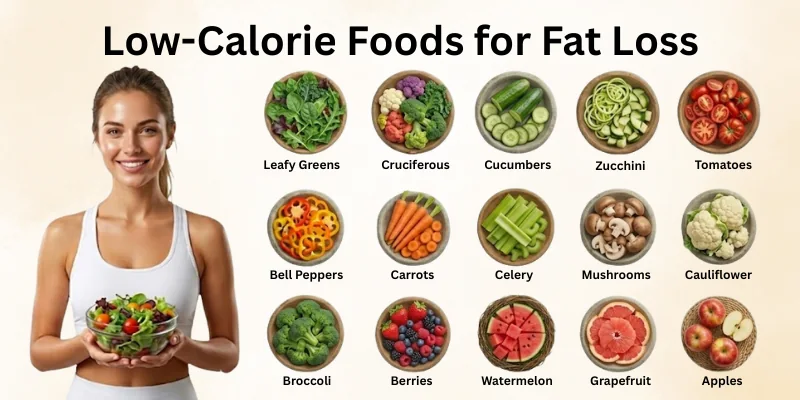
Adding them to balanced meals can help you stay consistent with your weight loss goals while still enjoying a variety of nutritious foods.
Here are the best low-calorie foods you can include in your diet for fat loss:
- Leafy Greens
- Cruciferous Vegetables
- Cucumbers
- Zucchini
- Tomatoes
- Bell Peppers
- Carrots
- Celery
- Mushrooms
- Cauliflower
- Broccoli
- Berries
- Watermelon
- Grapefruit
- Apples
Let’s cover each in detail with tips for fat loss.
1. Leafy Greens
Leafy greens like spinach, kale, and lettuce are very low in calories but rich in fiber, vitamins, and minerals. They help you feel full while adding almost no calories. Eating them regularly supports fat loss and improves digestion. They can be eaten raw in salads, sautéed, or added to soups and smoothies. Leafy greens also provide antioxidants that protect your body during weight loss.
Tips:
- Add spinach or kale to every meal.
- Use lettuce wraps instead of bread for sandwiches.
- Blend greens into smoothies for extra nutrients.
- Mix different greens for variety and flavor.
2. Cruciferous Vegetables
Vegetables like broccoli, cabbage, and cauliflower are low-calorie, high in fiber, and packed with vitamins. They improve satiety and reduce hunger pangs. Cruciferous vegetables are also great for digestion and detoxification. These can be steamed, roasted, or stir-fried for fat-loss-friendly meals. Eating them daily can help reduce overall calorie intake.
Tips:
- Steam or roast broccoli for lunch or dinner.
- Add cabbage to salads for crunch and fiber.
- Use cauliflower rice as a low-calorie rice substitute.
- Mix with spices for better flavor without adding calories.
3. Cucumbers
Cucumbers are mostly water and very low in calories, making them perfect for fat loss. They help hydrate the body and improve digestion. Eating cucumbers fills you up, reducing the desire for high-calorie snacks. They can be eaten raw, added to salads, or blended into refreshing drinks. Cucumbers also support skin health during fat loss.
Tips:
- Slice cucumbers for snacks or salads.
- Add to water for a hydrating drink.
- Use as a low-calorie base for sandwiches.
- Sprinkle with lemon and herbs for flavor.
4. Zucchini
Zucchini is low in calories but high in fiber and water. It helps keep you full while reducing calorie intake. Zucchini can be spiralized into noodles as a pasta substitute. It can also be sautéed, grilled, or added to soups. Including zucchini in meals helps reduce refined carb intake and supports fat loss.
Tips:
- Make zucchini noodles with tomato sauce for dinner.
- Roast with herbs for a healthy side dish.
- Add to soups or stews for volume without calories.
- Use in casseroles instead of potatoes.
5. Tomatoes
Tomatoes are low in calories but high in vitamins, antioxidants, and water content. They improve hydration and satiety. Tomatoes can be eaten raw, roasted, or added to sauces. They support fat loss while boosting heart health. Including tomatoes in meals also enhances flavor without adding extra calories.
Tips:
- Add fresh tomatoes to salads.
- Use roasted tomatoes in sandwiches or pasta.
- Make tomato soup as a low-calorie meal.
- Include in omelets or vegetable stir-fries.
6. Bell Peppers
Bell peppers are low in calories, high in fiber, and rich in vitamins like vitamin C. They support fat loss by improving satiety and metabolism. Bell peppers can be eaten raw as snacks or added to cooked dishes. They also improve digestion and provide antioxidants. Their bright colors make meals more appealing and satisfying.
Tips:
- Add to salads for crunch and sweetness.
- Roast or grill as a side dish.
- Use in stir-fries or omelets.
- Snack on raw pepper strips with hummus.
7. Carrots
Carrots are low in calories and high in fiber, vitamins, and antioxidants. They support fat loss by keeping you full between meals. Carrots can be eaten raw, roasted, or added to soups and salads. They also improve digestion and eye health. Sweet, crunchy carrots are a satisfying low-calorie snack.
Tips:
- Snack on carrot sticks with low-calorie dips.
- Roast with spices for a healthy side dish.
- Grate into salads or soups for extra fiber.
- Include in smoothies for natural sweetness.
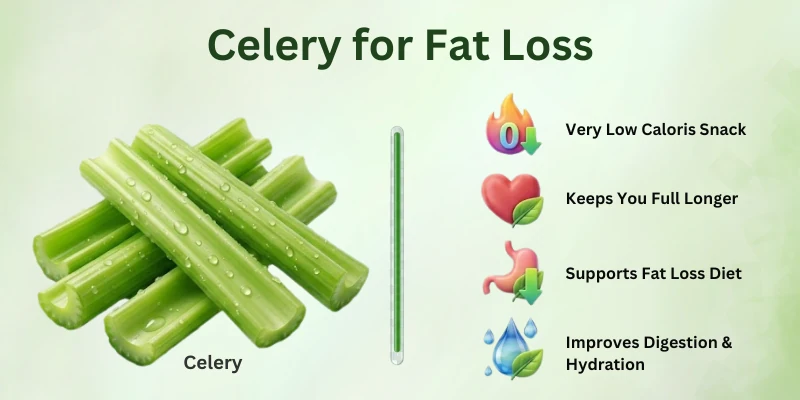
8. Celery
Celery is extremely low in calories and mostly made of water. It is perfect for snacking and hydration during fat loss. Celery also provides fiber that keeps you full. You can eat it raw with hummus or peanut butter. It supports digestion and adds crunch to meals without adding calories.
Tips:
- Use celery sticks as a snack with light dips.
- Chop into salads for extra volume.
- Blend into green smoothies for hydration.
- Include in soups for bulk and fiber.
9. Mushrooms
Mushrooms are low in calories but rich in nutrients and antioxidants. They are filling and add flavor to meals without adding fat or sugar. Mushrooms can be sautéed, grilled, or added to soups, salads, or stir-fries. They also support fat loss by increasing satiety. Regular consumption improves overall nutrition.
Tips:
- Use mushrooms as a meat substitute in stir-fries.
- Roast or grill for a low-calorie side.
- Add to salads or soups for volume.
- Combine with herbs for a better taste.
10. Cauliflower
Cauliflower is low in calories, high in fiber, and rich in vitamins. It helps you feel full while reducing calorie intake. Cauliflower can be roasted, steamed, or mashed as a potato substitute. It is versatile and supports fat-loss-friendly meals. Including cauliflower in your diet helps reduce refined carb consumption.
Tips:
- Make cauliflower rice as a low-calorie base.
- Roast with spices for a tasty side dish.
- Use in soups or casseroles for volume.
- Blend into smoothies for added fiber.
11. Broccoli
Broccoli is high in fiber and low in calories, making it ideal for fat loss. It keeps you full and provides essential vitamins and antioxidants. Broccoli can be steamed, roasted, or added to salads and soups. Regular consumption supports digestion and weight management. It also boosts immunity and overall health.
Tips:
- Steam or roast as a side dish.
- Add to omelets or stir-fries.
- Include in salads or soups for extra fiber.
- Pair with lemon or herbs for better flavor.
12. Berries
Berries like strawberries, blueberries, and raspberries are low in calories but rich in antioxidants and fiber. They improve satiety and satisfy sweet cravings. Berries can be eaten as snacks, in smoothies, or added to yogurt. They support fat loss while improving digestion and skin health. Including berries regularly boosts overall nutrition.
Tips:
- Add to Greek yogurt for breakfast.
- Use in smoothies for natural sweetness.
- Snack on fresh or frozen berries.
- Sprinkle on oatmeal or salads.
13. Watermelon
Watermelon is low in calories and mostly water, which keeps you hydrated and full. It is naturally sweet and helps reduce cravings for sugary foods. Watermelon can be eaten fresh or blended into smoothies. It supports fat loss by reducing overall calorie intake. Regular consumption also improves skin and hydration.
Tips:
- Snack on fresh watermelon slices.
- Blend into refreshing smoothies or juices.
- Freeze for a healthy summer treat.
- Combine with mint or lemon for flavor.
14. Grapefruit
Grapefruit is low in calories and rich in vitamin C. It helps boost metabolism and improve fat loss when included in meals. Grapefruit can be eaten as a snack or added to salads. It keeps you full and reduces sugar cravings. Eating grapefruit regularly supports digestion and hydration.
Tips:
- Eat half a grapefruit before meals.
- Add to salads for a tangy flavor.
- Blend into smoothies with berries.
- Combine with other citrus fruits for variety.
15. Apples
Apples are low in calories, high in fiber, and naturally sweet. They keep you full and reduce snacking on high-calorie foods. Apples can be eaten raw, baked, or added to salads. They support fat loss by controlling hunger and providing essential nutrients. Eating apples regularly also improves digestion and energy levels.
Tips:
- Snack on raw apples between meals.
- Bake with cinnamon for a low-calorie dessert.
- Add slices to salads or oatmeal.
- Pair with peanut butter for extra protein.
Why Low-Calorie Foods Are Important for Fat Loss
Eating low-calorie foods helps create a calorie deficit, which is necessary for fat loss. These foods usually contain more water and fiber, keeping you full longer. They also provide essential nutrients without adding excess calories.
Choosing the right low-calorie foods improves metabolism, reduces fat storage, and supports overall health. Combining these foods with regular exercise maximizes fat loss results.
Additional Tips for Fat Loss Using Low-Calorie Foods
Adding low-calorie foods to your meals is a great start, but your daily eating habits also play an important role in successful fat loss. Small lifestyle changes can help you stay full for longer, reduce unnecessary calorie intake, and make it easier to maintain a healthy eating routine.
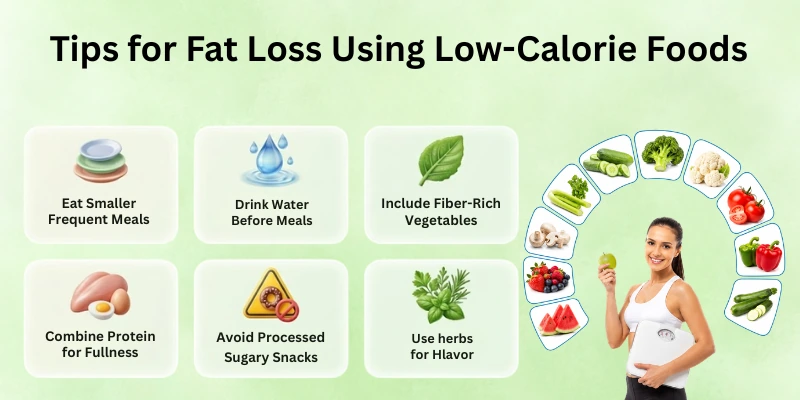
Follow these simple tips to get the most benefit from low-calorie foods.
- Eat smaller meals frequently to control hunger.
- Drink water before meals and snacks.
- Include fiber-rich vegetables in every meal.
- Combine protein with low-calorie foods for fullness.
- Plan meals ahead to avoid high-calorie choices.
- Avoid processed snacks and sugary drinks.
- Use herbs and spices for flavor without calories.
Final Note
In this guide, we have covered low-calorie foods for fat loss and explained how to use them to control hunger, stay full, and reduce calories naturally.
Smart food choices, combined with planning and hydration, make fat loss easier and more sustainable. Eating a variety of vegetables, fruits, and low-calorie foods ensures you stay energized while losing fat.
Eat smart, stay full, and focus on nutrition for lasting results. Goodbye, goodbye, goodbye.
FAQs: Low-Calorie Foods for Fat Loss
Here are some of the most commonly asked questions related to low-calorie foods for fat loss:
Low-calorie foods help create a calorie deficit, which is essential for fat loss. They keep you full without adding extra calories. Eating these foods supports weight loss while providing essential nutrients.
Best options include leafy greens, broccoli, cauliflower, cucumbers, zucchini, tomatoes, berries, and apples. These foods are rich in fiber, vitamins, and water, keeping you full for longer. They can be included in meals, snacks, and salads.
Yes, high-fiber and water-rich foods like vegetables and fruits reduce hunger and sugar cravings. They provide bulk in the stomach, which helps you eat less overall. Eating these foods regularly supports long-term fat loss.
Include low-calorie foods in every meal and snack. Eating frequently in small portions helps control hunger and maintain energy levels. Combining vegetables and fruits with protein enhances satiety.
Yes, fruits like berries, apples, grapefruit, and watermelon are low in calories and high in fiber. They provide natural sweetness, reduce cravings, and support fat loss. Portion control is still important with higher-calorie fruits like bananas or mangoes.
Low-calorie foods help, but fat loss also requires balanced nutrition, protein intake, and regular exercise. Combining these foods with lean protein and fiber ensures sustainable results. Drinking water and avoiding processed foods improve effectiveness.
Yes, snacks like cucumber sticks, celery, carrots, or roasted chickpeas are filling but low in calories. They prevent overeating at main meals and maintain energy. Healthy snacking supports a calorie deficit for fat loss.
Combine low-calorie foods with protein sources like beans, lentils, Greek yogurt, or tofu. Add fiber-rich vegetables and whole grains for satiety. Eating slowly and drinking water before meals also helps.
Yes, water adds volume to the stomach, helping you feel full. It supports digestion, hydration, and metabolism during fat loss. Drinking water before or with meals reduces overeating.
Absolutely, low-calorie vegetables and fruits are safe for daily consumption. They provide essential nutrients and fiber while supporting fat loss. Including variety ensures you get all vitamins and minerals.




- Be Respectful
- Stay Relevant
- Stay Positive
- True Feedback
- Encourage Discussion
- Avoid Spamming
- No Fake News
- Don't Copy-Paste
- No Personal Attacks
- Be Respectful
- Stay Relevant
- Stay Positive
- True Feedback
- Encourage Discussion
- Avoid Spamming
- No Fake News
- Don't Copy-Paste
- No Personal Attacks
