Foods High in Magnesium for Energy and Better Health
Published: 4 Jun 2026
Magnesium is a vital mineral that plays a key role in over 300 biochemical reactions in the body. It supports muscle and nerve function, energy production, heart health, and bone strength. Low magnesium levels can cause fatigue, muscle cramps, mood swings, and poor sleep.
Including magnesium-rich foods in your diet helps maintain overall health, boosts energy, and reduces the risk of chronic diseases. This guide will explain the best foods high in magnesium, their benefits, and tips to include them in your daily meals.
Let’s dive in with me to cover all the best foods high in magnesium.
Why Magnesium is Important
Magnesium is essential for many body functions:
- Supports energy production and metabolism.
- Maintains healthy bones and teeth.
- Regulates muscle and nerve function, preventing cramps.
- Helps maintain a healthy heart and blood pressure.
- Improves sleep, mood, and stress management.
A magnesium-rich diet keeps your body energized and prevents deficiency-related problems.
Best Foods High in Magnesium
Magnesium is an essential mineral that supports muscle function, nerve health, energy production, and bone strength. Including magnesium-rich foods in your daily diet can help maintain healthy magnesium levels and support overall well-being.
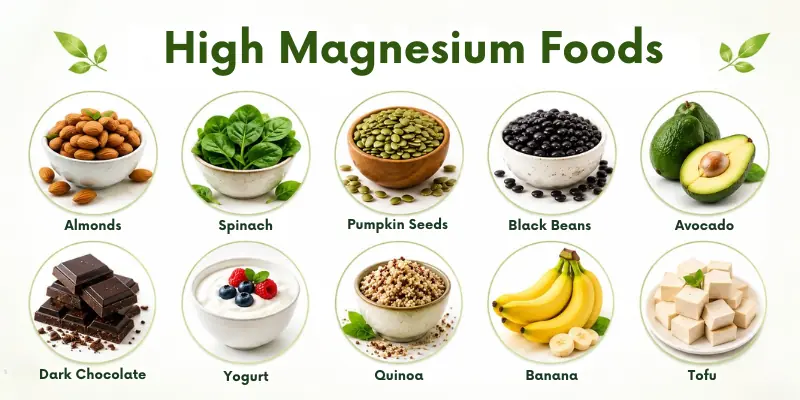
Here is the list of all the best foods high in magnesium:
- Spinach and Leafy Greens
- Almonds
- Cashews
- Pumpkin Seeds
- Sunflower Seeds
- Dark Chocolate
- Avocado
- Black Beans
- Chickpeas
- Quinoa
- Whole Grains (Brown Rice, Oats, Barley)
- Fatty Fish (Salmon, Mackerel)
- Tofu and Soy Products
- Bananas
These nutrient-dense foods can be easily added to meals and snacks throughout the day. Let’s take a closer look at the benefits of each one.
1. Spinach and Leafy Greens
Among the vegetables that are high in magnesium and antioxidants are Swiss chard, spinach, and kale. They are beneficial to the health of the heart, the bones, and the function of the muscles. Consuming leafy greens on a daily basis helps to maintain energy levels and reduces spasms in the muscles.
Tips for Best Results:
- Eat raw in salads or lightly steamed.
- Combine with citrus fruits for vitamin C benefits.
- Add to smoothies for a nutrient boost.
2. Almonds
Magnesium, protein, and healthy fats are all found in exceptionally high concentrations in almonds. They contribute to the regulation of blood sugar, the improvement of heart health, and the enhancement of energy. You can obtain a significant portion of the magnesium you need daily from just a handful.
Tips for Best Results:
- Eat raw or roasted without salt.
- Add to oatmeal, yogurt, or smoothies.
- Use almond butter as a snack alternative.
3. Cashews
Cassava nuts are a good source of magnesium, copper, and healthy fats. They are beneficial to the metabolism of energy, the function of muscles, and overall health. Additionally, cashews are beneficial for the maintenance of bone strength.
Tips for Best Results:
- Eat a small handful as a snack.
- Add to salads, stir-fries, or rice dishes.
- Avoid heavily salted or sugary versions.
4. Pumpkin Seeds
The seeds of the pumpkin are an excellent source of magnesium, zinc, and antioxidants. They help improve sleep quality, promote healthy heart function, and prevent cramping in the muscles. They are simple to incorporate into one’s regular diet.
Tips for Best Results:
- Eat raw or lightly roasted.
- Sprinkle on salads, oatmeal, or yogurt.
- Use as a quick snack anytime.
5. Sunflower Seeds
The seeds of sunflowers are yet another significant source of magnesium. They are beneficial to the health of the cardiovascular system, nerve function, and energy production. In addition, they have vitamin E, which provides additional antioxidant benefits.
Tips for Best Results:
- Eat a small handful daily.
- Add to salads, smoothies, or cereal.
- Avoid salted varieties for better health.
6. Dark Chocolate
Magnesium and antioxidants are abundant in dark chocolate products that contain at least 70 percent cocoa. Brain function, mood, and energy levels are all improved as a result. Consuming small portions not only satisfies sweet cravings but also does not negatively impact one’s health.
Tips for Best Results:
- Limit to 1–2 squares daily.
- Choose high-cocoa content for more magnesium.
- Pair with nuts or fruits for added benefits.
7. Avocado
Avocado is a fruit that is high in magnesium and also contains essential nutrients such as fiber, potassium, and healthy fats. It is beneficial to the health of the heart, the production of energy, and the function of the muscles.
Tips for Best Results:
- Add to salads, sandwiches, or smoothies.
- Pair with eggs or legumes for a balanced meal.
- Use in moderation due to high calorie content.
8. Black Beans
Magnesium, protein, and fiber are all characteristics of black beans. In addition to assisting with digestion and providing sustained energy, they also help control blood sugar levels. There is no better food for vegetarians and vegans than beans.
Tips for Best Results:
- Soak and cook beans thoroughly.
- Use in salads, soups, or stir-fries.
- Pair with vitamin C-rich foods for better absorption.
9. Chickpeas
Iron, magnesium, and protein are all found in abundance in chickpeas. Bone health, energy levels, and muscle function are all supported by them. Chickpeas can be enjoyed in a variety of dishes, including salads, soups, and hummus.
Tips for Best Results:
- Eat boiled or roasted chickpeas as a snack.
- Combine with whole grains for a complete protein.
- Avoid fried chickpeas for lower calories.
10. Quinoa
Quinoa is an excellent source of magnesium, fiber, and antioxidants, in addition to being a complete protein. Maintaining energy levels, promoting heart health, and preventing muscle cramps are all benefits of this.
Tips for Best Results:
- Cook quinoa as a side dish or salad base.
- Mix with vegetables or legumes for balanced nutrition.
- Use as a rice alternative for magnesium boost.
11. Whole Grains (Brown Rice, Oats, Barley)
Grains that are whole are a good source of magnesium, fiber, and B vitamins. They are beneficial to digestion, energetic metabolism, and the health of the heart. When you eat meals that contain whole grains, you feel fuller and have more energy.
Tips for Best Results:
- Replace refined grains with whole grains.
- Pair with vegetables and protein for balanced meals.
- Avoid processed grain products with added sugar.
12. Fatty Fish (Salmon, Mackerel)
Fatty fish contains magnesium, omega-3 fatty acids, and protein. They support heart health, muscle function, and energy production. Fish also provides vitamin D, which helps magnesium absorption.
Tips for Best Results:
- Grill, bake, or steam fish for best nutrition.
- Include 2–3 servings per week.
- Pair with vegetables for a complete meal.
13. Tofu and Soy Products
Magnesium, protein, and calcium are all found in high concentrations in tofu and soy products. In addition to being beneficial to the health of bones and muscles, they are good for vegetarians and vegans.
Tips for Best Results:
- Use in stir-fries, salads, or soups.
- Choose firm tofu for cooking versatility.
- Pair with leafy greens for added nutrients.
14. Bananas
There are magnesium, potassium, and natural sugars that can be found in bananas. The function of the muscles, energy levels, and nerve health are all supported by them. One can easily transport and consume bananas while on the move.
Tips for Best Results:
- Eat as a mid-morning or pre-workout snack.
- Pair with nut butter or yogurt for sustained energy.
- Great for children and adults alike.
Tips to Increase Magnesium Intake
Increasing magnesium intake is not just about adding certain foods but also about maintaining smart eating habits that help your body absorb it effectively. Magnesium works best when it is consumed consistently through a balanced and varied diet.
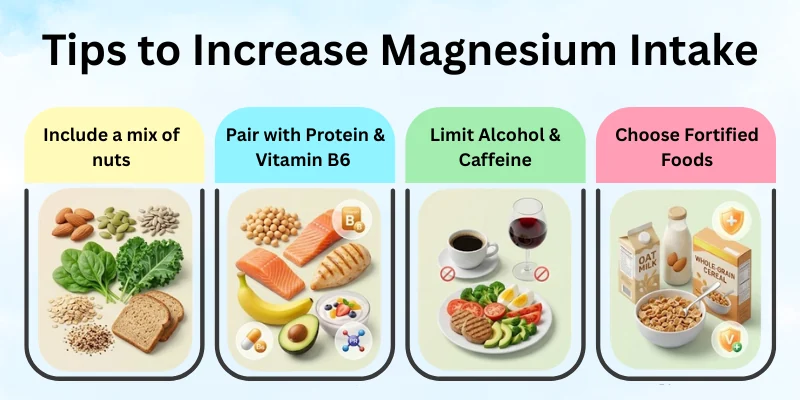
A few additional tips to increase magnesium intake include:
- Include a mix of nuts, seeds, leafy greens, and whole grains daily.
- Pair plant-based magnesium foods with vitamin B6 or protein for better absorption.
- Avoid excessive alcohol and caffeine, which can reduce magnesium levels.
- Use magnesium-fortified foods like cereals and plant-based milk if needed.
Final Note
In this guide, we covered the best foods high in magnesium, including nuts, seeds, leafy greens, beans, quinoa, fish, and more. Magnesium supports energy, heart health, muscle function, and bone strength. My personal advice is to eat a variety of these foods daily, combine plant-based magnesium with vitamin C-rich foods, and maintain a balanced diet for overall wellness.
Goodbye, and include magnesium-rich foods in your meals.
FAQs: Foods High in Magnesium
Here are some of the most frequently asked questions related to the best foods high in magnesium:
The best magnesium-rich foods include spinach, almonds, pumpkin seeds, black beans, quinoa, tofu, and fatty fish. They support energy, muscles, and heart health.
Magnesium supports energy production, muscle and nerve function, bone health, and heart health. Low magnesium can cause fatigue, cramps, and poor sleep.
Vegetarians can eat spinach, kale, beans, lentils, chickpeas, tofu, pumpkin seeds, and nuts. Pairing these foods with vitamin C-rich foods improves absorption.
Yes, magnesium helps convert food into energy. Eating magnesium-rich foods reduces fatigue and boosts focus and overall vitality.
Yes, dark chocolate (70% cocoa or higher) is rich in magnesium. Eating small amounts boosts energy, improves mood, and supports heart health.
Adult men need about 400–420 mg, and adult women need 310–320 mg of magnesium daily. Eating magnesium-rich foods helps meet these needs naturally.
Yes, almonds, cashews, pumpkin seeds, and sunflower seeds are high in magnesium. A small handful daily can help maintain adequate magnesium levels.
There is a high magnesium content in foods such as brown rice, oats, quinoa, and barley. In addition, they are a source of fiber and B vitamins, which aid in overall health.
Yes, magnesium supports muscle relaxation and nervous system function. Eating magnesium-rich foods can help reduce cramps and improve sleep quality.
Pair plant-based magnesium foods with vitamin C-rich foods like citrus fruits, tomatoes, or bell peppers. Avoid excessive caffeine and alcohol for better absorption.






- Be Respectful
- Stay Relevant
- Stay Positive
- True Feedback
- Encourage Discussion
- Avoid Spamming
- No Fake News
- Don't Copy-Paste
- No Personal Attacks
- Be Respectful
- Stay Relevant
- Stay Positive
- True Feedback
- Encourage Discussion
- Avoid Spamming
- No Fake News
- Don't Copy-Paste
- No Personal Attacks
