How to Reduce Joint Pain Naturally Without Expensive Treatments
Published: 5 Jun 2026
Joint pain affects millions of people and can limit daily activities. It can result from aging, arthritis, injuries, or inflammation. Chronic pain makes simple tasks uncomfortable and reduces quality of life.
While medications help, natural methods can provide safe, long-term relief. This guide covers effective strategies to reduce joint pain naturally, improve mobility, and support joint health.
So? What are you waiting for? Let’s dive in with me!!!!
Natural Ways to Reduce Joint Pain
Here are the most effective natural ways to reduce joint pain:
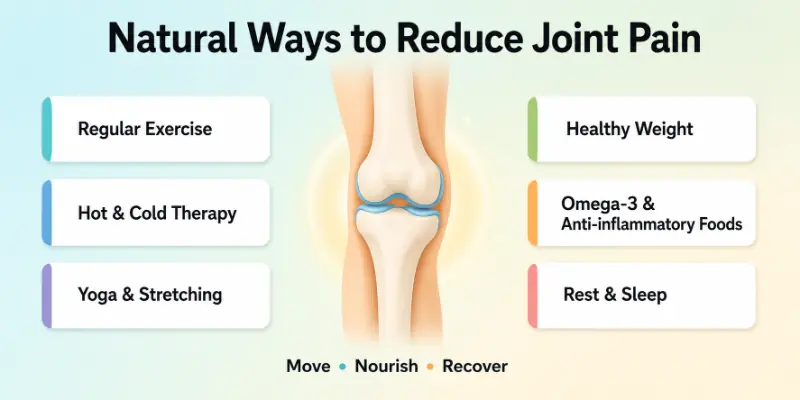
- Maintain a Healthy Weight
- Regular Exercise
- Hot and Cold Therapy
- Turmeric and Anti-inflammatory Foods
- Omega-3 Fatty Acids
- Adequate Hydration
- Yoga and Stretching
- Strength Training
- Massage Therapy
- Acupuncture
- Limit Sugary and Processed Foods
- Herbal Supplements
- Proper Footwear
- Rest and Sleep
- Mindfulness and Stress Management
Let us cover all in detail.
1. Maintain a Healthy Weight
Carrying extra weight puts stress on your joints, especially your knees and hips. Losing weight reduces strain and inflammation. Even a small amount of weight loss improves mobility. Healthy eating paired with exercise is the most effective approach. Maintaining a healthy weight also helps prevent further joint damage.
Tips:
- Track daily calorie intake and activity
- Eat nutrient-rich foods like fruits, vegetables, and lean protein
- Avoid crash diets or extreme weight loss methods
- Aim for gradual, sustainable weight loss
Benefits:
- Reduces joint pressure and pain
- Improves flexibility and mobility
- Lowers the risk of arthritis progression
2. Regular Exercise
Exercise strengthens muscles around joints and reduces stiffness. It also improves flexibility and circulation. Low-impact exercises are ideal for joint health. Exercise promotes repair and reduces inflammation naturally. Consistency is key to long-term joint support.
Tips:
- Do at least 30 minutes of exercise daily
- Include both aerobic and strength exercises
- Modify high-impact activities if joints feel sore
Benefits:
- Enhances joint support
- Reduces stiffness and pain
- Improves overall physical health
3. Hot and Cold Therapy
Heat and cold treatments are simple and effective for joint pain relief. Heat relaxes muscles and improves blood flow. Cold therapy reduces inflammation and numbs pain. Alternating between hot and cold can help with chronic conditions. These methods are easy to apply at home.
Tips:
- Use heating pads or warm baths for stiffness
- Apply ice packs to swollen joints
- Limit applications to 15–20 minutes per session
Benefits:
- Provides immediate pain relief
- Reduces swelling
- Improves joint function
4. Turmeric and Anti-inflammatory Foods
Turmeric contains curcumin, a powerful anti-inflammatory compound. Ginger, garlic, berries, and leafy greens also fight inflammation naturally. Including these foods daily can reduce joint pain without medication. They support cartilage health and improve mobility. Natural foods provide antioxidants that protect joints.
Tips:
- Add turmeric to curries, soups, or golden milk
- Include anti-inflammatory foods every day
- Combine with black pepper for better absorption
Benefits:
- Reduces joint swelling
- Supports cartilage and tissue repair
- Improves joint function
5. Omega-3 Fatty Acids
Omega-3 fatty acids help reduce joint inflammation and stiffness. They are found in fatty fish, flaxseeds, and walnuts. Omega-3s also support heart health and overall immunity. Regular intake can complement other natural joint care strategies. They are especially useful for arthritis patients.
Tips:
- Eat fatty fish like salmon or sardines twice a week
- Include flax or chia seeds in your diet
- Consider fish oil supplements after consulting a doctor
Benefits:
- Reduces joint pain and swelling
- Improves mobility
- Supports overall wellness
6. Adequate Hydration
Water keeps joints lubricated and cartilage healthy. Dehydration can worsen stiffness and discomfort. Drinking enough water also flushes toxins from the body. Proper hydration supports joint repair and overall health. It helps maintain flexibility and mobility.
Tips:
- Drink 8–10 glasses of water daily
- Eat water-rich fruits and vegetables
- Limit sugary and caffeinated drinks
Benefits:
- Improves joint lubrication
- Reduces stiffness
- Supports cartilage health
7. Yoga and Stretching
Yoga improves flexibility, posture, and joint alignment. Stretching reduces stiffness and improves blood flow. Gentle yoga can reduce stress, which contributes to pain. Daily practice enhances mobility and strengthens supporting muscles. It also promotes relaxation and well-being.
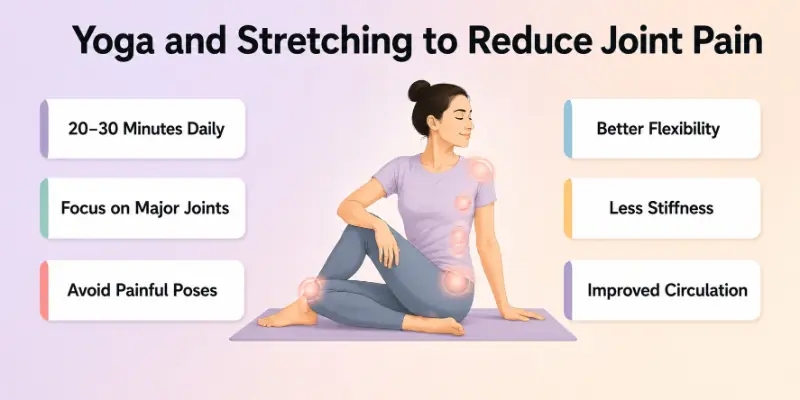
Tips:
- Practice 20–30 minutes daily
- Focus on hips, shoulders, spine, and knees
- Avoid poses that cause pain
Benefits:
- Enhances flexibility
- Reduces stiffness
- Improves circulation
8. Strength Training
Strength training builds muscles around joints, improving stability. It reduces the risk of injuries and pain. Light weights or resistance bands are safe options. Strong muscles help distribute pressure evenly on joints. It supports long-term joint health and mobility.
Tips:
- Perform strength exercises 2–3 times per week
- Start with light weights or bodyweight exercises
- Avoid movements causing joint pain
Benefits:
- Strengthens muscles
- Reduces joint strain
- Improves mobility
9. Massage Therapy
Massage increases blood flow and relaxes tight muscles. It helps reduce joint tension naturally. Regular massage can relieve chronic pain and improve flexibility. Massaging surrounding muscles also reduces joint stress. It’s a safe, natural complement to other therapies.
Tips:
- Focus on sore joints and muscles around them
- Use gentle massage oils for better relief
- Try self-massage or professional therapy
Benefits:
- Reduces pain and tension
- Improves circulation
- Supports joint mobility
10. Acupuncture
Acupuncture stimulates nerves and improves blood flow. It is effective for chronic joint pain and arthritis. Treatments should be done by certified practitioners. Acupuncture complements diet, exercise, and natural therapies. It can reduce reliance on pain medications.
Tips:
- Seek certified acupuncture practitioners
- Schedule regular sessions
- Discuss medical history before starting
Benefits:
- Provides natural pain relief
- Reduces inflammation
- Enhances mobility
11. Limit Sugary and Processed Foods
Processed foods and sugar trigger inflammation in joints. Reducing these foods helps manage joint pain naturally. Whole, nutrient-rich foods support cartilage repair. Avoiding fried and processed meals promotes overall health. Diet plays a crucial role in pain management.
Tips:
- Replace sugary snacks with fruits or nuts
- Cook fresh meals instead of processed ones
- Avoid fried and sugary drinks
Benefits:
- Reduces inflammation
- Supports joint health
- Improves overall wellness
12. Herbal Supplements
Certain herbal supplements may reduce joint pain. Examples include ginger, boswellia, and glucosamine. Always consult a doctor before starting supplements. They can complement a healthy diet and exercise routine. Supplements provide additional anti-inflammatory support.
Tips:
- Take supplements under medical guidance
- Combine with anti-inflammatory foods
- Follow recommended doses
Benefits:
- Supports joint repair
- Reduces stiffness
- Improves mobility
13. Proper Footwear
Supportive shoes reduce stress on knees, hips, and back. Proper footwear helps maintain alignment and prevents strain. It’s essential for daily activities and exercise. Cushioned shoes absorb impact and protect joints. Good shoes improve comfort and reduce pain.
Tips:
- Wear well-fitted, cushioned shoes
- Avoid high heels and worn-out footwear
- Use orthopedic insoles if needed
Benefits:
- Improves posture
- Reduces joint stress
- Supports daily activities
14. Rest and Sleep
Rest allows joints and muscles to recover. Poor sleep worsens inflammation and increases pain perception. Adequate sleep improves overall health and healing. It also boosts energy levels for daily activities. Quality rest is essential for managing chronic pain naturally.
Tips:
- Sleep 7–8 hours per night
- Use supportive pillows for sore joints
- Take short breaks during long periods of activity
Benefits:
- Promotes healing
- Reduces inflammation
- Improves energy
15. Mindfulness and Stress Management
Stress increases inflammation and can worsen joint pain. Mindfulness, meditation, and deep breathing reduce stress naturally. Relaxation techniques also improve pain perception. Daily practice enhances mental and physical well-being. Stress management supports long-term joint health.
Tips:
- Meditate or practice deep breathing daily
- Walk in nature or journal for stress relief
- Avoid activities that overstress joints
Benefits:
- Reduces pain perception
- Improves mental health
- Supports physical recovery
Final Note
In this guide, we have covered how to reduce joint pain naturally using diet, exercise, therapy, and lifestyle changes.
Personal advice includes listening to your body, avoiding overexertion, and combining strategies for the best results. Consistency and patience are key. Following these methods can significantly improve joint comfort, mobility, and quality of life.
FAQs
Here are some of the most commonly asked questions related to how to reduce joint pain naturally:
Yes, eating anti-inflammatory foods like fatty fish, berries, nuts, and leafy greens can reduce joint pain. Avoid processed foods and sugary drinks. Maintaining a healthy diet also supports overall joint health. A balanced diet improves mobility and reduces stiffness over time.
Low-impact exercises such as swimming, walking, yoga, and cycling strengthen muscles around the joints. Stretching and mobility exercises improve flexibility and prevent stiffness. Regular activity keeps joints lubricated. Consistent exercise can also prevent future joint injuries.
Yes, applying heat or cold packs, using turmeric or ginger, and practicing gentle stretches can relieve joint pain. Massage therapy may also help. Home remedies are safe when used correctly. These methods can complement medical treatments effectively.
Excess weight adds pressure on joints, especially knees, hips, and spine. Losing weight can reduce pain and improve mobility. A healthy BMI lowers the risk of arthritis. Even small weight loss can significantly relieve joint stress.
Supplements like glucosamine, chondroitin, omega-3, and vitamin D may reduce inflammation and strengthen joints. Always consult a doctor before starting supplements. Natural supplements are generally safer than prescription drugs. They work best when combined with diet and exercise.
Yes, water keeps joints lubricated and helps maintain cartilage health. Dehydration can worsen stiffness and discomfort. Drink at least 8–10 glasses daily. Proper hydration also supports overall muscle and bone function.
Poor sleep increases inflammation and worsens joint pain. Aim for 7–9 hours of quality sleep nightly. Sleep helps the body repair tissues and reduce discomfort. Better sleep can enhance your response to treatments and exercises.
Yes, stress increases inflammation in the body and can intensify pain perception. Practices like meditation, deep breathing, and yoga reduce stress naturally. Managing stress improves overall well-being. Lower stress levels also help prevent flare-ups.
High-impact activities like running on hard surfaces or heavy lifting can worsen joint pain. Avoid repetitive strain and sudden movements. Focus on safe, low-impact alternatives. Choosing the right activities protects your joints long-term.
If joint pain is severe, persistent, or accompanied by swelling, redness, or fever, see a doctor. Early diagnosis can prevent complications. Regular check-ups help monitor joint health. Timely medical advice ensures safer and more effective pain management.





- Be Respectful
- Stay Relevant
- Stay Positive
- True Feedback
- Encourage Discussion
- Avoid Spamming
- No Fake News
- Don't Copy-Paste
- No Personal Attacks
- Be Respectful
- Stay Relevant
- Stay Positive
- True Feedback
- Encourage Discussion
- Avoid Spamming
- No Fake News
- Don't Copy-Paste
- No Personal Attacks
