Foods High in Potassium: Best Foods, Benefits & Daily Guide
Published: 3 Oct 2026
Potassium is an essential mineral that helps your body perform many important functions every day. It supports muscle movement, nerve signals, fluid balance, and healthy heart function. Without enough potassium, your body may struggle to maintain these basic processes.
Many people think bananas are the best source of potassium, but several other foods contain high amounts of this mineral. Vegetables, fruits, beans, dairy products, and seafood can also help you meet your daily potassium needs.
In this article, we will explore the best foods high in potassium, their health benefits, and simple ways to add them to your daily diet.
Top Foods High in Potassium
Potassium is present in many natural foods that provide important nutrients along with this essential mineral. Eating a variety of potassium-rich foods can help support healthy muscles, nerves, fluid balance, and heart function.
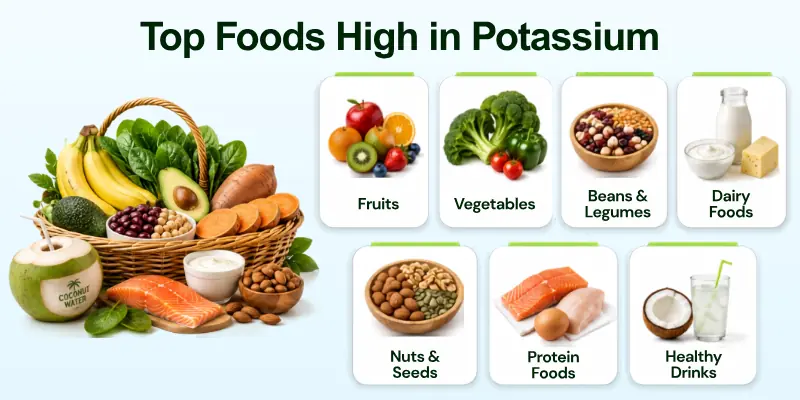
Although bananas are commonly linked with potassium, many other foods contain high amounts of this mineral. Fruits, vegetables, legumes, dairy products, nuts, seeds, and seafood can all contribute to your daily potassium intake.
Adding different potassium-rich foods to your meals can help you maintain a balanced and nutrient-rich diet. Here are some of the best foods high in potassium:
- Fruits High in Potassium
- Vegetables High in Potassium
- Beans and Legumes High in Potassium
- Dairy Foods High in Potassium
- Nuts and Seeds High in Potassium
- Protein Foods High in Potassium
- Drinks High in Potassium
Let’s take a closer look at these potassium-rich foods and understand their nutritional benefits.
1. Fruits High in Potassium
Fruits are a simple and tasty way to increase your potassium intake. Bananas are one of the most popular potassium-rich fruits, but many other fruits also provide this important mineral along with fiber, vitamins, and antioxidants.
Adding different fresh and dried fruits to your diet can help you get potassium while supporting overall health. Each fruit offers a unique combination of nutrients that can benefit your body.
- Bananas: Provide potassium along with natural fiber that supports healthy digestion.
- Avocados: Offer potassium along with healthy fats and fiber that support heart health.
- Oranges: Provide potassium along with vitamin C and antioxidants that support overall wellness.
- Dried Apricots: Contain concentrated potassium, making them a nutrient-rich snack option.
- Kiwi: Provides potassium along with vitamin C and other beneficial nutrients.
- Cantaloupe: Helps with hydration while adding potassium to your daily diet.
- Pomegranate: Supplies potassium along with antioxidants that help protect cells from damage.
- Prunes: Provide potassium and fiber that support healthy digestion.
- Raisins: Offer a convenient source of potassium in a small serving.
Tip: Eat dried fruits like apricots and raisins in moderate portions because they contain more calories and natural sugar than fresh fruits.
2. Vegetables High in Potassium
Vegetables are excellent sources of potassium and can easily become part of a balanced diet. Many leafy greens and root vegetables provide this mineral along with fiber, vitamins, and other essential nutrients.
Eating a variety of vegetables throughout the week helps support healthy muscles, nerves, and heart function while improving overall nutrition.
- Sweet Potatoes: Provide potassium along with fiber, beta-carotene, and other important nutrients.
- Potatoes: Contain potassium, especially when eaten with the skin, where many nutrients are stored.
- Spinach: Provides potassium along with iron, magnesium, and other essential minerals.
- Beet Greens: Offer potassium along with vitamins and minerals that support a healthy diet.
- Tomatoes: Add potassium to meals whether eaten fresh or cooked into sauces.
- Mushrooms: Provide potassium while adding flavor and nutrients with fewer calories.
- Broccoli: Contains potassium along with fiber and vitamin C.
- Swiss Chard: Provides potassium along with other important minerals.
- Acorn Squash: Offers potassium along with fiber and natural sweetness.
Tip: Cook potatoes and sweet potatoes with the skin on when possible to help retain more nutrients.
3. Beans and Legumes High in Potassium
Beans and legumes are valuable sources of potassium, plant-based protein, and fiber. They are filling, affordable, and easy to add to many different meals.
- Including beans and legumes in your diet can help increase potassium intake while providing nutrients that support overall health.
- White Beans: Provide a high amount of potassium along with plant-based protein and fiber.
- Lentils: Add potassium, fiber, and protein while being quick and easy to prepare.
- Kidney Beans: Offer potassium along with protein and important nutrients.
- Soybeans: Provide potassium and complete plant-based protein.
- Chickpeas: Supply potassium, fiber, and protein in a versatile food option.
- Black Beans: Add potassium and nutrients to meals like soups, salads, and wraps.
Tip: Rinse canned beans before eating to reduce excess sodium while keeping their potassium content.
4. Dairy Foods High in Potassium
Dairy products are often overlooked sources of potassium. They also provide nutrients like calcium and protein that support a balanced diet.
Choosing plain or low-fat dairy options can help you enjoy potassium benefits without adding unnecessary sugar.
- Yogurt: Provides potassium along with protein and beneficial probiotics.
- Milk: Offers potassium along with calcium and vitamin D.
- Buttermilk: Provides potassium and can be a refreshing addition to meals.
- Cottage Cheese: Contains potassium along with protein and other nutrients.
Tip: Choose plain yogurt and milk instead of flavored versions to avoid extra added sugar.
5. Nuts and Seeds High in Potassium
Nuts and seeds provide potassium in small portions along with healthy fats, protein, and important minerals. They are convenient options for snacks when eaten in the right amounts.
Because nuts and seeds are calorie-dense, moderate portions help you enjoy their benefits without consuming too many calories.
- Pistachios: Provide potassium along with healthy fats and protein.
- Almonds: Offer potassium, vitamin E, and heart-healthy fats.
- Pumpkin Seeds: Provide potassium along with magnesium and zinc.
- Sunflower Seeds: Add potassium and healthy fats in a convenient snack form.
- Flaxseeds: Supply potassium along with omega-3 fatty acids and fiber.
Tip: Keep nut and seed portions around a small handful because calories can add up quickly.
6. Protein Foods High in Potassium
Many protein-rich foods also contain potassium, making them useful additions to a balanced diet. Seafood and lean meats can help you meet both protein and mineral needs.
Adding these foods to your meals can support muscle function and provide important nutrients for your body.
- Salmon: Provides potassium along with heart-healthy omega-3 fatty acids.
- Tuna: Offers protein and potassium in a convenient seafood option.
- Chicken Breast: Provides lean protein along with a moderate amount of potassium.
- Turkey: Supplies protein and potassium while staying low in fat.
- Lean Beef: Adds potassium along with iron and B vitamins.
Tip: Choose grilled, baked, or roasted cooking methods to keep meals healthier.
7. Drinks High in Potassium
Some drinks can help increase potassium intake, especially when they come from natural sources. Choosing unsweetened options provides potassium without adding unnecessary sugar.
These beverages help with hydration and provide important electrolytes.
- Coconut Water: Provides potassium and other electrolytes that support hydration.
- Orange Juice: Contains potassium along with vitamin C.
- Tomato Juice: Offers potassium in a low-calorie savory drink option.
Tip: Choose 100% natural juices without added sugar to get potassium benefits without extra calories.
Health Benefits of Eating Potassium-Rich Foods
Potassium helps your body perform important functions like muscle movement, nerve activity, and heart function. Eating potassium-rich foods can support overall health and maintain proper balance in the body.
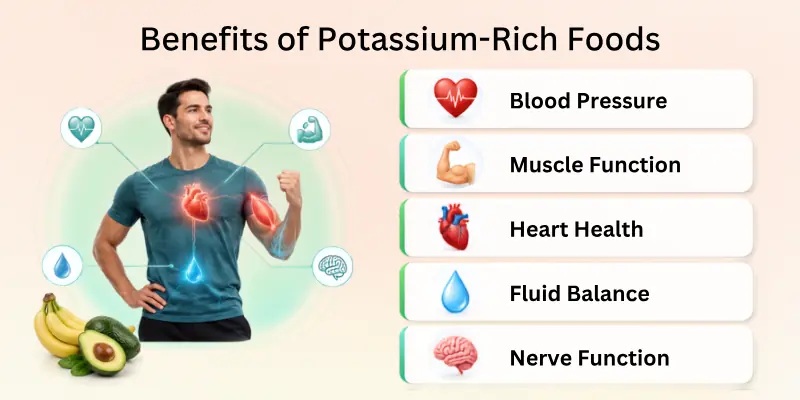
Here are some key benefits of eating potassium-rich foods:
- Blood Pressure Support: Potassium helps balance sodium levels in the body, which supports healthy blood pressure and proper blood vessel function.
- Muscle Function: Potassium supports normal muscle contractions and helps maintain muscle strength while reducing the risk of weakness and cramps.
- Heart Health: Potassium helps maintain a healthy heart rhythm and supports proper blood vessel function.
- Fluid Balance: Potassium works with other electrolytes to maintain fluid levels and support hydration.
- Nerve Function: Potassium helps nerve cells send signals properly and supports communication between cells.
How Much Potassium Do You Need Daily?
Your daily potassium needs depend on your age, gender, and health condition. Getting enough potassium helps your body perform normal functions, including heart health, muscle movement, and fluid balance.
The recommended daily potassium intake varies for different groups:
| Group | Daily Potassium Requirement |
|---|---|
| Adult Men | Around 3,400 mg per day |
| Adult Women | Around 2,600 mg per day |
| Children | Depends on age, usually 2,000 to 3,000 mg per day |
| Pregnant Women | Around 2,900 mg per day |
Your potassium needs may change based on factors like age, physical activity, pregnancy, health conditions, and certain medications.
Getting potassium from natural foods is usually the best choice because foods provide other important nutrients like fiber, vitamins, and minerals along with potassium.
Potassium Content Comparison Table
Different foods provide different amounts of potassium. This table shows common potassium-rich foods and their approximate potassium content per serving.
| Food | Serving Size | Potassium Amount |
|---|---|---|
| Spinach | 1 cup cooked | 839 mg |
| Sweet Potato | 1 medium | 541 mg |
| White Beans | Half cup cooked | 595 mg |
| Avocado | Half fruit | 487 mg |
| Potato | 1 medium with skin | 926 mg |
| Lentils | Half cup cooked | 365 mg |
| Banana | 1 medium | 422 mg |
| Orange | 1 medium | 237 mg |
| Cantaloupe | 1 cup | 473 mg |
| Dried Apricots | Half cup | 755 mg |
| Yogurt | 1 cup plain | 579 mg |
| Milk | 1 cup | 366 mg |
| Salmon | 3 ounces cooked | 326 mg |
| Coconut Water | 1 cup | 600 mg |
| Tomatoes | 1 cup chopped | 427 mg |
Including different potassium-rich foods throughout the day can help you meet your daily potassium needs while providing other important nutrients.
Conclusion
In this guide, we covered the best foods high in potassium, including fruits, vegetables, beans, dairy products, nuts, seeds, protein sources, and potassium-rich drinks. We also discussed the health benefits of potassium, daily requirements, and how this mineral supports important body functions.
Adding a variety of potassium-rich foods to your diet can help support heart health, muscle function, nerve activity, and fluid balance. Choose natural food sources and maintain a balanced diet to get the potassium your body needs.
Frequently Asked Questions
These common questions about foods high in potassium can help you understand potassium sources, daily needs, and how to add more potassium-rich foods to your diet.
Here are some foods that provide a good amount of potassium:
- Potatoes
- Spinach
- White Beans
- Sweet Potatoes
- Avocados
- Dried Apricots
Dried apricots, prunes, avocados, and bananas are fruits with good potassium content. The amount depends on the serving size and preparation method.
Bananas are a popular potassium-rich fruit, but they are not the only option. Foods like potatoes, beans, and leafy greens can also provide high amounts of potassium.
Eat more fruits, vegetables, beans, dairy products, nuts, and seeds. Choosing a variety of whole foods helps you get potassium along with other important nutrients.
Here are some vegetables that are rich in potassium:
- Potatoes
- Sweet Potatoes
- Spinach
- Tomatoes
- Beet Greens
- Mushrooms
Yes, potatoes are one of the best vegetable sources of potassium. Eating them with the skin can help retain more nutrients.
Potassium helps balance sodium levels in the body. Eating potassium-rich foods may support healthy blood pressure levels and heart health.
Adults usually need about 2,600 to 3,400 mg of potassium daily. Your exact needs depend on age, gender, and health conditions.
Yes, excessive potassium intake can cause problems, especially in people with kidney issues. Most healthy people can meet their needs through a balanced diet.
Here are some high-potassium foods that may need to be limited:
- Bananas
- Potatoes
- Tomatoes
- Beans
- Dried Fruits
- Avocados





- Be Respectful
- Stay Relevant
- Stay Positive
- True Feedback
- Encourage Discussion
- Avoid Spamming
- No Fake News
- Don't Copy-Paste
- No Personal Attacks
- Be Respectful
- Stay Relevant
- Stay Positive
- True Feedback
- Encourage Discussion
- Avoid Spamming
- No Fake News
- Don't Copy-Paste
- No Personal Attacks
