Best Foods for Cold Weather: Eat Healthy & Stay Warm in Winter
Published: 23 Sep 2026
Cold weather changes how your body feels and functions. During this season, your body naturally burns more energy to stay warm, which increases cravings for hot, comforting meals. But these choices are not just about taste; they directly affect your immunity, energy levels, and overall health.
Choosing the right foods in winter helps you stay warm from within, fight seasonal illnesses, and maintain steady energy throughout the day. A balanced winter diet includes warming meals, seasonal vegetables, fruits, nuts, and spices that support your body during colder months.
In this guide, you will discover the best foods for cold weather and how they help keep you strong, active, and healthy all winter long.
Best Foods for Cold Weather
Cold weather demands foods that keep your body warm, boost immunity, and provide long-lasting energy. Choosing the right foods during winter helps you stay healthy, active, and protected from seasonal illnesses.
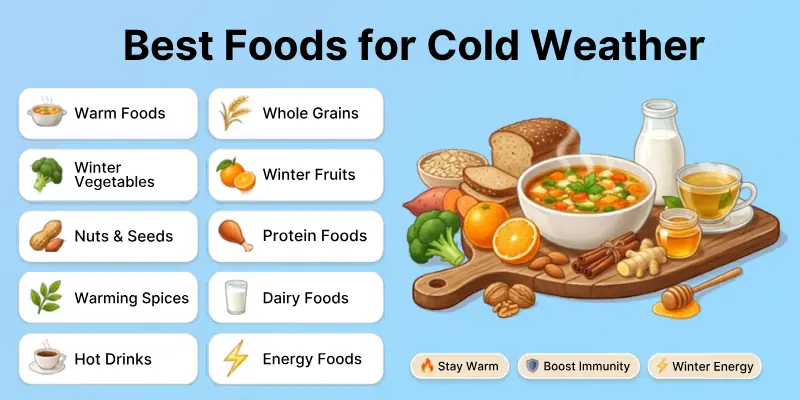
If you want to stay strong and energized this winter, start adding these foods to your daily diet.
- Warm foods for cold weather
- Whole grains for winter energy
- Seasonal vegetables for cold weather
- Fruits for winter immunity
- Nuts and seeds for cold weather
- Protein foods for the winter season
- Warming spices for cold weather
- Dairy foods for winter nutrition
- Hot drinks for cold weather
- Natural energy foods for winter
Let’s look at the best foods for cold weather.
1. Warm foods for cold weather
Warm and comforting foods are an essential part of a cold-weather diet because they help the body maintain warmth, improve digestion, and provide steady energy. These foods are especially useful when temperatures drop, and the body needs light but nourishing meals to stay active and healthy.
Below are some of the best warm foods you can include in your winter diet for better comfort and nutrition.
- Chicken soup
- Vegetable soup
- Bone broth
- Lentil soup (daal)
- Khichdi (rice + lentils)
- Stews and curries
- Oatmeal/porridge
- Warm rice dishes
Chicken Soup
Chicken soup is a light and nourishing dish made with chicken, vegetables, and broth. It is commonly consumed in cold weather because it provides warmth and comfort while being easy on the stomach.
It is often preferred during winter as it supports the body when you feel low energy or unwell.
How to enjoy chicken soup:
- Eat it as a warm dinner or light meal when you feel cold or tired
- Serve it freshly prepared and hot
- Add vegetables and mild spices for better nutrition and taste
Vegetable Soup
Vegetable soup is a warm, light meal prepared with seasonal vegetables and broth. It is a healthy option for cold weather as it provides hydration, nutrients, and gentle warmth.
It is commonly included in winter diets for its simplicity and balanced nutrition.
How to enjoy vegetable soup:
- Have it as a light evening or dinner meal
- Serve it hot for best comfort
- Add seasonal vegetables and mild spices
Bone Broth
Bone broth is a slow-cooked liquid made from bones, herbs, and spices. It is widely used in cold weather for its rich nutrients and warming effect on the body.
It is especially useful when the body needs extra nourishment and strength during winter.
How to enjoy bone broth:
- Drink it warm in the evening or before bedtime
- Serve it freshly prepared
- Add herbs, garlic, or mild spices for flavor
Lentil Soup (Daal)
Lentil soup, also known as daal, is a protein-rich dish made from lentils and spices. It is a common winter food because it provides energy and helps maintain body warmth.
It is a filling and simple meal that supports daily nutrition in cold weather.
How to enjoy lentil soup (daal):
- Eat it with roti or rice as a main meal
- Serve it hot for better taste and comfort
- Add garlic, cumin, or spices for enhanced flavor
Khichdi (Rice + Lentils)
Khichdi is a soft and balanced dish made with rice and lentils cooked together. It is a comforting food for cold weather because it is light, warm, and easy to digest.
It is often chosen in winter when a simple and soothing meal is needed.
How to enjoy khichdi:
- Eat it as a complete meal for lunch or dinner
- Serve it hot with ghee for better taste
- Add mild spices or vegetables for extra nutrition
Stews & Curries
Stews and curries are warm dishes made with vegetables, meat, or lentils cooked in spices and gravy. They are ideal for cold weather because they provide warmth, energy, and nutrition.
They are commonly eaten in winter as filling and flavorful meals.
How to enjoy stews and curries:
- Eat them with rice or roti as a main meal
- Serve them hot for the best taste
- Use seasonal vegetables, meat, or lentils for variety
Oatmeal / Porridge
Oatmeal or porridge is a warm breakfast made from oats cooked in milk or water. It is a good cold-weather food because it provides steady energy and keeps you full for longer.
It is especially helpful in the morning when the body needs warmth and fuel for the day.
How to enjoy oatmeal/porridge:
- Eat it as a warm breakfast
- Cook it with milk or water as preferred
- Add fruits, nuts, or honey for better nutrition
Warm Rice Dishes
Warm rice dishes are simple meals made with rice combined with spices, vegetables, or lentils. They are suitable for cold weather because they provide comfort and steady energy.
They are commonly eaten in winter due to their simplicity and easy digestion.
How to enjoy warm rice dishes:
- Eat them as lunch or dinner meals
- Serve them hot for comfort
- Add vegetables, spices, or ghee for flavor
2. Whole grains for winter energy
Whole grains play an important role in a cold-weather diet because they provide steady energy, support digestion, and help the body stay warm. These foods are rich in fiber and essential nutrients, making them ideal for maintaining health during winter.
Including whole grains in your daily meals can help you stay active, full, and energized throughout the cold season.
Here are some of the best whole grains for cold weather.
- Oats
- Brown rice
- Barley (jau)
- Millet (bajra, jowar)
- Whole wheat roti
- Corn (makai)
Brown Rice
Brown rice is a whole grain that provides slow-releasing energy and helps maintain body warmth in cold weather. It is rich in fiber and nutrients, making it a healthy choice for winter meals.
It is especially helpful for keeping you full for longer and supporting smooth digestion during the cold season.
How to enjoy brown rice:
- Eat it with vegetables, lentils, or curry as a main meal
- Serve it hot for better warmth and comfort
- Combine it with protein foods for a balanced winter diet
Barley (Jau)
Barley, also known as jau, is a highly nutritious grain commonly used in winter diets. It helps support natural body warmth and provides long-lasting energy.
It is especially beneficial in cold weather as it supports digestion and keeps the body strong and active.
How to enjoy barley (jau):
- Drink it as warm barley soup or barley water
- Cook it with vegetables or lentils for a healthy meal
- Serve it hot for better digestion and warmth
Millet (Bajra, Jowar)
Millets such as bajra and jowar are traditional grains that are ideal for cold weather. They are rich in nutrients and help the body stay warm naturally.
They are especially useful in winter as they provide strong energy and support overall health.
How to enjoy millet (bajra, jowar):
- Eat them as roti with vegetables or curry
- Use them in porridge or warm meals
- Serve them hot for better energy and digestion
Whole Wheat Roti
Whole wheat roti is a staple food that provides steady energy and warmth during cold weather. It is rich in fiber and helps maintain balanced energy levels throughout the day.
It is especially useful in winter because it pairs well with hot curries and soups.
How to enjoy whole wheat roti:
- Eat it fresh and warm with vegetables or curries
- Use it as part of lunch or dinner
- Add ghee for extra warmth and flavor in winter
Corn (Makai)
Corn, also known as makai, is a warm and filling food commonly eaten in cold weather. It provides energy and helps the body stay warm naturally.
It is especially popular in winter because it is tasty, nutritious, and easy to prepare.
How to enjoy corn (makai):
- Eat it boiled or roasted as a snack
- Use it in soups or warm dishes
- Serve it hot with salt, butter, or mild spices for better taste
3. Seasonal Vegetables for Winter
Seasonal vegetables are an important part of a cold-weather diet because they provide essential vitamins, minerals, and natural nutrients that help the body stay healthy. These vegetables are fresh, nutritious, and support immunity during the winter season.
Eating seasonal vegetables regularly can help improve digestion, boost energy, and keep the body strong during cold weather.
Here are some of the best seasonal vegetables for winter.
- Spinach (palak)
- Mustard greens (sarson)
- Carrots
- Turnips (shalgam)
- Cauliflower
- Cabbage
- Beetroot
- Radish
- Sweet potato
- Green peas
Spinach (Palak)
Spinach is a leafy green vegetable rich in iron, vitamins, and antioxidants. It is commonly eaten in cold weather because it helps strengthen the body and supports overall health.
It is especially useful in winter as it boosts energy and supports immunity.
How to enjoy spinach (palak):
- Cook it as saag or add it to curries
- Use it in soups or parathas
- Serve it hot with roti or rice
Mustard Greens (Sarson)
Mustard greens are a traditional winter vegetable known for their strong flavor and high nutritional value. They help keep the body warm and support immunity.
They are especially popular in cold-weather meals due to their warming effect.
How to enjoy mustard greens (sarson):
- Cook as sarson ka saag
- Serve with makai roti for a traditional meal
- Eat hot for the best taste and benefits
Carrots
Carrots are sweet and crunchy vegetables rich in vitamins and antioxidants. They are commonly eaten in winter because they support eye health and immunity.
They are especially useful in cold weather for their natural sweetness and nutrition.
How to enjoy carrots:
- Eat raw as a snack or in salads
- Use in soups or stews
- Cook in halwa or warm dishes
Turnips (Shalgam)
Turnips are root vegetables that are commonly eaten in winter for their warming properties and nutritional benefits. They support digestion and overall health.
They are especially useful in cold weather as they are light and easy to cook.
How to enjoy turnips (shalgam):
- Cook in curries or stews
- Add to soups or mixed vegetables
- Serve hot with roti or rice
Cauliflower
Cauliflower is a versatile winter vegetable that is rich in fiber and vitamins. It is commonly used in many warm dishes during cold weather.
It is especially beneficial as it supports digestion and provides light nutrition.
How to enjoy cauliflower:
- Cook as curry or sabzi
- Use in parathas or baked dishes
- Serve hot with roti
Cabbage
Cabbage is a leafy vegetable that is commonly available in winter and is rich in fiber and vitamins. It helps support digestion and overall health.
It is especially useful in cold weather as it can be used in many simple dishes.
How to enjoy cabbage:
- Cook as stir-fry or curry
- Use in salads or soups
- Serve hot with spices
Beetroot
Beetroot is a nutrient-rich root vegetable known for improving blood circulation and boosting energy. It is commonly eaten in winter for its health benefits.
It is especially useful in cold weather for increasing stamina and strength.
How to enjoy beetroot:
- Eat raw in salads
- Juice it for energy
- Cook in curries or soups
Radish
Radish is a crunchy and slightly spicy vegetable that is commonly eaten in winter. It supports digestion and helps cleanse the body naturally.
It is especially useful in cold weather for its detoxifying properties.
How to enjoy radish:
- Eat raw or in salads
- Cook in parathas or curries
- Add to soups for flavor
Sweet Potato
Sweet potato is a naturally sweet and energy-rich root vegetable. It is commonly eaten in cold weather because it provides warmth and long-lasting energy.
It is especially useful in winter as it keeps you full and active.
How to enjoy sweet potato:
- Eat boiled or roasted as a snack
- Use in desserts or warm dishes
- Serve hot with spices or butter
Green Peas
Green peas are small but highly nutritious vegetables rich in protein and vitamins. They are commonly used in winter meals for their freshness and nutrition.
They are especially useful in cold weather as they support energy and immunity.
How to enjoy green peas:
- Cook in curries or rice dishes
- Use in soups or stews
- Serve hot with spices and vegetables
4. Fruits for Cold Weather
Fruits play an important role in a cold-weather diet because they are rich in vitamins, antioxidants, and natural nutrients that help strengthen the immune system. They support the body in fighting seasonal infections and keeping energy levels stable during winter.
Including fresh fruits in your daily routine can help improve overall health and protect the body from the common cold and flu.
Here are some of the best fruits for immunity in cold weather.
- Oranges
- Guava
- Pomegranate
- Apples
- Pears
- Amla (Indian gooseberry)
- Dates
- Banana
Oranges
Oranges are citrus fruits rich in vitamin C, which helps strengthen immunity and protect the body from seasonal illnesses. They are commonly eaten in cold weather because they support overall health.
They are especially useful in winter for preventing colds and boosting energy.
How to enjoy oranges:
- Eat fresh as a snack
- Drink as fresh juice
- Add to fruit salads for extra nutrition
Guava
Guava is a nutrient-rich fruit that contains more vitamin C than many other fruits. It is commonly eaten in cold weather to support immunity and improve digestion.
It is especially helpful in winter for maintaining overall health and energy.
How to enjoy guava:
- Eat fresh with or without the skin
- Slice into fruit salads
- Consume as a healthy snack
Pomegranate
Pomegranate is a powerful fruit rich in antioxidants and iron. It is commonly consumed in cold weather because it helps improve blood health and immunity.
It is especially useful in winter for boosting strength and vitality.
How to enjoy pomegranate:
- Eat seeds fresh as a snack
- Add to salads or yogurt
- Drink as fresh juice
Apples
Apples are a simple and nutritious fruit that provides fiber and antioxidants. They are commonly eaten in cold weather because they support digestion and overall health.
They are especially useful in winter as a light and healthy snack option.
How to enjoy apples:
- Eat raw as a snack
- Slice into fruit bowls
- Use in smoothies or salads
Pears
Pears are soft and juicy fruits that are easy to digest and rich in fiber. They are commonly eaten in cold weather for their gentle nutrition and hydration benefits.
They are especially useful in winter for supporting digestion and overall wellness.
How to enjoy pears:
- Eat fresh as a snack
- Add to fruit salads
- Blend into smoothies
Amla
Amla is one of the richest natural sources of vitamin C. It is widely used in cold weather for strengthening immunity and improving overall health.
It is especially beneficial in winter for protecting the body from infections.
How to enjoy amla:
- Eat raw with salt or honey
- Drink as juice
- Use in pickles or chutneys
Bananas (Moderate Intake)
Bananas are energy-rich fruits that provide quick fuel and support digestion. They are useful in cold weather when eaten in moderation.
How to enjoy bananas:
- Eat as a snack during the day
- Add to smoothies or porridge
- Combine with nuts for extra energy
5. Nuts and seeds for cold weather
Nuts and seeds are highly nutritious foods that provide healthy fats, protein, and essential minerals. They are especially beneficial in cold weather because they help generate body heat and provide long-lasting energy throughout the day.
Including nuts and seeds in your winter diet can support immunity, improve strength, and keep you full for longer periods.
Here are some of the best nuts and seeds for warmth and energy.
- Almonds
- Walnuts
- Peanuts
- Pistachios
- Cashews
- Sesame seeds (til)
- Flaxseeds
- Pumpkin seeds
Almonds
Almonds are nutrient-dense nuts rich in healthy fats, protein, and vitamin E. They are commonly eaten in cold weather because they help keep the body warm and provide steady energy.
They are especially useful in winter for improving strength and supporting overall health.
How to enjoy almonds:
- Eat soaked almonds in the morning
- Add to milk or desserts
- Use as a healthy snack
Walnuts
Walnuts are rich in omega-3 fatty acids and are known for supporting brain and heart health. They are commonly included in winter diets due to their warming properties.
They are especially helpful in cold weather for maintaining energy and mental focus.
How to enjoy walnuts:
- Eat raw as a snack
- Add to oatmeal or desserts
- Mix with other nuts for a winter mix
Peanuts
Peanuts are affordable and energy-rich nuts that provide protein and healthy fats. They are commonly eaten in cold weather because they help keep the body warm.
They are especially useful in winter as a quick and filling snack.
How to enjoy peanuts:
- Eat roasted peanuts as a snack
- Add to salads or chutneys
- Use in snacks like chikki
Pistachios
Pistachios are nutrient-rich nuts that provide protein, fiber, and healthy fats. They are commonly consumed in winter for their energy-boosting properties.
They are especially useful in cold weather for maintaining stamina and strength.
How to enjoy pistachios:
- Eat as a light snack
- Add to desserts or sweets
- Mix with other nuts
Cashews
Cashews are creamy and energy-rich nuts that are commonly used in cooking and snacks. They are beneficial in cold weather because they provide warmth and nutrition.
They are especially useful in winter for improving energy levels.
How to enjoy cashews:
- Eat roasted cashews as a snack
- Add to curries or desserts
- Mix with other nuts for daily use
Sesame Seeds (Til)
Sesame seeds are tiny but highly nutritious seeds that help generate body heat. They are widely used in winter foods for their warming effect.
They are especially beneficial in cold weather for improving energy and bone strength.
How to enjoy sesame seeds:
- Add to sweets like laddoos
- Sprinkle on roti or salads
- Use in chutneys or snacks
Flaxseeds
Flaxseeds are rich in fiber and omega-3 fatty acids. They are commonly used in cold weather for supporting digestion and overall health.
They are especially useful in winter for improving heart health and energy balance.
How to enjoy flaxseeds:
- Add to smoothies or yogurt
- Sprinkle on oatmeal
- Mix into baked foods
Pumpkin Seeds
Pumpkin seeds are packed with protein, magnesium, and healthy fats. They are commonly eaten in winter for their energy-boosting properties.
They are especially useful in cold weather for supporting immunity and strength.
How to enjoy pumpkin seeds:
- Eat roasted as a snack
- Add to salads or soups
- Mix with nuts for a healthy blend
6. Protein foods for the winter season
Protein-rich foods are essential in a cold-weather diet because they help build strength, support immunity, and provide long-lasting energy. These foods also help the body stay warm and recover better during seasonal changes.
Including both animal and plant protein sources in your meals ensures balanced nutrition throughout the winter season.
🐔 Animal Protein
Animal protein foods are rich in high-quality protein that helps build muscles and improve overall strength. They are commonly included in cold weather diets because they provide energy and support the body during colder months.
Animal Protein Foods:
- Eggs
- Chicken
- Fish
Eggs
Eggs are a complete source of protein that provides energy and essential nutrients. They are commonly eaten in cold weather because they help keep the body strong and active.
How to enjoy eggs:
- Eat boiled eggs or an omelet for breakfast
- Cook with vegetables for a balanced meal
- Use as a quick snack or light dinner
Chicken
Chicken is a lean source of protein that helps build strength and maintain body warmth. It is widely consumed in cold weather for its nourishing and filling qualities.
How to enjoy chicken:
- Eat as soup, curry, or a grilled dish
- Serve hot with rice or roti
- Add vegetables for better nutrition
Fish
Fish is rich in protein and healthy fats that support brain and heart health. It is especially useful in cold weather for providing energy and warmth.
How to enjoy fish:
- Cook grilled or fried with spices
- Add to curries or soups
- Serve hot with rice
🌱 Plant Protein
Plant-based protein foods are rich in fiber, vitamins, and minerals. They are important in cold weather because they support digestion, immunity, and long-lasting energy.
Plant Protein Foods:
- Lentils (daal)
- Chickpeas (chana)
- Kidney beans (rajma)
Lentils (Daal)
Lentils are a staple protein food that provide energy and warmth. They are commonly eaten in cold weather because they are easy to digest and very filling.
How to enjoy lentils:
- Eat with roti or rice as a main meal
- Cook as soup or curry
- Add spices for better taste
Chickpeas (Chana)
Chickpeas are high in protein and fiber, making them ideal for winter diets. They help provide energy and keep you full for longer.
How to enjoy chickpeas:
- Eat boiled or cooked as curry
- Add to salads or snacks
- Use in soups or stews
Kidney Beans (Rajma)
Kidney beans are a rich source of plant protein and carbohydrates. They are commonly eaten in cold weather for their warming and filling nature.
How to enjoy kidney beans:
- Cook as rajma curry with rice
- Serve hot as a main meal
- Add spices for flavor and warmth
7. Warming spices for cold weather
Warming spices are an important part of a cold-weather diet because they help improve digestion, support immunity, and naturally increase body warmth. These spices are commonly used in winter cooking to enhance flavor while supporting overall health.
Adding these spices to daily meals can help the body stay active and comfortable during cold weather.
Here are some of the best warming spices for winter.
- Ginger
- Garlic
- Cinnamon
- Turmeric
- Black pepper
- Cloves
- Cumin
- Cardamom
- Mustard seeds
Ginger
Ginger is a powerful warming spice that helps improve digestion and supports the immune system. It is commonly used in cold weather because it helps the body feel warm and relieves seasonal discomfort.
How to enjoy ginger:
- Add to tea or warm drinks
- Use in soups and curries
- Mix in home remedies for cold relief
Garlic
Garlic is a strong natural spice known for its immunity-boosting and warming properties. It is widely used in winter cooking to support overall health.
How to enjoy garlic:
- Add to curries and soups
- Use in stir-fried dishes
- Eat in small amounts for health benefits
Cinnamon
Cinnamon is a warm and aromatic spice that helps regulate body temperature and supports metabolism. It is often used in both sweet and savory winter foods.
How to enjoy cinnamon:
- Add to tea or milk
- Use in porridge and desserts
- Sprinkle in warm drinks
Turmeric
Turmeric is a powerful anti-inflammatory spice that supports immunity and overall health. It is commonly used in cold weather for its healing and warming effects.
How to enjoy turmeric:
- Add to warm milk (golden milk)
- Use in curries and soups
- Mix in herbal drinks
Black Pepper
Black pepper helps improve digestion and increases nutrient absorption. It is commonly added to winter meals for its warming effect.
How to enjoy black pepper:
- Sprinkle on soups and salads
- Add to curries and stews
- Use in spice blends
Cloves
Cloves are aromatic spices that help support immunity and relieve cold-related discomfort. They are often used in winter drinks and recipes.
How to enjoy cloves:
- Add to tea or warm water
- Use in rice dishes or curries
- Mix in spice blends
Cumin
Cumin is a digestive-friendly spice that helps improve metabolism and body warmth. It is commonly used in everyday cooking.
How to enjoy cumin:
- Add to soups and lentils
- Use in roasted dishes
- Mix in warm water for digestion
Cardamom
Cardamom is a fragrant spice that supports digestion and adds warmth to the body. It is commonly used in drinks and desserts.
How to enjoy cardamom:
- Add to tea or milk
- Use in sweets and desserts
- Mix in rice dishes
Mustard Seeds
Mustard seeds are strong warming spices that help improve blood circulation and digestion. They are widely used in traditional winter cooking.
How to enjoy mustard seeds:
- Use in tempering curries
- Add to vegetables and pickles
- Cook in hot oil for a flavor base
8. Dairy foods for winter nutrition
Dairy products and healthy fats are important in a cold-weather diet because they provide warmth, energy, and essential nutrients. These foods help support bone health, improve strength, and keep the body active during winter.
Including them in balanced amounts can help maintain energy levels and overall well-being in cold weather.
Here are some of the best dairy and healthy fat options for winter.
- Milk (warm milk)
- Ghee
- Butter
- Cheese (moderate use)
- Yogurt (daytime only, in moderation)
Milk (Warm Milk)
Milk is a rich source of calcium, protein, and essential nutrients. Warm milk is especially popular in cold weather because it helps the body relax and stay warm.
How to enjoy milk:
- Drink warm milk before bed
- Add turmeric or cinnamon for extra benefits
- Use in porridge or drinks
Ghee
Ghee is a traditional healthy fat that provides warmth and long-lasting energy. It is commonly used in winter meals for its nourishing properties.
How to enjoy ghee:
- Add to roti, rice, or khichdi
- Use in cooking for better flavor
- Mix in warm meals for extra energy
Butter
Butter is a rich source of fat that provides energy and helps keep the body warm in cold weather. It is often used in cooking and breakfast foods.
How to enjoy butter:
- Spread on warm bread or roti
- Add to cooked vegetables
- Use in baking or breakfast meals
Cheese (Moderate Use)
Cheese is a protein-rich dairy product that provides energy and supports bone health. It should be eaten in moderation during cold weather due to its richness.
How to enjoy cheese:
- Add to sandwiches or snacks
- Use in cooked dishes
- Eat in small portions as part of meals
Yogurt (Daytime Only, in Moderation)
Yogurt is a probiotic-rich food that supports digestion and gut health. In cold weather, it is best consumed in moderation and during the daytime.
How to enjoy yogurt:
- Eat with lunch meals
- Mix with fruits or salads
- Avoid at night in winter for better digestion
9. Best Drinks for Cold Weather
Warm drinks are an important part of a cold-weather diet because they help keep the body warm, improve digestion, and provide comfort during chilly days. These drinks are especially useful in winter when the body needs extra warmth and hydration.
Including healthy warm beverages in your routine can also support immunity and overall well-being.
Here are some of the best drinks for cold weather.
- Ginger tea
- Green tea
- Herbal teas
- Turmeric milk (golden milk)
- Hot lemon water
- Warm soups
Ginger Tea
Ginger tea is a warming drink that helps improve digestion and supports immunity. It is commonly used in cold weather because it helps the body stay warm and relieves cold symptoms.
How to enjoy ginger tea:
- Drink it in the morning or evening
- Add honey for better taste
- Use fresh ginger for stronger benefits
Green Tea
Green tea is a light and antioxidant-rich drink that supports metabolism and overall health. It is often consumed in cold weather for its cleansing and refreshing effects.
How to enjoy green tea:
- Drink once or twice daily
- Avoid adding too much sugar
- Have it warm for better benefits
Herbal Teas
Herbal teas are made from natural ingredients like herbs, flowers, and spices. They are commonly used in winter for relaxation and immunity support.
How to enjoy herbal teas:
- Drink before bedtime for relaxation
- Choose ingredients like chamomile or mint
- Serve warm, not boiling
Turmeric Milk (Golden Milk)
Turmeric milk is a traditional warm drink known for its anti-inflammatory and immunity-boosting properties. It is widely used in cold weather for overall wellness.
How to enjoy turmeric milk:
- Drink before sleep for better rest
- Add a pinch of black pepper for absorption
- Use warm milk for best results
Hot Lemon Water
Hot lemon water is a simple and refreshing drink that supports digestion and immunity. It is commonly consumed in winter for detox and hydration.
How to enjoy hot lemon water:
- Drink in the morning on an empty stomach
- Add honey for taste
- Use warm water, not boiling
Warm Soups
Warm soups are both food and drink that provide hydration, warmth, and nutrition. They are especially useful in cold weather as a light and comforting option.
How to enjoy warm soups:
- Drink as a light dinner or snack
- Serve hot and freshly prepared
- Add vegetables or protein for nutrition
10. Natural Energy Boosters for Winter
Natural energy boosters are foods that provide quick energy, improve stamina, and help the body stay warm during cold weather. These foods are especially useful in winter when the body needs extra fuel to stay active and healthy.
Including natural energy-rich foods in your daily diet can help maintain strength, improve immunity, and prevent fatigue during cold days.
Here are some of the best natural energy boosters for winter.
- Honey
- Jaggery (gur)
- Dates
- Dry fruit mix
Honey
Honey is a natural sweetener that provides quick energy and supports immunity. It is commonly used in cold weather for its warming and healing properties.
How to enjoy honey:
- Add to warm water or tea
- Mix with milk or herbal drinks
- Use as a natural sweetener in foods
Jaggery (Gur)
Jaggery is an unrefined sugar that provides instant energy and helps keep the body warm. It is widely used in winter diets for its natural nutrients.
How to enjoy jaggery:
- Eat small pieces after meals
- Add to tea or warm water
- Use in desserts and traditional sweets
Dates
Dates are naturally sweet fruits that provide instant energy and warmth to the body. They are commonly eaten in cold weather for their high nutritional value.
They are especially useful in winter for boosting energy and supporting overall strength.
How to enjoy dates:
- Eat as a natural snack
- Add to milk or smoothies
- Combine with nuts for extra energy
Dry Fruit Mix
Dry fruits like almonds, walnuts, cashews, and raisins provide healthy fats and long-lasting energy. They are ideal for cold-weather nutrition.
How to enjoy dry fruits:
- Eat as a morning or evening snack
- Soak overnight for better digestion
- Mix in milk or cereals
Foods to Avoid in Cold Weather
In cold weather, some foods can make your body feel colder, reduce energy levels, or slow down digestion. Avoiding or limiting these foods can help your body stay warm, active, and healthy during winter.
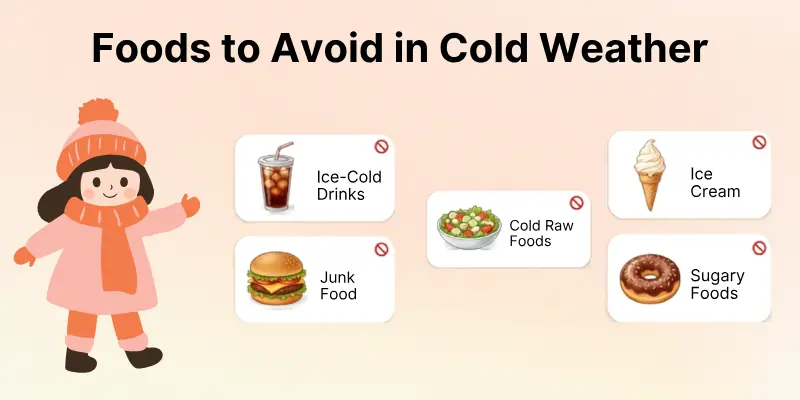
Here are some foods you should avoid or consume in moderation during cold weather.
1. Ice-cold Drinks
Ice-cold drinks can lower body temperature and make you feel colder in winter. They may also slow digestion and reduce comfort.
How to manage: Prefer warm drinks instead of chilled beverages.
2. Ice Cream
Ice cream can reduce body warmth and may cause throat discomfort in cold weather. It is better to avoid frequent consumption.
How to manage: Eat only in small portions occasionally.
3. Excess Junk Food
Junk food is high in unhealthy fats and low in nutrients, which can reduce immunity. It may also affect energy levels in winter.
How to manage: Limit fast food and choose home-cooked meals.
4. Processed Sugary Foods
Processed sugary foods give quick energy but no real nutrition or warmth. They can also weaken immunity if eaten in excess.
How to manage: Reduce packaged sweets and prefer natural sugars.
5. Cold Raw Foods in Excess
Eating too many cold raw foods can slow digestion and reduce body warmth. It may also lower energy levels in winter.
How to manage: Prefer cooked and warm meals instead.
Conclusion
In this article, we explored a complete guide to the best foods for cold weather, including warm and comfort foods, seasonal vegetables, immunity-boosting fruits, whole grains, protein-rich foods, healthy fats, warming spices, and natural energy boosters. We also discussed healthy drinks that help keep the body warm and foods to avoid during the winter season.
All these food groups play important roles in maintaining body warmth, boosting immunity, and supporting overall health during cold weather. A balanced winter diet helps you stay energetic, active, and protected from seasonal illnesses.
By following the right food choices and avoiding unhealthy options, you can easily enjoy the cold season in a healthier and more comfortable way.
FAQs: About Foods for Cold Weather
Here are the main questions about foods for cold weather:
The best foods for cold weather include warm soups, whole grains, nuts, and protein-rich meals. These foods help increase body heat and provide long-lasting energy. A balanced winter diet keeps you active and healthy during cold days.
Foods that help boost immunity in cold weather include:
- Oranges and Amla (rich in vitamin C)
- Ginger and Turmeric (natural immunity boosters)
- Garlic (helps fight infections)
- Green Vegetables Like Spinach (rich in vitamins)
- Nuts and Seeds (support overall strength and immunity)
You can eat the following foods for daily energy in winter:
- Oats and porridge for long-lasting energy
- Eggs for protein and strength
- Nuts for quick energy and healthy fats
- Brown rice for steady fuel throughout the day
- Bananas for instant energy boost
Yes, warm foods are better in cold weather because they help maintain body temperature. They also improve digestion and reduce cold-related discomfort. Hot meals like soups and curries are especially beneficial in winter.
Best fruits for cold weather include:
- Oranges for vitamin C and immunity
- Guava for strong immune support
- Pomegranate for energy and antioxidants
- Apples for fiber and digestion
- Amla for natural vitamin C boost
- Pears for hydration and light nutrition
Avoid these foods in cold weather:
- Ice-cold drinks that lower body temperature
- Ice cream that affects warmth and digestion
- Processed sugary foods with low nutrition
- Excess junk food high in unhealthy fats
- Too many raw cold foods in winter
Yes, nuts and seeds like almonds, walnuts, flaxseeds, and pumpkin seeds are excellent for winter. They provide healthy fats that help generate body heat. They also support brain function and overall energy.
A warm breakfast like oatmeal, porridge, or eggs is ideal for cold-weather nutrition. These foods provide steady energy and keep you full for hours. Adding nuts or honey makes them even healthier.
Yes, dairy products like milk, ghee, and butter are good for winter diets. They provide warmth, strength, and essential nutrients. However, yogurt should be consumed in moderation during cold weather.
A proper winter diet plan improves immunity, digestion, and energy levels. It includes seasonal vegetables, fruits, grains, and protein-rich foods. This helps the body stay strong and active throughout cold weather.






- Be Respectful
- Stay Relevant
- Stay Positive
- True Feedback
- Encourage Discussion
- Avoid Spamming
- No Fake News
- Don't Copy-Paste
- No Personal Attacks
- Be Respectful
- Stay Relevant
- Stay Positive
- True Feedback
- Encourage Discussion
- Avoid Spamming
- No Fake News
- Don't Copy-Paste
- No Personal Attacks
