Common Myths About Heart-Healthy Eating You Should Stop Believing
Published: 3 Aug 2026
Heart disease kills more people every year than almost any other condition. So it makes sense that people want to eat right to protect their hearts.
But there is a big problem.
A lot of the advice floating around about heart-healthy eating is wrong. Some of it is outdated. Some of it came straight from food industry marketing. And some of it just never had solid science behind it.
You have probably heard things like “avoid all fats,” or “eggs are dangerous,” or “just cut salt, and you are good.” Millions of people follow this advice every day. And many of them are actually hurting their heart health without realizing it.
This article breaks down the most common myths about heart-healthy eating and helps separate fact from fiction so you can make more informed nutrition choices. For each myth, we will tell you what the science actually says and what you should do instead.
Common Myths About Heart-Healthy Eating
You try to eat healthy for your heart. But most of what you hear is either outdated, misunderstood, or simply wrong. Following bad advice can do more harm than you think.
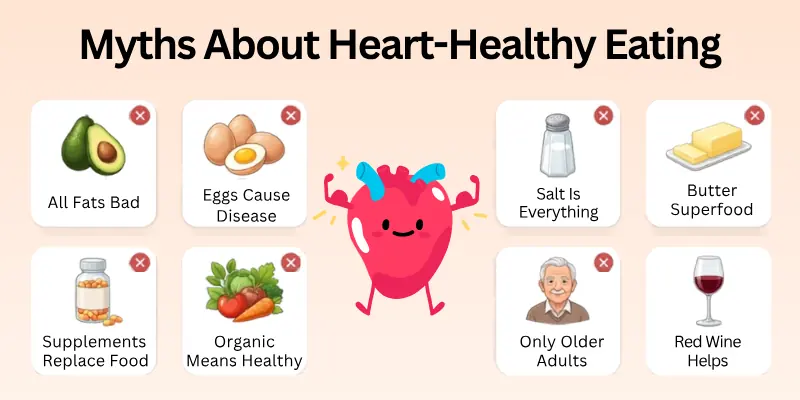
Read on to find out which myths you have been believing and what the truth really is.
- All Fats Are Bad for Your Heart
- Eggs Cause Heart Disease
- A Low-Fat Diet Is Always Heart-Healthy
- Only Salt Is the Enemy
- Butter and Coconut Oil Are Superfoods
- Supplements Can Replace Heart-Healthy Foods
- Organic Means Heart-Healthy
- If you take heart medication, diet does not matter
- Only Older Adults Need to Worry
- Red Wine Is Good for Your Heart
- Heart-Healthy Food Is Expensive and Tasteless
Myth 1: All Fats Are Bad for Your Heart
Many people assume that cutting out all fats is the best way to protect their heart, but the truth is more nuanced.
Myth: Many people believe that eating fat automatically increases the risk of heart disease. Because of this, they try to avoid all fats, regardless of the food source.
Fact: Not all fats affect the body in the same way. Unsaturated fats found in foods such as olive oil, nuts, seeds, avocados, and fatty fish can support healthy cholesterol levels and contribute to overall heart health. The fats that should be limited are trans fats and excessive amounts of saturated fats.
Key Points:
- Healthy fats help the body absorb certain vitamins.
- Unsaturated fats may support a healthier cholesterol balance.
- Many nutrient-rich foods naturally contain beneficial fats.
- Eliminating all fats can make it harder to maintain a balanced eating pattern.
Rather than avoiding fat completely, focus on choosing healthier sources of fat as part of a heart-friendly diet.
Myth 2: Eggs Cause Heart Disease
Eggs have long been blamed for increasing the risk of heart disease, causing many people to remove them from their diets unnecessarily.
Myth: Many people believe that eating eggs raises cholesterol levels and directly leads to heart disease. This belief comes mainly from the cholesterol found in egg yolks.
Fact: For most healthy individuals, moderate egg consumption does not significantly increase the risk of heart disease. While eggs contain dietary cholesterol, blood cholesterol levels are influenced by many factors, including overall diet, genetics, and lifestyle habits.
Key Points:
- Eggs provide high-quality protein and several important nutrients.
- Dietary cholesterol does not affect everyone in the same way.
- Overall, eating patterns matter more than a single food.
- Pairing eggs with nutritious foods can support a balanced diet.
For most people, eggs can be included as part of a balanced, heart-conscious eating plan.
Myth 3: A Low-Fat Diet Is Always Heart-Healthy
Many people assume that any food labeled “low-fat” is automatically a better choice for heart health.
Myth: Many people believe that reducing fat intake as much as possible is the key to a healthier heart. As a result, they often choose low-fat products without looking at the full nutrition label.
Fact: A low-fat label does not always mean a food is nutritious. Some low-fat products contain added sugars, refined carbohydrates, or extra ingredients to improve flavor and texture. These additions can reduce the overall nutritional value of the food.
Key Points:
- Low-fat foods can still be highly processed.
- Added sugars may contribute excess calories.
- Nutrition labels provide a clearer picture than front-of-package claims.
- Whole foods are often a better choice than heavily processed alternatives.
Instead of focusing only on fat content, consider the overall nutritional quality of the foods you eat.
Myth 4: Butter and Coconut Oil Are Superfoods
The popularity of certain food trends has led many people to believe that some ingredients offer exceptional heart-health benefits.
Myth: Many people believe that butter and coconut oil are superfoods that can significantly improve heart health. This perception is often influenced by marketing claims and social media trends.
Fact: While butter and coconut oil can be part of a balanced diet, neither should be considered a miracle food for heart health. Both contain substantial amounts of saturated fat, which should be consumed in moderation as part of an overall healthy eating pattern.
Key Points:
- No single food can guarantee better heart health.
- Overall dietary habits matter more than individual ingredients.
- Foods promoted as superfoods may still need to be consumed in moderation.
- A variety of nutrient-rich foods supports a more balanced diet.
Rather than relying on so-called superfoods, focus on building a well-rounded diet that includes a variety of nutritious foods.
Myth 5: Only Salt Is the Enemy
When people think about heart health, salt is often the first thing that comes to mind. However, focusing on sodium alone can overlook other important dietary factors.
Myth: Many people believe that reducing salt intake is the only dietary change needed to protect heart health. As long as they avoid salty foods, they assume the rest of their diet does not matter as much.
Fact: While excessive sodium intake can affect blood pressure, it is not the only dietary concern. Added sugars, trans fats, and heavily processed foods can also impact cardiovascular health. A heart-friendly diet involves looking at the overall quality of what you eat rather than focusing on a single nutrient.
Key Points:
- Processed foods often contain more than just high amounts of sodium.
- Added sugars can contribute to poor dietary habits.
- Trans fats may negatively affect cholesterol levels.
- A balanced eating pattern is more effective than targeting one ingredient.
Heart health is influenced by your overall diet, not just the amount of salt on your plate.
Myth 6: Only Older Adults Need to Worry
Heart health is often associated with aging, leading many younger people to believe they do not need to pay attention to their eating habits yet.
Myth: Many people think heart disease is only a concern for older adults. As a result, younger individuals may assume they can postpone healthy eating until later in life.
Fact: Heart health is influenced by long-term lifestyle habits. The food choices you make in your teens, twenties, and thirties can affect your cardiovascular health in the years ahead. Building healthy habits early may help support better health over time.
Key Points:
- Dietary habits often develop early in life.
- Long-term eating patterns can influence overall cardiovascular wellness.
- Healthy choices are beneficial regardless of age.
- Prevention is generally easier than trying to reverse unhealthy habits later.
Heart-healthy eating is not just for older adults; it is a lifelong habit that can benefit people of all ages.
Myth 7: If You Take Heart Medication, Diet Does Not Matter
Some people assume that once they start taking medication for heart-related conditions, healthy eating becomes less important.
Myth: Many people believe that heart medications can fully offset the effects of an unhealthy diet. As a result, they may pay less attention to their food choices after beginning treatment.
Fact: Medication and diet work together, not separately. While medications can help manage conditions such as high blood pressure or high cholesterol, healthy eating continues to play an important role in supporting overall cardiovascular health.
Key Points:
- Medications are not a substitute for healthy lifestyle habits.
- Nutritious food choices can complement medical treatment.
- Diet may help support long-term heart health goals.
- Following both medical and dietary recommendations often provides the best results.
Taking heart medication does not eliminate the need for healthy eating habits.
Myth 8: Supplements Can Replace Heart-Healthy Foods
With countless vitamins and supplements on the market, it is easy to believe that a pill can provide the same benefits as a nutritious diet.
Myth: Many people think that taking supplements is enough to support heart health, even if their diet is lacking in nutritious foods.
Fact: Supplements may help in certain situations, but they cannot fully replicate the combination of nutrients, fiber, and beneficial plant compounds found in whole foods. A balanced diet remains the foundation of good nutrition.
Key Points:
- Whole foods provide a wide range of nutrients that work together.
- Fiber found in foods is difficult to replace with supplements alone.
- Supplements are intended to complement, not replace, healthy eating.
- Relying solely on supplements may leave important nutritional gaps.
Heart-healthy foods should come first, with supplements serving as an addition when needed.
Myth 9: Organic Means Heart-Healthy
Many people assume that foods labeled “organic” are automatically better for heart health, regardless of their nutritional content.
Myth: There is a common belief that organic foods are always healthier and more beneficial for the heart compared to non-organic options.
Fact: Organic simply refers to how food is grown or processed, not its nutritional value. An organic cookie or snack can still be high in sugar, salt, or unhealthy fats. Heart health depends more on the overall nutrient profile of a food rather than its organic label.
Key Points:
- Organic does not automatically mean low-calorie or nutrient-rich.
- Processed organic foods can still be unhealthy.
- Nutrition labels matter more than marketing terms.
- A balanced diet is more important than choosing organic-only products.
Focus on nutritional quality, not just whether a product is organic.
Myth 10: Red Wine Is Good for Your Heart
Some people believe that drinking red wine regularly can improve heart health and protect against cardiovascular disease.
Myth: There is a popular idea that red wine is beneficial for the heart and should be consumed daily for its protective effects.
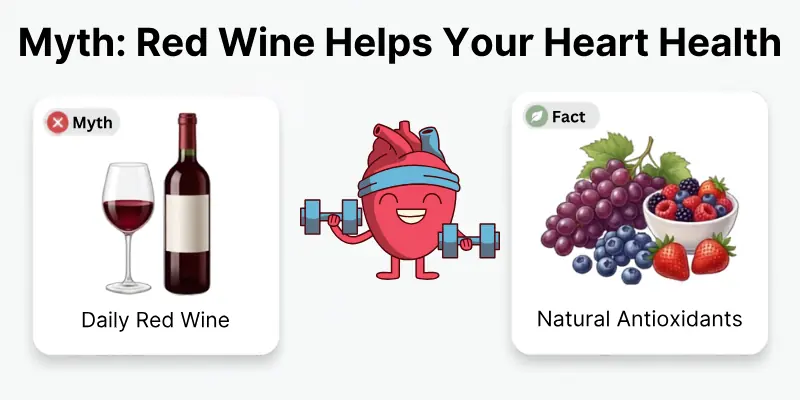
Fact: While some studies have explored potential benefits of compounds in red wine, alcohol is not necessary for heart health. Similar beneficial antioxidants can be obtained from fruits like grapes, berries, and other plant-based foods without the risks associated with alcohol consumption.
Key Points:
- Alcohol is not an essential nutrient for heart health.
- Antioxidants are available in many non-alcoholic foods.
- Regular alcohol intake may carry health risks.
- Whole food sources are safer and more beneficial overall.
You do not need alcohol to support heart health; nutritious foods provide safer alternatives.
Myth 11: Heart-Healthy Food Is Expensive and Tasteless
Many people avoid heart-healthy eating because they believe it is costly, bland, or difficult to maintain.
Myth: A common belief is that eating for heart health requires expensive ingredients and food that lacks flavor.
Fact: Heart-healthy eating can be affordable and flavorful. Foods like beans, lentils, oats, seasonal fruits, vegetables, and whole grains are budget-friendly and nutritious. Herbs, spices, and simple cooking methods can make meals both healthy and enjoyable.
Key Points:
- Many affordable foods support heart health.
- Whole foods are often cheaper than processed options.
- Flavor can be enhanced with herbs and spices instead of unhealthy fats or excess salt.
- Meal planning helps maintain both cost and nutritional balance.
Heart-healthy eating can fit any budget and does not need to be boring.
What Does Real Heart-Healthy Eating Look Like?
Real heart-healthy eating is not about strict restrictions or following diet trends. Instead, it focuses on balanced, nutrient-rich foods that support overall cardiovascular health.
A heart-healthy diet typically includes a variety of whole and minimally processed foods that provide essential nutrients like fiber, healthy fats, vitamins, and minerals.
Key Components of a Heart-Healthy Diet:
- Fruits and vegetables for fiber, antioxidants, and vitamins
- Whole grains like oats, brown rice, and whole wheat
- Lean proteins such as fish, poultry, beans, and lentils
- Healthy fats from nuts, seeds, and olive oil
- Limited intake of added sugar, salt, and processed foods
True heart-healthy eating is about balance and consistency, not strict rules or eliminating entire food groups.
Conclusion
In this article, we explored several common myths about heart-healthy eating and the facts behind them. From misconceptions about fats and cholesterol to beliefs about supplements and organic foods, it becomes clear that many ideas around heart health are not fully accurate.
The key takeaway is that heart health is not defined by single foods or strict rules, but by overall eating patterns. A balanced diet made up of whole, minimally processed foods plays a much more important role in supporting cardiovascular wellness.
By focusing on evidence-based information rather than myths, you can make more confident and sustainable choices for your heart health.
If you want to know exactly which foods support a healthy heart every day, read our complete guide on Foods for Heart Health.
FAQs
Here are some commonly asked questions about myths about heart-healthy eating and how to follow a heart-healthy diet correctly.
Many people believe things about heart-healthy eating that science has already proven wrong. Here are the most common ones:
- All fats are bad for your heart
- Eggs cause heart disease
- Low-fat foods are always healthier
- Only older adults need to worry about heart health
- Salt is the only dietary cause of heart disease
- Supplements can replace whole foods
- Organic food is automatically heart-healthy
- Red wine is good for your heart
Knowing these myths helps you make better food choices every day.
No, not all fats are harmful to the heart. Healthy fats like those in nuts, seeds, and olive oil support heart-healthy diet balance. The key is choosing unsaturated fats over trans fats.
For most healthy people, eggs do not significantly increase heart disease risk. Dietary cholesterol has less impact on blood cholesterol than previously believed. Eggs can be part of a heart-healthy diet plan.
Not always, because many low-fat foods contain added sugar or refined ingredients. These can reduce their overall nutritional value. Always check the full label for healthy eating misconceptions.
No, supplements cannot replace the benefits of whole foods. Whole foods provide fiber, antioxidants, and nutrients that pills cannot fully match. A heart-healthy nutrition plan should focus on real foods first.
No, heart health is influenced by many dietary factors, not just salt. Sugar, unhealthy fats, and processed foods also play a role. A balanced approach is essential for cardiovascular health.
Not necessarily, because organic foods can still be high in sugar, salt, or fat. Organic only refers to farming methods, not nutrition quality. Always focus on heart-healthy eating facts instead of labels.
Some studies suggest limited benefits, but alcohol is not required for a healthy heart. Similar antioxidants can be found in fruits and berries. A heart-healthy diet myth is that red wine is necessary.
Everyone can benefit from a heart-healthy diet, not just older adults. Early healthy eating habits support long-term cardiovascular wellness. Prevention is a key part of heart disease prevention diet.
A real plan includes fruits, vegetables, whole grains, lean proteins, and healthy fats. It limits processed foods, sugar, and excess sodium. This is the foundation of a heart-healthy eating pattern.


- Be Respectful
- Stay Relevant
- Stay Positive
- True Feedback
- Encourage Discussion
- Avoid Spamming
- No Fake News
- Don't Copy-Paste
- No Personal Attacks
- Be Respectful
- Stay Relevant
- Stay Positive
- True Feedback
- Encourage Discussion
- Avoid Spamming
- No Fake News
- Don't Copy-Paste
- No Personal Attacks
