Anti-Inflammatory Foods List to Reduce Inflammation Naturally
Published: 7 Jun 2026
Inflammation is the body’s natural response to injury or infection. But chronic inflammation can lead to health issues like heart disease, arthritis, diabetes, and digestive problems. Including anti-inflammatory foods in your daily diet can help reduce inflammation, protect your organs, and improve overall health.
This guide will provide a comprehensive anti-inflammatory foods list, explain their benefits, and show you how to include them in your meals for a healthier lifestyle.
Let’s dive in with me to cover all!
Why Anti-Inflammatory Foods Are Important
Anti-inflammatory foods are rich in antioxidants, vitamins, minerals, and healthy fats, which help the body:
- Reduce chronic inflammation and swelling.
- Protect heart, brain, and joint health.
- Boost immunity and prevent diseases.
- Support digestion and gut health.
A diet rich in these foods improves overall wellness, reduces the risk of chronic diseases, and helps maintain energy levels.
Anti-Inflammatory Foods List
Inflammation in the body can lead to fatigue, joint pain, and long-term health issues if not managed properly. A diet rich in anti-inflammatory foods helps support the immune system, reduce internal stress, and promote overall wellness. These foods are packed with antioxidants, vitamins, and healthy fats that naturally help the body fight inflammation.
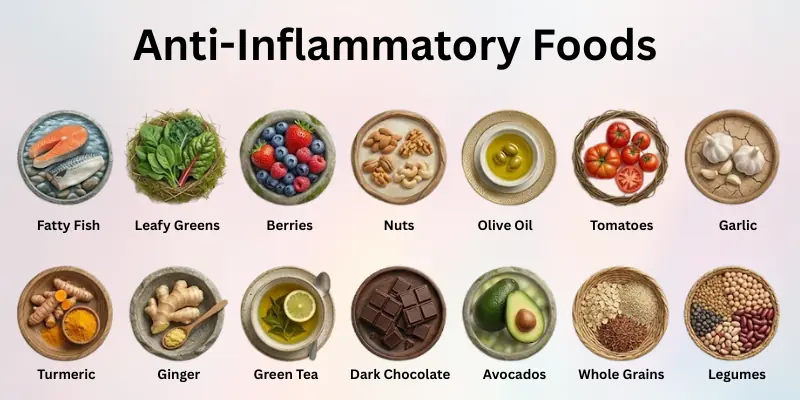
Here is a detailed list of anti-inflammatory foods that can be included in your daily diet to help fight inflammation naturally.
- Fatty Fish (Salmon, Mackerel, Sardines)
- Leafy Greens (Spinach, Kale, Swiss Chard)
- Berries (Blueberries, Strawberries, Raspberries)
- Nuts (Almonds, Walnuts, Cashews)
- Olive Oil
- Tomatoes
- Garlic
- Turmeric
- Ginger
- Green Tea
- Dark Chocolate (70% or higher)
- Avocados
- Whole Grains (Oats, Quinoa, Brown Rice)
- Legumes (Lentils, Chickpeas, Beans)
Let’s explore each food in detail.
1. Fatty Fish (Salmon, Mackerel, Sardines)
Omega-3 fatty acids, which are found in abundance in fatty fish, have been shown to reduce inflammation in the joints, arteries, and tissues. They are beneficial to cardiac health, brain function, and the immune system as a whole.
Tips for Best Results:
- Include fish 2–3 times per week.
- Grill, bake, or steam instead of frying.
- Pair with leafy greens or whole grains for a balanced meal.
2. Leafy Greens (Spinach, Kale, Swiss Chard)
inflammation, improve digestion, and support healthy blood flow.There is a high concentration of antioxidants, vitamins, and minerals in leafy greens. Inflammation is reduced, digestion is improved, and healthy blood flow is supported throughout the body.
Tips for Best Results:
- Eat raw in salads or lightly steamed.
- Add to soups, smoothies, or stir-fries.
- Include a variety of greens for maximum nutrients.
3. Berries (Blueberries, Strawberries, Raspberries)
Vitamin C and polyphenols, which are found in abundance in berries, aid in the fight against free radicals and reduce inflammation. Also, they improve the health of the brain and the heart.
Tips for Best Results:
- Eat fresh or add to yogurt and smoothies.
- Include a cup daily for maximum benefits.
- Combine with nuts or seeds for extra nutrition.
4. Nuts (Almonds, Walnuts, Cashews)
Minerals like magnesium, vitamin E, and healthy fats can be found in nuts. They assist in the reduction of inflammatory markers, the improvement of heart health, and the restoration of brain function.
Tips for Best Results:
- Eat a small handful daily.
- Add to oatmeal, salads, or smoothies.
- Avoid salted or sugar-coated nuts.
5. Olive Oil
It is abundant in monounsaturated fats and antioxidants, and extra virgin olive oil is even more so. It supports the health of the heart, reduces inflammation, and has the potential to reduce the risk of developing chronic diseases.
Tips for Best Results:
- Use as a salad dressing or for light cooking.
- Avoid high-heat frying.
- Pair with vegetables and whole grains for better absorption.
6. Tomatoes
Tomatoes contain a high concentration of lycopene, an antioxidant that helps to reduce inflammation and promotes healthy heart function. The lycopene content of tomatoes can be increased through cooking.
Tips for Best Results:
- Eat raw in salads or cooked in sauces.
- Pair with olive oil to enhance nutrient absorption.
- Include 1–2 servings daily.
7. Garlic
Sulfur compounds found in garlic have been shown to reduce inflammation and strengthen the immune system. Additionally, it helps to maintain a healthy heart and reduces blood pressure.
Tips for Best Results:
- Use raw or lightly cooked in meals.
- Add to soups, sauces, or stir-fries.
- Include 2–3 cloves daily for best results.
8. Turmeric
Turmeric contains curcumin, which is one of the most powerful anti-inflammatory compounds. Turmeric is also known as turmeric. It helps alleviate a variety of symptoms, including pain in the joints, inflammation, and oxidative stress.
Tips for Best Results:
- Add turmeric to curries, soups, or golden milk.
- Pair with black pepper to enhance absorption.
- Consume 1 teaspoon daily for benefits.
9. Ginger
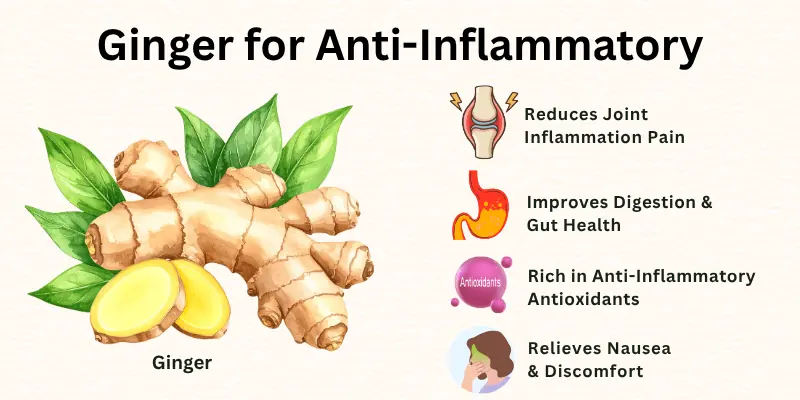
Ginger is loaded with gingerol, a compound that has been shown to reduce inflammation and aid digestion. Ginger contains a high concentration of ginger. The ability to alleviate joint pain and nausea is another benefit of this substance.
Tips for Best Results:
- Use fresh, grated, or as a tea.
- Add to smoothies, soups, or stir-fries.
- Include 1–2 teaspoons daily for best results.
10. Green Tea
Polyphenols and antioxidants, which are found in green tea, are known to promote inflammation and protect cells from damage. It is also beneficial to the health of the heart and metabolism.
Tips for Best Results:
- Drink 2–3 cups daily.
- Avoid adding sugar to maintain anti-inflammatory benefits.
- Combine with lemon for extra vitamin C.
11. Dark Chocolate (70% or higher)
Flavonoids, which are found in abundance in dark chocolate, have been shown to reduce inflammation and oxidative stress. Small amounts have the potential to improve mood and heart health.
Tips for Best Results:
- Limit to 1–2 squares daily.
- Choose high-cocoa content for maximum benefits.
- Pair with nuts or fruits for extra nutrition.
12. Avocados
Avocados contain a notable amount of monounsaturated fats, vitamin E, and antioxidants, all of which contribute to the reduction of inflammation and the maintenance of healthy skin.
Tips for Best Results:
- Add to salads, smoothies, or sandwiches.
- Eat half an avocado daily.
- Combine with leafy greens for better nutrient absorption.
13. Whole Grains (Oats, Quinoa, Brown Rice)
In addition to magnesium and antioxidants, whole grains are a source of fiber. They provide support for digestion and heart health, as well as a reduction in inflammatory markers.
Tips for Best Results:
- Replace refined grains with whole grains.
- Include in meals like salads, breakfast, or side dishes.
- Avoid processed or sugary grain products.
14. Legumes (Lentils, Chickpeas, Beans)
Legumes contain a high concentration of polyphenols, fiber, and protein, all of which are known to reduce inflammation and improve gut health. Additionally, they are beneficial to the health of the heart and energy levels.
Tips for Best Results:
- Soak and cook properly for easy digestion.
- Include in soups, stews, or salads.
- Pair with vitamin C foods to improve iron absorption.
Final Note
In this guide, we covered a comprehensive anti-inflammatory foods list, including fatty fish, leafy greens, berries, nuts, olive oil, garlic, turmeric, ginger, green tea, and more. Including these foods in your daily diet can reduce inflammation, protect your organs, improve energy, and support overall wellness.
My personal advice is to eat a variety of these foods regularly, avoid processed foods, and stay hydrated for a healthier, inflammation-free body.
Goodbye, and eat anti-inflammatory foods daily.
FAQs: Best Anti-inflammatory Foods List
Here are some of the most frequently asked questions related to the best anti-inflammatory foods list:
Fatty fish, leafy greens, berries, nuts, olive oil, garlic, turmeric, ginger, green tea, and whole grains are some of the foods that are considered to have the most effective anti-inflammatory properties.
These foods reduce chronic inflammation, improve heart and brain health, strengthen immunity, and protect organs from disease.
Yes, turmeric contains curcumin and ginger contains gingerol. Both compounds fight inflammation, relieve joint pain, and support digestion.
Yes, berries like blueberries, strawberries, and raspberries are rich in antioxidants and vitamin C. They reduce oxidative stress and prevent cell damage.
Antioxidants and monounsaturated fats are abundant in olive oil. It naturally promotes heart and brain health and reduces inflammatory markers.
Indeed, the healthy fats, magnesium, and vitamin E found in almonds, walnuts, pumpkin seeds, and flaxseeds help to lower inflammation and enhance general health.
Indeed, green tea has a lot of antioxidants and polyphenols. Frequent consumption strengthens immunity, protects cells, and lowers inflammation.
Incorporate foods that reduce inflammation into your daily diet. Regularly consuming a wide range of these foods can assist in the reduction of inflammation and the maintenance of overall health.
It is true that whole grains, such as oats, quinoa, and brown rice, contain a high amount of fiber and antioxidants. Anti-inflammatory markers are reduced, and digestion is improved as a result.
The answer is yes; foods such as fatty fish, ginger, turmeric, and nuts are effective in reducing inflammation and relieving joint pain. Consumption on a consistent basis helps to maintain mobility and reduce stiffness.





- Be Respectful
- Stay Relevant
- Stay Positive
- True Feedback
- Encourage Discussion
- Avoid Spamming
- No Fake News
- Don't Copy-Paste
- No Personal Attacks
- Be Respectful
- Stay Relevant
- Stay Positive
- True Feedback
- Encourage Discussion
- Avoid Spamming
- No Fake News
- Don't Copy-Paste
- No Personal Attacks
