How to Reduce Screen Time Naturally: Easy Steps
Published: 19 Apr 2026
Many people want to learn how to reduce screen time naturally because screens are now a big part of daily life. Long screen hours cause eye strain, tiredness, and stress.
They also affect sleep, focus, and our daily habits. That is why reducing screen time in a natural way is important for your physical and mental health. You do not need to quit screens completely, just manage them wisely.
This guide will show you easy habits, smart changes, and natural ways to cut screen usage without pressure or stress.
How to Reduce Screen Time Naturally
Here are the best natural ways to reduce screen time at home. These ideas are simple, practical, and easy to follow for everyone.
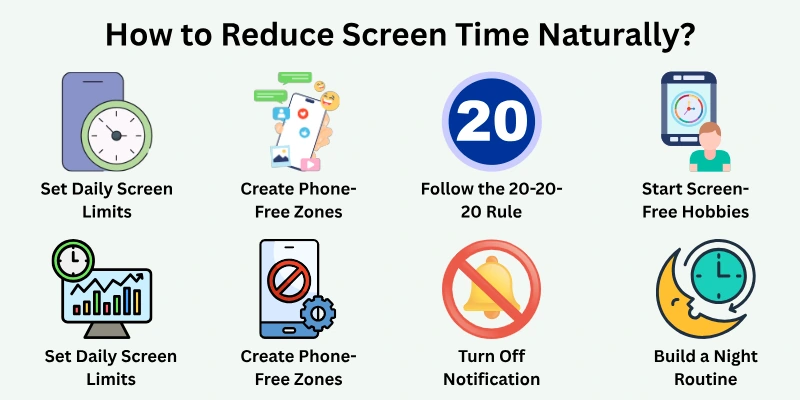
List of Remedies
- Set Daily Screen Limits
- Create Phone-Free Zones
- Turn Off Notifications
- Keep Phone Out of Reach
- Follow the 20-20-20 Rule
- Replace Screens With Outdoor Time
- Start Screen-Free Hobbies
- Use the One-Screen Rule
- Reduce Social Media Usage
- Build a Night Routine
- Use Physical Alternatives
- Track Your Screen Time
Let us cover all the best solutions in detail.
1. Set Daily Screen Limits
Many people don’t realize how fast hours pass while scrolling. Limits help you control your screen use without feeling overwhelmed. Your brain learns to stop checking your phone every few minutes. You get more time for real-life tasks and personal hobbies. It also improves mental clarity and reduces stress. This step supports your goal of how to reduce screen time naturally.
How It Works
- Set app timers for social media.
- Use built-in tools like Digital Wellbeing or Screen Time.
- Reduce 10–15 minutes daily for smooth progress.
2. Create Phone-Free Zones
Your environment shapes your behavior very fast. When certain places do not allow screens, your habit changes automatically. It helps you become more present and relaxed. It also improves relationships and family time. This method reduces unnecessary scrolling without effort. It is one of the strongest ways to practice how to reduce screen time naturally.
How It Works
- No phones in the bedroom.
- No screens during meals.
- Make a relaxing no-device corner.
3. Turn Off Notifications
Notifications force you to check your phone even when it’s not needed. Without them, your mind stays calm and focused. You avoid opening apps again and again out of habit. This reduces wasted hours daily. It also lowers stress and improves productivity. Your attention stays with real-life tasks.
How It Works
- Turn off social media alerts.
- Keep only important calls/messages.
- Use “Do Not Disturb” in focus time.
4. Keep Phone Out of Reach
Distance breaks the habit of constant checking. When your phone is not beside you, you stop grabbing it automatically. It helps you stay present and more productive. You become mindful of when and why you use your device. This reduces random scrolling during the day. It makes digital balance easier.
How It Works
- Put the phone in another room.
- Keep it inside a drawer.
- Use a physical alarm clock.
5. Follow the 20-20-20 Rule
Your eyes need breaks from staring at screens. This rule relaxes eye muscles and reduces strain. It also helps prevent headaches and dry eyes. It improves focus and resets your vision. The habit becomes natural with time. It supports overall digital wellness.
How It Works
- Every 20 minutes, look 20 feet away for 20 seconds.
- Set reminders if needed.
- Blink often to keep eyes moist.
6. Replace Screens With Outdoor Time
Outdoor activities refresh your mind and reduce digital cravings. Sunlight boosts mood naturally. Fresh air calms your body. Movement reduces stress and helps you sleep better. You feel more active and less attached to your phone. Nature is a natural screen-break.
How It Works
- Go for a daily walk.
- Sit outside for sunlight.
- Try light exercises outdoors.
7. Start Screen-Free Hobbies
Hobbies keep your mind busy without screens. They make you feel relaxed and creative. You get a sense of achievement. They also reduce boredom-driven scrolling. Your brain enjoys real-world activities more over time. This improves emotional balance.

How It Works
- Try reading, art, or crafting.
- Play music or cook.
- Learn DIY or puzzles.
8. Use the One-Screen Rule
Multitasking with multiple screens increases screen time. One-screen focus keeps things simple. It helps you enjoy the moment fully. It reduces digital overload. You finish tasks faster. This cuts total screen hours naturally.
How It Works
- No phone while watching TV.
- No extra tabs when working.
- Complete one task before switching.
9. Reduce Social Media Slowly
Sudden cut-offs feel difficult for most people. A slow reduction is easier and sustainable. You feel less pressure and more control. It helps break addictive scrolling habits. You gain more peace and clarity. Your digital health improves week by week.
How It Works
- Reduce usage by 10 minutes daily.
- Unfollow unnecessary pages.
- Remove apps from your home screen.
10. Build a Night Routine
Night routines help you avoid late-night scrolling. Your mind relaxes faster. Sleep quality improves naturally. You wake up fresh and calm. Your body gets proper rest. This reduces dependence on digital entertainment.
How It Works
- Avoid screens 1 hour before bed.
- Try stretching, journaling, or reading.
- Make your room dark and quiet.
11. Use Physical Alternatives
Using offline tools cuts your screen dependency. Physical items reduce digital distractions. They help you stay focused and organized. You avoid unnecessary tapping and checking. It creates healthy habits. Life becomes calmer and simpler.
How It Works
- Use a real notebook.
- Use a physical calendar.
- Keep printed books.
12. Track Your Screen Time
Awareness is the first step to change. Tracking shows how much time you actually spend online. You understand your patterns clearly. It motivates you to reduce usage. You make better decisions daily. Progress becomes visible and rewarding.
How It Works
- Check daily screen time reports.
- Set weekly goals.
- Celebrate small improvements.
Additional Tips for Reducing Screen
Here are some extra simple habits you can add:
- Avoid checking your phone right after waking up.
- Use silent mode during work.
- Replace scrolling with stretching breaks.
- Read physical books at night.
- Keep devices away during family time.
Final Note
In this guide, we have covered all the effective ways on how to reduce screen time naturally in a simple and easy style. Make this a personal journey instead of a strict rule. Start with one or two habits and slowly add more as you feel comfortable.
Your mind will feel lighter, your sleep will improve, and your daily routine will become healthier. I personally recommend taking small steps first because they are easier to follow long-term. You deserve a balanced digital life with more real moments and less stress.
FAQs: Tips to Reduce Screen Time Naturally
Here are some of the most commonly asked questions related to the tips to reduce screen time naturally:
Turning off notifications reduces phone checking instantly. It stops unnecessary alerts that distract you. This simple step helps you begin how to reduce screen time naturally without effort.
Keeping your phone in another room breaks the habit automatically. You stop reaching for it mindlessly. This supports your goal of reducing screen time naturally.
Yes, less screen time helps your brain relax before bed. Blue light affects your sleep cycle and keeps you awake. A screen-free hour at night improves sleep naturally.
Outdoor time gives your mind a break from digital stimulation. Sunlight boosts your mood and reduces the desire to scroll. It naturally lowers screen time throughout the day.
You can reduce usage by limiting daily minutes. Hiding apps from your home screen also prevents automatic tapping. This makes how to reduce screen time naturally much easier.
Tracking helps you see your real digital habits clearly. It shows where most of your time goes. This awareness motivates you to cut back naturally.
Yes, it lowers stress and prevents digital overload. You feel more present and calm. This improves your emotional balance naturally.
Yes, they keep your mind busy with real-world activities. Hobbies reduce boredom scrolling. This naturally reduces your overall screen time.
Recreational screen time should stay around 2–3 hours. Work hours are separate and unavoidable. Managing both helps maintain healthy digital balance.
Small habits show results within 1–2 weeks. Consistency makes the change easier. With steady effort, how to reduce screen time naturally becomes a long-term habit






- Be Respectful
- Stay Relevant
- Stay Positive
- True Feedback
- Encourage Discussion
- Avoid Spamming
- No Fake News
- Don't Copy-Paste
- No Personal Attacks
- Be Respectful
- Stay Relevant
- Stay Positive
- True Feedback
- Encourage Discussion
- Avoid Spamming
- No Fake News
- Don't Copy-Paste
- No Personal Attacks
