How To Avoid Junk Food Cravings: Easy Tips That Work
Published: 22 Jun 2026
Junk food cravings can feel powerful, especially when you are trying to eat healthy. Sugary snacks, fried foods, and processed treats are designed to be addictive and easy to overeat.
Many people struggle not because they lack willpower, but because they do not understand why cravings happen. Hunger, dehydration, stress, lack of sleep, and emotional triggers all play a role.
Guys, the good news is that you can control junk food cravings with the right daily habits. You do not need extreme dieting or strict restrictions. In this guide, I will share the best ways to avoid junk food cravings naturally and build healthier eating habits step by step.
So without wasting time, let’s dig in.
How to Avoid Junk Food Cravings: Best Tips
Overcoming junk food cravings starts with building healthy daily habits rather than relying on willpower alone. Simple changes to your eating routine and lifestyle can help control hunger, reduce unnecessary snacking, and make healthier choices easier.
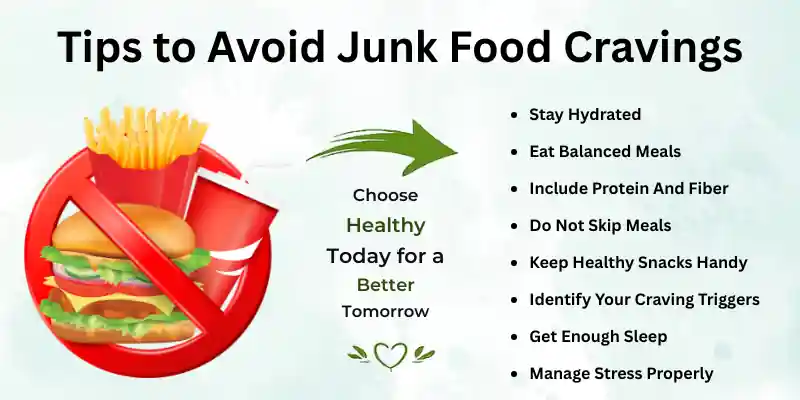
By following these practical tips consistently, you can manage cravings and stay on track with your nutrition and weight loss goals. Here is the detailed list of the most effective strategies:
- Stay Hydrated
- Eat Balanced Meals
- Include Protein And Fiber
- Do Not Skip Meals
- Keep Healthy Snacks Handy
- Identify Your Craving Triggers
- Get Enough Sleep
- Manage Stress Properly
- Reduce Sugar Gradually
- Practice Mindful Eating
- Avoid Keeping Junk Food At Home
- Plan Your Meals In Advance
- Distract Yourself When Cravings Hit
- Replace Junk With Healthier Alternatives
- Build Consistent Healthy Habits
Let us understand each strategy in detail and learn how to apply it in daily life.
1. Stay Hydrated
Sometimes thirst is mistaken for hunger or cravings. When your body lacks fluids, it may send signals that feel like the need for snacks. Drinking enough water throughout the day keeps your appetite stable and reduces unnecessary eating. Proper hydration also supports digestion, metabolism, and energy levels. Many people notice that when they drink water before meals, they eat less naturally. The next time you crave junk food, drink a full glass of water and wait ten minutes before deciding to eat.
How To Apply:
- Drink 8 to 10 glasses of water daily.
- Have one glass before every meal.
- Carry a water bottle with you.
- Add lemon or mint for natural flavor.
Benefits:
- Reduces false hunger signals.
- Controls overeating.
- Supports metabolism and digestion.
2. Eat Balanced Meals
Unbalanced meals cause blood sugar spikes and crashes, which lead to cravings for sugary or salty foods. A balanced meal includes protein, healthy fats, fiber, and complex carbohydrates. This combination keeps you full for longer and prevents sudden hunger. When your body gets proper nutrition, it does not demand quick energy from junk food. Planning balanced meals helps you avoid impulsive snacking. Consistency in meal quality is one of the strongest tools against cravings.
How To Apply:
- Include protein in every meal.
- Add vegetables or fruits for fiber.
- Choose whole grains instead of refined carbs.
- Avoid meals that are only carbs.
Benefits:
- Stabilizes blood sugar levels.
- Reduces sudden cravings.
- Improves energy and focus.
3. Include Protein And Fiber
Protein and fiber help you feel satisfied after eating. They slow down digestion and keep your stomach full for hours. When meals lack these nutrients, you feel hungry again very quickly. That hunger often turns into cravings for chips, sweets, or fried foods. Foods like eggs, beans, lentils, yogurt, nuts, vegetables, and whole grains are excellent choices. Adding these daily can significantly reduce junk food urges.
How To Apply:
- Add eggs or yogurt to breakfast.
- Include beans or chicken in lunch.
- Snack on nuts or fruit.
- Fill half your plate with vegetables.
Benefits:
- Keeps you full longer.
- Prevents overeating.
- Reduces sugar cravings.
4. Do Not Skip Meals
Skipping meals makes you extremely hungry later. When hunger becomes intense, your body demands quick calories, usually from junk food. Eating regularly keeps your metabolism steady and reduces binge eating. Three balanced meals with one or two healthy snacks work well for most people. Consistency prevents extreme hunger and emotional eating episodes. Regular eating patterns create stability and control.
How To Apply:
- Eat breakfast within two hours of waking.
- Avoid going more than 4 to 5 hours without food.
- Keep healthy snacks for busy days.
Benefits:
- Prevents binge eating.
- Maintains steady energy.
- Controls intense cravings.
5. Keep Healthy Snacks Handy
If junk food is easily available, you are more likely to eat it. The environment plays a huge role in food choices. Keeping fruits, nuts, yogurt, and roasted seeds within reach makes healthy eating easier. When hunger strikes, you will choose what is available. Preparing snacks in advance saves you from impulsive decisions. Small preparation leads to big results.
How To Apply:
- Store cut fruits in the fridge.
- Carry nuts or seeds in your bag.
- Keep healthy snacks at your workplace.
Benefits:
- Reduces temptation.
- Encourages smart choices.
- Prevents last-minute junk eating.
6. Identify Your Craving Triggers
Cravings are often emotional rather than physical. Stress, boredom, sadness, or habit can trigger the desire for junk food. Understanding your triggers helps you manage them better. Keeping a simple journal can reveal patterns in your eating behavior. Once you recognize triggers, you can replace them with healthier actions. Awareness creates control.
How To Apply:
- Write down when cravings happen.
- Note your mood and surroundings.
- Replace emotional eating with walking or deep breathing.
Benefits:
- Reduces emotional eating.
- Improves self-control.
- Builds mindful habits.
7. Get Enough Sleep
Lack of sleep increases hunger hormones and reduces willpower. When you are tired, your body seeks quick energy from sugary and fatty foods. Proper sleep supports appetite control and better decision-making. Most adults need 7 to 8 hours of sleep daily. Better sleep leads to fewer cravings during the day. Rest is a powerful yet underrated strategy.
How To Apply:
- Sleep at a fixed time daily.
- Avoid screens before bed.
- Reduce caffeine late in the day.
Benefits:
- Controls hunger hormones.
- Reduces late-night snacking.
- Improves energy levels.
8. Manage Stress Properly
Stress increases cortisol levels, which can trigger junk food cravings. Many people eat to comfort themselves during stressful situations. Finding non-food coping strategies is important. Activities like walking, stretching, journaling, or deep breathing help reduce stress naturally. Regular exercise also improves mood and reduces emotional eating. Managing stress protects your eating habits.
How To Apply:
- Practice deep breathing for five minutes daily.
- Take short breaks during work.
- Exercise regularly.
Benefits:
- Reduces emotional cravings.
- Improves mood.
- Supports healthier decisions.
9. Reduce Sugar Gradually
Suddenly removing sugar can make cravings stronger. Gradual reduction helps your body adjust without feeling deprived. Start by cutting sugary drinks and reducing dessert portions. Replace sweets with fruits or dark chocolate in small amounts. Over time, your taste buds adapt and prefer less sweetness. Consistency makes this process easier.
How To Apply:
- Cut sugar in drinks step by step.
- Replace soda with water.
- Choose natural sweet options.
Benefits:
- Lowers sugar dependency.
- Reduces intense cravings.
- Improves overall health.
10. Practice Mindful Eating
Mindful eating means paying attention to your food and hunger signals. Eating while distracted leads to overeating and stronger cravings. Slow down, chew properly, and focus on flavors. Stop eating when you feel satisfied, not overly full. This practice builds a healthier relationship with food. Over time, cravings reduce naturally.
How To Apply:
- Avoid eating in front of screens.
- Chew slowly.
- Pause between bites.
Benefits:
- Prevents overeating.
- Improves digestion.
- Reduces impulsive snacking.
11. Avoid Keeping Junk Food At Home
Lack of junk food makes eating it difficult. Your surroundings strongly affect your eating. Visible chips, cookies, and sugary drinks are easier to eat without thinking. Taking these items out of the house reduces temptation and simplifies healthy eating. A grocery list prevents impulse buys and focuses on healthy options. Your choices improve when your kitchen has healthy foods.
How To Apply:
- Clean your pantry and remove processed snacks.
- Shop with a prepared grocery list.
- Avoid shopping when you are hungry.
- Store healthy foods at eye level in your kitchen.
- Replace junk snacks with fruits, nuts, or yogurt.
Benefits:
- Reduces easy access to junk food.
- Encourages discipline.
- Supports consistent habits.
12. Plan Your Meals In Advance
Meal planning prevents last-minute, unhealthy decisions. When you already know what you will eat, you are less likely to order fast food or grab processed snacks. Preparing meals in advance reduces stress during busy days. Planning also helps you maintain balanced nutrition throughout the week. A structured eating routine improves control and consistency. Over time, this habit significantly reduces junk food cravings.
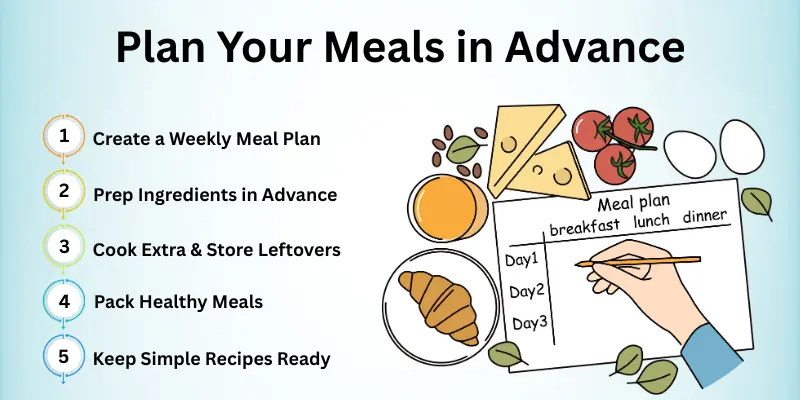
How To Apply:
- Create a weekly meal plan every weekend.
- Prepare ingredients in advance for quick cooking.
- Cook larger portions and store leftovers properly.
- Pack healthy meals if you work outside.
- Keep simple, healthy recipes ready for busy days.
Benefits:
- Reduces impulsive decisions.
- Saves money.
- Improves nutrition quality.
13. Distract Yourself When Cravings Hit
Usually, cravings last 10–20 minutes. Delaying your response often reduces the urge. Activities that are productive help curb snacking. Physical activity is effective because it changes your mental and physical focus. Stop reacting to cravings and redirect your energy. This simple method gradually builds self-control.
How To Apply:
- Take a 10-minute walk.
- Drink a glass of water and wait.
- Call a friend or family member.
- Do light stretching or quick exercises.
- Engage in reading, cleaning, or journaling.
Benefits:
- Breaks the craving cycle.
- Builds self-control.
- Reduces emotional eating.
14. Replace Junk With Healthier Alternatives
You do not need to completely deny yourself taste or enjoyment. Smart food swaps allow you to satisfy cravings in a healthier way. Replacing high-calorie snacks with better options reduces overall calorie intake while still keeping you satisfied. Over time, your taste preferences begin to shift toward natural flavors. Making gradual substitutions feels less restrictive and more sustainable. Healthy alternatives help you stay on track without feeling deprived.
How To Apply:
- Choose air-popped popcorn instead of fried chips.
- Eat fruit when craving sweets.
- Replace soda with sparkling water.
- Choose yogurt instead of ice cream.
- Keep dark chocolate in small portions for sweet cravings.
Benefits:
- Satisfies taste buds.
- Reduces calorie intake.
- Builds better food preferences.
15. Build Consistent Healthy Habits
Consistency beats perfection for long-term success. Small daily improvements gradually reduce cravings. Focus on easy-to-maintain routines instead of dieting. Regular practice makes healthy habits automatic. Patience and persistence produce lasting change. Consistency makes healthy behavior a routine, eliminating the need for willpower.
How To Apply:
- Set small daily health goals.
- Follow a fixed eating schedule.
- Exercise regularly, even for short durations.
- Track your progress weekly.
- Celebrate improvements without using food as a reward.
Benefits:
- Creates sustainable lifestyle changes.
- Reduces reliance on willpower.
- Improves overall health.
Final Note
In this guide, we have covered how to avoid junk food cravings using practical and sustainable strategies. As a nutrition expert, I strongly believe that controlling cravings is not about strict restriction but about balance, awareness, and consistency. When you hydrate properly, eat balanced meals, manage stress, and sleep well, cravings naturally reduce.
Stay connected and explore more health and nutrition guides on this site to build long-term healthy habits and transform your lifestyle step by step.
FAQs
Here are some of the most commonly asked questions related to how to avoid junk food cravings:
Daily cravings often happen because of stress, lack of sleep, dehydration, or unhealthy meals. When your body does not get proper nutrition, it looks for quick energy from junk food. Improving your daily habits can reduce cravings.
Most people see improvement within two to four weeks. Consistent healthy eating makes a big difference. The key is regular, balanced meals and patience.
Yes, sometimes cravings are actually thirst. Drinking water can reduce false hunger signals. Try a glass of water before reaching for snacks.
Yes, poor sleep increases hunger hormones. This makes sugary and high-calorie foods more tempting. Getting enough rest helps control appetite.
It is better to limit junk food instead of avoiding it completely. Total restriction can lead to stronger cravings. Small, controlled portions are more realistic and sustainable.
Yes, stress increases a hormone called cortisol. This can trigger cravings for high-calorie comfort foods. Managing stress helps reduce emotional eating.
Yes, snacks rich in protein and fiber help you feel full longer. They prevent sudden hunger and reduce junk food urges. Nuts, fruits, and yogurt are good options.
Yes, skipping meals or eating at irregular times can cause blood sugar drops. This often leads to strong cravings. Eating balanced meals on time helps control hunger.
Yes, physical activity improves mood and reduces stress. It also helps control emotional eating triggers. Even light exercise can make a difference.
The fastest way is to improve hydration, sleep, and meal balance. Drinking enough water, sleeping well, and eating proper meals can quickly reduce cravings. Small daily changes bring lasting results.



- Be Respectful
- Stay Relevant
- Stay Positive
- True Feedback
- Encourage Discussion
- Avoid Spamming
- No Fake News
- Don't Copy-Paste
- No Personal Attacks
- Be Respectful
- Stay Relevant
- Stay Positive
- True Feedback
- Encourage Discussion
- Avoid Spamming
- No Fake News
- Don't Copy-Paste
- No Personal Attacks
