How to Increase Metabolism For Weight Loss Naturally
Published: 2 Jul 2026
Metabolism is the process your body uses to convert food into energy. A faster metabolism means your body burns more calories even while resting. Many people struggle with slow fat loss because their metabolism is not working efficiently. The good news is that you can improve your metabolic rate naturally with simple lifestyle changes.
A healthy metabolism supports fat burning, energy levels, hormone balance, and overall health. It is not only about genetics. Your daily habits, sleep, diet, and activity level play a major role. Guys, if you often feel tired, gain weight easily, or struggle to lose fat, your metabolism might need support.
In this guide, I will share practical and proven strategies on how to increase metabolism for weight loss. So without wasting time, let’s dive in.
How To Increase Metabolism For Weight Loss
A healthy metabolism helps your body convert food into energy more efficiently and supports long-term weight management. Although no single food or habit can dramatically boost metabolism, combining healthy eating, regular exercise, and consistent lifestyle choices can make a positive difference.
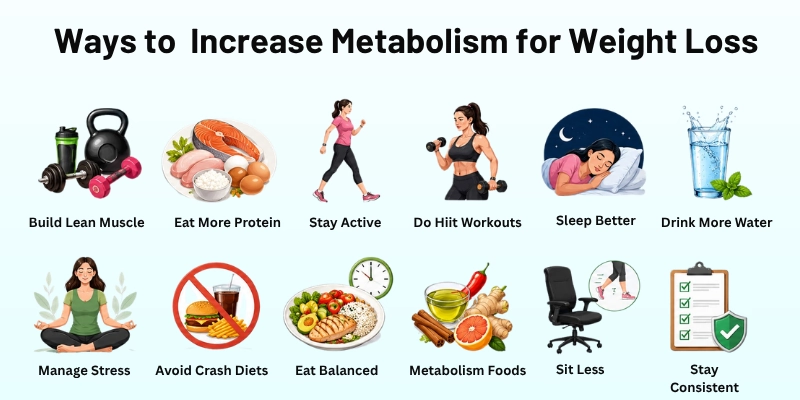
The following strategies can help support your metabolism naturally while contributing to your weight loss goals. Here is the list of the most effective ways to boost your metabolism naturally:
- Build More Lean Muscle
- Increase Daily Protein Intake
- Stay Physically Active Throughout The Day
- Add High-Intensity Workouts
- Improve Sleep Quality
- Stay Properly Hydrated
- Manage Stress Levels
- Avoid Extreme Dieting
- Eat Balanced And Frequent Meals
- Include Metabolism-Boosting Foods
- Reduce Sitting Time
- Stay Consistent With Healthy Habits
Let us understand each strategy in detail.
1. Build More Lean Muscle
Muscle tissue burns more calories than fat tissue, even when you are resting. When you build lean muscle, your resting metabolic rate increases naturally. Strength training supports fat loss while preserving muscle mass. Many people focus only on cardio, but muscle building plays a major role in boosting metabolism. Even small increases in muscle mass can improve daily calorie burn.
How To Apply:
- Perform strength training 3 to 4 times per week.
- Focus on compound exercises like squats and push-ups.
- Gradually increase resistance.
- Train all major muscle groups.
- Stay consistent with proper form.
2. Increase Daily Protein Intake
Protein requires more energy to digest compared to fats and carbohydrates. This effect increases calorie burn during digestion. Higher protein intake also helps maintain muscle during weight loss. It keeps you full for longer and reduces cravings. A protein-rich diet supports metabolic health effectively.
How To Apply:
- Include protein in every meal.
- Choose eggs, chicken, fish, lentils, and yogurt.
- Spread protein intake evenly across the day.
- Avoid skipping protein-rich foods.
- Monitor your daily protein target.
3. Stay Physically Active Throughout The Day
Your daily movement outside of workouts plays a huge role in metabolism. Walking, standing, stretching, and light activities increase total calorie burn. This daily activity is known as non-exercise activity. Small movements throughout the day prevent metabolic slowdown. Staying active improves circulation and energy levels.
How To Apply:
- Walk after meals.
- Take short movement breaks every hour.
- Use stairs instead of elevators.
- Avoid sitting for long periods.
- Track your daily steps.
4. Add High-Intensity Workouts
Short, intense workouts can significantly increase metabolism. They raise heart rate and improve calorie burn even after the workout ends. This afterburn effect supports fat loss. High-intensity sessions do not require long hours. Even 15 to 20 minutes can make a difference.
How To Apply:
- Perform interval training 2 to 3 times weekly.
- Combine cardio and strength movements.
- Start slow if you are new to exercise.
- Increase intensity gradually.
- Allow proper recovery between sessions.
5. Improve Sleep Quality
Sleep regulates hormones that control hunger and metabolism. Poor sleep can slow your metabolic rate and increase cravings. When you sleep well, your body repairs muscles and balances hormones. Good sleep supports fat-burning efficiency.
How To Apply:
- Aim for 7 to 8 hours of sleep daily.
- Maintain a consistent sleep routine.
- Avoid screens before bedtime.
- Keep your bedroom dark and comfortable.
- Reduce caffeine intake in the evening.
6. Stay Properly Hydrated
Water supports digestion and metabolic processes. Mild dehydration can slow metabolism and reduce energy levels. Drinking enough water improves workout performance. Cold water may slightly increase calorie burn as your body adjusts to the temperature.
How To Apply:
- Drink water throughout the day.
- Start your morning with a glass of water.
- Carry a reusable bottle.
- Replace sugary drinks with water.
- Drink water before meals.
7. Manage Stress Levels
Chronic stress increases cortisol levels, which may slow metabolism and promote fat storage. Stress can also trigger emotional eating. Managing stress supports hormonal balance. A calm mind improves overall health and metabolism.
How To Apply:
- Practice deep breathing exercises.
- Spend time outdoors.
- Exercise regularly.
- Limit unnecessary stress triggers.
- Practice mindfulness daily.
8. Avoid Extreme Dieting
Very low-calorie diets can slow metabolism. When you drastically reduce calories, your body adapts by conserving energy. This makes weight loss harder over time. Balanced nutrition supports long-term metabolic health.
How To Apply:
- Avoid crash diets.
- Maintain a moderate calorie deficit.
- Eat balanced meals.
- Do not skip meals frequently.
- Focus on sustainable habits.
9. Eat Balanced And Frequent Meals
Eating balanced meals supports steady energy levels. Long gaps between meals may slow metabolism for some people. Balanced meals include protein, healthy fats, and complex carbs. Structured eating prevents overeating later.
How To Apply:
- Eat every 3 to 4 hours.
- Include protein in each meal.
- Avoid excessive processed foods.
- Keep healthy snacks available.
- Maintain portion control.
10. Include Metabolism-Boosting Foods
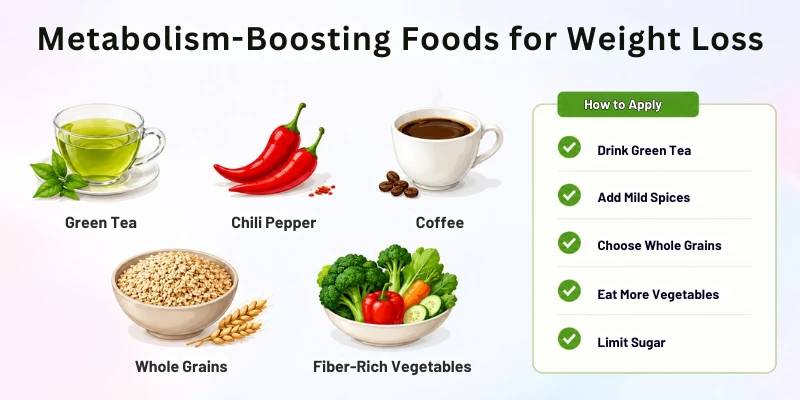
Certain foods may slightly support metabolism. Spices like chili, green tea, and coffee may increase calorie burn temporarily. Whole foods require more energy to digest. A nutrient-dense diet supports overall metabolic function.
How To Apply:
- Drink green tea daily.
- Add mild spices to meals.
- Choose whole grains over refined carbs.
- Eat fiber-rich vegetables.
- Avoid excessive sugar intake.
11. Reduce Sitting Time
Long sitting hours reduce calorie burn. Even standing increases energy expenditure slightly. Small activity breaks prevent metabolic slowdown. Active habits support consistent fat loss.
How To Apply:
- Stand while talking on the phone.
- Stretch every hour.
- Use a standing desk if possible.
- Take short walks regularly.
- Keep your body moving daily.
12. Stay Consistent With Healthy Habits
Metabolism improves gradually through consistent effort. Quick fixes do not create lasting results. Small daily improvements build long-term metabolic strength. Focus on sustainability rather than perfection.
How To Apply:
- Track your progress weekly.
- Set realistic goals.
- Stay patient with the results.
- Avoid comparing your journey to others.
- Commit to daily healthy habits.
Lifestyle Habits That Support Long-Term Metabolic Health
Increasing metabolism requires a balanced lifestyle. When you combine strength training, proper nutrition, hydration, and stress management, your body responds positively. Sustainable habits protect muscle mass and prevent metabolic slowdown.
Focus on building routines that you can maintain for years. Long-term consistency delivers real weight loss results.
Key Actions:
- Prioritize strength training.
- Eat enough protein daily.
- Sleep consistently.
- Stay active beyond workouts.
- Manage stress effectively.
Final Note
In this guide, we have covered the best strategies to increase metabolism for weight loss naturally and safely. As a health-focused professional, I always recommend building muscle, eating balanced meals, sleeping properly, and staying active daily. Metabolism does not change overnight, but consistent habits create powerful long-term results.
Stay connected and explore more practical health and fitness guides on this site to continue improving your lifestyle.
FAQs
Here are some of the most commonly asked questions related to increasing metabolism for weight loss:
Metabolism is how your body turns food into energy. This energy helps you breathe, move, and think. It keeps your body working every day.
Yes, you can boost metabolism naturally. Strength training, eating enough protein, sleeping well, and staying active all help. Small daily habits make a big difference.
Drinking water supports your body’s metabolic processes. It may slightly increase calorie burn. Staying hydrated also helps control hunger.
Metabolism can slow a little with age. This often happens because of muscle loss and lower activity levels. Staying active and building muscle can help maintain it.
You may notice small improvements within a few weeks. Consistency is the key. Healthy habits work over time.
Yes, very low-calorie diets can slow your metabolism. Your body tries to save energy when food intake is too low. This can make weight loss harder later.
Cardio helps burn calories and supports heart health. However, adding strength training gives better long-term metabolic benefits. Muscle helps you burn more calories at rest.
Yes, poor sleep can slow metabolism. It also affects hunger hormones. Good sleep supports better weight control.
Most people do not need supplements. You can improve metabolism naturally through healthy food and exercise. Supplements are not magic solutions.
Strength training is one of the best exercises for metabolism. Short high-intensity workouts also help burn more calories. Combining both gives great results.






- Be Respectful
- Stay Relevant
- Stay Positive
- True Feedback
- Encourage Discussion
- Avoid Spamming
- No Fake News
- Don't Copy-Paste
- No Personal Attacks
- Be Respectful
- Stay Relevant
- Stay Positive
- True Feedback
- Encourage Discussion
- Avoid Spamming
- No Fake News
- Don't Copy-Paste
- No Personal Attacks
