Best Exercises for Heart Health: Start Small, Live Longer
Published: 30 Jul 2026
Your heart works every minute of the day, so keeping it strong should be a priority. One of the best ways to support heart function is through regular exercise. Physical activity helps improve blood circulation, lowers blood pressure, supports healthy cholesterol levels, and reduces the risk of heart disease.
The cardiovascular exercises do more than burn calories. They help your heart pump blood more efficiently and improve your overall fitness. From walking and cycling to swimming and strength training, different types of exercise can benefit your cardiovascular system.
This guide covers the best exercises for heart health, their benefits, and common mistakes to avoid when exercising for heart health. Whether you are new to exercise or already active, these activities can help keep your heart healthy for years to come.
Best Exercises for Heart Health
Regular physical activity helps keep your heart strong and healthy. It improves blood circulation, supports healthy blood pressure levels, and lowers the risk of heart disease. The right exercises can also increase endurance and help your heart work more efficiently.
Here are some of the best exercises for a healthy heart that you can add to your fitness routine:
- Walking
- Running or Jogging
- Cycling
- Swimming
- Dancing
- Hiking
- Rowing
- Jump Rope
- Stair Climbing
- Strength Training
- High-Intensity Interval Training (HIIT)
- Yoga
- Tai Chi
- Walking
1. Walking
Walking is one of the most natural forms of exercise. It is simple, free, and something your body already knows how to do. You don’t need special skills or a gym membership. Just step outside and move.
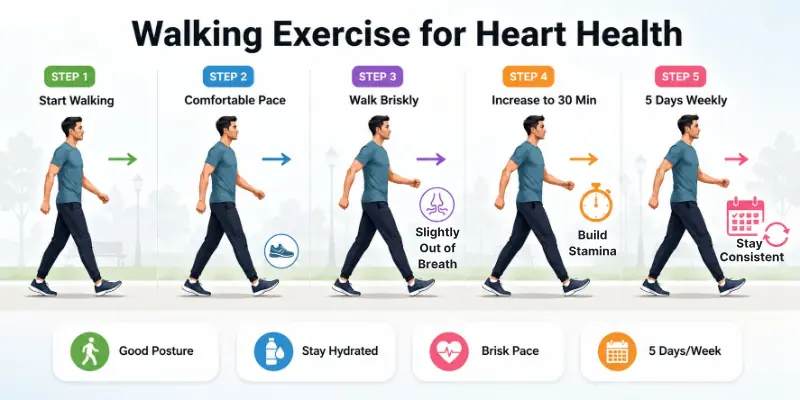
How to Do It
- Start with 15 to 20 minutes a day at a comfortable pace
- Walk briskly where you can talk but still feel slightly out of breath
- Increase your time to 30 minutes as your stamina builds
- Aim for at least 5 days a week
Tip: Walk after dinner every night, and your heart will thank you within weeks.
2. Running or Jogging
Running and jogging push your heart to work harder than walking, making them one of the most effective cardio exercises available. Even 10 minutes a day can produce real results for your cardiovascular system.
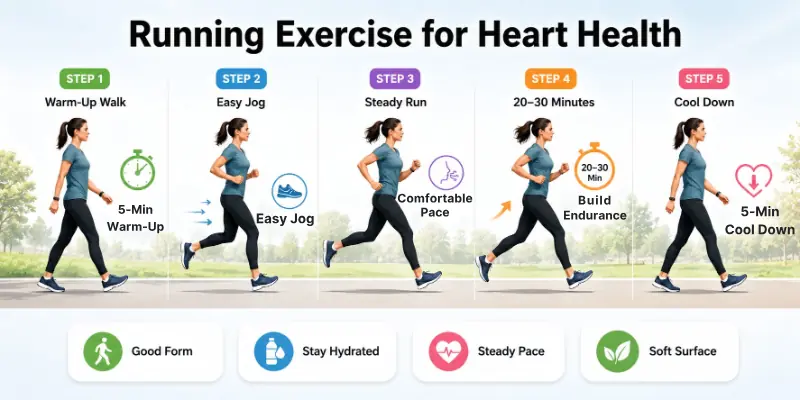
How to Do It
- Begin with a 5-minute warm-up walk before you start running
- Jog at a pace where speaking a full sentence feels slightly difficult
- Run for 20 to 30 minutes and gradually increase over weeks
- Cool down with slow walking for 5 minutes at the end
Tip: Run on grass or a track instead of concrete to protect your knees long term.
3. Cycling
Cycling is a low-impact cardio exercise that gives your heart a strong workout without putting stress on your joints. You can do it outdoors on a bike or indoors on a stationary one.
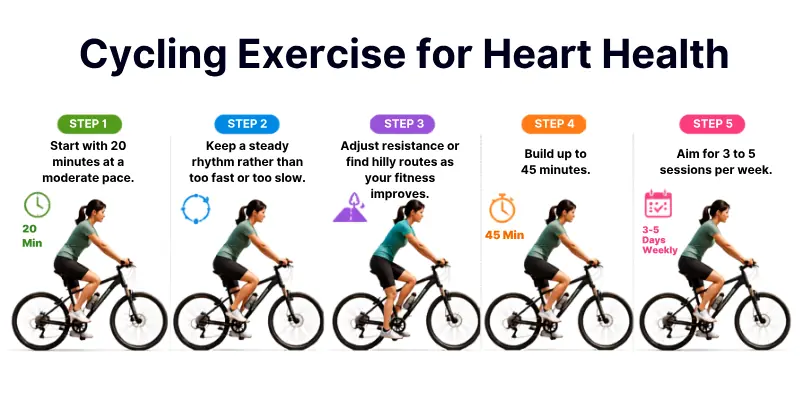
How to Do It
- Start with 20 minutes at a moderate pace and build up to 45 minutes
- Keep a steady rhythm rather than pedaling too fast or too slow
- Adjust the resistance or find hilly routes as your fitness improves
- Aim for 3 to 5 sessions per week
Tip: Set your seat at the right height before every ride to avoid knee strain and get the most out of each session.
4. Swimming
Swimming is a full-body workout that makes your heart and lungs work together at the same time. The water supports your body weight, making it perfect for people of all ages and fitness levels.
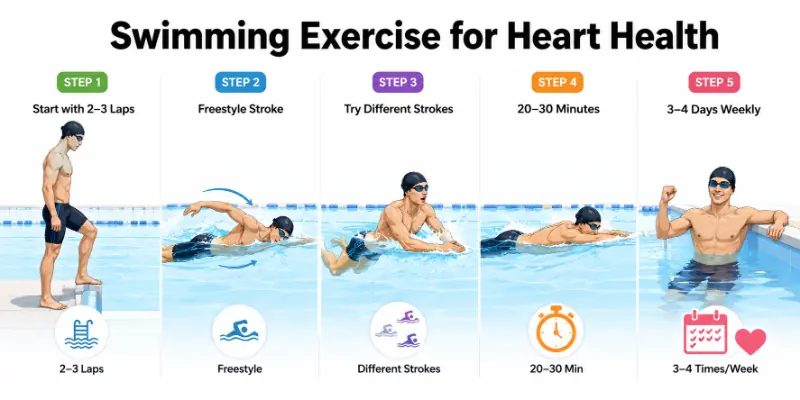
How to Do It
- Start with 2 to 3 laps and rest between sets
- Try different strokes like freestyle, breaststroke, or backstroke
- Swim for 20 to 30 minutes per session as you build stamina
- Aim for 3 to 4 times a week for consistent heart benefits
Tip: Focus on your breathing technique in the water, as proper breathing directly improves your heart and lung efficiency.
5. Dancing
Dancing is a fun and energetic way to get your heart pumping without feeling like a workout at all. It combines movement, rhythm, and enjoyment, which makes it one of the easiest exercises to stick to long-term.
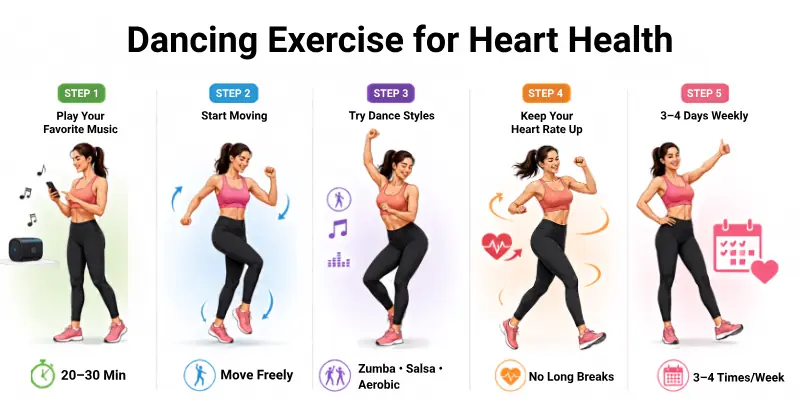
How to Do It
- Put on your favorite music and move freely for 20 to 30 minutes
- Try structured styles like Zumba, salsa, or aerobic dance classes
- Keep moving without long breaks to maintain your heart rate
- Dance at least 3 to 4 times a week for real cardiovascular benefits
Tip: Join a dance class instead of dancing alone, as the energy of a group pushes you to move harder and longer.
6. Hiking
Hiking is outdoor walking on natural terrain like hills, trails, and forests that challenges your heart more than flat surface walking. It combines physical effort with fresh air and nature, which makes it uniquely rewarding.
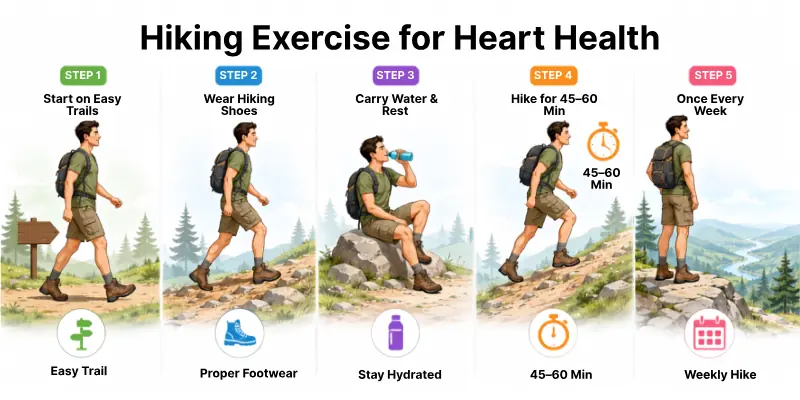
How to Do It
- Start with easy flat trails and gradually move to steeper ones
- Wear proper hiking shoes to handle uneven ground safely
- Carry water and take short breaks to manage your energy
- Aim for a hike of 45 minutes to an hour at least once a week
Tip: Hike in the early morning when temperatures are cooler, and your body performs at its best.
7. Rowing
Rowing is a full-body exercise that engages your arms, legs, and core all at once while giving your heart an intense cardiovascular workout. You can do it on water with a boat or indoors on a rowing machine.
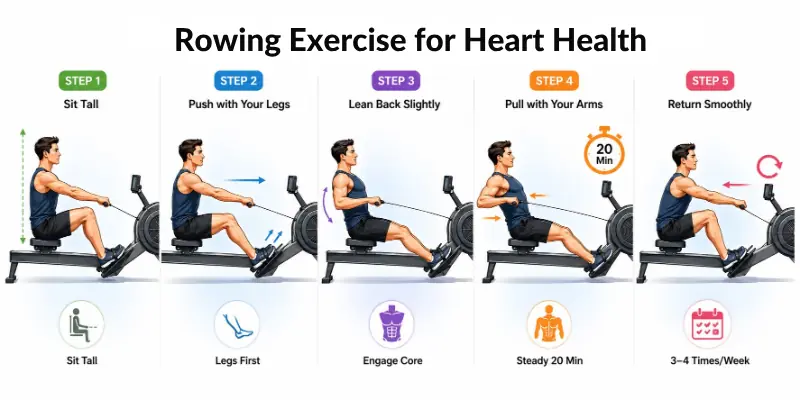
How to Do It
- Sit tall and push with your legs first before pulling with your arms
- Row at a steady pace for 20 minutes and increase duration over time
- Keep your back straight throughout each stroke to avoid injury
- Aim for 3 to 4 sessions per week for consistent heart benefits
Tip: Master your rowing form before increasing speed, as poor technique reduces the heart benefit and raises injury risk.
8. Jump Rope
Jump rope is a high-intensity cardio exercise that spikes your heart rate fast and keeps it elevated throughout the session. It is cheap, portable, and delivers serious cardiovascular results in a short amount of time.
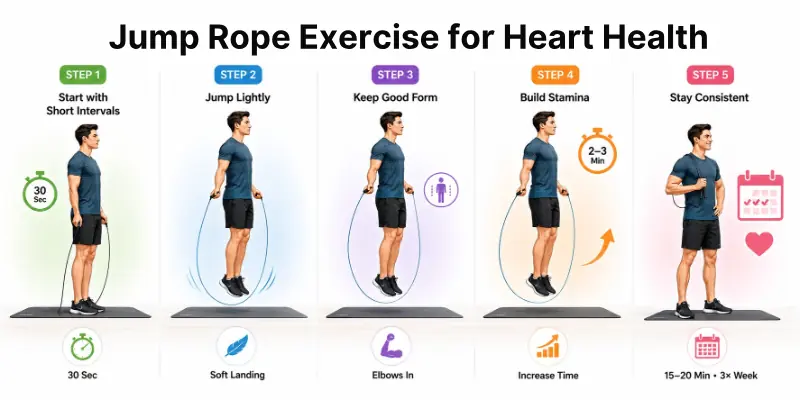
How to Do It
- Start with 30-second intervals and rest for 30 seconds in between
- Keep your elbows close to your body and jump on the balls of your feet
- Gradually increase your intervals to 2 to 3 minutes as your stamina grows
- Aim for 15 to 20 minutes total per session, at least 3 times a week
Tip: Jump on a rubber mat or wooden floor instead of concrete to reduce impact on your ankles and knees.
9. Stair Climbing
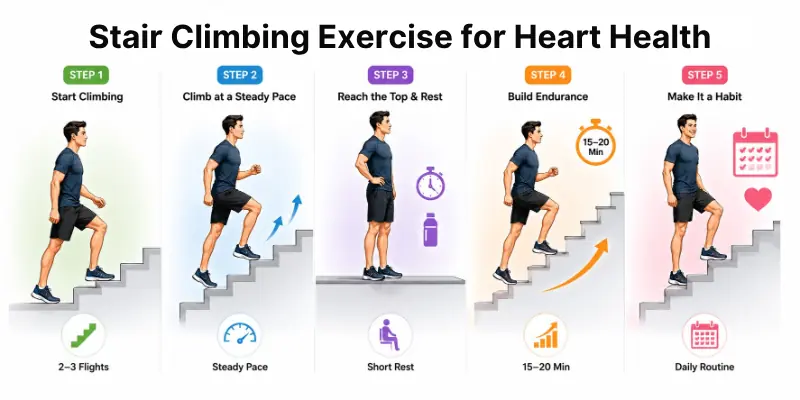
Stair climbing is a simple yet powerful exercise that uses your own bodyweight and gravity to push your heart and lungs to work harder. You can do it on actual stairs at home, outside, or on a stair climber machine at the gym.
How to Do It
- Start by climbing 2 to 3 flights of stairs and rest at the top
- Increase the number of flights gradually as your fitness improves
- Keep a steady pace and avoid holding the railing for full muscle engagement
- Aim for 15 to 20 minutes of continuous stair climbing per session
Tip: Take the stairs every day instead of the elevator and turn a daily habit into a heart-healthy routine.
10. Strength Training
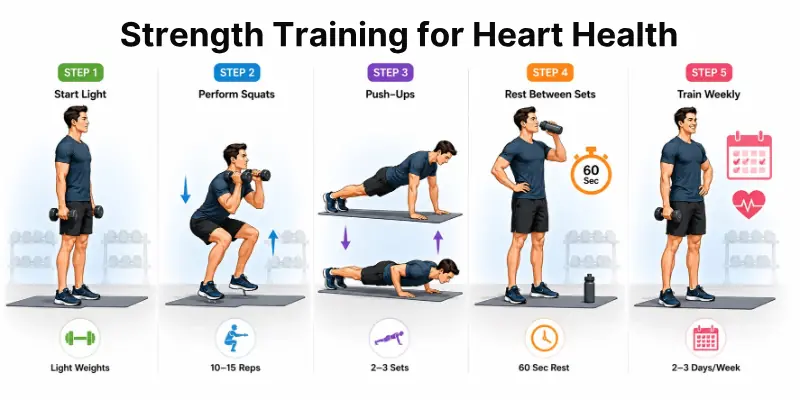
Strength training involves using resistance like weights, bands, or your own bodyweight to build muscle and improve how your heart functions over time. It is not just for building a strong body but also for building a stronger and more efficient heart.
How to Do It
- Start with light weights or bodyweight exercises like squats and push-ups
- Perform 2 to 3 sets of 10 to 15 repetitions per exercise
- Rest for 60 seconds between sets to keep your heart rate in a healthy range
- Train 2 to 3 days per week and allow rest days in between for recovery
Tip: Focus on compound movements like deadlifts and squats as they engage multiple muscle groups and give your heart a stronger workout than isolated exercises.
11. High-Intensity Interval Training (HIIT)
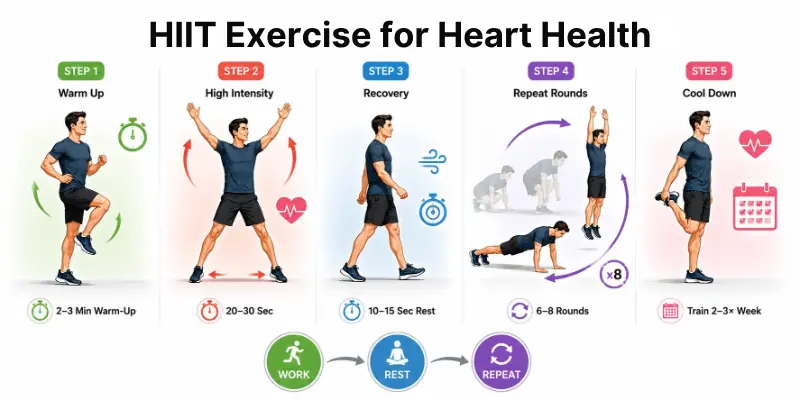
HIIT alternates between short bursts of maximum effort and brief recovery periods to push your heart to its limits and bring it back down repeatedly. This back and forth is what makes it one of the most powerful and time-efficient workouts for heart health.
How to Do It
- Work hard for 20 to 30 seconds, then rest for 10 to 15 seconds
- Choose exercises like burpees, sprints, or jumping jacks for your work intervals
- Complete 6 to 8 rounds per session for a full HIIT workout
Tip: Never skip your rest intervals, as the recovery periods are what train your heart to adapt and grow stronger between efforts.
12. Yoga
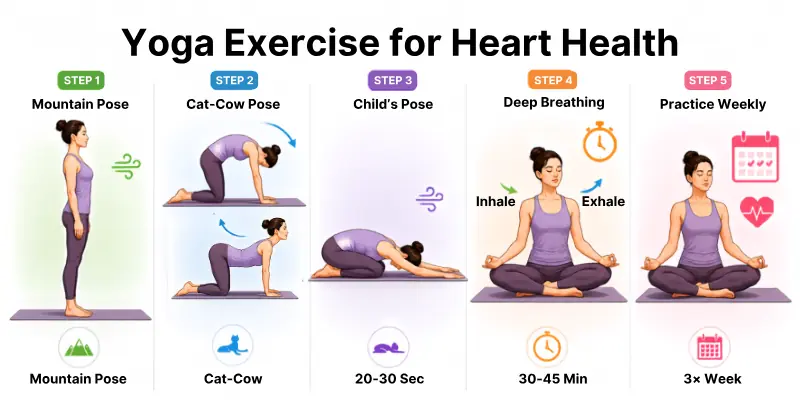
Yoga is a mind-and-body practice that combines controlled breathing, gentle movement, and held poses to reduce stress and improve heart function over time. It works differently from other exercises on this list, but its impact on heart health is just as real.
How to Do It
- Start with beginner-friendly poses like child’s pose, cat-cow, and mountain pose.
- Hold each pose for 20 to 30 seconds and focus on slow, deep breathing
- Follow a 30 to 45-minute session at least 3 times a week
- Consider joining a class or following a guided video to learn proper form
Tip: Practice yoga in the evening to wind down your nervous system and give your heart a chance to reset after a long day.
13. Tai Chi
Tai Chi is an ancient Chinese practice that uses slow, flowing movements and deep breathing to calm the nervous system and strengthen the heart gradually. It looks gentle from the outside, but its effects on cardiovascular health are backed by solid research.
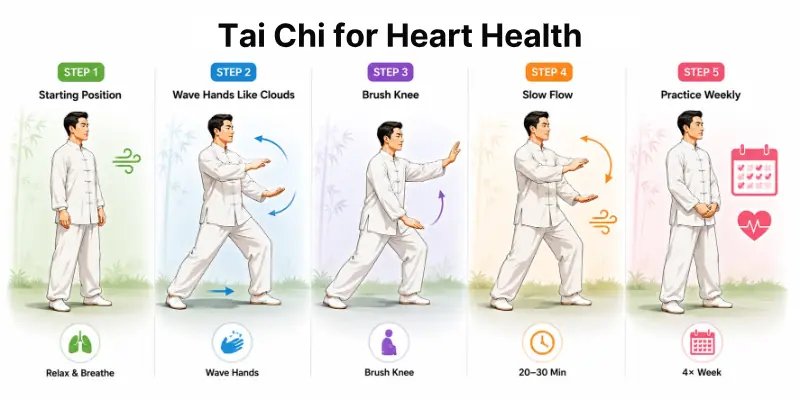
How to Do It
- Begin with basic moves like “wave hands like clouds” and “brush knee.”
- Move slowly and smoothly without rushing between one position and the next
- Practice for 20 to 30 minutes per session, at least 4 times a week
- Follow a beginner class or video to learn the correct flow and sequence
Tip: Practice Tai Chi outdoors in fresh air, as the combination of nature and movement gives your heart and mind a deeper benefit than indoors.
Common Mistakes to Avoid When Exercising for Heart Health
Exercise helps the heart, but bad habits can reduce its benefits or even cause strain. Many people start with good intentions but make simple mistakes that slow down progress or affect consistency.
Avoiding these mistakes can help you build a safer and more effective routine.
- Overtraining: Doing too much too soon can overload your heart and muscles and increase the risk of injury.
- No Strength Work: Skipping strength training can limit overall fitness and reduce long-term heart support.
- Irregular Routine: Inconsistent workouts make it harder for the body to build steady cardiovascular endurance.
- No Recovery: Ignoring recovery can lead to fatigue and reduce the benefits of exercise over time.
Tip: Start slow, stay consistent, and give your body enough time to recover between workouts.
Conclusion
In this guide, you learned the best exercises for heart health and how each one works differently to strengthen your cardiovascular system. From walking to Tai Chi, every option on this list is backed by real results.
You do not need to do all of them. Pick one or two that fit your lifestyle and start there. Consistency matters more than intensity when it comes to long-term heart health.
Small efforts done regularly add up to big changes over time. Your heart works hard for you every single day. It is time to return the favor.
FAQs
Here are some commonly asked questions to help you understand exercises for heart health.
There is no single best exercise for everyone. Some of the most effective heart-healthy exercises include:
- Walking
- Cycling
- Swimming
- Running or Jogging
Most adults should aim for at least 150 minutes of moderate aerobic exercise each week. This can include heart-healthy exercises such as brisk walking, cycling, or dancing. You can spread the activity across several days.
Yes, regular walking can support heart health when done consistently. Brisk walking is especially effective because it raises your heart rate while remaining low impact. It is one of the most recommended cardio heart health workouts.
Cardio exercises directly challenge the heart and improve cardiovascular endurance. Strength training also plays an important role in supporting healthy body composition and overall fitness. A balanced heart health workout should include both.
Most beginners can start with low-impact activities such as walking, cycling, or swimming. It is best to begin slowly and increase intensity over time. Consistency is more important than pushing too hard in the beginning.
Several cardio physical activities for heart health can burn a high number of calories, including:
- Running
- Jump Rope
- High-Intensity Interval Training (HIIT)
- Stair Climbing
Regular physical activity can support healthy blood pressure levels over time. Walking, cycling, swimming, and other aerobic exercises are often recommended for this purpose. Results improve when exercise is combined with healthy lifestyle habits.
Many people notice improvements in energy and endurance within a few weeks of regular activity. Long-term heart health benefits usually develop with regular exercise over several months. The key is maintaining a routine rather than seeking quick results.
If you want a joint-friendly workout, consider these exercises for a healthy heart:
- Swimming
- Cycling
- Walking
- Tai Chi
Daily movement is beneficial, but your body also needs time to recover. Many people do well with a mix of active days and lighter recovery days. The goal is to stay active regularly without overtraining.






- Be Respectful
- Stay Relevant
- Stay Positive
- True Feedback
- Encourage Discussion
- Avoid Spamming
- No Fake News
- Don't Copy-Paste
- No Personal Attacks
- Be Respectful
- Stay Relevant
- Stay Positive
- True Feedback
- Encourage Discussion
- Avoid Spamming
- No Fake News
- Don't Copy-Paste
- No Personal Attacks
