How to Warm Up Before Exercise: Prevent Injuries & Boost Performance
Published: 6 Jul 2026
Warming up before exercise is one of the most important steps in preventing injuries and improving performance. A proper warm-up prepares your muscles, joints, and cardiovascular system for the physical activity ahead. Skipping warm-ups can lead to strains, reduced endurance, and slower reactions.
A good warm-up increases blood flow to muscles, raises body temperature, and primes your nervous system. It also mentally prepares you for the workout, improving focus and motivation. Guys, if you want to maximize your workouts and avoid unnecessary injuries, warming up correctly is essential.
In this guide, I will share the best ways to warm up effectively before exercise. Let’s dive in without wasting any time.
How To Warm Up Before Exercise
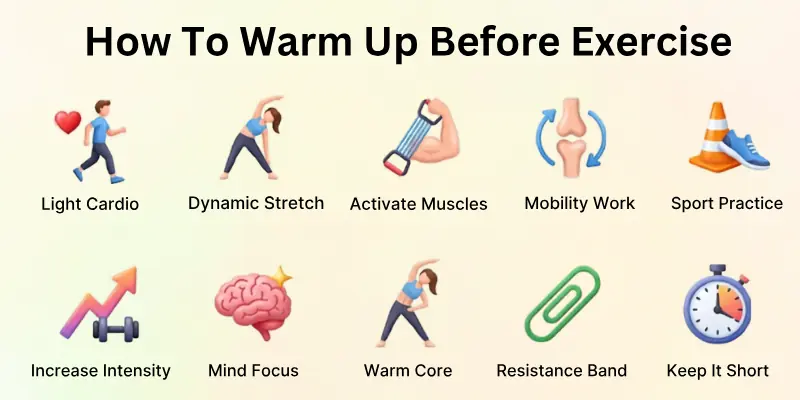
Here is a list of the most effective ways to warm up properly:
- Start with light cardio
- Perform Dynamic Stretching
- Activate Key Muscle Groups
- Use Mobility Exercises
- Include Sport-Specific Movements
- Gradually Increase Intensity
- Focus On Mind-Muscle Connection
- Warm Up Your Core
- Use Resistance Bands For Activation
- Keep The Warm-Up Short But Effective
Let us explore each method in detail.
1. Start with light cardio
Light cardio raises your heart rate and increases blood flow to muscles. This gradual increase in circulation helps your body transition from rest to exercise mode. Even 3–5 minutes of cardio can make a significant difference. It also helps warm up joints and improve flexibility.
How To Apply:
- Jog or march in place for 3–5 minutes.
- Use a stationary bike or elliptical.
- Jump rope lightly.
- Focus on controlled, steady movement.
- Avoid jumping into high intensity immediately.
2. Perform Dynamic Stretching
Dynamic stretches involve controlled movements that take joints through their full range of motion. Unlike static stretching, dynamic stretches prepare muscles for activity without reducing strength. This increases flexibility and reduces the risk of strains.
How To Apply:
- Do leg swings, arm circles, and torso twists.
- Perform walking lunges.
- Swing your arms and hips gently.
- Repeat 8–10 movements per side.
- Avoid holding stretches for long periods.
3. Activate Key Muscle Groups
Activating the muscles you plan to use in your workout primes them for performance. Muscle activation helps improve coordination, stability, and strength. Activation also reduces the risk of overcompensation and injuries.
How To Apply:
- Glute bridges for glutes.
- Scapular push-ups for shoulders.
- Bodyweight squats for legs.
- Light resistance band exercises.
- Repeat 8–12 times per muscle group.
4. Use Mobility Exercises
Flexibility of the joints is increased through mobility exercises. Having mobile joints reduces the stress that exercise puts on the muscles. They enhance both the quality of movement and the technique.
How To Apply:
- Hip circles for hips.
- Shoulder rolls for shoulders.
- Ankle rotations for lower legs.
- Cat-cow stretch for spine mobility.
- Perform 5–10 reps per joint.
5. Include Sport-Specific Movements
Mimic the movements of your planned workout to prepare your body for performance. This makes your warm-up more effective and relevant. It also improves coordination and neural activation.
How To Apply:
- Light jogging before running sprints.
- Shadow boxing before a boxing session.
- Bodyweight squats before weighted squats.
- Light swimming strokes before pool training.
- Practice technique slowly and controlled.
6. Gradually Increase Intensity
The warm-up should progress from low intensity to the start of your main workout. A gradual increase prevents sudden strain on muscles and joints. It also allows your heart rate and breathing to adjust naturally.
How To Apply:
- Begin with 3–5 minutes of light cardio.
- Add dynamic stretches and mobility exercises.
- Increase speed or effort slightly.
- End with light repetitions of your main exercises.
- Avoid jumping directly into maximum intensity.
7. Focus On Mind-Muscle Connection
Warming up is not just physical; it also prepares your mind. Focusing on muscle engagement during warm-up improves performance and reduces injuries. Mental preparation enhances coordination and workout efficiency.
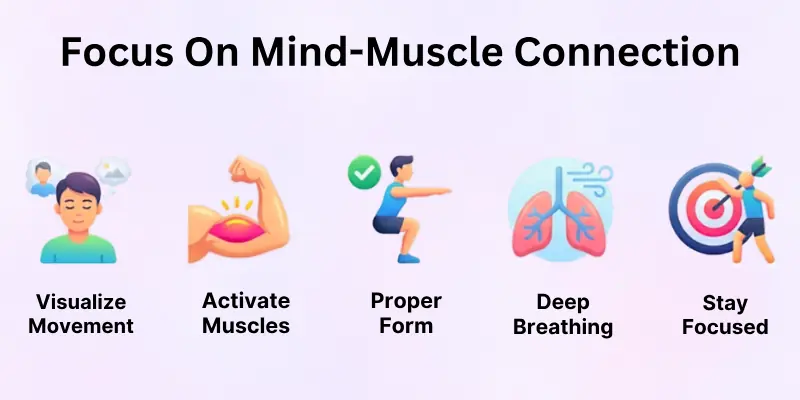
How To Apply:
- Visualize the movements you will perform.
- Pay attention to the muscles you are activating.
- Maintain proper form during warm-up.
- Breathe deeply and consistently.
- Stay focused and avoid distractions.
8. Warm Up Your Core
A strong core is essential for stability, posture, and injury prevention. Activating your core during warm-up prepares your body for most exercises. Core engagement protects your spine and improves overall strength.
How To Apply:
- Perform plank holds or variations.
- Do seated or standing twists.
- Engage the core during bodyweight squats.
- Repeat for 30–60 seconds.
- Focus on controlled breathing.
9. Use Resistance Bands For Activation
Resistance bands provide light tension and help activate muscles. They are especially effective for smaller stabilizing muscles. Bands improve muscle coordination and reduce injury risk.
How To Apply:
- Side steps with a band around the thighs.
- Band pull-aparts for shoulders.
- Glute kickbacks with a band.
- Perform 8–12 reps per movement.
- Focus on controlled, slow movements.
10. Keep The Warm-Up Short But Effective
Warm-ups do not need to be long. 10–15 minutes is usually sufficient for most workouts. The goal is to increase heart rate, blood flow, and muscle readiness. Short, consistent warm-ups lead to better performance and injury prevention.
How To Apply:
- Plan your warm-up before starting exercises.
- Include cardio, dynamic stretches, and activation.
- Adjust duration based on workout intensity.
- Avoid skipping warm-ups.
- Make it a daily habit.
Tips For An Effective Warm-Up
A proper warm-up enhances performance, reduces injury risk, and increases confidence during workouts. Every warm-up should be tailored to your workout type, intensity, and personal fitness level. Combining cardio, mobility, activation, and mental focus creates a complete routine.
Key Actions:
- Always start with light cardio.
- Include dynamic stretches.
- Activate key muscle groups.
- Progress intensity gradually.
- Maintain focus and breathing.
Final Note
In this guide, we have covered the best ways to warm up before exercise effectively. As a fitness professional, I always emphasize that warming up is not optional—it is essential for performance and safety. A proper warm-up improves flexibility, coordination, and readiness for exercise. Stay consistent with warm-ups and explore more workout tips and guides on this site to maximize your results.
FAQs
Here are some of the most commonly asked questions related to warming up before exercise:
Warming up gets your muscles, joints, and heart ready for exercise. It reduces the risk of injury. It also helps you perform better during your workout.
A good warm-up usually takes 10–15 minutes. The time depends on how intense your workout will be. Longer or more intense workouts may need slightly more warm-up.
Static stretches before exercise may lower strength and performance. Dynamic stretches are better for preparing your muscles. Moving stretches increase blood flow and flexibility safely.
Yes, every workout benefits from a warm-up. This includes cardio, strength training, or flexibility exercises. It helps prevent injuries and improves results.
Warming up may reduce some post-workout muscle discomfort. It lowers the chance of injury. While some soreness may still occur, muscles handle exercise better when warmed up.
Yes, warm-ups increase blood flow and coordination. They prime your muscles for better movement. This helps you exercise more efficiently and safely.
Yes, mental focus helps your workout. Visualizing exercises and connecting the mind to muscles improves technique. It also increases concentration and motivation.
Yes, resistance bands activate stabilizing muscles. They improve coordination and control. Using them helps prepare your muscles for strength exercises.
Yes, skipping warm-ups increases your risk of strains or sprains. Muscles and joints are not prepared for sudden stress. Warm-ups help prevent common workout injuries.
Absolutely, beginners benefit a lot from warm-ups. It prepares muscles and joints safely. Warm-ups also build confidence and improve exercise form.





- Be Respectful
- Stay Relevant
- Stay Positive
- True Feedback
- Encourage Discussion
- Avoid Spamming
- No Fake News
- Don't Copy-Paste
- No Personal Attacks
- Be Respectful
- Stay Relevant
- Stay Positive
- True Feedback
- Encourage Discussion
- Avoid Spamming
- No Fake News
- Don't Copy-Paste
- No Personal Attacks
