Yoga for Beginners: 10 Best Yogas to Start
Published: 15 Mar 2026
Yoga is a perfect way to improve flexibility, strength, and mental calmness. Beginners often feel overwhelmed by different poses and styles. But you can start easily with simple, effective steps at home.
This guide will walk you through beginner-friendly yoga poses, how to do them safely, and their benefits. By following this step-by-step guide, you can create a daily yoga routine that strengthens your body and mind.
Let’s begin your yoga journey with simple and effective steps.
Yoga for Beginners: Step-by-Step Guide
Here is a list of beginner-friendly yoga poses you can start with:
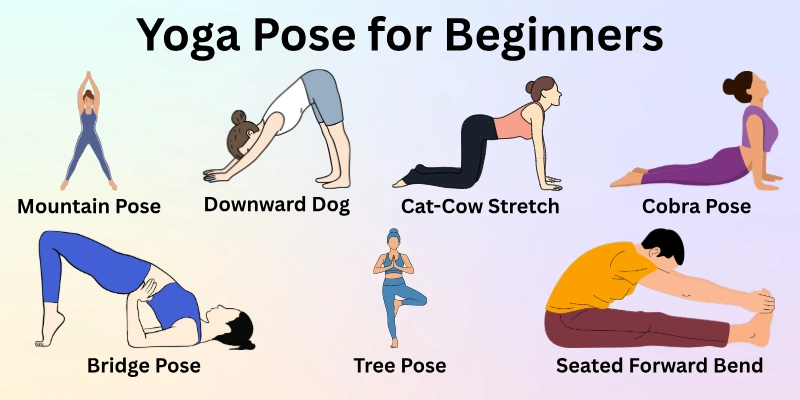
- Mountain Pose (Tadasana)
- Downward Dog (Adho Mukha Svanasana)
- Cat-Cow Stretch (Marjaryasana-Bitilasana)
- Child’s Pose (Balasana)
- Cobra Pose (Bhujangasana)
- Warrior I (Virabhadrasana I)
- Warrior II (Virabhadrasana II)
- Tree Pose (Vrikshasana)
- Seated Forward Bend (Paschimottanasana)
- Bridge Pose (Setu Bandhasana)
Let us cover all in detail below.
1. Mountain Pose (Tadasana)
Mountain Pose is the foundation of all yoga poses. It teaches you how to stand correctly and align your body. This pose improves posture and awareness. Beginners can practice it to feel grounded and centered.
How to Do: Stand with feet together, arms at your sides. Inhale and raise your arms overhead, palms together. Keep your body straight and gaze forward.
Duration: Hold for 30–60 seconds, repeat 2–3 times.
Benefits:
- Improves posture
- Strengthens legs and core
- Enhances body awareness
- Reduces tension
Other Details: Focus on breathing deeply and evenly while holding the pose.
2. Downward Dog (Adho Mukha Svanasana)
Downward Dog stretches the entire body. It strengthens arms, shoulders, and legs while calming the mind. This pose is excellent for beginners to improve flexibility. It also energizes the body and relieves fatigue.
How to Do: Start on hands and knees, lift hips upward to form an inverted V-shape. Keep your hands and feet grounded, and try to straighten your legs.
Duration: Hold for 30–60 seconds, repeat 2–3 times.
Benefits:
- Stretches spine, hamstrings, and calves
- Strengthens arms and shoulders
- Improves circulation
- Relieves stress
Other Details: Bend knees slightly if hamstrings are tight; focus on lengthening the spine.
3. Cat-Cow Stretch (Marjaryasana-Bitilasana)
Cat-Cow Stretch improves spine flexibility and mobility. It warms up the back and core muscles. Perfect for beginners to loosen stiffness. This movement also relieves tension in the neck and shoulders.
How to Do: Start on hands and knees. Inhale, arch your back (Cow), lift head and tailbone. Exhale, round your back (Cat), tuck your chin and tailbone.
Duration: Repeat 8–10 times slowly.
Benefits:
- Enhances spinal flexibility
- Relieves back tension
- Stimulates organs
- Improves posture
Other Details: Move slowly and coordinate your breath with each motion.
4. Child’s Pose (Balasana)
Child’s Pose is a restful pose that relaxes your body. It stretches the hips, thighs, and spine. Beginners can use it to rest between active poses. It also calms the mind and reduces stress.
How to Do: Kneel on the floor, sit back on your heels, and stretch arms forward on the floor. Rest your forehead gently on the mat.
Duration: Hold for 1–3 minutes.
Benefits:
- Relieves tension in the back and neck
- Gently stretches hips and thighs
- Promotes relaxation
- Improves breathing
Other Details: Breathe deeply and let your body sink naturally into the pose.
5. Cobra Pose (Bhujangasana)
Cobra Pose strengthens the spine and opens the chest. It improves posture and relieves back stiffness. Ideal for beginners to strengthen the back gently. This pose also stimulates abdominal organs.
How to Do: Lie face down, place hands under shoulders, press palms, and lift chest while keeping hips on the floor.
Duration: Hold 15–30 seconds, repeat 2–3 times.
Benefits:
- Strengthens spine
- Opens chest and lungs
- Reduces fatigue
- Stimulates abdominal organs
Other Details: Avoid straining the lower back; lift chest gently using back muscles.
6. Warrior I (Virabhadrasana I)
Warrior I builds strength and stability in the legs and core. It also improves balance and focus. Beginners can practice this pose to improve concentration and posture. It stretches the hips and chest simultaneously.
How to Do: Step one leg forward, bend the knee at 90 degrees. Keep the back leg straight, raise arms overhead, palms together.
Duration: Hold for 20–40 seconds each side.
Benefits:
- Strengthens legs and arms
- Improves balance and focus
- Opens hips and chest
- Enhances stamina
Other Details: Keep your front knee aligned with the ankle to avoid strain.
7. Warrior II (Virabhadrasana II)
Warrior II strengthens legs, shoulders, and arms. It also enhances endurance and stability. Beginners can use this to practice balance and body control. This pose opens the hips and improves circulation.
How to Do: Step one leg forward, bend the knee, stretch arms parallel to the floor, and gaze over the front hand.
Duration: Hold 20–40 seconds each side.
Benefits:
- Strengthens legs and arms
- Improves stamina and balance
- Opens hips
- Enhances focus
Other Details: Keep shoulders relaxed and chest open.
8. Tree Pose (Vrikshasana)
Tree Pose improves balance and strengthens legs. It also calms the mind and enhances focus. Beginners can use it to practice stability and concentration. This pose strengthens the core as well.
How to Do: Stand on one leg, place the sole of the other foot on inner thigh or calf, hands together above the head.
Duration: Hold 20–30 seconds each leg.
Benefits:
- Improves balance and stability
- Strengthens legs and core
- Enhances focus and concentration
- Calms mind
Other Details: Avoid placing foot on the knee; keep soft gaze for stability.
9. Seated Forward Bend (Paschimottanasana)
Seated Forward Bend stretches the back and hamstrings. It relaxes the nervous system. Beginners can use it to improve flexibility gently. This pose also promotes better digestion.
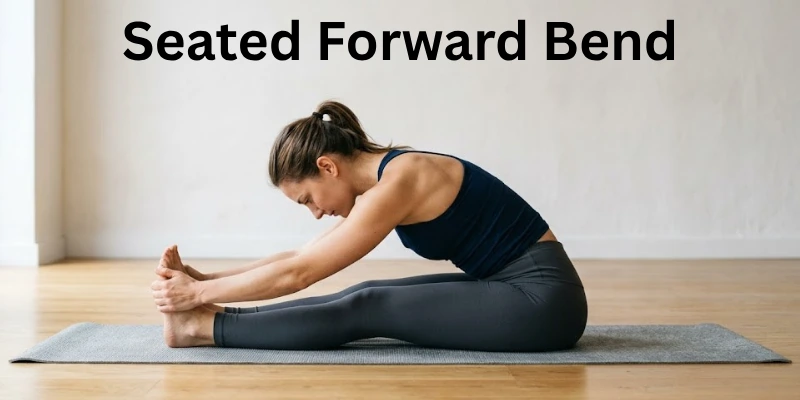
How to Do: Sit with legs straight, inhale, and stretch arms overhead. Exhale and bend forward, reaching for your feet or shins.
Duration: Hold 30–60 seconds.
Benefits:
- Stretches spine and hamstrings
- Relieves stress
- Improves digestion
- Calms mind
Other Details: Keep your back straight initially, then gently fold forward.
10. Bridge Pose (Setu Bandhasana)
Bridge Pose strengthens the back, glutes, and legs. It also opens the chest and improves posture. Beginners can use it to strengthen their core and spine. This pose helps reduce fatigue and stress.
How to Do: Lie on your back, bend knees, place feet flat on the floor, and lift hips upward.
Duration: Hold 20–40 seconds, repeat 2–3 times.
Benefits:
- Strengthens the back and glutes
- Opens chest
- Improves posture
- Relieves tension
Other Details: Press feet firmly into the floor and engage glutes while lifting.
How to Prepare for Your Yoga Practice
This section teaches beginners how to prepare their body and mind before practice. It includes tips on clothing, mat, breathing, and mental focus. Proper preparation helps you get the most out of each session.
- Wear comfortable, stretchable clothing
- Use a non-slip yoga mat
- Warm up your body with light stretches
- Practice deep, calm breathing
- Find a quiet, distraction-free space
Common Mistakes Beginners Make in Yoga
Many beginners make simple mistakes that reduce the effectiveness of yoga.
This section helps you avoid them and practice safely. Awareness of posture, alignment, and breathing is key. Correcting mistakes ensures better results and prevents injuries.
- Avoid holding your breath during poses
- Do not strain your joints or muscles
- Keep proper alignment in each pose
- Move slowly and mindfully
- Listen to your body and rest when needed
3. Tips to Build a Consistent Yoga Habit
Consistency is essential to see results in yoga. Beginners often start enthusiastically but lose motivation. This section shares practical tips to make yoga a daily habit.
Following these tips helps you stay committed and enjoy the benefits fully.
- Set a fixed time for daily practice
- Start with short sessions and gradually increase
- Track your progress and improvements
- Pair yoga with mindful breathing or meditation
- Celebrate small milestones to stay motivated
Final Note
In this guide, we have covered Yoga for Beginners with 10 easy, step-by-step poses. My personal recommendation as an expert is to start slowly, focus on breathing, and practice 15–30 minutes daily. Consistency is key; over time, you will gain flexibility, strength, and mental calmness. Remember, yoga is not about perfection but progress and awareness.
Enjoy your journey, stay patient, and goodbye!
FAQs: Yoga for Beginners
Here are some of the most commonly asked questions related to the best boga poses for beginners:
Hatha yoga is often the best choice for beginners. It is slow-paced, focuses on basic poses, and improves flexibility and balance. Starting with Hatha helps you learn proper alignment. You can gradually move to more advanced styles as you progress.
Beginners can start with 15–30 minutes daily. Short, consistent sessions are better than long, irregular practices. Over time, you can increase duration as your strength and flexibility improve. Consistency is the key to seeing results.
You only need a yoga mat to start at home. Comfortable clothes are recommended, but no expensive equipment is necessary. Some poses may use props like blocks or straps for support, but beginners can skip them initially.
Yes, yoga is excellent for reducing stress and anxiety. Poses combined with deep breathing calm the mind and relax the body. Even 10–15 minutes of practice daily can improve mental clarity. Regular yoga supports emotional well-being.
It is ideal to practice yoga 3–5 times per week. This frequency builds strength, flexibility, and mindfulness gradually. Daily short sessions are also effective. Skipping too many days can slow progress, so consistency matters.
Yes, yoga strengthens the core and back muscles, which improves posture. Poses like Mountain Pose, Cobra, and Bridge train alignment. Practicing regularly helps you stand taller and reduces back pain. Good posture becomes natural over time.
Yes, mild soreness is normal when starting yoga. It means your muscles are adapting to new movements. Stretching and proper hydration help reduce discomfort. Over time, soreness decreases as your body gets stronger and more flexible.






- Be Respectful
- Stay Relevant
- Stay Positive
- True Feedback
- Encourage Discussion
- Avoid Spamming
- No Fake News
- Don't Copy-Paste
- No Personal Attacks
- Be Respectful
- Stay Relevant
- Stay Positive
- True Feedback
- Encourage Discussion
- Avoid Spamming
- No Fake News
- Don't Copy-Paste
- No Personal Attacks
