Iron-Rich Foods for Pregnancy: Boost Iron Levels Naturally
Published: 15 Jul 2026
Iron is an essential mineral that plays a vital role in maintaining healthy blood and supporting the growth and development of both the mother and the baby during pregnancy. It helps the body produce hemoglobin, which carries oxygen to all parts of the body, including the growing baby.
During pregnancy, a woman’s iron needs increase significantly because the body produces more blood to support the baby’s development. Without enough iron, the mother may feel weak and tired and may develop iron deficiency anemia, which can affect both maternal health and fetal growth.
In this guide, you will learn about the iron-rich foods for pregnancy, why iron is so important, foods to avoid during pregnancy, and the daily iron requirement during pregnancy.
Why Iron is Important During Pregnancy
Iron plays a crucial role during pregnancy because it supports the increased blood supply in the mother’s body and ensures proper oxygen delivery to the growing baby. Adequate iron intake helps maintain energy levels, supports healthy fetal development, and prevents complications related to iron deficiency.
Understanding its importance can help you make better food choices throughout your pregnancy journey.
Role of Iron in the Body
Iron is essential for several important functions during pregnancy:
- Hemoglobin formation: Iron helps in producing hemoglobin, a protein in red blood cells that carries oxygen throughout the body.
- Oxygen supply to the baby: It ensures that enough oxygen is delivered to the placenta and the developing baby for proper growth and development.
Symptoms of Iron Deficiency
When iron levels are low during pregnancy, the body may show several warning signs, including:
Here are some iron deficiency symptoms during pregnancy:
- Fatigue and weakness
- Dizziness or light-headedness
- Pale skin or pale inner eyelids
- Shortness of breath even with light activity
- Low energy and reduced concentration
Best Iron-Rich Foods for Pregnancy
Eating iron-rich foods during pregnancy is one of the most effective ways to prevent iron deficiency and support healthy blood production for both mother and baby. A balanced diet that includes both plant and animal-based iron sources can help maintain optimal hemoglobin levels throughout pregnancy.
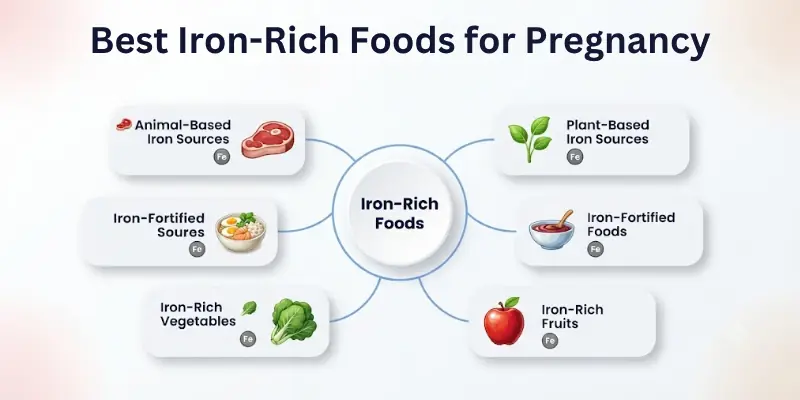
Let’s explore the best food sources that can naturally boost your iron levels during pregnancy.
- Animal-Based Iron Sources
- Plant-Based Iron Sources
- Iron-Fortified Foods
- Iron-Rich Fruits
- Iron-Rich Vegetables
Animal-Based Iron Sources
Animal-based foods are rich in heme iron, which is easily absorbed by the body and helps quickly improve hemoglobin levels during pregnancy. These foods are especially helpful in preventing iron deficiency and supporting a healthy oxygen supply to the baby.
Include these nutrient-rich sources in your diet to naturally support healthy iron levels.
- Chicken
- Beef
- Fish
- Liver
1. Chicken
Chicken is a rich source of heme iron that is easily absorbed by the body, making it helpful for maintaining healthy blood levels during pregnancy. It supports the increased oxygen demand of both mother and baby.
Benefits:
- Supports healthy hemoglobin production
- Helps improve oxygen delivery to the baby
- Reduces tiredness and supports energy levels
Tip: Choose boiled, grilled, or baked chicken instead of fried options to keep it healthy during pregnancy.
2. Beef
Beef provides high-quality heme iron that supports red blood cell formation and helps maintain healthy iron levels during pregnancy. It is especially useful for preventing iron deficiency.
Benefits:
- Supports red blood cell production
- Helps maintain healthy iron levels
- Reduces fatigue and improves stamina
Tip: Prefer lean cuts of beef and cook them thoroughly using healthy methods like grilling or boiling.
3. Fish
Fish (especially low-mercury varieties) provide iron along with essential omega-3 fatty acids that support both maternal health and fetal development during pregnancy.
Benefits:
- Supports healthy iron intake
- Promotes baby’s brain and eye development
- Helps improve overall pregnancy nutrition
Tip: Always consume well-cooked, low-mercury fish and avoid raw or undercooked seafood.
4. Liver
Liver is one of the most iron-dense foods and can help improve iron levels quickly during pregnancy. However, it should be eaten carefully due to its high vitamin A content.
Benefits:
- An extremely rich source of iron
- Helps increase hemoglobin levels efficiently
- Supports red blood cell formation
Tip: Consume liver only occasionally and in small portions, as excessive intake is not recommended during pregnancy.
Plant-Based Iron Sources
Plant-based iron sources are an important part of a healthy pregnancy diet. These foods contain non-heme iron, which supports blood formation and overall energy levels during pregnancy.
Here are the best plant-based iron foods to support healthy iron levels during pregnancy.
- Lentils (Daal)
- Chickpeas
- Beans
- Tofu
1. Lentils (Daal)
Lentils are a great source of plant-based iron and protein, making them highly beneficial for maintaining energy and supporting pregnancy nutrition.
Benefits:
- Supports iron and protein needs
- Helps maintain energy levels
- Aids in healthy blood production
Tip: Soak lentils before cooking and eat with vitamin C-rich foods for better absorption.
2. Chickpeas
Chickpeas are rich in iron, fiber, and protein, helping improve overall pregnancy nutrition and supporting digestive health.
Benefits:
- Supports healthy iron levels
- Improves digestion and energy
- Provides long-lasting fullness
Tip: Use chickpeas in salads or curries and add lemon for better iron absorption.
3. Beans
Beans are a good source of plant-based iron and help in maintaining healthy blood levels while also supporting digestive health during pregnancy.
Benefits:
- Helps improve iron intake
- Supports digestive health
- Provides steady energy release
Tip: Cook beans properly after soaking to improve digestion and nutrient absorption.
4. Tofu
Tofu is a plant-based protein and iron source that is especially useful for vegetarian diets during pregnancy.
Benefits:
- Supports iron and protein needs
- Helps maintain healthy blood levels
- Provides a balanced vegetarian nutrition option
Tip: Cook tofu with vegetables and vitamin C-rich ingredients for better iron absorption.
Iron-Fortified Foods
Iron-fortified foods are products that have iron added during processing to help meet daily nutritional needs. These are especially helpful during pregnancy when iron requirements are higher and diet alone may not be enough.
Here are the best iron-fortified foods you can add to your daily meals to help maintain healthy iron levels during pregnancy.
- Fortified cereals
- Fortified grains
- Fortified bread
1. Fortified Cereals
Fortified cereals are breakfast foods enriched with added iron to help improve daily iron intake during pregnancy. They are an easy and quick option for busy mornings.
Benefits:
- Helps improve daily iron intake
- Supports healthy hemoglobin levels
- Provides quick energy for the day
Tip: Eat fortified cereals with milk or fruit to make a balanced and nutritious breakfast.
2. Fortified Grains
Fortified grains like wheat or rice are enriched with iron to help meet increased nutritional needs during pregnancy. They support better overall diet quality.
Benefits:
- Helps prevent iron deficiency
- Supports steady energy levels
- Improves overall diet quality
Tip: Use fortified grains as a regular part of meals like roti, rice, or porridge.
3. Fortified Bread
Fortified bread contains added iron to support healthy blood levels during pregnancy. It is a simple way to increase iron intake in daily meals.
Benefits:
- Supports healthy iron levels
- Easy and quick source of nutrition
- Helps improve overall diet balance
Tip: Pair fortified bread with vitamin C-rich foods like fruits or vegetables for better iron absorption.
Iron-Rich Fruits
Iron-rich fruits are a natural and tasty way to support healthy blood levels during pregnancy. They also provide essential vitamins and antioxidants that help improve overall energy and immunity.
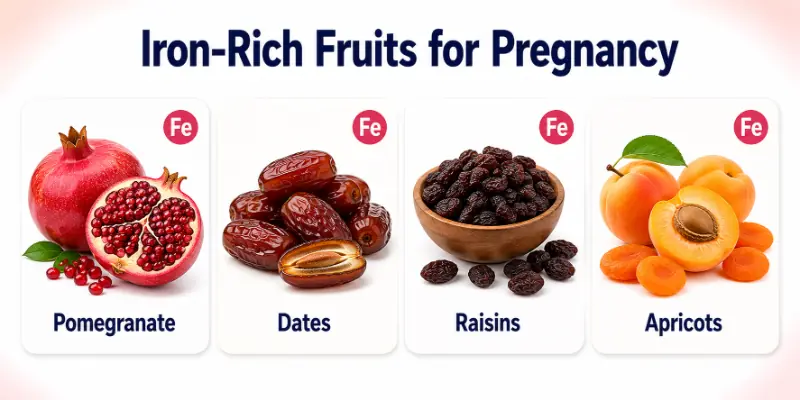
Here are the best iron-rich fruits you should include in your daily diet to naturally support iron levels and healthy pregnancy development.
- Pomegranate
- Dates
- Raisins
- Apricots
1.Pomegranate
Pomegranate is a nutrient-rich fruit that supports healthy blood formation during pregnancy. It also provides antioxidants that help improve energy levels and immunity.
Benefits:
- Supports healthy hemoglobin levels
- Improves blood flow and energy
- Rich in antioxidants for immunity
Tip: Eat fresh seeds or drink fresh juice without added sugar.
2. Dates
Dates are naturally sweet fruits rich in iron and energy-boosting nutrients, making them very beneficial during pregnancy. They help support overall strength and reduce fatigue.
Benefits:
- Helps improve iron levels
- Provides quick energy
- Supports fatigue reduction
Tip: Eat 2–3 dates daily as a healthy snack.
3. Raisins
Raisins are dried grapes that provide iron and natural sugars to support energy and blood health during pregnancy. They are a simple and healthy snack option.
Benefits:
- Supports iron intake
- Helps reduce weakness
- Improves energy levels
Tip: Soak raisins overnight for better digestion and absorption.
4. Apricots
Apricots are a good source of iron and essential vitamins that support healthy blood production during pregnancy. They also help maintain overall nutritional balance.
Benefits:
- Supports red blood cell production
- Helps improve iron levels
- Provides essential vitamins
Tip: Eat fresh or dried apricots in moderation as a healthy snack.
Iron-Rich Vegetables
Iron-rich vegetables are an essential part of a healthy pregnancy diet as they provide plant-based iron along with important vitamins and minerals. These vegetables help support healthy blood production and overall maternal well-being.
Here are the best iron-rich vegetables you should include in your daily meals to naturally support healthy iron levels during pregnancy.
- Spinach
- Kale
- Moringa leaves
1. Spinach
Spinach is a leafy green vegetable rich in non-heme iron and folate, both of which are important for healthy blood formation during pregnancy. It also supports overall energy levels.
Benefits:
- Supports red blood cell production
- Helps prevent iron deficiency
- Provides essential pregnancy nutrients
Tip: Cook lightly and add lemon juice to improve iron absorption.
2. Kale
Kale is a nutrient-dense leafy vegetable that contains iron along with vitamins that support overall pregnancy health. It helps maintain healthy energy levels.
Benefits:
- Supports healthy iron intake
- Improves overall nutrition
- Helps maintain energy levels
Tip: Use in salads, soups, or lightly cooked dishes for best results.
3. Moringa Leaves
Moringa leaves are highly nutritious and rich in iron, making them very beneficial for preventing iron deficiency during pregnancy. They also support overall immunity.
Benefits:
- Very rich in natural iron
- Helps improve hemoglobin levels
- Supports overall health and immunity
Tip: Add to soups or cooked dishes for easy daily intake.
Foods to Avoid During Pregnancy
During pregnancy, it is important to avoid certain foods that can interfere with iron absorption or may pose health risks to both mother and baby. Choosing safe eating habits helps support healthy iron levels and overall pregnancy health.
Foods That Block Iron Absorption
Here are the foods that can reduce iron absorption when taken with meals:
- Tea and Coffee: These drinks can reduce iron absorption when taken with meals, especially iron-rich foods.
- Calcium Supplements Timing Issues: Taking calcium supplements with iron-rich meals can block iron absorption in the body.
Unsafe or Restricted Foods
Here are the foods that should be avoided during pregnancy due to health risks:
- Raw or Undercooked Meat: May contain harmful bacteria and parasites that can affect pregnancy health.
- Raw Fish (sushi): Increases the risk of foodborne infections and should be strictly avoided.
- Unpasteurized Dairy Products: Can contain harmful bacteria that may cause infections during pregnancy.
- Junk and Processed Foods: Low in nutrients and may negatively affect overall pregnancy nutrition.
Daily Iron Requirement During Pregnancy
Understanding daily iron needs during pregnancy helps support healthy blood production and proper growth of the baby. Iron requirements generally increase during pregnancy to meet higher physiological demands.
Iron requirements may vary based on individual health conditions and should be confirmed with a healthcare provider.
Iron Requirement (General Guideline)
| Pregnancy Stage | Daily Iron Requirement |
|---|---|
| First Trimester | ~18 mg per day |
| Second Trimester | ~27 mg per day |
| Third Trimester | ~27 mg per day |
Most general health guidelines recommend around 27 mg of iron per day throughout pregnancy. However, actual requirements may differ depending on diet, blood iron levels, and medical advice.
Conclusion
In this guide, we have explored the importance of iron-rich foods for pregnancy and how they support both maternal health and the baby’s development. Maintaining adequate iron intake is essential for healthy blood production, sustained energy levels, and preventing iron deficiency.
A balanced diet that includes a variety of iron-rich foods such as fruits, vegetables, grains, and protein sources can help meet daily nutritional needs. Proper food combinations and absorption tips can further improve iron effectiveness in the body.
Focus on a well-balanced, iron-rich diet and follow your healthcare provider’s advice to ensure a safe and healthy pregnancy journey.
Frequently Asked Questions
Here are the most commonly asked questions about iron-rich foods for pregnancy:
Here are the best iron-rich foods for pregnancy:
- Spinach
- Lentils
- Chicken
- Beef
- Fortified cereals
These foods help support healthy hemoglobin levels and prevent iron deficiency during pregnancy.
Pregnant women generally need around 27 mg of iron per day to support increased blood volume and baby development. This requirement may vary depending on individual health conditions. Always follow your healthcare provider’s advice for exact needs.
Here are the common signs of iron deficiency during pregnancy:
- Tiredness and fatigue
- Dizziness
- Pale skin
- Shortness of breath
- Low energy
These symptoms should be checked with a doctor for proper diagnosis and treatment.
Fruits like pomegranate, dates, raisins, and apricots are rich in iron. They also provide natural energy and essential vitamins. These fruits help support healthy blood levels during pregnancy.
A healthy, iron-rich diet can reduce the risk of anemia in many cases. However, some women may still require iron supplements depending on their iron levels. A doctor’s guidance is important for proper treatment.
Here are the foods to avoid with iron-rich meals:
- Tea and coffee
- Calcium supplements with meals
- Dairy products taken at the same time
These can reduce iron absorption in the body.
Iron absorption can be improved by eating vitamin C-rich foods like oranges and lemons with iron-rich meals. Avoid tea and coffee immediately after eating. Proper food combinations help your body absorb more iron effectively.
Iron supplements may be prescribed if diet alone is not enough. They help prevent or treat iron deficiency anemia during pregnancy. Always take supplements only under medical supervision.
Iron-rich foods are best consumed during main meals like breakfast or lunch. This helps improve absorption and energy levels. Avoid taking them with calcium or caffeine at the same time.
A balanced pregnancy diet rich in iron can help improve hemoglobin levels naturally. Foods like leafy greens, meat, and legumes are especially effective. Consistency is key for better results.





- Be Respectful
- Stay Relevant
- Stay Positive
- True Feedback
- Encourage Discussion
- Avoid Spamming
- No Fake News
- Don't Copy-Paste
- No Personal Attacks
- Be Respectful
- Stay Relevant
- Stay Positive
- True Feedback
- Encourage Discussion
- Avoid Spamming
- No Fake News
- Don't Copy-Paste
- No Personal Attacks
