Causes of Open Pores on Face: Reveal the Real Reasons
Published: 29 Sep 2026
Open pores are a common skin concern that can affect people of all ages. They appear as small visible openings on the skin and are often more noticeable on the nose, cheeks, and forehead. While pores are a natural part of the skin, they can sometimes look larger than usual.
Many people look for products or treatments to reduce the appearance of open pores without understanding what causes them in the first place. Factors such as excess oil production, aging, genetics, acne, and sun damage can all play a role in making pores more visible.
Understanding the underlying cause is the first step toward managing their appearance. In this article, we will explore the most common causes of open pores on face, the factors that can make them look larger, and the myths that often surround this common skin concern.
Common Causes of Open Pores on Face
Open pores can develop for several reasons, and in many cases, more than one factor is involved. While some causes are related to natural skin characteristics, others result from lifestyle habits, environmental exposure, or skin conditions.
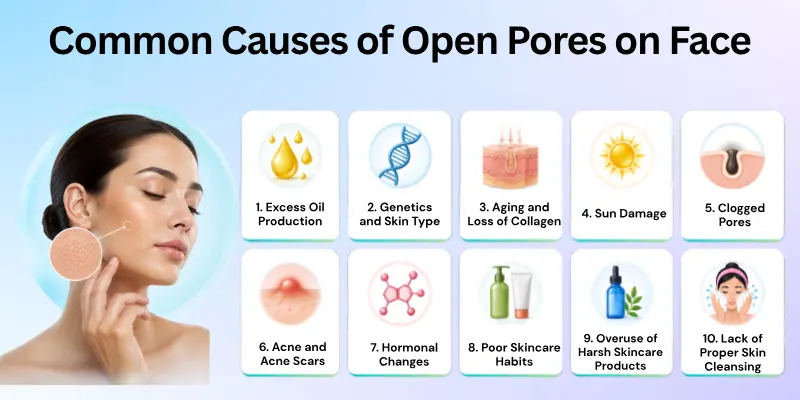
Understanding these causes can help explain why pores become more visible over time. Here are the most common causes of open pores on the face:
- Excess Oil Production
- Genetics and Skin Type
- Aging and Loss of Collagen
- Sun Damage
- Clogged Pores
- Acne and Acne Scars
- Hormonal Changes
- Poor Skincare Habits
- Overuse of Harsh Skincare Products
- Lack of Proper Skin Cleansing
Let’s take a closer look at each of these causes and understand how they contribute to enlarged or visible pores.
1. Excess Oil Production
Excess oil production is one of the most common causes of open pores on the face. The skin naturally produces oil, called sebum, to keep the skin moisturized and protected. However, some people produce more oil than their skin needs.
When excess sebum collects inside the pores, it can mix with dirt and dead skin cells. This buildup may gradually stretch the pore openings, making them look larger and more noticeable, especially on the nose, cheeks, and forehead.
- Overactive sebaceous glands increase oil production
- Excess sebum can stretch pore openings over time
- Oily skin often has more visible pores
- Oil buildup can make pores appear larger
- Enlarged pores are common in the T-zone area
- Excess oil may contribute to blackheads and clogged pores
2. Genetics and Skin Type
Genetics can have a significant influence on the size and appearance of your pores. If large pores run in your family, you may naturally have more visible pores regardless of your skincare routine. This is one of the causes of enlarged pores on the face that cannot be controlled.
Your skin type also plays a role in how noticeable your pores appear. People with oily skin often have larger-looking pores because excess sebum can make pore openings more visible. Those with dry or normal skin may notice their pores less.
- Pore size can be inherited
- Some people naturally have larger pores
- Oily skin makes pores more visible
- Higher sebum levels increase pore visibility
- Skin type affects pore appearance
3. Aging and Loss of Collagen
Aging is a natural process that can make pores appear larger over time. As the skin gets older, it produces less collagen and elastin, which are proteins that help keep the skin firm and smooth.
When collagen levels decrease, the skin loses some of its elasticity and support. As a result, the skin around the pores becomes less firm, causing pore openings to appear larger and more noticeable.
- Collagen production declines with age
- Skin loses firmness and elasticity
- Pores receive less structural support
- Pore openings become more noticeable
- Age-related skin changes affect pore appearance
- Enlarged pores are common in mature skin
4. Sun Damage
Frequent exposure to the sun can affect the skin’s structure and make pores appear larger. Ultraviolet (UV) rays break down collagen and elastin, which help keep the skin firm and supported.
As the skin loses its natural elasticity, the area around the pores becomes less tight. This can make pores look more visible, especially in people who spend a lot of time outdoors without sun protection.
- UV rays damage collagen fibers
- Sun exposure reduces skin elasticity
- Weakened skin makes pores more visible
- Long-term damage affects skin texture
- Lack of sunscreen may worsen pore appearance
5. Clogged Pores
Clogged pores occur when excess oil, dead skin cells, and impurities collect inside the pore openings. This buildup can prevent pores from functioning normally and make them appear larger.
Over time, the blockage can stretch the pore walls and increase their visibility. Clogged pores are also closely linked to blackheads and other common skin concerns.
- Oil and dead skin collect in pores
- Buildup can stretch pore openings
- Blackheads make pores more noticeable
- Poor cleansing increases pore blockage
- Clogged pores can affect skin texture
6. Acne and Acne Scars
Acne is a common skin condition that can contribute to enlarged pores. When pores become blocked with oil and dead skin cells, inflammation can develop and affect the surrounding skin tissue.
Repeated breakouts may weaken the skin’s structure over time. In some cases, acne scars can make pores appear deeper and more noticeable, creating an uneven skin texture.
- Repeated breakouts affect pore appearance
- Inflammation can enlarge pore openings
- Acne scars make pores look deeper
- Damaged skin texture increases visibility
- Severe acne may worsen enlarged pores
7. Hormonal Changes
Hormonal changes can influence how much oil the skin produces. During puberty, menstruation, pregnancy, or other hormonal fluctuations, the sebaceous glands may become more active and produce excess sebum.
Higher oil production can increase the likelihood of clogged pores and make pore openings appear larger. This is why some people notice more visible pores during certain stages of life.
- Hormones can increase oil production
- Excess sebum makes pores more noticeable
- Puberty often triggers enlarged pores
- Hormonal fluctuations affect skin texture
- Increased oil can lead to pore congestion
8. Poor Skincare Habits
Daily skincare habits can have a direct impact on the appearance of pores. Neglecting basic skincare, such as cleansing and moisturizing, may allow oil, dirt, and impurities to build up on the skin.
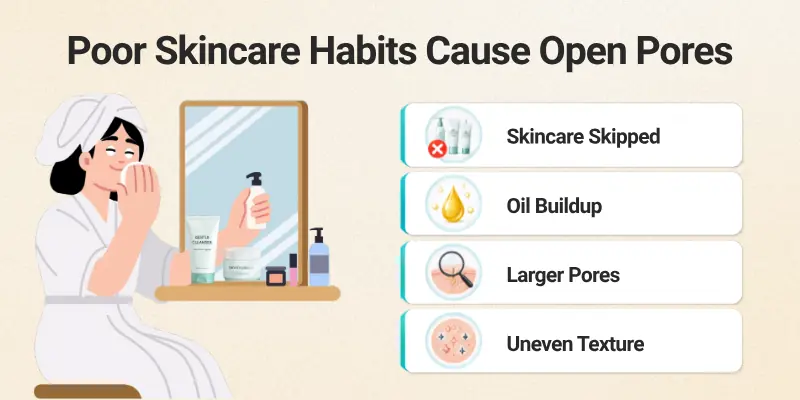
Over time, these habits can make pores appear more noticeable and contribute to an uneven skin texture. Consistent skincare is important for maintaining healthy-looking skin.
- Skipping skincare allows buildup on the skin
- Pores may appear larger over time
- Inconsistent routines affect skin texture
- Poor habits can worsen pore visibility
9. Overuse of Harsh Skincare Products
Using strong skincare products too often can irritate the skin and damage its natural barrier. Harsh scrubs, excessive exfoliation, and drying products may leave the skin feeling tight and sensitive.
When the skin becomes irritated, pores can appear more noticeable. Overusing aggressive products may also lead to dryness and an uneven skin texture.
- Harsh products can irritate the skin
- Excessive exfoliation weakens the skin barrier
- Irritated skin makes pores more noticeable
- Dryness can affect skin texture
10. Lack of Proper Skin Cleansing
Proper cleansing helps remove excess oil, dirt, and dead skin cells from the skin’s surface. When the face is not cleansed regularly, these impurities can collect inside pores and make them appear larger.
Poor cleansing habits may also increase the risk of clogged pores and blackheads. Keeping the skin clean can help maintain a smoother and healthier appearance.
- Dirt and oil remain on the skin
- Impurities can build up inside pores
- Poor cleansing increases pore blockage
- Blackheads become more likely
- Pores may appear larger and more visible
Factors That Can Make Open Pores More Noticeable
Open pores can appear larger due to several external and lifestyle-related factors. Even if your pores are naturally small, certain conditions can make them stand out more and affect the overall appearance of your skin.
Here are some common factors that can make open pores more noticeable:
- Oily Skin: Produces excess sebum that makes pore openings more visible.
- Dehydrated Skin: Reduces skin smoothness and can highlight pore appearance.
- Frequent Makeup Use: Product buildup may settle into pores and make them stand out.
- High Humidity: Increases oil production and can make pores look larger.
- Smoking: Damages collagen and contributes to premature skin aging.
Common Myths About Open Pores
Many people believe common skincare myths that can create confusion about open pores. Understanding the facts can help you take better care of your skin and avoid unrealistic expectations.
Here are some common myths about open pores:
- Pores Can Open and Close: Pores do not have muscles, so they cannot physically open or close.
- Ice Permanently Shrinks Pores: Ice may temporarily tighten the skin, but it does not permanently reduce pore size.
- Scrubbing Removes Open Pores: Scrubbing cannot eliminate pores and may irritate the skin if done excessively.
When Open Pores May Be Linked to Other Skin Conditions
In some cases, open pores may be associated with underlying skin concerns rather than normal skin characteristics. Certain conditions can affect skin texture, elasticity, and overall pore appearance.
Here are some skin conditions that may make open pores more noticeable:
- Severe Acne: Chronic breakouts and inflammation can affect pore appearance.
- Chronic Sun Damage: Long-term UV exposure weakens skin structure and elasticity.
- Premature Skin Aging: Reduced collagen support can make pores appear larger.
When to See a Dermatologist for Open Pores
Open pores are usually a cosmetic concern, but in some cases, they may be linked to underlying skin conditions. If enlarged pores are affecting your skin significantly or are accompanied by other symptoms, professional advice may be helpful.
Here are some situations when you should consider seeing a dermatologist:
- Persistent Enlarged Pores: Pores remain highly visible despite proper skincare.
- Severe Acne: Frequent breakouts are causing enlarged pores or acne scars.
- Ongoing Skin Irritation: Redness, itching, or sensitivity occurs regularly.
- Noticeable Skin Texture Changes: Skin becomes rough, uneven, or damaged.
- Lack of Improvement: Over-the-counter products do not improve pore appearance.
Conclusion
In this guide, we covered the most common causes of open pores on face, including excess oil production, genetics, aging, sun damage, clogged pores, acne, hormonal changes, and poor skincare habits.
Understanding these factors can help explain why pores become more visible and why their appearance may vary from person to person. While pores cannot be permanently removed or completely closed, knowing the underlying cause can help you choose the right skincare approach.
If you are looking for practical ways to improve their appearance, you can also read our guide on home remedies for open pores. With proper skin care and healthy habits, you can support healthier-looking skin and make enlarged pores less noticeable over time.
FAQs
Here are answers to some frequently asked questions about the causes of open pores on face.
The main causes of open pores on the face include:
- Excess oil production
- Genetics and skin type
- Aging and loss of collagen
- Sun damage
- Clogged pores
- Acne and acne scars
- Hormonal changes
- Poor skincare habits
- Overuse of harsh skincare products
- Lack of proper skin cleansing
Yes, oily skin can make pores look larger. Excess sebum can build up inside pore openings. This buildup may increase pore visibility over time.
Yes, aging can make pores more noticeable. The skin produces less collagen and elastin with age. This loss of support can make pore openings appear larger.
Yes, genetics can influence pore size. Some people naturally have larger pores than others. This trait is often inherited from family members.
Sun damage can affect the appearance of pores. UV rays break down collagen and weaken the skin’s structure. As a result, pores may become more visible.
The nose contains many oil-producing glands. Higher oil production can make pores more noticeable. This is why enlarged pores are common in this area.
Yes, acne can make pores appear larger. Inflammation may affect the surrounding skin tissue. Acne scars can also make pores look deeper and more noticeable.
Open pores do not usually disappear completely. Everyone has pores, and they are a natural part of the skin. However, their appearance may become less noticeable with proper skincare.
Washing your face helps remove excess oil and impurities. Clean skin can make pores look less noticeable. However, cleansing cannot permanently shrink pore size.
You should see a dermatologist if enlarged pores are affecting your skin significantly. Professional advice may help identify underlying skin concerns. A dermatologist can also recommend suitable treatment options.






- Be Respectful
- Stay Relevant
- Stay Positive
- True Feedback
- Encourage Discussion
- Avoid Spamming
- No Fake News
- Don't Copy-Paste
- No Personal Attacks
- Be Respectful
- Stay Relevant
- Stay Positive
- True Feedback
- Encourage Discussion
- Avoid Spamming
- No Fake News
- Don't Copy-Paste
- No Personal Attacks
