Signs and Symptoms of Nutrient Deficiencies: Warning Signs You Should Never Ignore
Published: 5 Apr 2026
Your body needs vitamins, minerals, and other nutrients to work properly. When you do not get enough, it shows in your health. Recognizing signs and symptoms of nutrient deficiencies early helps prevent serious problems.
This guide explains the common symptoms, causes, and simple solutions to restore balance. You will learn how your diet, lifestyle, and small changes can make a big difference.
Common Signs and Symptoms of Nutrient Deficiencies
In this section, we will list the main signs and symptoms that appear when your body lacks nutrients. These symptoms affect skin, hair, nails, energy, immunity, and more. By noticing them, you can identify deficiencies early.
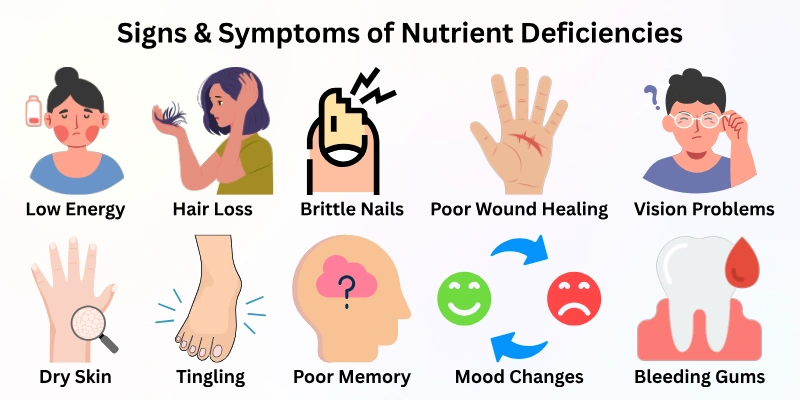
Common Nutrient Deficiency Signs
- Fatigue and Low Energy
- Weak Muscles
- Hair Loss or Brittle Hair
- Pale or Dry Skin
- Brittle Nails
- Poor Wound Healing
- Mood Changes or Irritability
- Poor Memory and Focus
- Frequent Infections
- Cravings for Non-food items (pica)
- Vision Problems
- Swollen or Bleeding Gums
- Muscle Cramps or Tingling
- Digestive Problems
Let us cover all these in detail.
1. Fatigue and Low Energy
Fatigue is a common early sign of nutrient deficiency. Your body relies on vitamins like B12, iron, and magnesium for energy production. Lack of these nutrients slows your metabolism, leaving you tired even after sleep. You may notice weakness, slow recovery from exercise, and feeling lethargic during the day. Early attention can restore your energy levels.
- Iron deficiency: Feeling extremely tired, pale skin, and dizziness.
- Vitamin B12 deficiency: Weakness, numbness in hands or feet, low energy.
- Magnesium deficiency: Fatigue, low stamina, and muscle weakness.
2. Weak Muscles
Muscle weakness happens when your body lacks protein, vitamin D, or magnesium. These nutrients help build and maintain muscles. Deficiency can make normal activities feel tiring or challenging. Weak muscles also reduce endurance during exercise and daily tasks.
- Protein deficiency: Loss of muscle mass, slow recovery after exercise.
- Vitamin D deficiency: Muscle weakness, bone pain, difficulty standing or walking.
- Magnesium deficiency: Muscle cramps, twitching, and spasms.
3. Hair Loss or Brittle Hair
Hair needs protein, zinc, iron, and biotin to grow strong. Deficiency in these nutrients causes hair to fall out, become dry, or split. Hair may thin gradually or fall in clumps. Early correction can restore hair health.
- Iron deficiency: Hair shedding, thinning, slow regrowth.
- Zinc deficiency: Brittle hair, hair loss, white spots on nails.
- Biotin deficiency: Dry, brittle hair and slow growth.
4. Pale or Dry Skin
Skin health depends on iron, vitamin A, vitamin C, and essential fatty acids. Lack of these nutrients makes your skin look pale, dry, or flaky. Skin may also bruise easily or develop rashes.
- Iron deficiency: Pale skin and dark circles under eyes.
- Vitamin A deficiency: Dry, rough, scaly skin.
- Essential fatty acid deficiency: Flaky skin, eczema-like patches.
5. Brittle Nails
Iron, zinc, biotin, and protein all have an impact on nail health. Weak, thin, or ridged nails are the result of deficiency. White spots or easy splitting of the nails are possible.
- Iron deficiency: Spoon-shaped nails, thin and weak.
- Zinc deficiency: White spots, slow growth, soft nails.
- Biotin deficiency: Brittle, splitting nails.
6. Poor Wound Healing
Nutrients like vitamin C, zinc, and protein are essential for tissue repair. Deficiency slows the healing process and increases infection risk. Cuts, bruises, or sores take longer to recover.
- Vitamin C deficiency: Slow healing, bleeding gums, easy bruising.
- Zinc deficiency: Wounds take longer to close, infections may develop.
- Protein deficiency: Weak tissue repair, slow recovery from injuries.
7. Mood Changes or Irritability
Brain function depends on B vitamins, omega-3 fatty acids, and iron. Lack of these nutrients can cause irritability, mood swings, anxiety, or even depression. Early attention improves mental clarity and emotional stability.
- Vitamin B6 deficiency: Mood swings, irritability, confusion.
- Omega-3 deficiency: Anxiety, low mood, poor memory.
- Iron deficiency: Fatigue, irritability, trouble concentrating.
8. Poor Memory and Focus
Deficiency in B vitamins, omega-3s, and iron can reduce focus and cognitive performance. You may feel forgetful, have trouble concentrating, or struggle with problem-solving. Brain cells need these nutrients for energy and communication.
- Vitamin B12 deficiency: Memory loss, confusion, concentration issues.
- Omega-3 deficiency: Poor focus, slow learning, reduced brain function.
- Iron deficiency: Difficulty concentrating, mental fatigue.
9. Frequent Infections
Immune system health depends on vitamin C, D, zinc, and protein. Deficiency weakens immunity and makes you more susceptible to colds, flu, and infections. Small daily intakes of these nutrients improve resistance.
- Vitamin C deficiency: Frequent colds, slower recovery, weak immunity.
- Vitamin D deficiency: Higher risk of respiratory infections.
- Zinc deficiency: Poor immune response, more infections.
10. Cravings for Non-Food Items (Pica)
Craving substances like ice, dirt, or chalk may indicate a nutrient deficiency. This behavior often relates to iron or zinc deficiency. Early detection helps correct the diet and prevent complications.

- Iron deficiency: Pica cravings for ice or dirt.
- Zinc deficiency: Craving unusual non-food items.
- Other deficiencies: Sometimes related to minerals like calcium.
11. Vision Problems
Vitamin A keeps your eyes healthy and helps you see in low light. It protects the surface of your eyes from dryness and infection. Lack of it makes night vision hard. Eyes may feel dry or blurry. Long-term deficiency can harm vision permanently.
- Vitamin A deficiency: Night blindness, dry eyes, slower adaptation to darkness.
12. Swollen or Bleeding Gums
Vitamin C and K are essential for healthy gums. Lack of these nutrients can cause bleeding, swelling, or pain while brushing. This is an early sign of deficiency and should not be ignored.
- Vitamin C deficiency: Gum swelling, easy bleeding.
- Vitamin K deficiency: Poor blood clotting, gum bleeding.
13. Muscle Cramps or Tingling
Magnesium, calcium, potassium, and vitamin B12 are vital for nerves and muscles. Deficiency causes cramps, tingling, or numbness. Early intake of these nutrients relieves symptoms.
- Magnesium deficiency: Muscle cramps, tremors, twitches.
- Calcium deficiency: Cramps, weak bones.
- Vitamin B12 deficiency: Tingling in hands and feet, numbness.
14. Digestive Problems
Fiber, vitamin B12, and magnesium are essential for digestion. Deficiency can cause constipation, diarrhea, or bloating. Maintaining these nutrients helps normal bowel movement.
- Fiber deficiency: Constipation, bloating.
- Vitamin B12 deficiency: Indigestion, stomach upset.
- Magnesium deficiency: Irregular bowel movement, cramps.
How to Prevent Nutrient Deficiencies
In this part you will learn simple preventive measures. Eating a balanced diet with fruits, vegetables, proteins, and whole grains prevents deficiencies. Supplements can help only if needed.
- Eat a colorful plate with fruits and vegetables daily.
- Include lean protein, beans, and nuts.
- Add fortified foods if recommended.
- Drink enough water.
- Take supplements only under guidance.
When to See a Doctor
If signs persist despite diet changes, professional help is necessary. Some deficiencies indicate serious underlying conditions. Lab tests confirm the problem and guide treatment.
- Persistent fatigue or weakness.
- Unexplained hair or nail loss.
- Frequent infections.
- Vision problems or numbness.
- Blood tests to check nutrient levels.
Final Note
In this guide, we have covered the main signs and symptoms of nutrient deficiencies and explained how each deficiency affects your body. My personal advice is to eat a balanced diet, notice early signs, and consult your doctor when needed.
Small daily changes can make a big difference for your health. Stay strong, stay nourished, and take care of yourself.
FAQs: Lack of Nutrients
Here are some of the most commonly asked questions related to the symptoms of nutrient deficiency:
Early signs include fatigue, hair loss, pale skin, and weak nails. Mood changes and frequent infections are also common. Recognizing them helps prevent serious health problems.
Vitamin deficiency shows through tiredness, weak muscles, and poor wound healing. Your skin, hair, and nails may also look unhealthy. Blood tests can confirm which vitamin is low.
Iron deficiency causes fatigue, pale skin, dizziness, and shortness of breath. You may also notice brittle nails and hair loss. It is common and easy to treat with iron-rich foods or supplements.
Vitamin D deficiency weakens bones and muscles. It can cause bone pain, fatigue, and mood changes. Sunlight exposure and vitamin D rich foods help prevent this.
Yes, low vitamin B12 causes weakness, fatigue, and tingling in hands or feet. It may also affect memory and focus. Early treatment with B12 supplements restores energy levels.
Calcium deficiency causes muscle cramps, weak bones, and brittle nails. You may also experience tingling or numbness. Dairy, leafy greens, and supplements help maintain healthy calcium.
Zinc deficiency shows as slow wound healing, hair loss, and weak immunity. Taste changes or frequent infections may also appear. Foods like nuts, seeds, and meat can improve zinc levels.
Yes, lack of nutrients like iron, B12, omega-3, and magnesium can cause irritability, anxiety, or low mood. Brain function relies on these nutrients. Proper diet improves mood and focus.
A balanced diet with fruits, vegetables, whole grains, lean proteins, nuts, and seeds prevents deficiencies. Fortified foods and dairy add extra vitamins. Regular variety ensures you get all essential nutrients.
See a doctor if you feel persistent fatigue, hair loss, weak nails, or frequent illness. Blood tests can detect which nutrients are low. Early detection prevents serious complications.



- Be Respectful
- Stay Relevant
- Stay Positive
- True Feedback
- Encourage Discussion
- Avoid Spamming
- No Fake News
- Don't Copy-Paste
- No Personal Attacks
- Be Respectful
- Stay Relevant
- Stay Positive
- True Feedback
- Encourage Discussion
- Avoid Spamming
- No Fake News
- Don't Copy-Paste
- No Personal Attacks
