Natural Remedies for Headache Relief: Simple Ways to Feel Better
Published: 6 Apr 2026
Headaches can disrupt your daily life and make it hard to focus or work. Many people prefer natural remedies for headache relief instead of medicine.
These remedies are simple and safe and can help with different types of headaches, like migraines, tension headaches, or sinus headaches. Natural remedies work by relaxing muscles, improving blood flow, reducing inflammation, or calming stress.
In this guide, you will learn 20 effective ways to relieve headaches naturally. You can pick the remedies that suit your lifestyle and needs.
Natural Remedies for Headache Relief
In this section, we will list 20 natural remedies that help ease headache pain. These remedies are easy to try at home. They work by targeting common causes of headaches like dehydration, tension, inflammation, and stress.
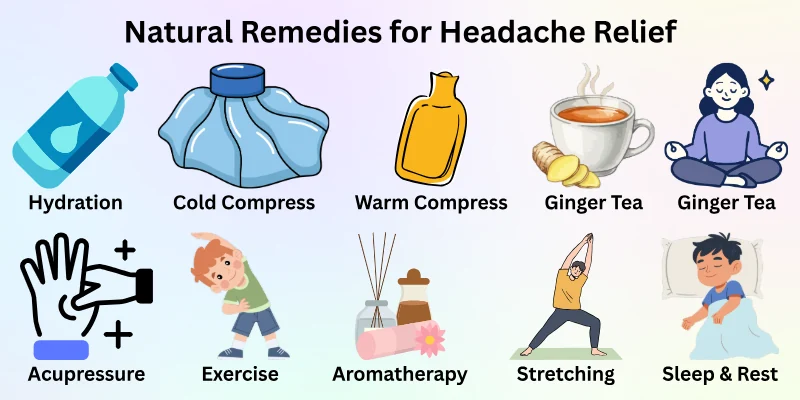
By using one or more of these remedies, you can get fast relief.
Remedies List:
- Hydration (Drink Water)
- Cold Compress
- Warm Compress
- Caffeine (Small Amount)
- Peppermint Oil Massage
- Lavender Essential Oil
- Ginger Tea
- Magnesium Supplements
- Yoga and Stretching
- Deep Breathing Exercises
- Meditation
- Sleep and Rest
- Limit Screen Time
- Avoid Trigger Foods
- Acupressure
- Epsom Salt Bath
- Apple Cider Vinegar
- Exercise
- Dark and Quiet Room
- Aromatherapy
Let us cover all these remedies in detail.
1. Hydration (Drink Water)
Dehydration is one of the most common causes of headaches. When your body loses water, your blood flow and oxygen supply to the brain reduce, causing pain. Drinking enough water helps restore balance and ease headache symptoms.
Water also helps flush out toxins and improves overall energy. People often forget to drink enough fluids, which can trigger sudden headaches. Staying hydrated is a simple and effective remedy that works for almost every type of headache.
- Drink 8–10 glasses of water daily.
- Keep a water bottle nearby to remind yourself.
- Include water-rich foods like watermelon and cucumber.
2. Cold Compress
A cold compress helps numb pain and reduce inflammation. It works especially well for migraines and intense headaches. Placing ice or a cold pack on your forehead or neck constricts blood vessels and eases throbbing pain.
Cold therapy also slows nerve signals that carry pain messages to your brain. Many people find relief within a few minutes of applying cold. This method is safe, simple, and effective without medication.
- Wrap ice in a cloth to protect your skin.
- Apply for 10–15 minutes at a time.
- Repeat if necessary after a short break.
3. Warm Compress
Warm compress works best for tension headaches caused by tight neck or shoulder muscles. Heat relaxes muscles and improves blood flow. Placing a warm towel or heating pad on tense areas can reduce pain and stiffness.
Warm compress also helps calm stress-related headaches. Combining warmth with gentle neck stretches increases effectiveness. This method is safe and easy to do at home.
- Keep the compress comfortably warm.
- Apply for 15–20 minutes.
- Repeat 1–2 times daily if needed.
4. Caffeine (Small Amount)
Caffeine can relieve mild to moderate headaches by narrowing blood vessels in the brain. It also improves the absorption of pain-relief medicines if taken together. Small amounts of caffeine in coffee or tea help reduce headache intensity.
However, too much caffeine may trigger headaches or cause dependency. Caffeine works best when used occasionally, not daily in large amounts.
- Drink a small cup of coffee or tea.
- Avoid excess intake late in the day.
- Combine with water to prevent dehydration.
5. Peppermint Oil Massage
Peppermint oil contains menthol, which has a cooling effect and relaxes tense muscles. Massaging peppermint oil on your temples, forehead, or neck can reduce headache pain. It also improves blood circulation and calms stress.
Peppermint oil works especially well for tension headaches. You should always dilute it with a carrier oil to avoid skin irritation. Regular use can prevent headaches triggered by stress.
- Mix peppermint oil with a carrier oil.
- Massage gently in circular motions.
- Repeat 2–3 times daily if needed.
6. Lavender Essential Oil
Lavender essential oil is known for its calming properties and can relieve headache symptoms. Inhaling lavender oil reduces migraine pain and eases stress. Topical application on temples or behind the neck also works.
Lavender helps balance hormones and relax nerves that trigger headaches. Many studies show that lavender is effective for both tension and migraine headaches. It is safe when used in small amounts or with carrier oils.
- Add a few drops to a diffuser or inhale directly.
- Mix with carrier oil for temple massage.
- Use during stressful situations or at headache onset.
7. Ginger Tea
Ginger reduces inflammation and has natural pain-relief properties. Drinking ginger tea can ease migraine and sinus headaches. Ginger also improves blood circulation and calms nausea often associated with headaches.
Regular consumption strengthens the body’s ability to fight headache triggers. Fresh ginger works best for quick results. Ginger tea is simple to prepare and very safe for daily use.
- Boil fresh ginger slices in water for 10 minutes.
- Drink 1–2 cups daily.
- Add honey or lemon for taste.
8. Magnesium Supplements
Magnesium is an essential mineral that helps prevent headaches, especially migraines. Low magnesium can cause nerve excitability and muscle tension, triggering pain. Supplementing magnesium relaxes blood vessels and reduces headache frequency.
Magnesium also supports sleep and stress management, which are common headache triggers. Many people notice fewer migraines after a few weeks of magnesium intake.
- Take magnesium as per doctor advice.
- Include magnesium-rich foods like nuts, seeds, and spinach.
- Avoid high doses unless recommended.
9. Yoga and Stretching
Tension in the neck and shoulders often causes headaches. Yoga and gentle stretches relax muscles and improve blood flow.
Regular practice also reduces stress, a major headache trigger. Stretching helps relieve pressure in the head and neck area. Yoga improves posture, reducing tension headaches over time.
- Try simple neck, shoulder, and spine stretches.
- Include yoga poses like child’s pose or downward dog.
- Practice daily for best results.
10. Deep Breathing Exercises
Deep breathing reduces stress and improves oxygen flow to the brain. Low oxygen and high stress can worsen headaches.
Breathing exercises calm your nervous system and relieve tension. Simple breathing techniques can ease migraine or tension headaches naturally. Regular practice prevents recurring headaches.
- Inhale slowly for 4 seconds, hold for 4, exhale for 6.
- Repeat 5–10 times.
- Practice in a quiet, comfortable space.
11. Meditation
Meditation helps calm your mind and reduce stress, which is a major cause of headaches. Focusing on your breath or using guided meditation can relax your nervous system.
Meditation improves blood flow and reduces muscle tension in the head and neck. Regular practice can lower the frequency and intensity of headaches over time. It also improves mental clarity and emotional balance. Meditation is a safe method for people of all ages.
- Practice 10–15 minutes daily in a quiet place.
- Focus on slow, deep breathing.
- Use guided meditation apps for help.
12. Sleep and Rest
Lack of sleep is a common trigger for headaches. Proper rest helps your body repair and prevents tension in muscles. Regular sleep patterns reduce migraine and stress headaches. Short naps can provide immediate relief if a headache starts.
Avoid oversleeping, which may worsen headaches in some cases. Maintaining good sleep hygiene supports long-term headache prevention.
- Aim for 7–8 hours of sleep nightly.
- Take short naps if needed.
- Keep your sleeping environment quiet and dark.
13. Limit Screen Time
Prolonged use of phones, computers, or TVs can strain your eyes and trigger headaches. Screen glare and poor posture worsen tension in the head and neck.
Taking regular breaks prevents eye fatigue and reduces headaches. Adjusting screen brightness and distance also helps. Limiting screen time promotes better overall health and energy.
- Follow the 20-20-20 rule: look 20 feet away every 20 minutes for 20 seconds.
- Use anti-glare screens.
- Sit straight with proper posture.
14. Avoid Trigger Foods
Certain foods can trigger headaches, especially migraines. Common triggers include processed foods, caffeine, alcohol, and foods with artificial additives.

Avoiding these foods can reduce headache frequency. Keeping a food diary helps identify personal triggers. A balanced diet supports overall brain and nerve health.
- Limit processed and packaged foods.
- Avoid alcohol and excessive caffeine.
- Identify triggers with a food diary.
15. Acupressure
Acupressure stimulates pressure points on the body to reduce headache pain. Applying gentle pressure improves blood flow and relaxes tight muscles. It also helps release tension in the head, neck, and shoulders. Acupressure can provide relief within minutes if done correctly. It is safe and can be done anywhere without equipment.
- Press the webbing between thumb and index finger.
- Massage temples in circular motions.
- Apply gentle pressure for 1–2 minutes at each point.
16. Epsom Salt Bath
Epsom salt contains magnesium, which relaxes muscles and reduces headache pain. A warm bath also promotes relaxation and eases stress.
It can relieve tension headaches and mild migraines naturally. The combination of heat and magnesium works effectively to calm the body. This remedy is simple, safe, and relaxing.
- Add 2 cups of Epsom salt to warm bath water.
- Soak for 15–20 minutes.
- Relax in a quiet environment during the bath.
17. Apple Cider Vinegar
Apple cider vinegar (ACV) may help reduce headaches caused by sinus pressure or dehydration. ACV balances pH and supports detoxification in the body. Drinking a small amount diluted in water can ease mild headaches.
Some people find relief when sinus headaches start. ACV should be used carefully to avoid irritation.
- Mix 1–2 tablespoons ACV in a glass of water.
- Drink slowly once or twice daily.
- Avoid undiluted ACV to protect teeth and stomach.
18. Exercise
Moderate exercise improves blood flow and oxygen delivery to the brain. It reduces stress and tension, common headache triggers.
Regular activity can prevent migraines and reduce headache intensity. Exercise also boosts endorphins, which act as natural painkillers. Consistency is key for long-term benefits.
- Try brisk walking, jogging, or cycling.
- Include 20–30 minutes of exercise most days.
- Stretch before and after exercise to prevent tension.
19. Dark and Quiet Room
Resting in a dark, quiet room helps reduce sensory overload. Light, noise, and movement can worsen headaches, especially migraines.
Reducing stimuli allows your body to relax and recover. This method is simple, drug-free, and effective. Combining it with other remedies speeds up relief.
- Lie down in a dark room.
- Close eyes and relax for 15–30 minutes.
- Use a cool cloth on the forehead if needed.
20. Aromatherapy
Aromatherapy uses essential oils like lavender, eucalyptus, or peppermint to reduce headache pain. Inhalation or topical application stimulates relaxation and eases stress. It also improves circulation and calms muscle tension.
Aromatherapy can be combined with massage or meditation for better results. It is safe when oils are diluted and used in moderation.
- Diffuse essential oils in a room.
- Apply diluted oils to temples or neck.
- Use during headache onset or stressful situations.
Final Note
In this guide, we have covered 20 natural remedies for headache relief to help reduce pain and stress naturally.
My personal advice is to start with simple remedies like hydration, cold/warm compress, and peppermint oil, then combine others based on your headache type. Regular practice and lifestyle changes prevent future headaches.
Take care of your body, rest well, and stay relaxed. Goodbye and feel better soon! ❤️
FAQs: Remedies for Headache
Here are some of the most commonly asked questions related to the natural solutions for headaches:
Some of the best natural remedies include hydration, cold or warm compress, peppermint oil massage, ginger tea, and magnesium supplements. Yoga, meditation, and proper sleep also help. These remedies are safe, effective, and work for tension or migraine headaches.
You can stop headaches naturally by drinking water, resting in a quiet room, applying cold or warm compress, and practicing deep breathing exercises. Avoiding trigger foods and reducing screen time also helps. Simple lifestyle changes can prevent headaches from worsening.
Yes, peppermint oil works as a natural remedy for headache relief. It cools tense muscles and improves blood flow. Massage diluted peppermint oil on temples, forehead, or neck for fast relief.
Ginger tea has anti-inflammatory properties that help relieve headaches. Drinking 1–2 cups daily can ease migraine or sinus headache pain. It also improves circulation and calms nausea associated with headaches.
Magnesium relaxes blood vessels and reduces nerve excitability, preventing migraines. Low magnesium can trigger headache pain. Taking supplements or magnesium-rich foods like nuts and seeds helps reduce headache frequency.
Yes, yoga and meditation reduce stress and relax muscles in the neck and shoulders. Regular practice improves blood flow and lowers tension. These methods prevent both tension and migraine headaches naturally.
Yes, cold compresses numb pain and reduce inflammation, especially for migraines. Warm compresses relax tense muscles and improve blood flow for tension headaches. Both methods are safe and provide quick relief at home.
Lack of sleep can trigger headaches by increasing stress and muscle tension. Proper rest allows the body to recover and prevents headache recurrence. Aim for 7–8 hours of quality sleep daily to stay headache-free.
Yes, aromatherapy with essential oils like lavender, peppermint, or eucalyptus reduces headache intensity. Inhalation or topical application helps relax muscles and calm stress. It works best when combined with massage or meditation.
Avoid processed foods, excessive caffeine, alcohol, and foods with artificial additives. These can trigger migraines or tension headaches. Eating a balanced diet with fruits, vegetables, lean proteins, and whole grains helps prevent headaches naturally.




- Be Respectful
- Stay Relevant
- Stay Positive
- True Feedback
- Encourage Discussion
- Avoid Spamming
- No Fake News
- Don't Copy-Paste
- No Personal Attacks
- Be Respectful
- Stay Relevant
- Stay Positive
- True Feedback
- Encourage Discussion
- Avoid Spamming
- No Fake News
- Don't Copy-Paste
- No Personal Attacks
