Causes of Eye Strain: Common Triggers Behind Tired Eyes
Published: 21 Sep 2026
Have your eyes ever felt tired, sore, or uncomfortable after spending hours on a computer, reading a book, or using your phone? Eye strain is a common problem that can affect people of all ages. While it is usually not serious, it can make daily activities less comfortable and reduce your ability to focus.
Many people experience eye strain from time to time, but they may not know what is causing it. In some cases, the problem is linked to long periods of screen use. In others, it may be related to poor lighting, dry eyes, vision problems, lack of sleep, or other everyday habits. Identifying the cause is often the first step toward finding relief.
This article explains the most common causes of eye strain, how they affect your eyes, and which factors may increase your risk. Understanding these causes can help you make simple changes that support better eye comfort and overall eye health.
Common Causes of Eye Strain
Eye strain can happen for many different reasons. While many people think screens are the only problem, several daily habits and eye conditions can also lead to discomfort. Understanding the reasons for eye strain can help you identify what may be affecting your eyes and take steps to protect your vision.
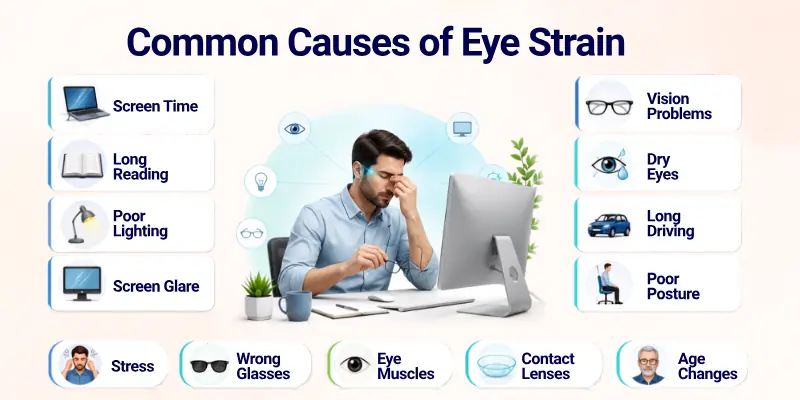
Some causes place extra stress on the eye muscles, while others make it harder for the eyes to stay focused. Over time, these issues can result in tired, sore, or uncomfortable eyes.
Here are the most common eye strain causes:
- Digital Eye Strain (Computer Vision Syndrome)
- Reading for Long Periods
- Poor Lighting Conditions
- Glare From Screens or Reflective Surfaces
- Uncorrected Vision Problems
- Dry Eyes
- Driving Long Distances
- Poor Posture While Working
- Stress and Fatigue
- Wearing the Wrong Prescription Glasses
- Eye Muscle Imbalance
- Contact Lens Irritation
- Age-Related Vision Changes
Let’s look at each cause in more detail.
1. Digital Eye Strain (Computer Vision Syndrome)
Spending long hours on digital devices is one of the most common causes of digital eye strain. Using computers, smartphones, and tablets for extended periods forces your eyes to focus continuously, which can make your eye muscles tired and uncomfortable.
Digital screens can also reduce how often you blink, causing dryness and irritation. Bright screens, glare, and incorrect settings may increase the pressure on your eyes and lead to discomfort during long work or study sessions.
Common factors that contribute to digital eye strain include:
- Long hours of computer work
- Frequent use of smartphones and tablets
- Screen glare and reflections
- Incorrect screen brightness or contrast settings
- Holding screens too close to the eyes
- Using digital devices without regular breaks
Learn more about tips to reduce eye strain and protect your eyes during long screen use.
2. Reading for Long Periods
Reading for a long time is another common cause of eye strain. When you focus on books, documents, or small text for extended periods, your eye muscles work harder to maintain clear vision. This continuous effort can lead to tired and uncomfortable eyes.
Many people experience tired eyes after studying, working with documents, or doing close-up tasks without breaks. Poor reading habits, such as holding material too close or reading in poor light, can increase eye discomfort.
Factors that may contribute to eye strain while reading include:
- Reading for several hours without breaks
- Looking at small text for a long time
- Holding books or documents too close
- Reading in dim lighting
- Continuous close focus on one object
Taking short breaks and following healthy eye habits can help reduce pressure on your eyes.
3. Poor Lighting Conditions
Poor lighting can make your eyes work harder and increase the risk of eye strain. When the light is too dim, your eyes need extra effort to focus. On the other hand, very bright light can create discomfort and make it harder to see clearly.
Many people do not realize that lighting plays an important role in causing eye strain. Working, reading, or using digital devices in unsuitable lighting can lead to tired eyes, headaches, and eye discomfort.
Factors that may contribute to eye strain due to poor lighting include:
- Reading or working in dim light
- Exposure to overly bright lights
- Uneven lighting in the room
- Working near strong light sources
- Using screens in dark environments
4. Glare From Screens or Reflective Surfaces
Glare from screens and reflective surfaces is another common reason for eye strain. When bright light reflects into your eyes, it creates extra stress and makes it harder to focus clearly. This can cause discomfort, especially during long periods of work or screen use.
Many people experience eye discomfort because of unwanted reflections from digital devices, windows, or bright indoor lights. Reducing glare can make your eyes feel more comfortable and reduce the effort needed to see.
Sources that may increase eye strain include:
- Reflections on computer monitors
- Sunlight coming through windows
- Bright indoor lights
- Glossy screens and surfaces
- Incorrect screen positioning
- High screen brightness settings
5. Uncorrected Vision Problems
Uncorrected vision problems are another important cause of eye strain. When your eyes cannot focus properly, they need to work harder to create a clear image. This extra effort can make your eyes feel tired, sore, or uncomfortable.
People with untreated vision issues may notice why their eyes feel strained after reading, using screens, or doing close-up work. Wearing the correct prescription glasses or contact lenses can help reduce the stress placed on your eyes.
Common vision problems that may lead to eye strain include:
- Nearsightedness (difficulty seeing far objects clearly)
- Farsightedness (difficulty seeing close objects clearly)
- Astigmatism (blurry or distorted vision)
- Presbyopia (age-related difficulty reading nearby objects)
- Blurred vision due to an outdated prescription
- Difficulty focusing on nearby or distant objects
6. Dry Eyes
Dry eyes are a common cause of eye strain because they make your eyes feel uncomfortable and force them to work harder. When your eyes do not produce enough tears or tears evaporate too quickly, you may experience dryness, irritation, and tired eyes.
Many people experience eye fatigue due to dry eyes, especially during long screen use or activities that require continuous focus. Reduced blinking, dry environments, and certain habits can make this problem worse. Some people also find relief through home remedies for eye strain that help soothe dry and irritated eyes.
Factors that may contribute to dry eyes include:
- Reduced tear production (not making enough tears)
- Dry air from fans or air conditioners
- Long periods of screen use
- Extended focus activities without breaks
- Contact lens use
- Environmental factors like dust and smoke
7. Driving Long Distances
Driving for long periods can also contribute to eye strain because your eyes need to stay focused on the road for extended hours. Continuous focus, changing light conditions, and reduced blinking during driving can make your eyes feel tired and uncomfortable.
Many people notice signs of tired and sore eyes after long journeys, especially when driving at night or in heavy traffic. The constant need to track movement and judge distances can increase the effort required from your eyes.
Factors that may contribute to eye strain while driving include:
- Continuous focus on the road
- Night driving with bright headlights
- Long hours without eye breaks
- Reduced blinking while concentrating
- Changing light conditions
- Looking at distant objects for extended periods
8. Poor Posture While Working
Poor posture while working can increase the risk of eye strain, especially when you spend many hours at a computer. Sitting too close to a screen, keeping the wrong screen height, or leaning forward can make your eyes work harder to maintain focus.
Poor workplace habits may also cause neck and shoulder tension, which can add to overall discomfort. Making simple changes to your sitting position and screen setup can help reduce pressure on your eyes.
Factors that may contribute to eye strain due to poor posture include:
- Incorrect screen height (screen placed too high or low)
- Sitting too close to the computer screen
- Leaning forward while working
- Neck and shoulder strain
- Eye muscle fatigue from poor positioning
9. Stress and Fatigue
Stress and fatigue can also contribute to eye strain by making your eyes feel tired and uncomfortable. When your body feels stressed or exhausted, your eye muscles may struggle to maintain focus, especially during work, reading, or screen use.
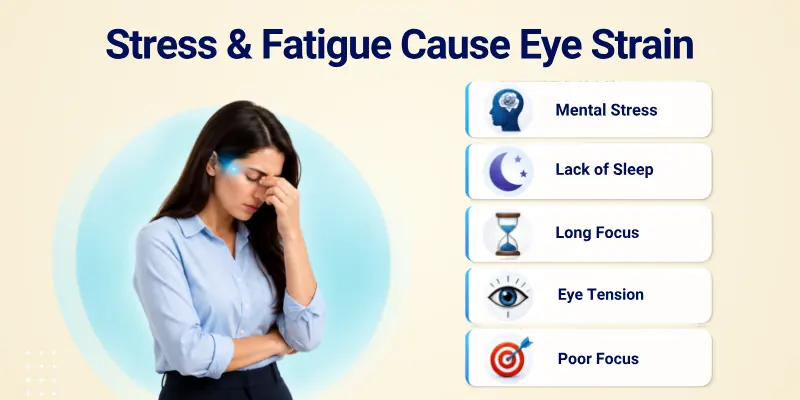
Many people experience eye strain headaches when they do not get enough rest or spend long hours concentrating on tasks. Lack of sleep and mental stress can increase eye discomfort and make it harder to focus.
Factors that may contribute to eye strain from stress and fatigue include:
- Mental stress (feeling worried or overwhelmed)
- Lack of sleep
- Long hours of concentration
- Eye muscle tension
- Reduced ability to focus clearly
10. Wearing the Wrong Prescription Glasses
Wearing the wrong prescription glasses can make your eyes work harder to see clearly and become a common reason for eye strain. When your glasses do not match your current vision needs, your eyes may struggle to focus, which can lead to tiredness and discomfort.
An outdated prescription or poorly fitted glasses can increase eye fatigue, especially during reading, computer work, or other activities that require clear vision. Getting regular eye checks can help ensure your glasses provide the right support.
Factors that may contribute to eye strain from incorrect glasses include:
- Outdated prescription (old lens power that no longer suits your eyes)
- Poor lens quality (lenses that affect clear vision)
- Incorrect fit (glasses that do not sit properly)
- Wrong lens strength
- Scratched or damaged lenses
11. Eye Muscle Imbalance
Eye muscle imbalance occurs when the muscles that control eye movement do not work together properly. This can make it harder for your eyes to focus on objects and may cause extra effort during reading, screen use, or other close-up activities.
People with this issue may wonder why are my eyes tired even after normal daily tasks because their eyes work harder to maintain clear vision. Proper eye examination can help identify muscle-related problems and find suitable solutions.
Factors that may contribute to eye strain from eye muscle imbalance include:
- Difficulty focusing (trouble keeping objects clear)
- Double vision (seeing two images instead of one)
- Increased eye effort during close-up work
- Trouble maintaining eye alignment
- Eye discomfort after prolonged visual tasks
12. Contact Lens Irritation
Contact lenses can sometimes cause eye strain when they do not fit properly or when they reduce the moisture on the surface of the eyes. Wearing lenses for too long can make your eyes feel dry, tired, and uncomfortable, especially during long periods of reading or screen use.
People who wear contact lenses may notice causes of eye discomfort due to irritation, dryness, or poor lens care. Using lenses correctly and following proper cleaning habits can help reduce stress on your eyes.
Factors that may contribute to eye strain from contact lenses include:
- Wearing lenses for too many hours
- Dryness caused by contact lens use
- Dirty or poorly cleaned lenses
- Incorrect lens fit
- Using expired contact lenses
13. Age-Related Vision Changes
Age-related vision changes are another common cause of eye strain, especially as people get older. With age, the eyes may lose some ability to focus clearly on nearby objects, which can make reading and close-up tasks more difficult.
These changes can lead to tired eyes because the eye muscles need extra effort to focus. Regular eye exams can help detect vision changes and ensure you use the right prescription.
Factors that may contribute to eye strain due to aging include:
- Presbyopia (difficulty seeing close objects with age)
- Reduced ability to focus quickly
- Changes in lens flexibility
- Need for updated glasses or contact lenses
- Increased difficulty with reading or screen use
Risk Factors That Increase Eye Strain
Some people have a higher chance of developing eye strain because of their daily activities, work habits, or existing eye problems. Spending long hours focusing on screens, reading, or doing close-up tasks can increase pressure on the eyes.
Certain lifestyle and health factors can make your eyes feel tired more often. Knowing these risk factors can help you take better steps to protect your eye comfort.
Here are the people who are more likely to experience eye strain:
- Office workers: Spend long hours using computers and digital devices.
- Students: Read, study, and use screens for extended periods.
- Gamers: Focus on screens for many hours without enough breaks.
- Graphic designers: Work with detailed visuals and screens for long periods.
- Drivers: Maintain continuous focus, especially during long trips.
- Older adults: Experience age-related changes that affect clear vision.
- People with existing eye conditions: May have more difficulty focusing and experience discomfort more easily.
When Should You See a Doctor?
Eye strain is usually temporary and improves with rest or simple changes in daily habits. However, some symptoms may continue or become more serious, which can indicate an underlying eye problem. Paying attention to warning signs can help you get the right care at the right time.
If your eye discomfort does not improve or affects your daily activities, it is important to seek medical advice.
Here are the signs that you should see a doctor:
- Persistent eye strain: Eye discomfort continues even after rest and reducing screen time.
- Frequent headaches: Regular headaches may be linked to vision problems or ongoing eye stress.
- Vision changes: Blurry vision, double vision, or other symptoms of eye strain that continue for a long time may need an eye checkup.
- Severe eye pain: Strong pain, redness, or sensitivity to light should not be ignored.
- Symptoms that do not improve with rest: Ongoing problems may require professional evaluation.
Conclusion
In this guide, we covered the most common causes of eye strain and explained how different habits, eye problems, and daily activities can affect your eye comfort. From long screen use and poor lighting to dry eyes, vision problems, and stress, many factors can make your eyes feel tired and uncomfortable.
Understanding what causes eye strain can help you identify the main trigger and make simple changes to protect your eyes. Taking regular breaks, maintaining healthy eye habits, and using the right vision correction can reduce discomfort and support better eye health.
Proper care can help prevent ongoing eye strain and keep your eyes comfortable. Simple exercises for eye relaxation may help reduce discomfort after long reading sessions.
FAQs About Reasons for Eye Strain
Here are answers to some common questions about causes of eye strain:
1. Can eye strain cause headaches?
Yes, eye strain can cause headaches because your eyes work harder to focus. Long screen use and vision problems can increase eye strain. Resting your eyes may help reduce discomfort.
2. Is eye strain permanent?
No, eye strain is usually temporary and improves with proper rest. Changing habits like taking breaks and reducing screen time can help. Persistent symptoms may need an eye checkup.
3. How long does eye strain last?
Eye strain can last from a few minutes to several hours. The duration depends on the cause and how much rest your eyes get. Reducing the trigger can help it improve faster.
4. Can mobile phones cause eye strain?
Yes, using mobile phones for long periods can cause eye strain. Small text, bright screens, and reduced blinking can increase discomfort. Taking regular breaks can help protect your eyes.
5. Does eye strain cause blurry vision?
Yes, eye strain can cause temporary blurry vision after long periods of focus. It usually improves when you rest your eyes. Ongoing blurry vision may require an eye examination.
6. What is the biggest cause of eye strain?
Here are the main factors that can increase eye strain:
- Long hours of screen use
- Poor lighting conditions
- Dry eyes
- Vision problems
- Lack of regular breaks
7. Can lack of sleep cause eye strain?
Yes, lack of sleep can make your eyes feel tired and uncomfortable. Poor rest can reduce your eyes’ ability to recover. Getting enough sleep can support better eye health.
8. How can I reduce eye strain naturally?
Here are simple ways to reduce eye strain naturally:
- Take regular breaks from screens
- Blink often to keep eyes moist
- Use proper lighting while working or reading
- Stay hydrated
- Practice healthy eye habits
- Try eye exercises for relaxation
9. Are blue light glasses effective for eye strain?
Blue light glasses may improve comfort for some people during screen use. However, they do not prevent all causes of eye strain. Taking breaks and adjusting screen habits are still important.
10. When should I worry about eye strain?
You should worry if eye strain continues despite rest and healthy habits. Severe pain, vision changes, or frequent headaches need medical attention. An eye doctor can help find the underlying cause.






- Be Respectful
- Stay Relevant
- Stay Positive
- True Feedback
- Encourage Discussion
- Avoid Spamming
- No Fake News
- Don't Copy-Paste
- No Personal Attacks
- Be Respectful
- Stay Relevant
- Stay Positive
- True Feedback
- Encourage Discussion
- Avoid Spamming
- No Fake News
- Don't Copy-Paste
- No Personal Attacks
