Home Remedies for Eye Strain: Simple Ways to Relieve Tired Eyes
Published: 22 Sep 2026
Do your eyes feel tired, dry, or uncomfortable after spending hours on a computer, phone, or tablet? Eye strain is a common problem that affects many people, especially those who spend a lot of time looking at screens. It can make daily tasks harder and leave your eyes feeling exhausted.
Many people experience symptoms such as blurred vision, headaches, burning eyes, or difficulty focusing. While eye strain is usually not serious, it can be frustrating and affect your comfort throughout the day. Learning to recognize the early symptoms of eye strain can help you take steps to relieve discomfort before it gets worse.
The good news is that several simple home remedies can help reduce eye strain and support eye comfort. In this article, you will learn about effective home remedies for eye strain, simple eye care habits, and ways to find natural relief at home.
Best Home Remedies for Eye Strain
Eye strain can make your eyes feel tired, dry, and uncomfortable. It often develops after long hours of screen use, reading, or other tasks that require intense focus. Several practical remedies may help relieve discomfort and give your eyes a chance to recover.
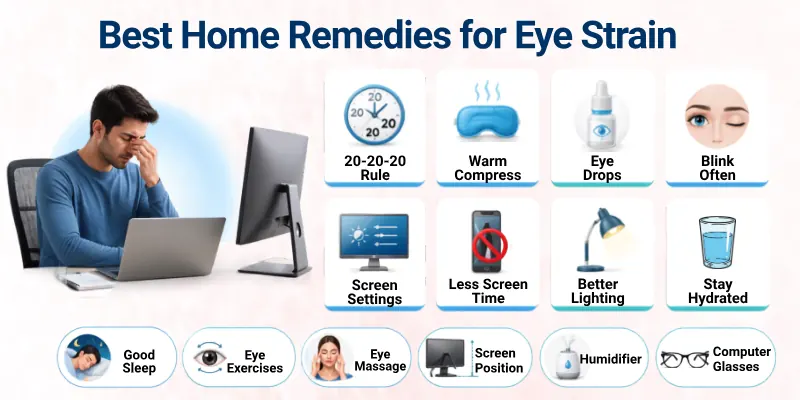
Most of these remedies are easy to follow and can become part of your daily routine. Small changes in your habits may provide noticeable relief from eye strain and help you avoid future problems.
Here are some effective remedies for eye strain:
- Follow the 20-20-20 Rule
- Apply a Warm Compress
- Use Artificial Tears
- Blink More Often
- Adjust Screen Brightness and Reduce Glare
- Reduce Screen Time
- Improve Room Lighting
- Stay Hydrated
- Get Enough Sleep
- Perform Simple Eye Exercises
- Massage Around the Eyes
- Position Your Screen Correctly
- Use a Humidifier
- Wear Computer Glasses if Needed
Let’s look at each remedy and how it may help relieve eye strain naturally.
1. Follow the 20-20-20 Rule
The 20-20-20 rule is a simple home remedy that can help reduce eye strain from prolonged screen use. Looking at screens for long periods forces your eyes to focus continuously, which may lead to discomfort and fatigue.
Taking short breaks throughout the day can help your eyes feel more relaxed. It is often recommended as a natural way to relieve eye strain and support comfortable screen use throughout the day.
How to do it:
- Look away from your screen every 20 minutes
- Focus on an object that is about 20 feet away
- Keep your eyes on that object for at least 20 seconds
- Return to your work and repeat the process throughout the day
Tip: Use a timer or reminder app to make this habit easier to follow.
2. Apply a Warm Compress
A warm compress may help soothe tired eyes and ease discomfort caused by eye strain. The gentle warmth can help your eyes feel more relaxed after long hours of reading, screen use, or other close-up tasks.
This remedy is especially helpful when your eyes feel strained after spending long hours looking at a computer, phone, or tablet screen. Many people use this simple remedy when their eyes feel tired or heavy.
How to do it:
- Soak a clean washcloth in warm water
- Wring out the excess water
- Close your eyes and place the cloth over them
- Leave it in place for 5 to 10 minutes
- Repeat once or twice a day as needed
Tip: Make sure the cloth is warm, not hot, to avoid irritating the delicate skin around your eyes.
3. Use Artificial Tears
Artificial tears can help relieve dryness and irritation that often occur with eye strain. Long hours of screen use may reduce how often you blink, which can leave your eyes feeling dry and uncomfortable. Using lubricating eye drops can help keep the eyes moist and improve overall comfort.
Artificial tears are available without a prescription and are commonly used for temporary relief from dry, tired eyes. They may be especially helpful if you experience eye strain while working on a computer or using digital devices for long periods.
How to do it:
- Choose preservative-free artificial tears if possible
- Follow the instructions provided on the product label
- Apply the recommended number of drops to each eye
- Use them whenever your eyes feel dry or irritated
- Avoid touching the dropper tip to your eyes or skin
Tip: If you wear contact lenses, check that the eye drops are safe to use with your lenses.
4. Blink More Often
Blinking helps keep your eyes moist and comfortable throughout the day. When using a computer, phone, or tablet, people often blink less than usual, which can lead to dryness and eye strain. Making a conscious effort to blink more often may help reduce irritation and improve eye comfort.
This simple habit can be especially useful for people who spend long hours looking at screens. Regular blinking supports healthy tear distribution and may provide relief from tired, dry eyes.
How to do it:
- Pause for a moment while using digital devices
- Close your eyes fully and then open them slowly
- Blink several times naturally in a row
- Repeat this throughout the day, especially during screen use
- Combine this habit with regular screen breaks for better results
Tip: Place a small reminder near your screen to help you remember to blink more often.
5. Adjust Screen Brightness and Reduce Glare
A screen that is too bright or too dim can make your eyes work harder than necessary. Glare from windows, overhead lights, or reflective screens may also contribute to eye strain and discomfort. Adjusting your screen settings and reducing glare can make viewing more comfortable, especially during long periods of screen use.
This simple change can help reduce visual stress and support better eye comfort throughout the day. It is particularly helpful for people who experience digital eye strain while working on computers or mobile devices.
How to do it:
- Adjust your screen brightness to match the lighting in your room
- Increase text size if you find yourself squinting
- Position your screen away from direct sunlight
- Reduce reflections from nearby lights or windows
- Use an anti-glare screen filter if needed
Tip: Clean your screen regularly, as dust and smudges can increase glare and make viewing more difficult.
6. Reduce Screen Time
Long hours of screen use can make your eyes feel tired and uncomfortable. The more time you spend looking at digital devices, the harder your eyes have to work to stay focused. Cutting back on screen time when possible may help reduce eye strain and improve overall eye comfort.
Reducing screen use is especially helpful if you experience eye fatigue after work, gaming, or extended browsing sessions. Giving your eyes time away from screens allows them to relax and recover naturally.
How to do it:
- Set daily limits for non-essential screen use
- Take part in activities that do not require digital devices
- Listen to podcasts or audiobooks instead of watching videos
- Avoid scrolling on your phone during breaks
- Spend some time outdoors each day when possible
Tip: Even a short period away from screens can help reduce eye fatigue and support healthier viewing habits.
7. Improve Room Lighting
Poor lighting can make it harder for your eyes to focus, especially when reading, working, or using digital devices. A room that is too dark or too bright may increase eye strain and make your eyes feel tired more quickly. Creating a comfortable lighting environment can help reduce unnecessary stress on your eyes.
Good lighting supports clear vision and may improve comfort during daily activities. It can be especially helpful for people who spend long hours reading or working at a desk.
How to do it:
- Use soft, even lighting throughout the room
- Position lights so they do not shine directly into your eyes
- Reduce harsh reflections from screens and work surfaces
- Turn on additional lighting when reading or doing detailed work
- Adjust window blinds or curtains to control natural light
Tip: Place a lamp beside your workspace instead of relying on a bright overhead light alone.
8. Stay Hydrated
Drinking enough water is important for overall health, including eye health. When your body does not get enough fluids, your eyes may feel dry, irritated, or uncomfortable. Staying hydrated can support healthy tear production and help keep your eyes properly lubricated.

This simple habit may be especially helpful if you experience dryness along with eye strain. For long-term eye support, staying hydrated can be combined with healthy daily habits and a diet that includes foods for eye health.
How to do it:
- Drink water regularly throughout the day
- Carry a water bottle to make hydration easier
- Increase your fluid intake during hot weather or physical activity
- Limit drinks that may contribute to dehydration
- Eat water-rich foods such as cucumbers, oranges, and watermelon
Tip: Do not wait until you feel thirsty. Drinking water consistently throughout the day can help support healthy eye moisture.
9. Get Enough Sleep
Sleep gives your eyes time to rest and recover from the demands of the day. Long hours of screen use, reading, and other visually demanding activities can leave your eyes feeling tired and strained. Getting enough sleep may help reduce eye fatigue and support overall eye comfort.
Poor sleep can make eye strain symptoms feel worse and may lead to dry eyes, difficulty focusing, and increased sensitivity to light. A consistent sleep routine can help your eyes function more comfortably throughout the day.
How to do it:
- Aim for 7 to 9 hours of sleep each night
- Go to bed and wake up at the same time every day
- Create a dark, quiet, and comfortable sleeping environment
- Avoid caffeine and heavy meals close to bedtime
- Limit screen use before going to sleep
Tip: Give your eyes a break from phones, tablets, and computers before bedtime to help them relax and prepare for sleep.
10. Perform Simple Eye Exercises
Simple eye exercises may help relax the eye muscles and reduce tension caused by prolonged screen use. They are often used as a natural way to relieve eye strain and improve visual comfort. These exercises do not strengthen your eyesight, but they may help your eyes feel less tired after long periods of focusing.
If you spend several hours each day using digital devices, adding a few minutes of eye exercises to your routine may help reduce discomfort. You can learn more about effective eye exercises for eye strain to support healthy screen habits.
How to do it:
- Look up, down, left, and right slowly
- Roll your eyes gently in a circular motion
- Shift your focus between a nearby object and a distant object
- Close your eyes for a few seconds between exercises
- Repeat the movements several times without straining your eyes
Tip: Stop immediately if an exercise causes pain or discomfort.
11. Massage Around the Eyes
A gentle eye massage may help ease tension around the eyes and surrounding muscles. Long periods of concentration can cause tightness in the area around the eyes, eyebrows, and temples. A light massage may promote relaxation and help your eyes feel more comfortable.
This remedy can be especially helpful after a long day of screen use or close-up work. It is simple to perform and requires no special equipment.
How to do it:
- Wash your hands before touching your face
- Close your eyes and relax your facial muscles
- Use your fingertips to gently massage around the eyebrows and temples
- Apply light pressure and move in small circular motions
- Continue for one to two minutes as needed
Tip: Avoid pressing directly on your eyeballs, as this may cause discomfort.
12. Position Your Screen Correctly
The position of your screen can affect how hard your eyes have to work throughout the day. A screen that is too close, too far away, or placed at the wrong height may contribute to eye strain and discomfort. Setting up your workspace correctly can help reduce stress on your eyes and support more comfortable viewing.
Proper screen placement is especially important for people who spend long hours working on computers. A few small adjustments can make screen use easier on your eyes.
How to do it:
- Place your screen about an arm’s length away from your eyes
- Position the top of the screen at or slightly below eye level
- Keep the screen directly in front of you
- Adjust your chair and desk for a comfortable viewing angle
- Avoid looking up or down at your screen for long periods
Tip: If you use multiple screens, place the one you use most often directly in front of you.
13. Use a Humidifier
Dry indoor air can make eye strain symptoms feel worse, especially if your eyes already feel dry or irritated. A humidifier adds moisture to the air, which may help keep your eyes more comfortable throughout the day. This can be particularly helpful during winter or in air-conditioned environments.
People who spend long hours indoors may notice less eye dryness when the air contains adequate moisture. A humidifier can be a useful addition to other eye strain relief habits.
How to do it:
- Place a humidifier in the room where you spend most of your time
- Follow the manufacturer’s instructions for proper use
- Keep the device clean to prevent mold and bacteria buildup
- Maintain a comfortable indoor humidity level
- Refill the water tank as needed
Tip: Position the humidifier nearby, but avoid directing moisture straight toward your face.
14. Wear Computer Glasses if Needed
Computer glasses are designed to make screen viewing more comfortable. They may help reduce eye strain by improving visual clarity and reducing glare from digital devices. Some people find them useful when spending several hours each day working on a computer.
These glasses are not necessary for everyone, but they may provide additional comfort if you regularly experience digital eye strain. An eye care professional can help determine whether they are suitable for your needs.
How to do it:
- Schedule an eye examination if you frequently experience eye strain
- Ask your eye doctor whether computer glasses may be helpful
- Wear the glasses during extended periods of screen use
- Follow any recommendations provided by your eye care professional
- Keep the lenses clean for clear vision
Tip: Computer glasses work best when combined with healthy habits such as regular breaks and proper screen positioning.
When Should You See a Doctor?
Eye strain is usually temporary and often improves with simple home remedies. However, some symptoms should not be ignored. If your symptoms continue or become worse, it may be time to consult an eye care professional.
Persistent eye discomfort may sometimes be linked to an underlying eye condition that requires professional care.
Seek medical attention if:
- Persistence: Symptoms last for several days.
- Pain: Eye pain becomes severe.
- Vision Changes: Blurred vision or other vision problems occur.
- Headaches: Frequent headaches develop.
- Redness: Redness or swelling appears around the eyes.
- No Relief: Home remedies do not improve your symptoms.
Conclusion
In this guide, we covered some of the most effective home remedies for eye strain, including the 20-20-20 rule, warm compresses, artificial tears, proper screen habits, eye exercises, and other simple ways to improve eye comfort.
These remedies can help reduce eye fatigue and support healthier daily screen use. While eye strain is often temporary, it is still important to understand the causes of eye strain and recognize the early symptoms of eye strain.
Following healthy habits, practicing regular eye exercises for eye strain, and eating foods for eye health can help protect your eyes and reduce future discomfort. If symptoms persist or become severe, consult an eye care professional for proper evaluation.
FAQs About Home Remedies for Eye Strain
Here are answers to some of the most commonly asked questions about home remedies for eye strain.
1. What is the fastest way to relieve eye strain at home?
Here are some quick ways to relieve eye strain:
- Take a short break from screens.
- Follow the 20-20-20 rule.
- Blink more often to keep your eyes moist.
- Apply a warm compress to soothe tired eyes.
2. Can eye strain go away on its own?
Yes, eye strain often improves with rest. Taking breaks from screens can help. Most symptoms go away within a short time. Healthy eye habits can speed up recovery.
3. Does sleeping help eye strain?
Yes, sleep helps your eyes recover. It can reduce eye fatigue and discomfort. Aim for enough sleep each night. A consistent sleep schedule may provide better results.
4. Are warm compresses good for tired eyes?
Yes, warm compresses can soothe tired eyes. They may help relax the muscles around the eyes. Many people find them comforting after screen use. This remedy is simple and easy to do at home.
5. How long does eye strain usually last?
Eye strain can last for a few minutes or several hours. The duration depends on the cause. Most cases improve with rest. Persistent symptoms may require medical advice.
6. Can dehydration cause eye strain?
Yes, dehydration can contribute to dry eyes. Dryness may make eye strain symptoms worse. Drinking enough water can help. Proper hydration supports healthy tear production.
7. Which eye exercises help reduce eye strain?
Eye rolling and focus-shifting exercises may help. Looking at distant objects can also relax the eyes. These exercises are simple to do at home. Regular practice may improve eye comfort during screen use.
8. Is eye strain harmful to eyesight?
Eye strain is usually temporary. It does not normally cause permanent vision damage. Persistent symptoms should be checked by a doctor. An eye exam can help identify any underlying problems.
9. What foods help reduce eye strain?
Here are some foods that support eye health:
- Carrots
- Leafy green vegetables
- Fatty fish
- Citrus fruits
- Nuts and seeds
They may also help reduce eye fatigue and support comfortable vision.
10. When should I worry about eye strain?
See a doctor if symptoms do not improve. Severe pain or vision changes should not be ignored. Frequent headaches also require medical attention. Early treatment can help prevent complications.





- Be Respectful
- Stay Relevant
- Stay Positive
- True Feedback
- Encourage Discussion
- Avoid Spamming
- No Fake News
- Don't Copy-Paste
- No Personal Attacks
- Be Respectful
- Stay Relevant
- Stay Positive
- True Feedback
- Encourage Discussion
- Avoid Spamming
- No Fake News
- Don't Copy-Paste
- No Personal Attacks
