Causes of Yellow Teeth: Common Reasons Behind Tooth Discoloration
Published: 9 Oct 2026
Have you noticed your teeth looking more yellow than before and wondered why? It can be confusing, especially if you brush your teeth every day. While poor oral hygiene is one possible reason, it is not the only cause.
Aging, smoking, certain medications, genetics, and even tooth injuries can also affect the color of your teeth. Understanding the causes of yellow teeth can help you identify what may be behind the discoloration.
In this article, you’ll learn the most common reasons teeth turn yellow, the risk factors involved, and when it may be time to see a dentist.
Common Causes of Yellow Teeth
Yellow teeth can develop for many different reasons. In some people, the cause is a daily habit, while in others it may be related to aging, genetics, or an underlying health condition.
More than one factor can also contribute to tooth discoloration over time. Here are the most common causes of yellow teeth:
- Poor Oral Hygiene
- Coffee and Tea
- Red Wine
- Dark-Colored Foods
- Smoking and Tobacco Use
- Aging
- Genetics
- Certain Medications
- Excess Fluoride
- Tooth Injury or Trauma
- Teeth Grinding
- Acidic Foods and Drinks
- Dry Mouth
- Medical Conditions
Let’s look at each cause in more detail.
1. Poor Oral Hygiene
Poor oral hygiene is one of the most common causes of yellow teeth. When you do not brush and floss regularly, plaque builds up on the surface of your teeth. This layer traps bacteria and stains, making your teeth look dull or yellow.
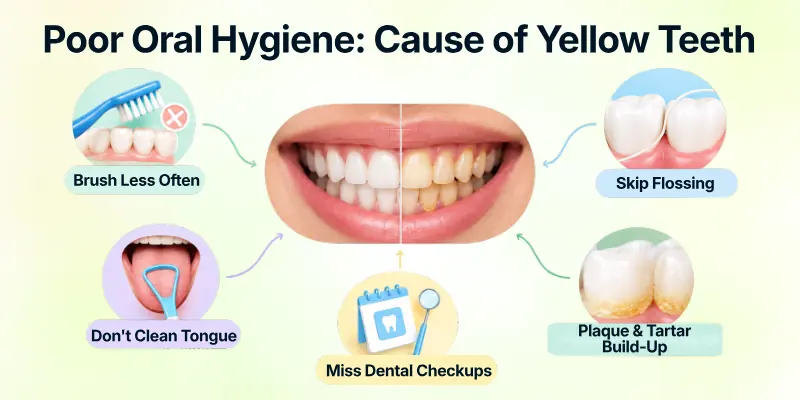
If plaque is not removed, it can harden into tartar. Tartar has a yellow or brown color and cannot be removed by brushing alone. It usually requires professional dental cleaning.
Poor oral hygiene habits include:
- Brushing your teeth less than twice a day
- Skipping daily flossing
- Not cleaning your tongue
- Missing regular dental checkups
- Allowing plaque and tartar to build up
2. Coffee and Tea
Coffee and tea are popular drinks, but they can gradually stain your teeth. They contain natural compounds called tannins that stick to tooth enamel, making it easier for stains to develop. Over time, these stains can make your teeth appear yellow or dull.
The chance of discoloration increases with frequent consumption because new stains build up on top of old ones. If teeth are not cleaned properly, the stains become more noticeable and harder to remove.
Habits that increase staining from coffee and tea include:
- Drinking several cups every day
- Sipping coffee or tea for long periods
- Drinking black coffee or dark tea regularly
- Not rinsing your mouth after drinking them
- Skipping brushing and flossing
3. Red Wine
A glass of red wine can do more than stain a glass. It can also leave stains on your teeth over time. Red wine contains dark pigments, tannins, and natural acids that can gradually change the color of tooth enamel.
Frequent exposure allows these pigments to build up on the surface of the teeth, making discoloration more noticeable. The natural acids in red wine can also weaken the enamel temporarily, making it easier for stains to stick.
Habits that can increase staining from red wine include:
- Drinking red wine regularly
- Sipping it over a long period
- Not rinsing your mouth after drinking
- Brushing immediately after drinking red wine
- Poor daily oral hygiene
4. Dark-Colored Foods
Many dark-colored foods contain natural pigments that can stick to the surface of your teeth. Eating these foods occasionally is unlikely to cause noticeable discoloration, but frequent consumption can gradually stain the enamel.
The risk of staining increases when these pigments remain on the teeth for a long time, especially if plaque is present. Good oral hygiene can help reduce surface stains.
Dark-colored foods that commonly stain teeth include:
- Dark berry fruits
- Tomato-based sauces
- Curry-based dishes
- Soy sauce meals
- Beetroot-containing foods
- Balsamic vinegar dressings
5. Smoking and Tobacco Use
Smoking and other tobacco products can leave stubborn stains on your teeth. Tobacco contains nicotine and tar, which gradually build up on the enamel and cause yellow or brown discoloration. The longer you use tobacco, the more noticeable the stains can become.
Tobacco also reduces saliva production and encourages plaque buildup, making it easier for stains to stick to the teeth. Without regular dental care, these stains often become more difficult to remove.
Smoking and tobacco habits that increase staining include:
- Daily cigarette smoking
- Regular pipe smoking
- Chewing tobacco products
- Long-term tobacco use
6. Aging
It is normal for teeth to become less white with age. As the years pass, the outer layer of enamel gradually becomes thinner from everyday chewing and wear. This allows the naturally yellow dentin beneath the enamel to show through more clearly.
Years of exposure to foods, drinks, and other staining habits can also make discoloration more noticeable. Although aging is a natural process, it often works together with other factors that affect the color of your teeth.
Age-related factors include:
- Thinning tooth enamel
- Visible yellow dentin
- Years of stain buildup
- Everyday tooth wear
7. Genetics
Your genes play a role in the natural color of your teeth. Some people are born with enamel that is thinner or less translucent, making the yellow dentin underneath more visible. This is why two people with the same oral hygiene habits can have different tooth shades.
Unlike stains caused by food or smoking, genetic tooth color is a natural trait. Good oral hygiene is still important, but it may not completely change the natural shade of your teeth.
Genetics may lead to:
- Naturally thinner enamel
- More visible dentin
- Darker natural tooth shade
- Less translucent enamel
8. Certain Medications
Some medicines can affect the color of your teeth, especially when they are used for a long time or during childhood. In certain cases, the discoloration develops inside the tooth, making it more difficult to remove with regular brushing or whitening toothpaste.
Not everyone who takes these medications will develop yellow teeth. The risk depends on the type of medicine, the person’s age, and how long it is used.
Medications linked to tooth discoloration include:
- Tetracycline antibiotics
- Doxycycline antibiotics
- Certain antihistamines
- Some blood pressure medicines
- Specific chemotherapy drugs
9. Excess Fluoride
Fluoride helps protect teeth from decay, but too much fluoride during childhood can affect how permanent teeth develop. This condition is called dental fluorosis and may cause white, yellow, or brown changes in tooth color.
Dental fluorosis only develops while the teeth are forming under the gums, usually before the age of eight. Once the teeth have fully developed, excess fluoride will not cause fluorosis.
Common sources of excess fluoride include:
- Swallowing fluoride toothpaste
- Fluoride-rich drinking water
- Excess fluoride supplements
- Frequent fluoride treatments
10. Tooth Injury or Trauma
A blow to the mouth or a tooth injury can change the color of a tooth. After an injury, the inner tissues of the tooth may become damaged, causing the affected tooth to turn yellow, gray, or even brown over time.
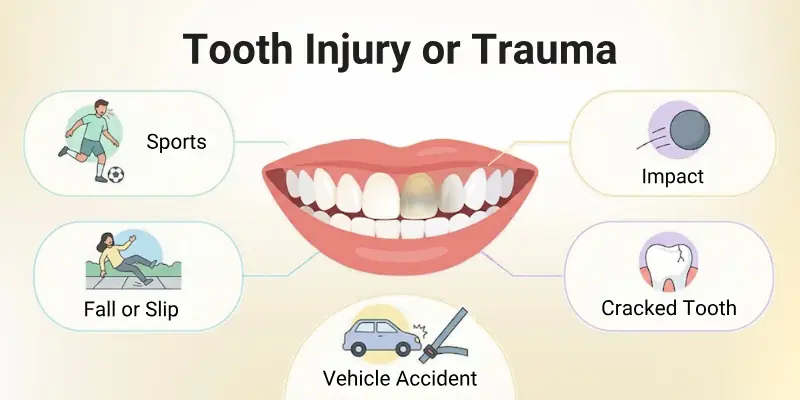
In many cases, only the injured tooth changes color while the surrounding teeth remain the same. If you notice discoloration after an accident or injury, it is important to have the tooth checked by a dentist.
Tooth injuries that may cause discoloration include:
- Sports-related accidents
- Falls and slips
- Hard object impact
- Vehicle accidents
- Cracked tooth injuries
11. Teeth Grinding (Bruxism)
Grinding or clenching your teeth can gradually wear down the protective enamel. As the enamel becomes thinner, the yellow dentin underneath becomes more visible, making your teeth appear more yellow over time.
Many people grind their teeth while sleeping without realizing it. If the habit continues for a long time, it can affect both the appearance and health of your teeth.
Signs of teeth grinding include:
- Worn tooth edges
- Flattened tooth surfaces
- Jaw pain
- Morning headaches
- Tooth sensitivity
12. Acidic Foods and Drinks
Acidic foods and drinks do not stain your teeth directly, but they can gradually wear away the protective enamel. As the enamel becomes thinner, the yellow dentin underneath becomes easier to see, making your teeth appear more yellow.
Frequent exposure to acids also leaves the tooth surface more vulnerable to stains from coffee, tea, and other dark-colored foods. Over time, this combination can make discoloration more noticeable.
Common acidic foods and drinks include:
- Soft drinks
- Citrus fruits
- Sports drinks
- Energy drinks
- Vinegar-based foods
13. Dry Mouth
Saliva plays an important role in keeping your teeth clean by washing away food particles and bacteria. When your mouth does not produce enough saliva, plaque and stains can build up more easily, making your teeth look yellow over time.
Dry mouth can develop because of certain medications, dehydration, or underlying health conditions. If it continues for a long time, it can increase the risk of tooth discoloration and other oral health problems. Learn more about the causes of dry mouth and what may be triggering it.
Dry mouth may result from:
- Certain medications
- Dehydration
- Medical conditions
- Mouth breathing
- Cancer treatments
14. Medical Conditions
Some health conditions can affect the color of your teeth by changing the way enamel develops or reducing saliva production. In other cases, an underlying condition may make teeth more likely to collect plaque and stains over time.
Tooth discoloration caused by a medical condition is often difficult to improve with brushing alone. If your teeth become yellow without an obvious reason or the color changes suddenly, it is a good idea to see a dentist to identify the underlying cause.
Medical conditions linked to yellow teeth include:
- Enamel development disorders
- Dry mouth conditions
- Liver disease
- Celiac disease
- Calcium deficiency
Types of Tooth Discoloration
Not all yellow teeth are caused by the same problem. Tooth discoloration is generally divided into three main types based on where the stain develops and what causes it.
1. Extrinsic (Surface) Stains
These stains develop on the outer surface of the teeth and are the most common type of discoloration.
Common causes include:
- Coffee and tea
- Smoking or tobacco
- Red wine
- Dark-colored foods
- Poor oral hygiene
2. Intrinsic (Internal) Stains
These stains form inside the tooth and are often more difficult to remove than surface stains.
Common causes include:
- Certain medications
- Tooth injury
- Excess fluoride
- Genetic factors
3. Age-Related Discoloration
This type of discoloration develops naturally as you get older and your enamel gradually wears away.
Common changes include:
- Thinner tooth enamel
- Visible yellow dentin
- Years of stain buildup
Risk Factors That Increase Yellow Teeth
Some people are more likely to develop yellow teeth because of their daily habits, age, or natural characteristics. Having one or more of these risk factors does not always mean your teeth will become yellow, but it does increase the likelihood of tooth discoloration over time.
Check whether any of these risk factors apply to you:
- Smoking or tobacco use: Tobacco leaves stubborn stains that gradually darken tooth enamel.
- Coffee: Frequent coffee consumption allows stains to build up over time.
- Poor oral hygiene: Plaque and tartar make teeth look more yellow and dull.
- Age: Enamel naturally becomes thinner as you get older.
- High-sugar diet: Sugar encourages plaque buildup, which can contribute to discoloration.
- Acidic beverages: Acid wears down enamel and makes yellow dentin more visible.
- Medications: Some medicines may affect tooth color or enamel development.
- Genetic factors: Your natural enamel and dentin color are partly inherited.
Signs That Yellow Teeth May Need Professional Attention
Yellow teeth are often caused by everyday habits and are not always a reason to worry. However, some signs may indicate an underlying dental problem that requires professional care. Recognizing these symptoms early can help prevent more serious complications.
Watch for these warning signs of yellow teeth:
- Sudden discoloration: A tooth that changes color quickly should be examined by a dentist.
- Single yellow tooth: One discolored tooth may be linked to injury or nerve damage.
- Tooth pain: Pain along with yellow teeth may indicate decay or an infection.
- Sensitivity: Increased sensitivity can be a sign of enamel wear or exposed dentin.
- Swollen gums: Swollen gums may point to gum disease or another oral infection.
- Tooth decay: Cavities can weaken teeth and contribute to discoloration.
- Tooth cracks: Cracks may trap stains and increase the risk of tooth damage.
- Bad breath: Persistent bad breath with stained teeth may result from plaque or gum disease.
How to Prevent Yellow Teeth
Many of the causes of yellow teeth can be prevented with simple daily habits. If your teeth are already discolored, you can also explore our guide on home remedies for yellow teeth for natural ways to reduce surface stains at home.
Here are some practical tips to help keep your teeth looking brighter.
- Brush Properly Twice Daily
- Floss Every Day
- Reduce Staining Foods and Drinks
- Drink Water After Meals
- Stop Smoking
- Visit Your Dentist Regularly
- Use Whitening Toothpaste Carefully
Conclusion
In this guide, we covered the most common causes of yellow teeth, the different types of tooth discoloration, risk factors, warning signs, and simple ways to help prevent staining. Understanding what is causing your teeth to turn yellow is the first step toward choosing the right solution.
While many cases of yellow teeth are linked to everyday habits, some may be caused by underlying dental or medical conditions. If your tooth color changes suddenly, affects only one tooth, or is accompanied by pain or swelling, it is important to seek professional advice.
For mild surface stains, you can also explore our guide on home remedies for yellow teeth to learn about natural ways to improve the appearance of your teeth at home.
Frequently Asked Questions
Here are answers to some of the most common questions about the causes of yellow teeth.
1. What is the most common cause of yellow teeth?
Poor oral hygiene is one of the most common causes of yellow teeth. Common reasons include:
- Infrequent tooth brushing
- Skipping daily flossing
- Plaque buildup
- Tartar accumulation
- Poor dental hygiene
2. Can yellow teeth become white again?
Yes, many cases of yellow teeth can improve with good oral hygiene and professional dental cleaning. Surface stains are usually easier to remove than stains inside the tooth. The right treatment depends on what is causing the discoloration.
3. Why are my teeth yellow even though I brush every day?
Brushing alone may not remove all the causes of yellow teeth. Genetics, aging, medications, enamel wear, or staining foods can still affect tooth color. A dentist can help identify the underlying cause if brushing does not improve the color.
4. How can I prevent my teeth from turning yellow?
You can lower the risk of yellow teeth by following good oral hygiene habits and avoiding common staining factors.
To help prevent yellow teeth:
- Brush twice daily
- Floss every day
- Limit staining drinks
- Reduce acidic foods
- Drink water after meals
- Avoid tobacco products
- Visit your dentist regularly
5. Does coffee permanently stain teeth?
Coffee can leave surface stains on tooth enamel, especially when consumed daily. These stains are not always permanent and may improve with proper dental care. Reducing coffee intake and maintaining good oral hygiene can help prevent further staining.
6. Can smoking cause yellow teeth?
Yes, smoking is a major cause of yellow teeth. Nicotine and tar leave stubborn stains that become darker with continued tobacco use. Quitting smoking can help prevent new stains from forming.
7. Can medications make teeth yellow?
Yes, some medications can contribute to tooth discoloration. Certain antibiotics, antihistamines, and blood pressure medicines are known to affect tooth color in some people. Do not stop taking prescribed medication without medical advice.
8. Is yellowing of one tooth normal?
A single yellow tooth is not always normal and may be linked to a tooth injury, infection, or nerve damage. Unlike general staining, discoloration in one tooth often has a specific cause. It is best to have it checked by a dentist.
9. Are yellow teeth always caused by poor oral hygiene?
No, poor oral hygiene is only one possible cause. Genetics, aging, certain medications, and medical conditions can also make teeth appear yellow. Some people naturally have darker-looking teeth despite good oral care.
10. When should I see a dentist about yellow teeth?
Yellow teeth are not always a dental emergency, but some symptoms should not be ignored.
See a dentist if you have:
- Sudden tooth discoloration
- One yellow tooth
- Tooth pain
- Tooth sensitivity
- Swollen gums
- Signs of tooth decay
- Cracked tooth
- Persistent bad breath




- Be Respectful
- Stay Relevant
- Stay Positive
- True Feedback
- Encourage Discussion
- Avoid Spamming
- No Fake News
- Don't Copy-Paste
- No Personal Attacks
- Be Respectful
- Stay Relevant
- Stay Positive
- True Feedback
- Encourage Discussion
- Avoid Spamming
- No Fake News
- Don't Copy-Paste
- No Personal Attacks
