What is Intermittent Fasting and How It Can Improve Your Health
Published: 12 Jun 2026
Are you confused about what intermittent fasting really is and whether it works for you? You are not alone. Many people hear about fasting and assume it means skipping meals or starving yourself, but the truth is very different.
In this guide, I will break down what is intermittent fasting, explain how it works, and share the benefits and risks so you can decide if it fits your lifestyle. I have explored health and nutrition trends for years, and I will guide you step by step to make fasting simple, practical, and effective.
Let’s dig in!
What is Intermittent Fasting?
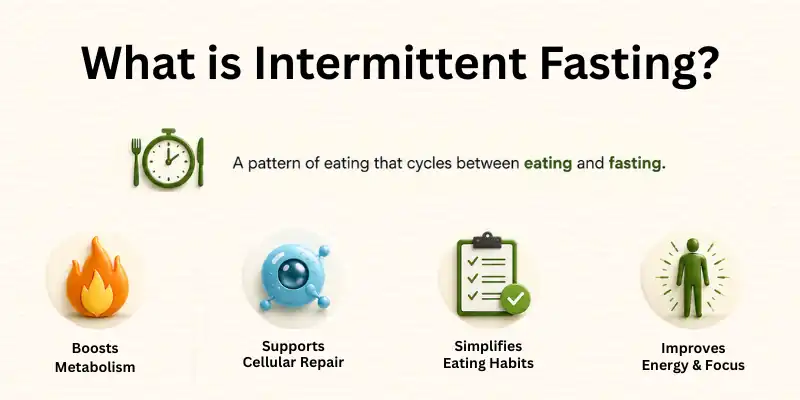
Intermittent fasting is not a diet but a pattern of eating that cycles between periods of eating and fasting. Unlike traditional diets that focus on what you eat, intermittent fasting focuses on when you eat. The idea is to give your body a break from constant digestion so it can burn stored fat and improve overall health.
Here’s how it works:
- Boosts metabolism: Fasting helps regulate insulin and increases fat burning.
- Supports cellular repair: The body uses fasting periods to repair cells and remove toxins.
- Simplifies eating habits: Fewer meals can make it easier to stick to healthy choices.
This approach uses your body’s natural rhythm to improve energy, focus, and fat loss without strict calorie counting.
Common Types of Intermittent Fasting
Intermittent fasting comes in several styles, each with its own schedule and rules. Choosing the right type depends on your lifestyle, goals, and how your body responds. Here are the most popular methods:
- 16/8 Method: Fast for 16 hours and eat during an 8-hour window. Most people skip breakfast and eat from noon to 8 PM.
- 5:2 Method: Eat normally five days a week, and reduce calories to about 500–600 on two non-consecutive days.
- Eat-Stop-Eat: Do a full 24-hour fast once or twice a week. For example, fasting from dinner one day to dinner the next.
- Alternate-Day Fasting: Alternate between normal eating days and fasting or very low-calorie days.
- OMAD (One Meal a Day): Eat all your daily calories in a single meal, fasting the rest of the day.
- Warrior Diet: Eat small amounts of raw fruits and vegetables during the day and one large meal at night.
Each type works by giving your body longer breaks from food, helping with fat burning, insulin regulation, and overall health.
How Intermittent Fasting Works
Intermittent fasting affects your body in several powerful ways, helping with fat loss, metabolism, and overall health. Understanding how your body responds makes it easier to use fasting effectively:
- Hormones and insulin: Fasting lowers insulin levels, which signals your body to burn stored fat for energy.
- Fat burning: With lower insulin, fat cells release stored energy, helping you lose fat naturally.
- Health vs. weight loss: Fasting for health focuses on improving cellular repair, brain function, and longevity, while fasting for weight loss targets fat burning and calorie control.
- Cellular repair and autophagy: Fasting triggers your body to clean out damaged cells and regenerate new ones, supporting long-term health.
- Metabolism boost: Short-term fasting can increase metabolic rate, giving your body a natural energy lift.
By understanding these effects, you can choose a fasting schedule that matches your goals and lifestyle.
Benefits of Intermittent Fasting
Intermittent fasting can improve your daily life and long-term health in ways that go beyond just burning fat. Here are the main benefits:
- Sustainable weight management: Helps control appetite and makes sticking to healthy eating easier.
- More consistent energy: Many people feel more alert and focused during fasting periods.
- Better digestion and gut health: Gives your digestive system a regular break and can reduce bloating.
- Potential longevity support: Can promote healthy aging by supporting overall cellular health.
- Mental clarity: Fasting may improve focus, concentration, and productivity.
- Simplified lifestyle: Fewer meals to plan and prepare saves time and reduces stress.
Risks and Who Should Avoid Intermittent Fasting
While intermittent fasting can be very effective, it is not suitable for everyone. Understanding the risks helps you stay safe and avoid potential health issues:
- Hunger and fatigue: Fasting can cause low energy, irritability, or difficulty concentrating, especially in the beginning.
- Headaches and dizziness: Skipping meals may lead to headaches or lightheadedness for some people.
- Overeating during eating windows: Some may overcompensate, which can reduce the benefits of fasting.
Not recommended for certain groups:
- Pregnant or breastfeeding women
- People with diabetes or low blood sugar
- Individuals with a history of eating disorders
- Children and teens are still growing
Always consult a healthcare professional before starting intermittent fasting if you fall into any of these categories. Listening to your body and adjusting your fasting plan is key to staying healthy.
Tips for Successful Intermittent Fasting
Starting intermittent fasting can feel challenging at first, but with the right approach, it becomes simple and sustainable.
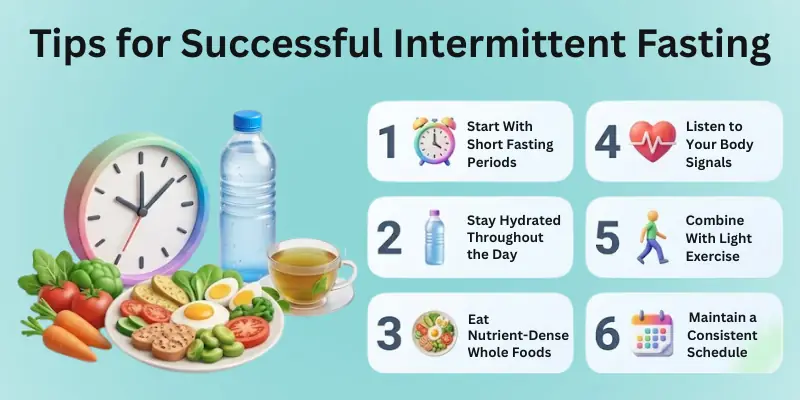
Here are practical tips to help you succeed:
- Start gradually: Begin with shorter fasting periods and slowly increase them as your body adjusts.
- Stay hydrated: Drink plenty of water, herbal tea, or black coffee during fasting hours to stay energized.
- Eat nutrient-dense foods: Focus on vegetables, lean proteins, healthy fats, and whole grains during eating windows.
- Listen to your body: Stop fasting if you feel dizzy, weak, or unwell, and try a gentler approach.
- Combine with light exercise: Gentle workouts like walking or yoga can support fasting without overstraining your body.
- Maintain a consistent schedule: Keeping regular fasting and eating times helps your body adapt faster.
Common Myths About Intermittent Fasting
Intermittent fasting is popular, but many people misunderstand how it works. Let’s clear up some common myths:
- Myth: Fasting slows metabolism: Short-term fasting can actually boost your metabolism, not slow it.
- Myth: You can eat anything during eating windows: Overeating unhealthy foods can reduce the benefits of fasting.
- Myth: Fasting causes muscle loss: When done properly with enough protein and exercise, fasting preserves muscle.
- Myth: Fasting is starving yourself: Fasting is about timing your meals, not skipping nutrition.
- Myth: Intermittent fasting is only for weight loss: It also improves focus, energy, and long-term health.
Final Note
In this guide, we have covered what is intermittent fasting in great detail, from how it works to its benefits, risks, and practical tips for success. If you are thinking of trying intermittent fasting, start slowly, listen to your body, and choose a method that fits your lifestyle. Remember, small changes consistently applied lead to the best results.
Don’t stop here; explore our other guides on this site to learn more about healthy eating, weight management, and lifestyle strategies that can help you feel your best every day.
FAQs
Here are some of the most commonly asked questions related to what is intermittent fasting:
Intermittent fasting is an eating pattern that alternates between periods of eating and fasting. It works by lowering insulin levels, boosting fat burning, and giving your body time to repair cells. This helps with weight management and overall health.
Yes, intermittent fasting helps your body burn stored fat and reduce calorie intake naturally. Many people find it easier to lose weight without strict dieting. Consistency and healthy food choices improve results.
Intermittent fasting is safe for most healthy adults, but it is not recommended for pregnant or breastfeeding women, children, people with diabetes, or those with eating disorders. Always consult a doctor if you have health concerns.
Fasting periods vary depending on the method. Common schedules include 16 hours fasting with an 8-hour eating window, or 24-hour fasts once or twice a week. Start gradually and listen to your body.
Yes, you can drink water, herbal tea, or black coffee during fasting periods. Avoid sugar, milk, or high-calorie drinks as they can break your fast. Staying hydrated supports energy and focus.
No, short-term intermittent fasting can actually boost metabolism. It helps regulate hormones and supports fat burning. Long-term fasting or extreme calorie restriction may have negative effects, so follow a safe schedule.
Yes, light to moderate exercise is safe and can complement fasting. Walking, yoga, or strength training during fasting periods can improve fat burning and energy. Avoid intense workouts if you feel weak or dizzy.
Results vary depending on your diet, fasting method, and lifestyle. Many people notice increased energy and reduced bloating within a few days, while weight loss may take a few weeks. Patience and consistency are key.
Focus on nutrient-dense foods like vegetables, lean proteins, healthy fats, and whole grains. Avoid processed foods and sugary snacks to get the most benefit from intermittent fasting. Balanced meals support energy and satiety.
Yes, intermittent fasting can improve insulin sensitivity, support heart health, boost brain function, and promote cellular repair. Over time, it may also help with healthy aging and longevity.






- Be Respectful
- Stay Relevant
- Stay Positive
- True Feedback
- Encourage Discussion
- Avoid Spamming
- No Fake News
- Don't Copy-Paste
- No Personal Attacks
- Be Respectful
- Stay Relevant
- Stay Positive
- True Feedback
- Encourage Discussion
- Avoid Spamming
- No Fake News
- Don't Copy-Paste
- No Personal Attacks
