Causes of Cracked Heels: Simple Guide to Main Factors
Published: 6 Aug 2026
Cracked heels are a common foot problem that many people ignore until they start causing pain or discomfort. What begins as dry, rough skin on the heels can gradually turn into deeper cracks that may even bleed in severe cases. While it might seem like a simple cosmetic issue, cracked heels often signal underlying problems such as lack of moisture, prolonged standing, or even certain health conditions.
Understanding the causes of cracked heels is the first step toward treating and preventing them effectively. Once you know what is damaging your skin, you can take simple daily actions to keep your feet soft, healthy, and pain-free.
In this guide, we will explore the main causes of cracked heels and how to manage them effectively.
What Are Cracked Heels?
Cracked heels are a common foot condition where the skin on the heels becomes dry, thick, and less flexible. This dryness causes the skin to harden and slowly break under pressure from walking or standing.
Over time, small lines appear on the heel, and these can turn into deeper cracks if the skin stays dry and unprotected.
Main Causes of Cracked Heels
Cracked heels start when the skin on your feet loses its softness and becomes dry. Everyday pressure from walking, standing, or wearing the wrong footwear makes the skin harder. As this continues, the skin weakens, and small cracks begin to form.
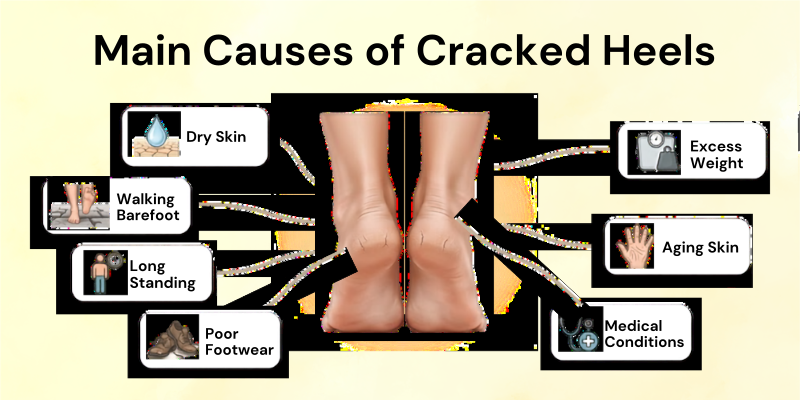
Here are the main causes of cracked heels:
- Dry Skin
- Walking Barefoot
- Standing for Long Hours
- Improper Footwear
- Obesity or Excess Weight
- Aging Skin
- Medical Conditions (like diabetes or eczema)
Let’s explain each cause in detail and how it affects your heel health.
1. Dry Skin
Dry skin is the most common cause of cracked heels. When the skin loses moisture, it becomes rough and less flexible. This makes it easier for the heel skin to split. Natural oils in the skin also reduce, which speeds up the dryness.
2. Walking Barefoot
Walking barefoot exposes the heels to hard and uneven surfaces. Constant friction removes natural softness from the skin. Over time, this leads to dryness and cracking. This habit also increases pressure on the heel area, which speeds up skin damage.
3. Standing for Long Hours
Standing for long periods puts continuous pressure on the heels. This pressure reduces skin strength and elasticity. As a result, cracks can form with regular strain. Blood circulation in the feet can also slow down, which affects skin repair.
4. Improper Footwear
Shoes that do not support the heel properly can increase stress on the skin. Open-back or hard footwear allows extra movement and friction. This weakens the skin and leads to cracks. Wearing such footwear for long hours makes the problem worse over time.
5. Obesity or Excess Weight
Extra body weight increases pressure on the feet during daily activities. The heels carry more load than normal. This constant stress can damage the skin over time. It can also reduce blood flow to the heel area, which slows down skin repair.
6. Ageing Skin
As the body ages, the skin produces less natural oil. The heel area becomes drier and thinner. This makes cracking more likely even with normal pressure. Skin also loses elasticity, so it cannot handle daily stress as easily.
7. Medical Conditions
Certain health conditions can affect skin health and its ability to heal. Diabetes, eczema, and thyroid issues can reduce moisture levels in the skin. This makes the heels more vulnerable to cracks and slow recovery. Skin also becomes weaker, so even small pressure can cause damage.
Symptoms of Cracked Heels
Cracked heels usually start with small changes in the skin that may look harmless at first. Over time, these signs become more visible and can cause discomfort while walking or standing. If ignored, the condition can get worse and lead to pain.
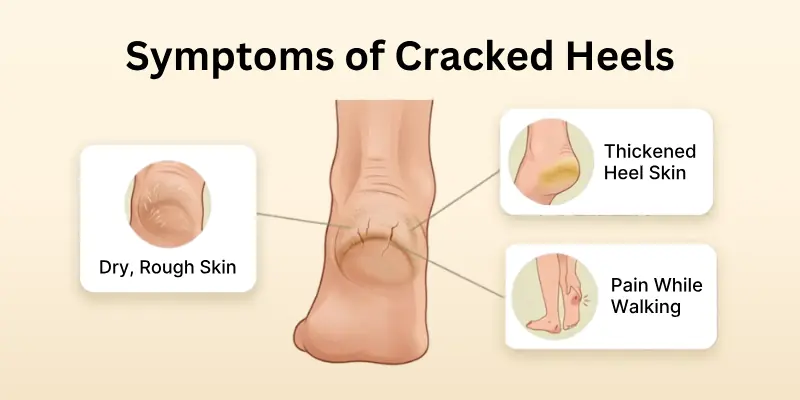
- Dry, Rough Skin: The heel area often becomes dry and rough in the early stage. The skin loses its smooth texture and starts feeling hard to touch. This is usually the first noticeable sign.
- Thickened Skin Around Heel: The skin around the heel may become thick over time. This happens as the skin tries to protect itself from constant pressure. It can make the heel look uneven and hard.
- Pain or Bleeding in Severe Cases: In advanced cases, deep cracks can form in the heel. These cracks may cause pain while walking or standing. If the skin breaks further, it can also lead to bleeding.
Conclusion
In this guide, we explored the main causes of cracked heels and how they develop over time. This condition often starts with simple dryness but can become painful if ignored.
Cracked heels can improve with regular care and simple routine changes. If left untreated, they may worsen and lead to pain, discomfort, or even infection in severe cases. Early attention and consistent foot care help prevent the condition from coming back.
If the condition is already visible, home remedies for cracked heels can help improve the skin.
FAQs
Here are some commonly asked questions about the causes of cracked heels.
Cracked heels are mainly caused by:
- Dry skin
- Standing for long hours
- Walking barefoot
- Improper footwear
- Medical conditions in some cases
Mild cracked heels may improve with basic foot care and moisturising. However, without proper care, they can get worse over time. Severe cases usually need regular treatment.
Most cases of cracked heels are not serious. But deep cracks can cause pain and discomfort. If ignored, they may also lead to infection.
You can treat cracked heels at home by:
- Soaking your feet in warm water
- Gently removing dead skin
- Applying a thick moisturiser daily
- Keeping feet clean and dry
Yes, walking barefoot increases friction on the heels. This makes the skin dry and thick over time. Eventually, cracks can start to form.
In some cases, a lack of vitamins and nutrients can affect skin health. This makes the skin dry and weak. As a result, heels may become more prone to cracking.
Yes, deep cracks can sometimes lead to bleeding. This usually happens in severe cases. It may also cause pain while walking.
Mild cases may improve within a few days of proper care. Severe cracks can take a few weeks to heal completely. Consistent treatment speeds up recovery.
Thick moisturising creams or petroleum-based ointments work best for cracked heels. They help lock in moisture and soften the skin. Regular use improves healing.
You should see a doctor if the cracks are deep or painful. Medical help is also needed if there is bleeding or infection. If home treatment does not work, professional care is important.





- Be Respectful
- Stay Relevant
- Stay Positive
- True Feedback
- Encourage Discussion
- Avoid Spamming
- No Fake News
- Don't Copy-Paste
- No Personal Attacks
- Be Respectful
- Stay Relevant
- Stay Positive
- True Feedback
- Encourage Discussion
- Avoid Spamming
- No Fake News
- Don't Copy-Paste
- No Personal Attacks
