Causes of Eye Bruising: Common Causes and When to See a Doctor
Published: 23 Oct 2026
You look in the mirror and notice a bruise around your eye. You don’t remember getting hit, and there’s no clear reason for it. Why is my eye bruised? Is this something to worry about, or is it just one of those things that happens sometimes?
Eye bruising confuses many people because it doesn’t always result from an obvious injury. Sometimes it shows up out of nowhere, and that can feel a little scary. Bruising around the eyes can happen for many reasons, from a simple bump to an unexpected health issue.
In this guide, we will cover the full list of causes of eye bruising, how long bruising usually takes to heal, when it’s an emergency, and answers to the most common questions people ask about this topic.
Let’s start by looking at why bruising happens around the eyes in the first place.
Causes of Eye Bruising
Eye bruising can happen for many reasons. Some causes are simple and go away on their own within a week or two. Others point to a health issue that needs a doctor’s attention. Knowing which one fits your case helps you know what to do next.
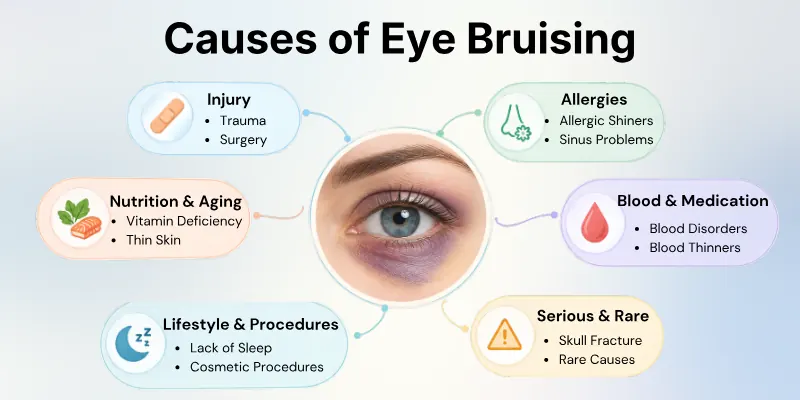
Below is a full list of the most common and less common reasons for bruising around the eyes. Keep reading to see which one matches what you’re going through.
- Trauma or Injury
- Facial or Nasal Surgery
- Allergic Shiners
- Sinus Congestion or Infection
- Blood Disorders
- Blood-Thinning Medications
- Vitamin Deficiencies
- Aging and Thin Skin
- Lack of Sleep or Fatigue
- Cosmetic Procedures
- Skull Fracture
- Rare Causes
Now let’s look at each of these causes one by one.
1. Trauma or Injury
A direct hit to the face is the most common reason for bruising around the eyes, often called a black eye. When something strikes the area, small blood vessels under the skin break, and blood leaks into the surrounding tissue. This is what causes the dark, purple discoloration people notice.
The skin around the eyes is thin and loose, which means it swells and bruises faster than skin on other parts of the face. Bruising from an injury doesn’t always show up right away. It’s common for a bruise to appear a full day after the impact, so don’t rule out an injury just because the discoloration showed up late.
Common sources of trauma that lead to eye bruising include:
- A fall or accidental bump
- A sports injury
- A blow during a fight or physical contact
- A car accident
2. Facial or Nasal Surgery
Bruising around the eyes is a normal part of healing after certain facial surgeries. Procedures like nose surgery, facelifts, and eyelid surgery all involve tissue close to the eyes, so it’s common for blood to pool in that area during recovery.
This type of bruising usually looks worse in the first few days and then fades over the following one to two weeks. Doctors often recommend cold compresses and rest to help speed up healing after these procedures.
Common surgeries that can cause bruising around the eyes include:
- Nose surgery (rhinoplasty)
- Facelifts
- Eyelid surgery (blepharoplasty)
- Dental or jaw surgery
3. Allergic Shiners
Allergies can do more than cause sneezing and a runny nose. Severe allergic reactions sometimes lead to swelling and a bruise-like discoloration under the eyes known as allergic shiners. This happens when congestion increases pressure in the blood vessels near the eyes.
Unlike a bruise from an injury, allergic shiners come from ongoing pressure rather than a broken blood vessel. Managing the allergy itself, whether through medication or avoiding triggers, usually clears up the discoloration. If your allergies also cause itchy eyes, you may find these home remedies for itchy eyes helpful.
Common triggers linked to allergic shiners include:
- Seasonal allergies
- Dust or pet dander
- Food allergies
- Reactions to makeup or skincare products
4. Sinus Congestion or Infection
When your sinuses are blocked or infected, the pressure can build up around the eyes and cause visible discoloration. This is closely related to allergic shiners, but the cause is congestion from illness rather than an allergic reaction.
The area under the eyes has thin skin with blood vessels close to the surface, so even mild swelling from sinus pressure can look like bruising. This type of bruising usually clears up once the congestion or infection is treated.
Common signs that sinus issues are behind your eye bruising include:
- Stuffy or blocked nose
- Pressure or pain around the cheeks and forehead
- Headache that worsens when bending forward
- Dark circles that appear alongside cold or flu symptoms
5. Blood Disorders
Some health conditions affect how well your blood clots, which makes bruising more likely even from very minor bumps. Conditions like hemophilia and thrombocytopenia fall into this category, and bruising around the eyes can be one of the visible signs.
People with these conditions often notice bruising in other parts of the body too, not just around the eyes. If bruises show up easily and take longer than usual to heal, it’s worth talking to a doctor about a possible blood disorder.
Common blood disorders linked to easy bruising include:
- Hemophilia
- Thrombocytopenia
- Von Willebrand disease
- Certain liver conditions that affect clotting
6. Blood-Thinning Medications
Certain medications make it harder for your blood to clot properly, which increases the chance of bruising, including around the eyes. This is a common and often overlooked cause, especially in people who take these medications daily for other health conditions.
If you’ve started a new medication and noticed more bruising than usual, it’s worth mentioning to your doctor. They may be able to adjust your dose or suggest ways to lower your risk of bruising.
Common medications linked to easier bruising include:
- Blood thinners like warfarin
- Aspirin
- Certain anti-inflammatory drugs
- Some supplements, like fish oil or vitamin E
7. Vitamin Deficiencies
Your blood vessels need certain vitamins to stay strong and healthy. Low levels of vitamin C or vitamin K can weaken the blood vessel walls, making it easier for bruises to develop around the eyes, even after minor pressure or injury.
A balanced diet can help provide the nutrients your body needs to maintain healthy blood vessels. If you think a nutrient deficiency may be the cause, you can also read our guide on signs of vitamin deficiency. A simple blood test can confirm whether a deficiency is contributing to your bruising before you start taking supplements.
Common vitamin deficiencies linked to easy bruising include:
- Vitamin C deficiency
- Vitamin K deficiency
- Vitamin B12 deficiency
- Poor overall nutrition
8. Aging and Thin Skin
As you get older, the skin around your eyes naturally becomes thinner and loses some of its elasticity. This makes the blood vessels underneath more visible and more likely to break, which can lead to bruising from even small bumps or rubbing.
These changes happen gradually and are a normal part of aging. Taking care of the delicate skin around your eyes and avoiding unnecessary rubbing may help reduce the risk of bruising over time.
Common age-related changes that lead to eye bruising include:
- Thinner skin around the eyes
- Loss of collagen and elasticity
- More visible and fragile blood vessels
- Slower healing after minor bumps
9. Lack of Sleep or Fatigue
Not getting enough sleep affects more than your energy levels. It can make the skin under your eyes look darker and cause blood vessels to become more noticeable, creating a bruised appearance.
This change usually develops over time instead of appearing suddenly. Getting enough quality sleep may help improve the appearance of the skin around your eyes. Learn more about the benefits of getting enough sleep every night and how healthy sleep habits support your overall well-being.
Common sleep-related habits that may contribute to eye bruising include:
- Sleeping less than seven hours a night
- Irregular sleep schedules
- Poor-quality sleep
- Ongoing stress that affects rest
10. Cosmetic Procedures
Certain cosmetic treatments involve needles or injections near the eyes, which can cause minor bleeding under the skin. Bruising after these procedures is common and usually temporary, fading within a week or two.
This type of bruising is expected and not usually a cause for concern. Applying ice shortly after the procedure can help reduce swelling and speed up healing.
Common cosmetic procedures that can cause bruising near the eyes include:
- Botox injections
- Dermal fillers
- Under-eye filler specifically
- Microneedling near the eye area
11. Skull Fracture
In more serious cases, bruising around both eyes can be a sign of a skull fracture, sometimes called raccoon eyes. This happens when blood from an injury at the base of the skull travels down and pools around the eyes.
This type of bruising usually follows a significant head injury and often comes with other symptoms. It’s considered a medical emergency and needs immediate attention.
Common warning signs that may point to a skull fracture include:
- Bruising around both eyes at once
- Clear fluid leaking from the nose or ears
- Severe headache after a head injury
- Confusion or loss of consciousness
12. Rare Causes
A small number of eye bruising cases come from more serious or rare health problems. In children, unexplained bruising around the eyes without any injury can sometimes be an early sign of a condition like leukemia, though this is uncommon.
Other rare causes include certain autoimmune conditions and tumors that affect blood vessels near the eyes. Any bruising that appears without a clear reason and doesn’t improve should be checked by a doctor.
Rare but serious causes of eye bruising include:
- Leukemia in children
- Autoimmune conditions affecting blood vessels
- Tumors near the eye socket
- Underlying clotting disorders
How Long Does Eye Bruising Take to Heal?
Once you know what’s causing your bruising, the next question is usually how long it will take to go away. Most eye bruising follows a predictable pattern of color changes as it heals, and the timeline depends a lot on the cause.
Here’s a general breakdown of what to expect during healing.
- Days 1 to 2: The bruise looks dark blue or purple
- Days 3 to 5: The color shifts to a deeper blue or green
- Days 6 to 10: The bruise turns yellow or light green as it fades
- Days 10 to 14: Most bruising clears up completely
Most minor eye bruises heal on their own without treatment. However, if the bruising appears without a clear cause, keeps coming back, affects your vision, or develops after a head injury, it’s important to see a healthcare professional as soon as possible.
When Is Eye Bruising an Emergency?
Not every case of eye bruising needs a trip to the emergency room, but some signs should never be ignored. Catching a serious problem early can make a big difference in how well it’s treated.
Seek medical attention right away if you notice any of the following along with your bruising.
- Vision Changes: Blurred, double, or reduced vision
- Blood on the Eye: Known as a subconjunctival hemorrhage, this can look alarming but is often harmless on its own.
- Blood Inside the Eye: Known as a hyphema, this is a serious sign that needs urgent care and can affect your vision.
- Bruising Around Both Eyes: Especially after a head injury.
- Fluid Leakage: Fluid leaking from the nose or ears may be a sign of a skull fracture.
- Severe Pain or Swelling: That keeps getting worse instead of better.
- Unexplained Bruising: Bruising that appears without an injury and doesn’t improve, especially if you also have swollen eyelids. Learn more about the causes of swollen eyelids.
Final Thought
In this guide, we walked through everything connected to the causes of eye bruising, starting with the most common reasons like trauma, surgery, and allergies. From there, we covered less obvious causes like blood disorders, vitamin deficiencies, and medications that thin the blood.
We also looked at how long bruising typically takes to heal, the warning signs that mean it’s time to seek emergency care, and answers to the most common questions people ask when they notice a bruise around their eye.
If you’re dealing with bruising that doesn’t match a simple injury, don’t wait too long before talking to a doctor. Most causes are harmless and heal on their own, but it’s always worth ruling out anything more serious. Eating a balanced diet and choosing foods for eye health may also help keep your eyes healthy and support long-term vision.
FAQs
Here are answers to some of the most common questions people ask about causes of eye bruising.
1. Why is my eye bruised with no injury?
Common causes of eye bruising without an injury include:
- Allergies
- Sinus congestion or infection
- Thin skin from aging
- Certain medications that thin the blood
- Lack of sleep
2. What causes sudden bruising around the eyes?
Common causes of sudden bruising around the eyes include:
- A recent bump or injury
- A blood disorder
- A skull fracture
- A severe allergic reaction
3. Can lack of sleep cause bruising under the eyes?
Yes. Poor sleep affects blood flow and can make the skin under your eyes look darker and more bruised over time. Improving your sleep habits usually helps this type of bruising fade.
4. How long does a black eye take to heal?
Most black eyes heal within one to two weeks. The bruise typically starts dark purple or blue and fades through green and yellow before disappearing completely.
5. Is bruising under the eyes without injury serious?
It depends on the cause. Bruising without injury is often harmless and linked to allergies, fatigue, or aging. But if it appears suddenly, spreads, or comes with other symptoms, it’s worth getting checked by a doctor.
6. Can allergies really cause bruising around the eyes?
Yes. Severe allergies can lead to what’s known as allergic shiners, where congestion increases pressure in the blood vessels near the eyes. This creates a bruise-like discoloration even without any injury.
7. What deficiency causes bruising around the eyes?
Low levels of vitamin C or vitamin K are the most common deficiencies linked to easy bruising. Both nutrients help keep blood vessels strong, so low levels can make bruising more likely even from light pressure.
8. Why do I bruise around my eyes so easily?
If bruises appear often without much force, there’s usually an underlying reason behind it. Common reasons for easy bruising around the eyes include:
- Thin, aging skin
- Blood-thinning medications
- An underlying blood disorder
- Low levels of vitamin C or vitamin K
- Frequent rubbing of the eyes
9. Can stress cause bruising around the eyes?
Stress itself doesn’t directly cause bruising, but it often leads to poor sleep, and lack of sleep can make the skin under your eyes look darker and more bruised over time.
10. Should I be worried about a bruise around one eye but not the other?
A bruise around just one eye is usually linked to a localized cause, like an injury, a sinus issue on that side, or a cosmetic procedure. Bruising around both eyes at once is more often linked to a head injury and should be checked right away.






- Be Respectful
- Stay Relevant
- Stay Positive
- True Feedback
- Encourage Discussion
- Avoid Spamming
- No Fake News
- Don't Copy-Paste
- No Personal Attacks
- Be Respectful
- Stay Relevant
- Stay Positive
- True Feedback
- Encourage Discussion
- Avoid Spamming
- No Fake News
- Don't Copy-Paste
- No Personal Attacks
