Causes of Heart Attack: Everything You Need to Know Before It Is Too Late
Published: 31 Jul 2026
Every year, millions of people experience a heart attack with little or no warning. In many cases, the damage has already been developing silently for years before any symptoms appear.
A heart attack does not happen suddenly in most cases. It is usually the result of long-term damage caused by unhealthy lifestyle habits, underlying medical conditions, and genetic factors that gradually affect the heart and blood vessels.
Understanding the causes of a heart attack is the first step toward prevention. When you know what increases your risk, you can take action early and protect your heart before serious problems develop.
In this guide, you will learn the major causes of heart attack, what happens inside the body during a heart attack, and how you can reduce your risk through simple lifestyle changes.
Main Causes of Heart Attack
A heart attack usually develops over time due to damage to the blood vessels and heart. Most cases are linked to lifestyle habits and underlying health conditions that gradually impede proper blood flow.
If you understand these causes early, you can take steps to protect your heart and reduce the risk.
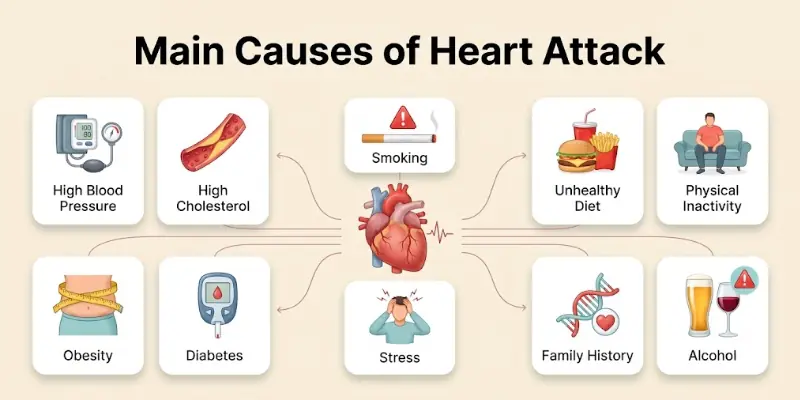
Let’s look at the reasons for a heart attack below:
- High Blood Pressure (Hypertension)
- High Cholesterol Levels
- Smoking and Tobacco Use
- Unhealthy Diet
- Physical Inactivity (Sedentary Lifestyle)
- Obesity (Excess Weight)
- Diabetes
- Stress and Mental Pressure
- Family History (Genetics)
- Alcohol Consumption
1. High Blood Pressure
High blood pressure occurs when blood exerts too much force on the artery walls. Over time, this pressure weakens and narrows the blood vessels. As a result, the heart has to work harder to pump blood.
- Artery walls get damaged
- Blood flow becomes restricted
- The heart is under extra strain
- The risk of a heart attack increases
Tip: Reducing salt intake and staying physically active can help keep blood pressure under control.
2. High Cholesterol Levels
High cholesterol happens when too much LDL (bad cholesterol) builds up in the blood. This excess cholesterol sticks to the artery walls and slowly forms plaque. Over time, this narrows the arteries and reduces normal blood flow to the heart.
- LDL cholesterol builds up in arteries
- Plaque formation narrows blood vessels
- Blood flow to the heart becomes restricted
- The risk of blockage and heart attack increases
Tip: Eating more fiber-rich foods like fruits, vegetables, and whole grains can help manage cholesterol levels naturally.
3. Smoking and Tobacco Use
Smoking and tobacco use damage the blood vessels and reduce the oxygen supply in the blood. This makes it harder for the heart to get the oxygen it needs to work properly. Over time, it also speeds up plaque buildup in the arteries.
- Damages blood vessel walls
- Reduces oxygen levels in the blood
- Increases plaque buildup in arteries
- Restricts normal blood flow to the heart
Tip: Quitting smoking early can quickly improve blood circulation and reduce strain on the heart.
4. Unhealthy Diet
An unhealthy diet includes foods that are high in saturated fat, sugar, and salt. Regular intake of fried and processed foods can slowly harm the heart. It also raises cholesterol levels and leads to weight gain, which puts extra pressure on the heart.
- Increases bad cholesterol levels
- Leads to weight gain and obesity
- Causes plaque buildup in arteries
- Affects normal blood circulation
Tip: Try to replace fried and processed foods with fresh home-cooked meals and balanced portions.
5. Physical Inactivity
Physical inactivity means spending most of the time sitting or avoiding regular movement. When the body is not active, the heart becomes weaker, and blood circulation slows down. Over time, this increases fat buildup and puts extra stress on the heart.
- Weakens heart muscles
- Slows down blood circulation
- Increases fat buildup in the body
- Reduces overall heart efficiency
Tip: Try to include at least 30 minutes of walking or light exercise in your daily routine.
6. Obesity
Obesity means having excess body fat that puts extra pressure on the heart. When the body carries more weight than normal, the heart has to work harder to pump blood. This extra strain can slowly weaken heart function over time.
- Increases pressure on the heart
- Raises blood pressure levels
- Increases the risk of diabetes and cholesterol problems
- Reduces overall heart efficiency
Tip: Maintaining a balanced diet and staying active can help manage body weight and support a healthier heart.
7. Diabetes
Diabetes is a condition where blood sugar levels stay too high for a long time. High blood sugar can damage blood vessels and make it harder for blood to flow properly. Over time, this increases strain on the heart and raises the risk of blockage.
- Damages blood vessels
- Reduces proper blood flow
- Increases the risk of artery blockage
- Puts extra strain on the heart
Tip: Keeping blood sugar under control with a balanced diet and regular checkups can protect heart health.
8. Stress and Mental Pressure
Stress and mental pressure happen when a person stays under constant emotional or psychological tension. This can come from work, personal problems, or daily life pressure. Over time, it can affect the heart and blood pressure by disturbing normal body balance.
- Increases blood pressure levels
- Affects normal heart rhythm
- Triggers unhealthy lifestyle habits
- Puts extra load on the heart
Tip: Simple habits like deep breathing, proper sleep, and short breaks during the day can help reduce stress naturally.
9. Family History
Family history means the risk of heart disease is passed through genes from parents to children. If close family members have had a heart attack, the chances of developing the same condition can be higher. This risk cannot be changed, but it can be managed with a healthy lifestyle.
- Inherited risk from parents or siblings
- Higher chance of early heart disease
- Genes can affect cholesterol and blood pressure
- Risk increases if multiple family members are affected
Tip: If heart disease runs in your family, regular health checkups and a healthy lifestyle can help reduce the risk.
10. Alcohol Consumption
Alcohol consumption can affect the heart when it is taken in excess or regularly. It can increase blood pressure and make the heart work harder than normal. Over time, it can also weaken the heart muscle and disturb its normal rhythm.
- Raises blood pressure levels
- Weakens heart muscles over time
- Affects normal heartbeat rhythm
- Increases strain on the cardiovascular system
Tip: Limiting alcohol or avoiding it completely helps keep the heart and blood vessels healthier.
How to Reduce the Risk of Heart Attack
Reducing the risk of a heart attack depends on daily habits. Small lifestyle changes can protect your heart and improve overall health. The key is consistency and simple choices that support your heart over time.
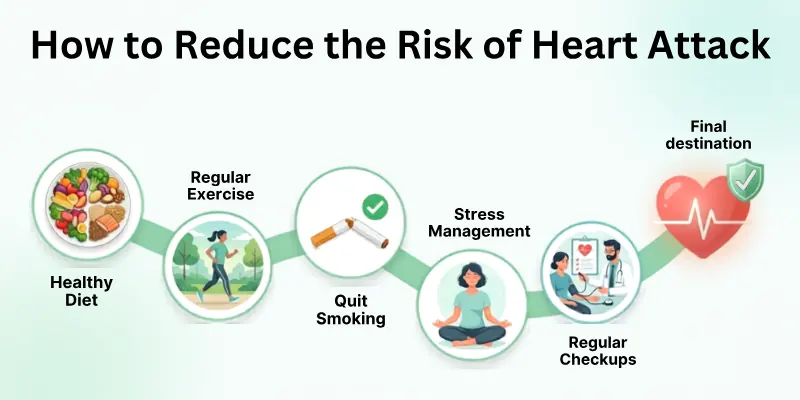
- Healthy diet: Eat more fruits, vegetables, whole grains, and lean protein. Avoid fried and processed foods. You can also follow a proper guide on Foods for heart health to make better choices.
- Regular exercise: Stay active with walking, jogging, or light workouts for at least 30 minutes a day. Learn simple routines in Exercise for heart health to improve heart strength.
- Quit smoking: Stop tobacco use to improve blood flow and reduce artery damage.
- Stress management: Keep stress under control with rest, sleep, and relaxation techniques.
- Regular checkups: Monitor blood pressure, cholesterol, and sugar levels regularly.
Tip: Start with one small habit change and build from there. Consistency matters more than perfection.
Warning Signs Before a Heart Attack
A heart attack often gives early warning signs before it happens. These signs appear when the heart is not getting enough proper blood flow. Recognizing them early can help prevent serious damage.
Here are some symptoms of a heart attack:
- Chest pain or pressure in the chest
- Shortness of breath
- Unusual fatigue or weakness
- Dizziness or lightheadedness
Conclusion
In this article, we discussed the main causes of heart attack and how they affect heart health over time. Most of these causes develop slowly and are linked to daily habits and lifestyle choices.
A heart attack is often preventable. Healthy eating, regular exercise, stress control, and routine checkups can reduce the risk. Paying attention to early warning signs also helps in taking timely action.
Taking small steps every day can protect your heart and improve long-term health.
Have more questions? Check the FAQs below for quick answers.
FAQs: Causes of Heart Attack
Here are answers to some common questions about the causes of heart attack.
Here are the main causes of heart attack:
- High blood pressure damages artery walls
- High cholesterol leads to plaque buildup
- Smoking reduces oxygen in blood
- Unhealthy diet increases fat and cholesterol
- Physical inactivity weakens the heart
- Diabetes damages blood vessels
- Stress affects blood pressure and heart rhythm
- Family history increases genetic risk
- Excess weight puts strain on the heart
In young people, a heart attack is often linked to smoking, stress, obesity, and an unhealthy diet. Sometimes genetic factors also play a role. Poor lifestyle habits are the most common trigger.
Yes, long-term stress can increase blood pressure and strain the heart. It may also lead to unhealthy habits like overeating or smoking. These combined factors increase heart attack risk.
Yes, high blood pressure is one of the leading heart attack causes. It damages artery walls and makes them narrow over time. This increases the chance of blockage in the heart.
High cholesterol causes plaque buildup in the arteries. This plaque reduces blood flow to the heart. If a blockage occurs, it can lead to a heart attack.
Here are some simple and effective ways to lower your risk of a heart attack:
- Eat a balanced and healthy diet
- Exercise regularly
- Avoid smoking and tobacco
- Manage stress properly
- Go for regular health checkups
Yes, an unhealthy diet is a major heart attack risk factor. Foods high in fat, sugar, and salt increase cholesterol and weight. This puts extra strain on the heart.
Smoking is a strong risk factor for heart attack. It damages blood vessels and reduces oxygen in the blood. This makes it easier for blockages to form.
Yes, family history can increase heart attack risk. If close relatives had heart disease, your chances may be higher. However, a healthy lifestyle can still reduce the risk.
A sedentary lifestyle, poor diet, smoking, and lack of exercise are major lifestyle causes. These habits weaken the heart over time. They also increase cholesterol and blood pressure.




- Be Respectful
- Stay Relevant
- Stay Positive
- True Feedback
- Encourage Discussion
- Avoid Spamming
- No Fake News
- Don't Copy-Paste
- No Personal Attacks
- Be Respectful
- Stay Relevant
- Stay Positive
- True Feedback
- Encourage Discussion
- Avoid Spamming
- No Fake News
- Don't Copy-Paste
- No Personal Attacks
