Causes of Jaw Tension: Common Reasons Your Jaw Feels Tight
Published: 28 Jul 2026
Jaw tension is a common problem that can cause tightness, soreness, or discomfort in the jaw muscles. It may make everyday activities such as chewing, talking, or yawning feel uncomfortable. In some cases, the tension is temporary and goes away on its own. However, frequent or ongoing jaw tightness may be linked to certain habits, lifestyle factors, or underlying conditions.
Understanding the causes of jaw tension can help you identify possible triggers and take steps to prevent the problem from getting worse.
In this article, we will discuss the most common jaw tension causes and explain when it may be time to seek professional help.
Common Causes of Jaw Tension and Jaw Tightness
Jaw tension can develop for many reasons. Some causes are related to daily habits, while others may involve medical or dental conditions.
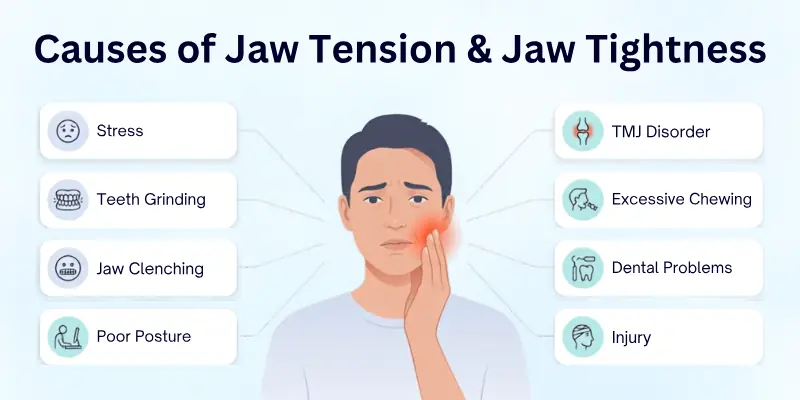
Here are the most common causes of jaw tension:
- Stress and Anxiety
- Teeth Grinding (bruxism)
- Jaw Clenching
- Poor Posture
- TMJ Disorders
- Excessive Chewing
- Dental Problems
- Injury or Trauma
1. Stress and Anxiety
Stress and anxiety are among the most common causes of jaw tension. When the brain perceives a stressful situation, it signals the body to become more alert and prepared to respond. This reaction can affect different muscle groups, including those around the face and jaw.
For many people, stress does not only affect emotions. It can also influence physical habits such as pressing the teeth together, tightening facial muscles, or holding tension in the jaw without noticing it. When these habits occur frequently, they can contribute to ongoing jaw tightness and make the jaw feel tense throughout the day.
Tip: If stress is a frequent part of your day, relaxation techniques such as deep breathing, meditation, or regular exercise may help reduce stress-related jaw tension.
2. Teeth Grinding (Bruxism)
Teeth grinding, also known as bruxism, is a habit that involves repeatedly rubbing or pressing the teeth together. It most often occurs during sleep, which means many people are unaware they are doing it. In some cases, it can also happen during periods of concentration or emotional stress.
The repeated grinding motion keeps the jaw active when it should be resting. Night after night, this extra workload can place strain on the muscles and structures involved in chewing and jaw movement. As a result, bruxism is considered one of the common causes of jaw tension and jaw tightness.
Tip: If you often wake up with a tired jaw or notice signs of teeth grinding, consider speaking with a dentist to identify the cause and discuss possible treatment options.
3. Jaw Clenching
Jaw clenching occurs when a person holds their teeth tightly together for extended periods. Unlike teeth grinding, there is little or no movement involved. Many people clench their jaw while working, driving, exercising, or focusing on demanding tasks without realizing it.
Because the jaw remains in a contracted position, the muscles do not get regular opportunities to relax. This constant engagement can gradually make the jaw feel tense and overworked. For this reason, jaw clenching is one of the most overlooked reasons for jaw tension and persistent jaw tightness.
Tip: Pay attention to your jaw position throughout the day. Keeping your teeth slightly apart when not eating or speaking can help reduce unnecessary clenching.
4. Poor Posture
The position of your head and neck can have a direct impact on the jaw. Spending long hours looking down at a phone, leaning toward a computer screen, or sitting with rounded shoulders can gradually affect the alignment of the muscles and joints in the upper body.
When the head moves forward from its natural position, the surrounding muscles must work harder to provide support. This added strain can influence the muscles connected to the jaw and contribute to ongoing tension. As a result, poor posture is considered one of the common causes of tight jaw muscles, especially in people who spend much of the day sitting.
Tip: Try to keep your screen at eye level and sit with your shoulders relaxed. Small posture adjustments throughout the day can help reduce unnecessary strain on the neck and jaw area.
5. TMJ disorders
The temporomandibular joint, commonly called the TMJ, connects the lower jaw to the skull and helps control movements such as talking, chewing, and yawning. When this joint is not functioning properly, it can affect how the jaw moves and feels during everyday activities.
TMJ disorders may develop due to joint irritation, structural problems, arthritis, or long-term strain on the jaw. Because the joint plays a central role in jaw movement, any issue affecting it can place additional stress on the surrounding tissues. This is why TMJ disorders are often associated with jaw tension, restricted movement, and clicking or popping sounds when opening the mouth. TMJ disorders are also considered one of the common causes of jaw stiffness and tightness.
Tip: If you regularly experience jaw clicking, locking, or difficulty opening your mouth, consider consulting a dentist or healthcare professional for a proper evaluation.
6. Excessive Chewing
Like any other muscle group, the jaw can become strained when it is used too much without adequate recovery. Habits such as chewing gum for long periods, frequently eating hard foods, or constantly chewing on objects like pens can place repeated demands on the jaw throughout the day.
Over time, this repetitive activity can make the jaw work harder than it was designed to during normal daily functions. The increased workload may contribute to jaw muscle fatigue and make the jaw feel tight after extended use. For some people, excessive chewing is one of the overlooked reasons for jaw tension because the habit often seems harmless.
Tip: If you regularly chew gum or hard foods for long periods, try reducing the duration and give your jaw time to rest between activities.
7. Dental Problems
Dental issues can sometimes affect the way the jaw functions. Problems such as a misaligned bite, missing teeth, or poorly fitted dental work may change how the upper and lower teeth come together. This can place uneven pressure on certain parts of the jaw during chewing and speaking.
When the jaw has to compensate for these changes, some muscles may work harder than others to maintain normal movement. Over time, this imbalance can contribute to jaw tension and make everyday activities feel less comfortable.
Tip: Regular dental checkups can help identify bite problems and other oral health issues before they begin affecting jaw function.
8. Injury or Trauma
A direct injury to the jaw, face, or surrounding muscles can affect how the jaw moves and functions. Accidents, sports injuries, falls, or impacts to the face may strain the muscles, ligaments, or joints involved in jaw movement.
After an injury, the body often tries to protect the affected area by limiting movement. This protective response can sometimes lead to tightness around the jaw, especially during the recovery process. In some cases, tension may continue if the injury does not heal properly.
Tip: If jaw tension develops after an injury or is accompanied by swelling, difficulty chewing, or limited movement, seek medical evaluation to rule out underlying damage.
When to Seek Medical Help
Jaw tension often improves with lifestyle changes and self-care. However, some symptoms may indicate an underlying condition that requires professional evaluation.
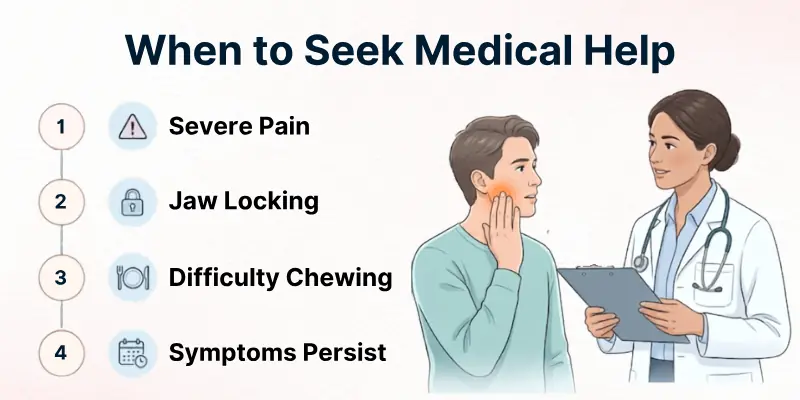
If your symptoms are severe, persistent, or affecting daily activities, it may be time to seek medical advice.
- Severe Pain: Mild jaw discomfort is common, but severe or worsening pain should not be ignored. Persistent pain may indicate a problem affecting the jaw joint, muscles, or surrounding structures that needs professional assessment.
- Jaw Locking: If your jaw becomes stuck in an open or closed position, seek medical attention. Jaw locking can interfere with normal movement and may be linked to a TMJ disorder or another jaw-related condition.
- Difficulty Chewing: Pain, tightness, or limited jaw movement that makes chewing difficult may require evaluation. A healthcare professional can help identify the cause and recommend appropriate treatment.
- Symptoms That Don’t Improve: Occasional jaw tension may resolve on its own, but symptoms that continue for weeks or repeatedly return should be checked. Persistent issues may suggest an underlying cause that needs further investigation.
Conclusion
Understanding the causes of jaw tension can help you identify potential triggers and take steps to improve jaw health. Common causes of jaw tension include stress and anxiety, teeth grinding, jaw clenching, poor posture, TMJ disorders, excessive chewing, dental problems, and injury.
Along with addressing these underlying factors, practicing jaw pain relief exercises may help reduce muscle tightness and improve comfort.
If your symptoms persist or become severe, seek professional medical or dental advice to determine the cause and receive appropriate treatment.
Frequently Asked Questions
Here are some common questions readers often have after learning about the causes of jaw tension.
Yes, stress is one of the leading causes of jaw tension. When you are stressed, your body may tighten muscles without you noticing. This often results in jaw clenching or facial tension.
Jaw tension can develop due to several physical and lifestyle factors. The most common causes include:
- Stress and anxiety
- Teeth grinding (bruxism)
- Jaw clenching
- Poor posture
- TMJ disorders
- Excessive chewing
- Dental problems
- Injury or trauma
Teeth grinding (bruxism) can significantly contribute to jaw tension. It puts repeated pressure on the jaw muscles and teeth, especially during sleep. If left unmanaged, it may worsen jaw discomfort over time.
Jaw clenching keeps the jaw muscles in a constant state of contraction. This prevents them from relaxing properly throughout the day. As a result, it can lead to ongoing jaw tightness and fatigue.
Jaw tension is usually harmless, but in some cases it may need medical attention. You should be concerned if you notice:
- Severe or persistent jaw pain
- Jaw locking or restricted movement
- Difficulty chewing or speaking
- Symptoms that keep coming back
Yes, poor posture is a common cause of jaw tension. Forward head posture places extra strain on the neck and jaw muscles. Over time, this imbalance can affect jaw alignment and comfort.
Yes, jaw tension can sometimes go away on its own, especially if it is caused by stress or temporary muscle strain. However, persistent or worsening symptoms may require professional evaluation.
TMJ disorder affects the joint that connects your jaw to your skull. When this joint is inflamed or not functioning properly, it can restrict movement. This often leads to jaw stiffness and discomfort.
Yes, dental issues like a misaligned bite or missing teeth can contribute to jaw tension. They change how pressure is distributed when chewing or speaking. This imbalance can strain jaw muscles over time.
Excessive chewing, such as frequent gum chewing, can overwork the jaw muscles. Repeated movement without rest may lead to muscle fatigue. This can result in a tight or tired feeling in the jaw.





- Be Respectful
- Stay Relevant
- Stay Positive
- True Feedback
- Encourage Discussion
- Avoid Spamming
- No Fake News
- Don't Copy-Paste
- No Personal Attacks
- Be Respectful
- Stay Relevant
- Stay Positive
- True Feedback
- Encourage Discussion
- Avoid Spamming
- No Fake News
- Don't Copy-Paste
- No Personal Attacks
