Foods for Heart Health: A Complete Guide for a Healthy Heart
Published: 29 Jul 2026
Your heart beats 100,000 times a day. It never stops. It never takes a break. But are you taking care of it? Heart disease kills more people every year than any other condition in the world. And most people do not even know they are at risk until it is too late.
The truth is simple. What you eat every day either protects your heart or damages it. There is no in between. You do not need a complicated diet plan. You do not need expensive supplements. You just need the right foods on your plate.
In this guide, you will find the best foods for heart health, what to avoid, simple diet patterns, and answers to the most common questions about heart-healthy eating.
Let us get started.
Top Heart-Healthy Foods
What you eat every day shapes your heart health. Some foods strengthen your heart. Others slowly damage it.
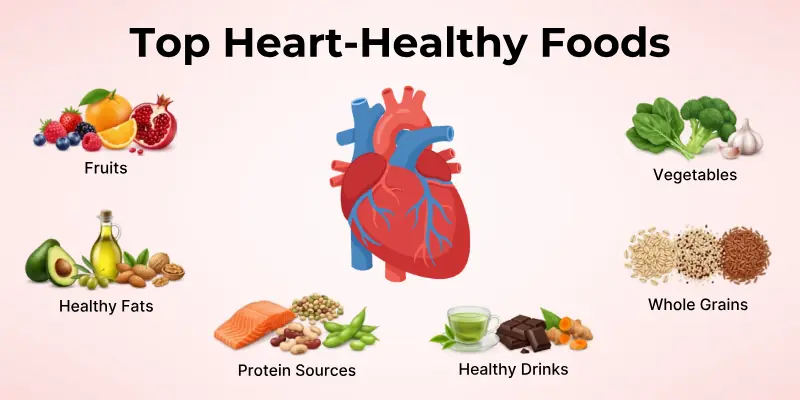
Here are the best foods you should add to your diet.
- Fruits for Heart Health: Berries, pomegranate, oranges, and more
- Vegetables for Heart Health: Leafy greens, garlic, broccoli, and more
- Whole Grains for Heart Health: Oats, Brown Rice, Quinoa
- Healthy Fats for Heart Health: Avocados, olive oil, nuts, and seeds
- Protein Sources for Heart Health: Fatty fish, legumes, and edamame
- Drinks and Other Heart-Healthy Foods: Green tea, dark chocolate, turmeric
Now, let us look at each category in detail.
1. Fruits for Heart Health
Fruits are nature’s best medicine for your heart. They are packed with antioxidants, fiber, and vitamins that protect your arteries and keep your heart strong.
- Berries
- Pomegranate
- Oranges
- Apples
- Red Grapes
Now let us look at each fruit in detail.
Berries
Berries are great for your heart. Blueberries, strawberries, and raspberries are the best options. They are full of antioxidants. These antioxidants lower bad cholesterol and reduce blood pressure. They also reduce inflammation in your arteries.
- How to Eat: Eat a handful every day. Add them to oatmeal or yogurt in the morning.
- Tip: Frozen berries work just as well as fresh ones. They are cheaper too.
Pomegranate
Pomegranate is one of the most powerful fruits for your heart. It is rich in antioxidants. These antioxidants reduce arterial plaque and improve blood flow. Studies show it also lowers blood pressure over time.
- How to Eat: Drink a small glass of fresh pomegranate juice daily. You can also add the seeds to your salad or yogurt.
- Tip: Buy whole pomegranates and remove the seeds yourself. They stay fresh in the fridge for up to a week.
Oranges
Oranges are full of fiber, potassium, and vitamin C. Potassium controls blood pressure. Fiber lowers bad cholesterol. Vitamin C protects your arteries from damage. Eating oranges regularly keeps your heart in good shape.
- How to Eat: Eat one orange a day. You can also drink a fresh glass of orange juice in the morning.
- Tip: Eat the whole orange instead of just drinking the juice. The fiber in the fruit is better for your heart.
Apples
Apples are one of the easiest heart-healthy foods to add to your diet. They contain quercetin and soluble fiber. Quercetin reduces inflammation and prevents blood clots. Soluble fiber lowers bad cholesterol naturally.
- How to Eat: Eat one apple a day. Keep the skin on. Most of the nutrients are in the skin.
- Tip: Pair an apple with a handful of nuts. It makes a great heart-healthy snack.
Red Grapes
Red grapes contain resveratrol. This antioxidant protects your heart by reducing inflammation. It also prevents blood clotting and improves blood vessel function. Red grapes are one of the most underrated heart-friendly foods.
- How to Eat: Eat a small bunch as a snack. You can also add them to your fruit salad.
- Tip: Always go for red or purple grapes. They have more resveratrol than green grapes.
2. Vegetables for Heart Health
Vegetables are some of the best foods for a healthy heart. They are packed with fiber, vitamins, and minerals. Eating more vegetables every day can lower your risk of heart disease significantly.
Here are the best vegetables for heart health:
- Leafy Green Vegetables
- Garlic
- Tomatoes
- Broccoli
- Beetroot
Now let us look at each one in detail.
Leafy Green Vegetables
Spinach, kale, and Swiss chard are great for your heart. They are rich in vitamin K and dietary nitrates. Vitamin K protects your arteries. Nitrates lower blood pressure and improve blood flow to the heart.
- How to Eat: Add spinach to your smoothie or sauté kale with garlic as a side dish.
- Tip: Eat leafy greens at least 3 times a week. Even a small amount makes a big difference.
Garlic
Garlic is one of the oldest natural remedies for heart health. It contains a compound called allicin. Allicin lowers bad cholesterol and reduces blood pressure. It also prevents blood clots from forming in your arteries.
- How to Eat: Add fresh garlic to your cooking every day. Use it in soups, stir-fries, and sauces.
- Tip: Crush or chop garlic before cooking. This activates the allicin and makes it more effective.
Tomatoes
Tomatoes are rich in lycopene. Lycopene is a powerful antioxidant that reduces inflammation in your arteries. It also lowers bad cholesterol and reduces the risk of heart disease. Eating tomatoes regularly keeps your blood vessels healthy.
- How to Eat: Add tomatoes to your salads, soups, and sauces. Eat them raw or cooked.
- Tip: Cooked tomatoes have more lycopene than raw ones. Add olive oil when cooking for better absorption.
Broccoli
Broccoli is packed with fiber, antioxidants, and vitamins. It lowers bad cholesterol and reduces inflammation. It also contains sulforaphane. This compound protects your arteries from damage and keeps your heart strong.
- How to Eat: Steam or roast broccoli as a side dish. Add it to soups and stir-fries.
- Tip: Do not overcook broccoli. Light steaming keeps most of the nutrients intact.
Beetroot
Beetroot is full of natural nitrates. These nitrates improve blood flow and lower blood pressure. Beetroot also reduces inflammation and supports healthy arteries. It is one of the most underrated vegetables for heart health.
- How to Eat: Drink fresh beetroot juice or add sliced beetroot to your salads.
- Tip: Drink a small glass of beetroot juice before exercise. It improves blood flow and keeps your heart working efficiently.
3. Whole Grains for Heart Health
Whole grains are among the best foods for heart health. They are rich in fiber, vitamins, and minerals that support healthy arteries and lower cholesterol levels. Regularly eating whole grains can help reduce the risk of heart disease and improve overall cardiovascular health.
Here are the best whole grains for heart health:
- Oats
- Brown Rice
- Quinoa
Now let us look at each one in detail.
Oats
Oats are one of the healthiest foods for your heart. They contain a type of soluble fiber called beta-glucan. This fiber helps lower bad cholesterol and supports healthy arteries. Eating oats regularly may reduce the risk of heart disease.
- How to Eat: Enjoy oatmeal for breakfast or add oats to smoothies and baked foods.
- Tip: Choose plain oats instead of flavored packets to avoid added sugar.
Brown Rice
Brown rice is a whole grain that provides fiber, magnesium, and antioxidants. These nutrients help control blood pressure and support healthy heart function. It is a healthier alternative to refined white rice.
- How to Eat: Serve brown rice with vegetables, fish, or legumes.
- Tip: Cook a large batch and store it in the refrigerator for easy meals throughout the week.
Quinoa
Quinoa is rich in fiber, protein, and minerals such as magnesium. These nutrients support heart health by helping regulate blood pressure and reducing inflammation. It is also naturally gluten-free.
- How to Eat: Use quinoa in salads, grain bowls, or as a side dish.
- Tip: Rinse quinoa before cooking to remove its natural bitter coating.
4. Healthy Fats for Heart Health
Not all fats are bad for your heart. Some fats actually protect it. Healthy fats lower bad cholesterol, reduce inflammation, and keep your arteries clean. Here are the best healthy fats for heart health:
- Avocados
- Olive Oil
- Nuts and Seeds
Now let us look at each one in detail.
Avocados
Avocados are full of monounsaturated fats and potassium. These healthy fats lower bad cholesterol. Potassium controls blood pressure. People who eat avocados regularly have better heart health markers.
- How to Eat: Add sliced avocado to your salad or spread it on whole grain toast.
- Tip: Eat half an avocado a day. It is enough to get the heart health benefits without overeating.
Olive Oil
Olive oil is the most researched healthy fat for your heart. It is rich in antioxidants and monounsaturated fats. These fats lower inflammation and reduce the risk of heart disease. It is a key part of the Mediterranean diet.
- How to Eat: Use extra virgin olive oil for cooking and salad dressings.
- Tip: Do not heat olive oil at very high temperatures. It loses its nutrients. Use it on low to medium heat.
Nuts and Seeds
Walnuts, almonds, flaxseeds, and chia seeds are great for your heart. They are rich in healthy fats, fiber, and plant-based omega-3s. They lower bad cholesterol, reduce inflammation, and support healthy arteries.
- How to Eat: Eat a small handful of nuts as a snack. Sprinkle flaxseeds or chia seeds into your smoothie or oatmeal.
- Tip: Do not eat too many nuts. A small handful a day is enough. They are high in calories.
5. Protein Sources for Heart Health
Protein is important for your body. But not all protein sources are good for your heart. Some proteins reduce inflammation and lower cholesterol. Others do the opposite. Here are the best protein sources for heart health:
- Fatty Fish
- Legumes
- Edamame
Now let us look at each one in detail.
Fatty Fish
Salmon, mackerel, sardines, and tuna are the best protein sources for your heart. They are packed with omega-3 fatty acids. These healthy fats lower triglycerides, reduce inflammation, and decrease the risk of irregular heartbeats.
- How to Eat: Eat fatty fish at least twice a week. Grill it, bake it, or add it to salads.
- Tip: Canned sardines and tuna are cheap and easy to find. They have the same heart health benefits as fresh fish.
Legumes
Beans, lentils, and chickpeas are great for your heart. They are high in fiber, plant protein, and magnesium. They lower bad cholesterol, stabilize blood sugar, and reduce inflammation.
- How to Eat: Add legumes to your soups, curries, and salads. Eat them a few times a week.
- Tip: Replace red meat with legumes at least twice a week. It makes a big difference for your heart health.
Edamame
Edamame are young soybeans. They are rich in plant protein, fiber, and isoflavones. Isoflavones lower bad cholesterol and reduce inflammation. Edamame is one of the best plant-based foods for cardiovascular health.
- How to Eat: Eat boiled edamame as a snack. Add it to salads or stir-fries.
- Tip: Buy frozen edamame from any grocery store. Boil it for 5 minutes and add a pinch of salt. It is a quick and healthy snack.
6. Drinks and Other Heart-Healthy Foods
What you drink matters just as much as what you eat. Some drinks protect your heart and improve blood flow. Others damage it. Here are the best drinks and other heart-healthy foods to add to your daily routine:
- Green Tea
- Dark Chocolate
- Turmeric
Now let us look at each one in detail.
Green Tea
Green tea is one of the best drinks for your heart. It is packed with catechins and polyphenols. These antioxidants lower bad cholesterol and reduce blood pressure. Drinking green tea regularly reduces the risk of heart disease.
- How to Drink: Drink two to three cups of green tea every day. Replace your afternoon coffee with green tea.
- Tip: Do not add too much sugar to your green tea. It cancels out the heart health benefits.
Dark Chocolate
Dark chocolate is good for your heart when eaten in moderation. It contains flavonoids. These compounds improve blood flow, lower blood pressure, and reduce blood clotting. Always choose dark chocolate with 70% cocoa or higher.
- How to Eat: Eat one or two small squares after dinner.
- Tip: Do not use this as an excuse to eat too much. Stick to one or two squares a day for the best results.
Turmeric
Turmeric contains curcumin. Curcumin is a powerful anti-inflammatory compound. It reduces inflammation in your arteries and improves blood vessel function. It also lowers bad cholesterol and reduces the risk of heart disease.
- How to Eat: Add turmeric to your soups, curries, and smoothies. You can also drink turmeric tea.
- Tip: Add a pinch of black pepper when using turmeric. Black pepper increases curcumin absorption by up to 2000%.
Foods to Avoid for Better Heart Health
Eating the right foods is important. But avoiding the wrong ones is just as important. Some foods slowly damage your heart without you even realizing it.
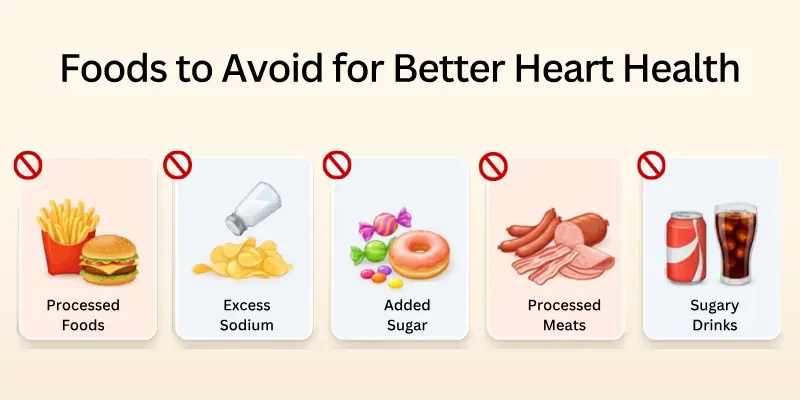
Here are the main foods you should limit or avoid completely:
1. Trans Fats and Processed Foods: Trans fats are the worst type of fat for your heart. They raise bad cholesterol and lower good cholesterol.
Such as: Margarine, chips, cookies, fried fast food, and packaged baked goods.
2. Excess Sodium: Too much sodium raises blood pressure. Most people eat way more sodium than they need.
Such as: Canned soups, processed meats, salty snacks, and fast food.
3. Added Sugar: Added sugar raises triglycerides and increases inflammation. It also causes weight gain, which puts extra pressure on your heart.
Such as: Soft drinks, candy, pastries, and sweetened cereals.
4. Red and Processed Meats: Red meat is high in saturated fat. Processed meats are even worse.
Such as: Bacon, sausages, hot dogs, and fatty cuts of beef and lamb.
5. Sugary Drinks: Sugary drinks raise blood pressure, increase inflammation, and cause weight gain.
Such as: Soft drinks, energy drinks, sweetened juices, and flavored coffees.
A healthy diet can also help lower the risk factors associated with heart disease. Learn more about the common causes of heart attack and how lifestyle choices affect heart health.
Heart-Healthy Diet Patterns
The food you eat matters. But how you eat matters just as much. Some diet patterns are specifically designed to protect your heart and reduce the risk of heart disease.
Here are the best ones:
- Mediterranean Diet: This diet focuses on fruits, vegetables, whole grains, olive oil, and fatty fish. It is one of the most researched diets for heart health. Studies show it reduces the risk of heart disease by up to 30%.
- DASH Diet: DASH stands for Dietary Approaches to Stop Hypertension. It focuses on reducing sodium and eating more fruits, vegetables, and low-fat dairy. It is specifically designed to lower blood pressure.
- Plant-Based Diet: This diet focuses on whole plant foods like fruits, vegetables, legumes, nuts, and seeds. It lowers bad cholesterol, reduces inflammation, and improves overall heart health.
Diet is only one part of protecting your heart. Regular physical activity also plays an important role. Read our guide on the best exercises for heart health.
Sample One-Day Heart-Healthy Meal Plan
Following a heart-healthy diet does not have to be complicated. Here is a simple one-day meal plan to get you started:
| Time of Day | What to Eat | Heart Benefit |
|---|---|---|
| 🌅 Breakfast | Oatmeal with berries and a cup of green tea | Lowers cholesterol and fights inflammation |
| 🍎 Morning Snack | A handful of walnuts and an apple | Reduces bad cholesterol and keeps arteries healthy |
| 🥗 Lunch | Grilled salmon with leafy green salad and olive oil dressing | Packed with omega-3s and healthy fats |
| 🥜 Afternoon Snack | Sliced avocado on whole grain toast | Controls blood pressure and lowers bad cholesterol |
| 🍛 Dinner | Lentil soup with roasted broccoli and brown rice | High in fiber and plant protein |
| 🍫 After Dinner | Two squares of dark chocolate | Improves blood flow and reduces blood pressure |
Myths & Misconceptions About Heart-Healthy Eating
Many people avoid healthy eating because of wrong information. These myths stop them from making better food choices. Here are a few common myths about heart-healthy eating:
- Eggs are Bad for Your Heart: Not true for most people. One egg a day is fine.
- All Fats Damage Your Heart: Healthy fats from avocados and olive oil actually protect it.
- Eating Healthy is Expensive: Beans, oats, and frozen vegetables are very affordable.
Want to know the full truth? Read our detailed guide on myths about heart-healthy eating.
Conclusion
In this guide, you learned about the best foods for heart health, foods to avoid, and eating patterns that support long-term cardiovascular wellness. Choosing more heart-healthy foods can help lower cholesterol, manage blood pressure, and protect your arteries over time.
Simple foods such as berries, leafy greens, oats, fatty fish, nuts, and olive oil can make a meaningful difference when eaten regularly. Small dietary changes often have the biggest long-term impact on heart health.
Start small, stay consistent, and make heart-healthy eating part of your daily routine. For a complete approach to heart health, learn about the common symptoms of a heart attack and when to seek medical attention.
FAQs
Here are the most common questions people ask about foods for heart health.
The best foods for heart health include:
- Fatty fish
- Berries
- Leafy greens
- Oats and whole grains
- Nuts and seeds
- Avocados
- Olive oil
- Legumes
- Dark chocolate
- Green tea
Eating these foods regularly can reduce your risk of heart disease significantly.
Berries, pomegranate, oranges, apples, and red grapes are the best fruits for heart health. They are packed with antioxidants that fight inflammation and lower bad cholesterol. Eat at least one serving of heart-healthy fruits every day.
Yes. Foods like oats, berries, legumes, and fatty fish reduce bad cholesterol naturally. They contain fiber and antioxidants that remove cholesterol from your body. Eating these foods consistently gives the best results.
Leafy greens, garlic, tomatoes, broccoli, and beetroot are the best vegetables for your heart. They are rich in fiber, vitamins, and natural compounds that protect your arteries. Add at least two servings of these vegetables to your daily meals.
The Mediterranean diet and DASH diet are the best diets for heart disease prevention. Both focus on whole foods, healthy fats, and low sodium intake. Studies show these diets reduce the risk of heart disease by up to 30%.
No. One egg a day is fine for most healthy people. Eggs are full of protein and important nutrients. They do not raise the risk of heart disease when eaten as part of a balanced diet.
Heart patients should avoid:
- Trans fats and processed foods
- Excess sodium
- Added sugar
- Red and processed meats
- Sugary drinks
Replacing them with whole foods makes a big difference for your heart health.
Yes. Extra virgin olive oil is one of the best foods for cardiovascular health. It is rich in antioxidants and monounsaturated fats that reduce inflammation and lower bad cholesterol. Use it as your main cooking oil for the best results.
Green tea contains powerful antioxidants called catechins and polyphenols. These compounds lower bad cholesterol, reduce blood pressure, and protect against heart disease. Drinking two to three cups of green tea daily gives the best heart health benefits.
A heart-healthy breakfast includes oatmeal with berries, a handful of nuts, and a cup of green tea. Oatmeal lowers bad cholesterol, berries fight inflammation, and green tea protects your arteries. Starting your day with these foods sets a strong foundation for heart health.






- Be Respectful
- Stay Relevant
- Stay Positive
- True Feedback
- Encourage Discussion
- Avoid Spamming
- No Fake News
- Don't Copy-Paste
- No Personal Attacks
- Be Respectful
- Stay Relevant
- Stay Positive
- True Feedback
- Encourage Discussion
- Avoid Spamming
- No Fake News
- Don't Copy-Paste
- No Personal Attacks
