Ways to Prevent Diabetes: Simple Tips for a Healthier Life
Published: 5 Oct 2026
Diabetes affects millions of people worldwide, but many cases of type 2 diabetes can be prevented through healthy lifestyle choices. Many people search for ways to prevent diabetes because type 2 and gestational diabetes often respond well to lifestyle changes. So can diabetes be prevented? In most cases involving type 2, the answer is yes.
Check out the causes of diabetes to understand why prevention works better for some types than others. Type 1 diabetes cannot be prevented since it comes from an autoimmune response. Type 2 diabetes, the most common form, is largely preventable through simple daily habits.
These ways to prevent diabetes cover practical steps like diet, exercise, sleep, and stress management. Watching for early symptoms of diabetes and making a few small changes now can lower your risk
Ways to Prevent Diabetes
Preventing diabetes comes down to small, steady changes rather than one big fix. Most of these ways to prevent diabetes focus on type 2, since it responds well to daily habits. Even small steps like walking more or cutting back on sugar can lower your risk over time. The key is picking a few changes you can actually stick with.
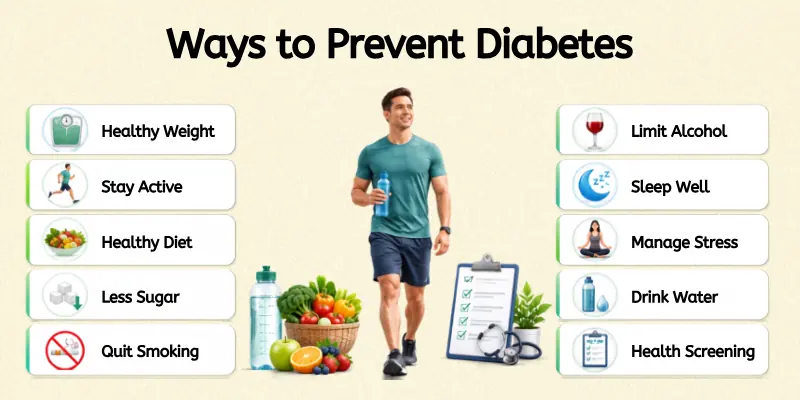
Here are the main tips to prevent diabetes:
- Manage Your Weight
- Stay Active
- Eat Healthy
- Cut Sugar and Carbs
- Quit Smoking
- Limit Alcohol
- Sleep Well
- Manage Stress
- Drink More Water
- Get Screened
Let’s break down each of these below.
1. Manage Your Weight
Maintaining a healthy weight can help lower the risk of type 2 diabetes. Extra body weight can increase insulin resistance and make it harder for your body to manage blood sugar levels.
Making small changes in your daily habits can support healthy weight management. Focus on slow and steady progress instead of quick weight loss methods.
Here are some helpful ways to manage your weight:
- Set a realistic weight loss goal and follow it consistently
- Track your weight and progress regularly
- Focus on steady changes instead of quick fixes
- Choose healthy foods and watch portion sizes
- Stay active with regular exercise and movement
- Get guidance from a healthcare provider when needed
Tip: Avoid skipping meals to lose weight faster, as it can affect your blood sugar levels and lead to unhealthy eating habits.
2. Stay Active
Regular physical activity can help lower the risk of type 2 diabetes by improving insulin sensitivity and helping your body use blood sugar for energy. Exercise also supports healthy weight management and overall health.
You do not need intense workouts to get benefits. Simple activities like walking, cycling, or strength exercises can make a difference when done consistently. Try these exercises for diabetes to get started with a routine that fits your lifestyle.
Here are some helpful ways to stay active:
- Aim for at least 30 minutes of activity most days
- Take regular walks throughout the day
- Include strength exercises in your routine
- Reduce long periods of sitting
- Choose activities you enjoy and can maintain
- Increase your activity level gradually
Tip: Start with small movements each day, as consistent activity is more helpful than occasional intense workouts.
3. Eat Healthy
Eating a balanced diet plays an important role in preventing type 2 diabetes. Healthy foods can help maintain stable blood sugar levels and improve your body’s ability to use insulin.
Focus on adding nutrient-rich foods to your meals while limiting foods that can cause blood sugar spikes. Small changes in your eating habits can support better long-term health. Check out these foods for diabetes to build a meal plan that works for you.
Here are some helpful ways to eat healthy:
- Choose whole grains instead of refined carbohydrates
- Add more vegetables, fruits, and fiber-rich foods
- Include lean proteins with your meals
- Limit sugary drinks and processed foods
- Control portion sizes to avoid overeating
- Choose healthy fats like nuts, seeds, and olive oil
Tip: Plan your meals ahead to make healthier choices and avoid relying on quick, processed foods.
4. Cut Sugar and Carbs
Reducing added sugar and refined carbohydrates can help prevent blood sugar spikes and support better insulin function. Foods like sugary drinks, sweets, and highly processed snacks can make blood sugar control more difficult.
You do not need to remove all carbohydrates from your diet. Focus on choosing healthier sources and keeping portions balanced.
Here are some helpful ways to cut sugar and carbs:
- Limit sugary drinks and sweetened foods
- Choose whole grains instead of refined carbs
- Replace processed snacks with healthier options
- Check food labels for hidden added sugars
- Balance carbohydrates with protein and fiber
- Avoid frequent high-sugar meals and snacks
Tip: Choose natural sources of carbohydrates like fruits, vegetables, and whole grains instead of highly processed options.
5. Quit Smoking
Quitting smoking can lower the risk of many health problems, including those linked with diabetes. Smoking can affect insulin sensitivity and make blood sugar control more difficult.
Stopping this habit can improve overall health and help your body respond better to lifestyle changes.
Here are some helpful ways to quit smoking:
- Set a quit date and prepare for challenges
- Avoid triggers that increase the urge to smoke
- Seek support from family or professionals
- Replace smoking with healthier habits
- Stay active to manage cravings
- Celebrate small wins along the way
Tip: Every step toward quitting smoking improves your health, even if you reduce gradually before stopping completely.
6. Limit Alcohol
Limiting alcohol intake can help reduce the risk of type 2 diabetes and support better blood sugar control. Too much alcohol may affect how your body manages glucose and can contribute to weight gain.
Making healthier choices around alcohol can support your overall health and diabetes prevention goals.
Here are some helpful ways to limit alcohol:
- Drink alcohol in moderation or avoid it when possible
- Choose low-sugar drinks if you drink alcohol
- Avoid drinking on an empty stomach
- Replace alcoholic drinks with healthier options
- Keep track of how often you drink
Tip: Reducing alcohol intake can make it easier to maintain a healthy weight and stable blood sugar levels.
7. Sleep Well
Getting enough quality sleep plays an important role in maintaining healthy blood sugar levels. Poor sleep can affect hormones that control hunger, weight, and insulin function.
A consistent sleep routine can support better metabolism and lower the risk of type 2 diabetes.
Here are some helpful ways to sleep well:
- Aim for 7 to 9 hours of sleep each night
- Follow a regular sleep schedule
- Avoid screens before bedtime
- Create a relaxing bedtime routine
- Limit caffeine late in the day
Tip: Good sleep habits can support healthy hormone balance and improve your body’s ability to manage blood sugar.
8. Manage Stress
Long-term stress can affect blood sugar control by increasing stress hormones in the body. High stress levels may also lead to unhealthy habits like poor eating choices and less physical activity.
Managing stress with healthy coping methods can support better overall health and diabetes prevention.
Here are some helpful ways to manage stress:
- Practice deep breathing or meditation
- Stay active to reduce stress levels
- Spend time on relaxing activities
- Maintain a healthy daily routine
- Talk to someone when stress feels overwhelming
Tip: Managing stress regularly can help you make healthier choices and support better blood sugar control.
9. Drink More Water
Drinking enough water can support healthy blood sugar levels and help you maintain better overall health. Choosing water over sugary drinks can reduce extra sugar intake and support diabetes prevention.

Staying hydrated also helps your body perform important functions and can make it easier to maintain healthy lifestyle habits.
Here are some helpful ways to drink more water:
- Drink water regularly throughout the day
- Replace sugary drinks with plain water
- Carry a water bottle to stay hydrated
- Drink water before meals
- Add lemon or herbs for natural flavor
Tip: Keeping water easily available can help you avoid high-sugar drinks and support better blood sugar control.
10. Get Screened
Regular diabetes screening can help detect high blood sugar levels early, especially if you have risk factors. Early testing allows you to make lifestyle changes before the condition becomes more serious.
People with a family history, excess weight, or other risk factors should talk to a healthcare provider about when to get tested. Watch for symptoms of diabetes like increased thirst and frequent urination, since these are often the first signs something is off.
Here are some helpful ways to stay on top of screening:
- Get regular blood sugar checks when needed
- Know your diabetes risk factors
- Talk to your doctor about testing schedules
- Monitor signs like increased thirst and frequent urination
- Take action if your results show prediabetes
Tip: Early screening can help identify blood sugar problems sooner and give you more time to manage your health.
Conclusion
In this guide, we covered practical ways to prevent diabetes, including healthy eating, regular exercise, weight management, stress control, proper sleep, hydration, and regular screening.
None of these changes need to happen overnight. Small, steady steps add up over time and lower your risk more than any single big change. If you have risk factors like family history or excess weight, don’t wait to make these changes or get tested.
Talk to your doctor about which steps make the most sense for your health, and start with the ones that feel easiest to stick with.
FAQs About the Ways to Prevent Diabetes
Here are answers to common questions readers often have after learning how to prevent diabetes.
1. Can type 1 diabetes be prevented?
No, type 1 diabetes cannot be prevented since it’s caused by an autoimmune response, not lifestyle choices. It develops when the immune system attacks insulin-producing cells for reasons doctors don’t fully understand. Prevention tips mainly apply to type 2 and gestational diabetes.
2. How long does it take to prevent diabetes with lifestyle changes?
Most people start seeing improvements in blood sugar within a few months of consistent changes. Studies show that losing 5 to 7 percent of body weight over 6 months can lower diabetes risk significantly. Results vary based on your starting point and how consistent you stay.
3. What is the best diet to prevent diabetes?
Here are some key parts of a diabetes prevention diet:
- Eat more whole grains and fiber-rich foods
- Include plenty of vegetables and fruits
- Choose lean protein sources
- Add healthy fats in moderation
- Limit added sugar and sugary drinks
- Reduce refined carbohydrates and processed foods
- Watch portion sizes during meals
4. Can you reverse prediabetes naturally?
Yes, prediabetes can often be reversed through weight loss, regular exercise, and better food choices. Many people bring their blood sugar back to a normal range within a year of consistent lifestyle changes. Regular testing helps track your progress along the way.
5. Does drinking water help prevent diabetes?
Water itself doesn’t directly prevent diabetes, but replacing sugary drinks with water lowers your overall sugar intake. This helps avoid blood sugar spikes and supports healthy weight management. Staying hydrated also supports normal body function overall.
6. What exercises are best for diabetes prevention?
A mix of aerobic activity, like brisk walking or cycling, and strength training works best for diabetes prevention. Aim for at least 30 minutes of activity most days of the week. Even short walks after meals help lower blood sugar spikes.
7. Can stress really affect my risk of diabetes?
Yes, long-term stress raises stress hormones that can affect blood sugar control over time. Stress can also lead to poor eating habits and less physical activity, both of which raise diabetes risk. Managing stress through relaxation techniques supports better overall prevention.
8. Is it possible to prevent diabetes if it runs in my family?
Family history raises your risk, but it doesn’t guarantee you’ll develop diabetes. Lifestyle changes like weight management, exercise, and a healthy diet can still lower your chances significantly. Knowing your family history simply means starting prevention habits earlier.
9. How often should I get tested if I’m trying to prevent diabetes?
Adults over 45 should get screened every three years, even without symptoms. People with risk factors like obesity or family history may need testing more often. Your doctor can recommend a schedule based on your personal risk level.
10. Can losing weight really lower my risk of type 2 diabetes?
Yes, losing just 5 to 7 percent of your body weight can significantly lower your risk of type 2 diabetes. Weight loss improves how your body responds to insulin and helps control blood sugar. Combining weight loss with extra activity offers stronger protection.






- Be Respectful
- Stay Relevant
- Stay Positive
- True Feedback
- Encourage Discussion
- Avoid Spamming
- No Fake News
- Don't Copy-Paste
- No Personal Attacks
- Be Respectful
- Stay Relevant
- Stay Positive
- True Feedback
- Encourage Discussion
- Avoid Spamming
- No Fake News
- Don't Copy-Paste
- No Personal Attacks
