What Causes Swelling in the Feet and Ankles? Common Reasons Explained
Published: 17 Sep 2026
Have you ever looked down at your feet or ankles and noticed they seem larger than usual? Swelling in the feet and ankles is a common problem that can affect people of all ages. In some cases, it happens after standing or sitting for a long time. In others, it may be linked to an injury, pregnancy, certain medications, or an underlying health condition.
Many people ask, “Why are my feet and ankles swollen?” The answer is not always simple because many factors can cause fluid to build up in the lower legs. Some causes are temporary and harmless, while others may require medical attention.
Understanding what causes swelling in the feet and ankles can help you identify possible triggers and know when swelling may be a sign of a more serious problem.
In this article, you will learn what causes swelling in the feet and ankles, risk factors that may increase your chances of developing swelling, and when it is important to see a doctor.
What Causes Swelling in the Feet and Ankles?
Swelling in the feet and ankles happens when excess fluid builds up in the tissues of the lower legs. This condition, often called edema, can develop for many different reasons. Some causes are temporary and may improve on their own, while others can be linked to underlying health conditions.
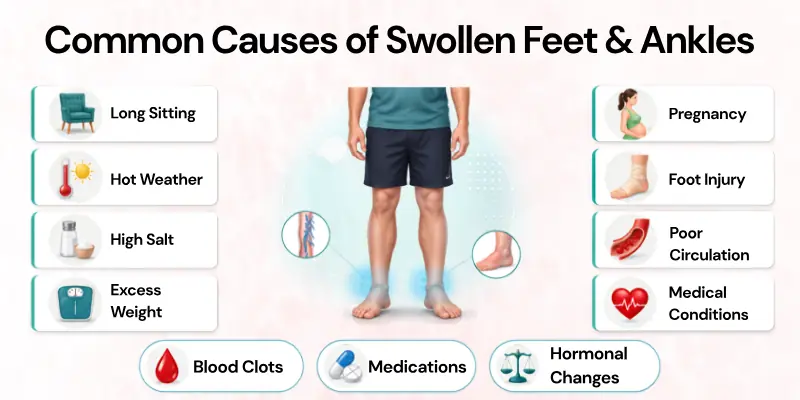
Understanding the possible causes can help you identify what may be triggering the swelling. It can also help you know when the problem might need medical attention.
Here are some of the most common causes of swelling in the feet and ankles:
- Standing or Sitting for Long Periods
- Hot Weather
- High Salt Intake
- Being Overweight or Obese
- Pregnancy
- Foot or Ankle Injuries
- Venous Insufficiency
- Lymphedema
- Heart Conditions
- Kidney Disease
- Liver Disease
- Blood Clots (Deep Vein Thrombosis)
- Infections
- Medication Side Effects
- Hormonal Changes
Let’s take a closer look at each cause and how it can lead to swollen feet and ankles.
1. Standing or Sitting for Long Periods
Standing or sitting in one position for a long time can cause fluid to collect in the feet and ankles. Gravity pulls fluid toward the lower body when there is little movement.
This is a common cause of swollen feet and ankles, especially among office workers, drivers, and travelers. The swelling often improves after walking or stretching.
This can lead to swelling because:
- Blood circulation slows down in the legs
- Fluid collects in the lower limbs
- Long periods of inactivity increase fluid buildup
- Long travel times can worsen swelling
- Movement often helps reduce the swelling
2. Hot Weather
Hot weather can cause the blood vessels to widen, which allows more fluid to move into the surrounding tissues. This extra fluid may collect in the feet and ankles, leading to temporary swelling.
Many people notice swollen feet during the summer or after spending time outdoors in high temperatures. The swelling usually improves once the body cools down and fluid balance returns to normal.
Hot weather may cause swelling because:
- Blood vessels expand in response to heat
- More fluid leaks into nearby tissues
- Gravity pulls excess fluid toward the feet and ankles
- Standing in hot weather can make swelling worse
3. High Salt Intake
Eating too much salt can cause the body to hold on to extra water. When excess fluid builds up, it may collect in the feet and ankles, leading to swelling.
This is one of the common causes of feet swelling, especially in people who regularly eat processed foods, fast food, or salty snacks. The swelling may become more noticeable by the end of the day.
Reducing sodium intake is one of the simplest ways to learn how to reduce swelling in feet and ankles caused by fluid retention.
High salt intake may cause swelling because:
- Excess sodium causes water retention
- The body holds more fluid than it needs
- Fluid can collect in the feet and ankles
- Processed and packaged foods often contain large amounts of salt
- Existing swelling may become worse after eating salty foods
4. Being Overweight or Obese
Carrying excess body weight can put extra pressure on the veins and joints in the lower body. This pressure may make it harder for blood and fluid to move back toward the heart, leading to swelling in the feet and ankles.
People who are overweight or obese may experience swelling more often, especially after standing or sitting for long periods. The risk of ongoing swelling can increase as body weight rises.
Being overweight or obese may cause swelling because:
- Extra weight puts pressure on the leg veins
- Blood circulation may become less efficient
- Fluid can build up in the lower limbs
- Standing and walking may place more stress on the feet and ankles
- Excess weight increases the risk of chronic swelling and vein problems
5. Pregnancy
Swelling in the feet and ankles is common during pregnancy, especially in the later months. Many women wonder about the cause of swollen feet during pregnancy, but in most cases, it happens because the body produces more blood and fluids to support the growing baby.
Hormonal changes and pressure from the uterus can also affect blood flow. As a result, fluid may collect in the lower limbs, causing swollen feet and ankles, particularly after standing for long periods or during hot weather.
Pregnancy may cause swelling because:
- The body holds more fluid during pregnancy
- Hormonal changes affect fluid balance
- The growing uterus puts pressure on blood vessels
- Blood flow from the legs may slow down
- Swelling often becomes more noticeable in the later stages of pregnancy
6. Foot or Ankle Injuries
Foot and ankle injuries are a common cause of foot and ankle swelling. When an injury occurs, the body sends extra blood and fluid to the affected area to support healing, which can lead to noticeable swelling.
Sprains, fractures, and other soft tissue injuries can cause swelling within a short time after the injury. The severity of the swelling often depends on how serious the injury is and which tissues are affected.
Foot or ankle injuries may cause swelling because:
- The body’s healing response increases fluid in the injured area
- Sprains can damage ligaments around the ankle
- Fractures often cause significant swelling and pain
- Soft tissue injuries can trigger inflammation
- Swelling may occur along with bruising, tenderness, or difficulty walking
7. Venous Insufficiency
Venous insufficiency occurs when the veins in the legs have trouble sending blood back to the heart. As a result, blood can pool in the lower legs, leading to swelling in the feet and ankles.
This is one of the most common causes of ankle swelling, especially in older adults and people who spend long hours standing. The swelling may gradually worsen over time if the condition is not managed.
People with long-term swelling should pay attention to the symptoms of swollen feet and ankles, as ongoing swelling may indicate an underlying vein problem.
Venous insufficiency may cause swelling because:
- Vein valves become weak or damaged
- Blood pools in the lower legs
- Fluid leaks into nearby tissues
- Swelling often worsens after long periods of standing
- Chronic swelling can develop over time
8. Lymphedema
Lymphedema develops when the lymphatic system cannot properly drain fluid from the body’s tissues. This causes fluid to build up, leading to persistent swelling in the feet, ankles, or legs.
The condition may affect one or both legs and often does not improve completely without treatment. In some cases, lymphedema develops after surgery, infection, or damage to the lymphatic system.
Many people try home remedies for swollen feet and ankles, but persistent swelling caused by lymphedema often requires proper medical care.
Lymphedema may cause swelling because:
- Lymph fluid cannot drain properly
- Fluid builds up in the tissues
- Swelling may affect one or both legs
- The affected area may feel heavy or tight
- Swelling often becomes long-lasting
9. Heart Conditions
Certain heart conditions can make it harder for the heart to pump blood effectively throughout the body. When this happens, fluid may collect in the feet, ankles, and lower legs.
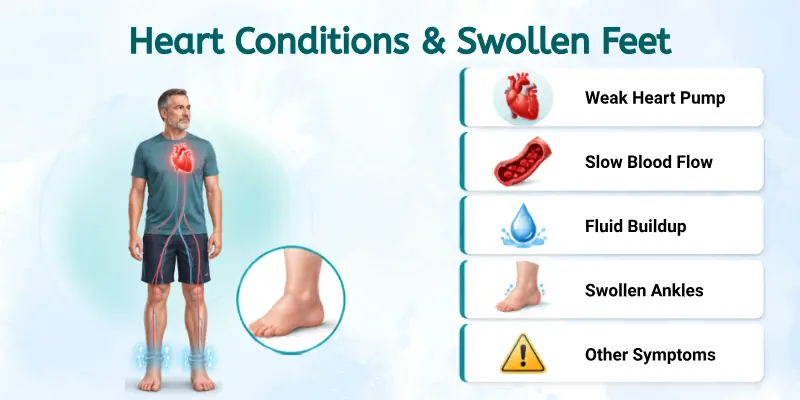
Heart failure is one of the most common heart-related causes of swollen feet and ankles. Swelling often develops gradually and may occur along with fatigue or shortness of breath.
The right treatment for swollen feet and ankles depends on the underlying cause, especially when a heart condition is involved.
Heart conditions may cause swelling because:
- The heart cannot pump blood efficiently
- Blood flow slows down in the body
- Fluid accumulates in the lower limbs
- Swelling may affect both feet and ankles
- Other symptoms may occur at the same time
10. Kidney Disease
The kidneys help remove excess fluid and waste from the body. When the kidneys do not work properly, fluid can build up and cause swelling in different areas, including the feet and ankles.
Kidney disease is one of the medical causes of feet swelling and may occur with other symptoms such as fatigue, changes in urination, or high blood pressure.
Identifying the cause is important because it can affect both management and treatment for swollen feet and ankles.
Kidney disease may cause swelling because:
- The kidneys cannot remove excess fluid effectively
- Fluid remains in the body and collects in tissues
- Swelling commonly affects the feet and ankles
- Salt and water balance may become disrupted
- Other signs of kidney problems may also develop
11. Liver Disease
The liver plays an important role in producing proteins that help keep fluid inside the blood vessels. When the liver is damaged, fluid can leak into surrounding tissues and cause swelling in the feet, ankles, and legs.
Liver disease may also lead to fluid retention in other parts of the body. In some cases, swelling develops gradually and becomes more noticeable over time.
Liver disease may cause swelling because:
- The liver produces less protein than normal
- Fluid leaks from blood vessels into tissues
- The body may retain excess fluid
- Swelling can affect the feet, ankles, and legs
- Fluid buildup may also occur in the abdomen
12. Blood Clots (Deep Vein Thrombosis)
A blood clot in a deep vein, known as deep vein thrombosis (DVT), can block normal blood flow in the leg. This blockage may cause sudden swelling, usually in one leg rather than both.
DVT is a serious condition that requires prompt medical attention. Swelling often occurs along with pain, redness, or warmth in the affected leg.
Blood clots may cause swelling because:
- A clot blocks blood flow in a vein
- Blood begins to pool behind the blockage
- Swelling often affects only one leg
- Pain and redness may occur with the swelling
- Immediate medical evaluation is important
13. Infections
Certain infections can trigger inflammation and fluid buildup in the affected area. As the body fights the infection, swelling may develop in the feet, ankles, or lower legs.
Skin infections such as cellulitis are a common example. People with diabetes or a weakened immune system may have a higher risk of infection-related swelling.
Infections may cause swelling because:
- The body’s immune response triggers inflammation
- Extra fluid collects in the affected tissues
- Cellulitis can cause redness and swelling
- The affected area may feel warm or painful
- Swelling may worsen if the infection spreads
14. Medication Side Effects
Some medications can cause the body to retain fluid or affect blood circulation. This may lead to swollen feet and ankles, especially after taking the medication for an extended period.
Several prescription drugs are known to cause swelling as a side effect. If swelling begins after starting a new medication, it is important to speak with a healthcare provider.
Medication side effects may cause swelling because:
- Certain drugs increase fluid retention
- Some medications affect blood vessel function
- Blood pressure medicines may cause swelling
- Steroids can lead to fluid buildup
- Hormonal medications and some antidepressants may contribute to swelling
15. Hormonal Changes
Changes in hormone levels can affect how the body stores and regulates fluids. As a result, some people experience swelling in the feet and ankles during certain stages of life.
Hormonal fluctuations related to the menstrual cycle, menopause, or other hormonal changes can cause temporary fluid retention. The swelling often improves as hormone levels stabilize.
Hormonal changes may cause swelling because:
- Hormones can affect fluid balance in the body
- Fluid retention may increase during the menstrual cycle
- Menopause can contribute to temporary swelling
- Hormonal fluctuations may affect blood vessels
- Swelling often improves when hormone levels return to normal
Risk Factors for Foot and Ankle Swelling
Certain factors can increase the chances of developing swollen feet and ankles. While these factors do not always cause swelling on their own, they can make fluid buildup more likely.
Knowing these risk factors can help you understand why swelling occurs and support the prevention of foot and ankle swelling in the future.
- Age: Older adults are more likely to experience swelling due to changes in circulation and vein function.
- Obesity: Excess body weight puts additional pressure on the veins and can increase fluid buildup in the lower limbs.
- Pregnancy: Hormonal changes and increased fluid volume can raise the risk of swelling during pregnancy.
- Inactivity: A sedentary lifestyle can slow blood circulation and allow fluid to collect in the feet and ankles.
- Medical Conditions: Heart disease, kidney disease, liver disease, and vein disorders can increase the risk of swelling.
- High-Sodium Diet: Eating too much salt can cause the body to retain excess fluid.
- Travel: Long flights or road trips may lead to swelling because of prolonged sitting and reduced movement.
When Should You See a Doctor?
Swollen feet and ankles are not always serious. However, some symptoms may indicate a health condition that needs medical attention.
See a doctor if you notice any of the following:
- Persistent Swelling: Swelling does not improve or keeps coming back.
- One-Leg Swelling: Sudden swelling affects only one leg.
- Pain or Redness: Swelling occurs with pain, redness, or warmth.
- Breathing Problems: Shortness of breath or chest pain develops with swelling.
- Underlying Conditions: You have kidney, liver, or heart disease and the swelling worsens.
Conclusion
In this guide, we covered what causes swelling in the feet and ankles, including lifestyle factors, injuries, pregnancy, medications, and underlying health conditions such as heart, kidney, liver, and vein disorders.
Some causes of swollen feet and ankles are temporary and improve with simple lifestyle changes, while others may require medical attention. If the swelling is persistent, severe, or occurs with other concerning symptoms, it is important to seek professional medical advice to identify the underlying cause and receive appropriate care.
FAQs
Many people have questions about swollen feet and ankles, especially when the swelling appears suddenly or keeps coming back. Here are answers to some of the most common questions about what causes swelling in the feet and ankles.
Sudden swelling can occur for several reasons. Common causes include injury, prolonged sitting, hot weather, and certain medications. Sometimes, it may be a sign of an underlying health condition.
Yes, dehydration can sometimes contribute to swelling. The body may retain water when fluid levels are low. This can lead to fluid buildup in the feet and ankles.
It can be. Some heart conditions can cause fluid to collect in the lower limbs. A doctor should evaluate swelling that occurs with other symptoms.
High blood pressure does not usually cause swelling directly. However, some blood pressure medications can lead to fluid retention. This may result in swollen feet and ankles.
Standing for long periods can slow circulation in the legs. Fluid may collect in the lower limbs due to gravity. This often causes temporary swelling in the feet and ankles.
Mild ankle swelling is common during pregnancy. Hormonal changes and increased fluid volume can contribute to swelling. It often becomes more noticeable in the later months.
Foods high in salt can make swelling worse. Excess sodium causes the body to retain more water. Processed foods and salty snacks are common examples.
You should not ignore severe or persistent swelling. Swelling with pain, redness, or breathing problems may need urgent care. A doctor can determine the underlying cause.
Simple lifestyle changes may help reduce swelling. Staying active and limiting salt intake are often beneficial. Elevating the legs can also help improve fluid drainage.
Yes, kidney disease can cause swelling. The kidneys help remove excess fluid from the body. When they do not work properly, fluid can build up in the lower limbs.






- Be Respectful
- Stay Relevant
- Stay Positive
- True Feedback
- Encourage Discussion
- Avoid Spamming
- No Fake News
- Don't Copy-Paste
- No Personal Attacks
- Be Respectful
- Stay Relevant
- Stay Positive
- True Feedback
- Encourage Discussion
- Avoid Spamming
- No Fake News
- Don't Copy-Paste
- No Personal Attacks
